- Company Articles
- Products and Technology
- Product knowledge
- Why Choose 3060 Aluminum Angle Yards? Top Benefits for Manufacturers

Why Choose 3060 Aluminum Angle Yards? Top Benefits for Manufacturers
Related Product
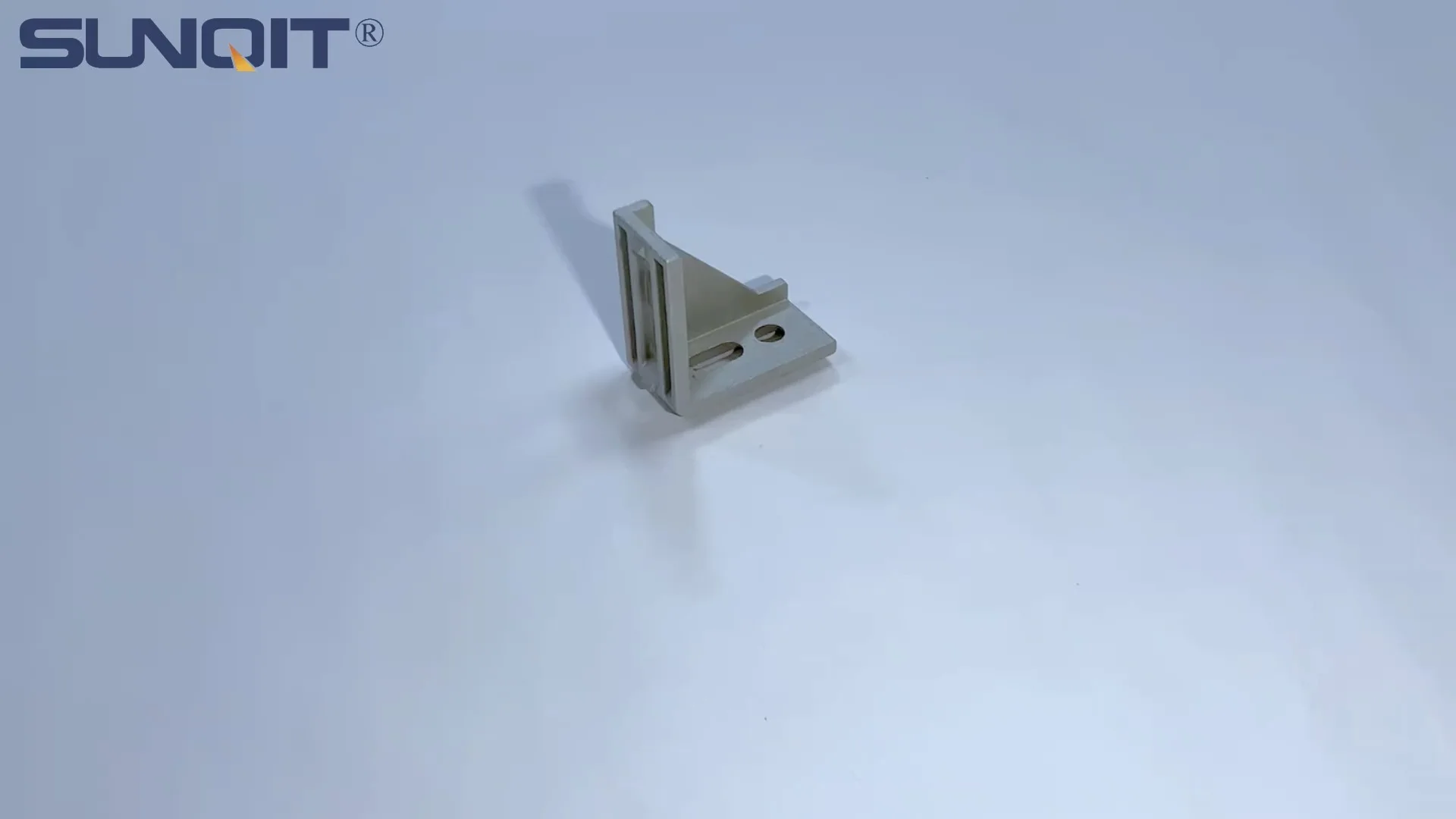
3060 Aluminum Angle Yards
It used for 90° flat connection for 20 series aluminum profile.
Imagine walking through a bustling manufacturing facility: workers moving swiftly between workbenches, conveyor belts humming as components glide along, and material racks neatly organizing parts for assembly. Now, picture the opposite: wobbly workstations that sag under tool weight, material racks that tip over when overloaded, and conveyor systems that jam because their frames lack stability. The difference? Often, it comes down to the yet critical components holding everything together. For forward-thinking manufacturers, one such component has emerged as a game-changer: the 3060 aluminum angle yard.
In an industry where efficiency, durability, and adaptability can make or break profitability, choosing the right structural materials isn't just a purchase—it's an investment in your operation's future. 3060 aluminum angle yards, with their unique design and versatile applications, have quickly become a cornerstone for lean manufacturing systems, workbenches, material racks, and beyond. But what exactly makes them stand out? Why are manufacturers swapping traditional steel frames or flimsy plastic components for these aluminum profiles? In this article, we'll dive into the top benefits of 3060 aluminum angle yards, explore how they integrate with essential accessories like 3060 aluminum profile end caps and 3030 aluminum profile end caps, and explain why partnering with a trusted lean system supplier is key to unlocking their full potential.
What Are 3060 Aluminum Angle Yards, Anyway?
Before we jump into the benefits, let's start with the basics. 3060 aluminum angle yards—sometimes referred to as 3060 aluminum angle profiles—are extruded aluminum components characterized by their "L" shape, with dimensions typically measuring 30mm in one leg and 60mm in the other (hence the "3060" designation). Unlike solid aluminum bars or flat sheets, these profiles are hollow, which balances strength with lightweight properties—a crucial feature in manufacturing settings where equipment mobility and load capacity are both priorities.
What truly sets 3060 angle yards apart is their T-slot design. Running along the length of each leg are precision-machined slots that allow for easy attachment of accessories: brackets, connectors, end caps, and even custom components. This T-slot system eliminates the need for welding or drilling, making assembly and reconfiguration a breeze. Whether you're building a workbench, a material rack, or a conveyor guide rail, 3060 angle yards act as the "backbone," providing a stable framework that can be adapted as your production needs change.
Now, let's talk materials. Most 3060 angle yards are made from 6063-T5 aluminum alloy, a grade prized for its excellent extrudability, corrosion resistance, and strength-to-weight ratio. This alloy undergoes heat treatment (the "T5" designation) to enhance its mechanical properties, ensuring it can withstand the rigors of daily use in factories, warehouses, and assembly lines. Compared to steel, aluminum is naturally resistant to rust and oxidation, reducing maintenance costs and extending the lifespan of your equipment.
Benefit 1: Structural Integrity That Stands Up to Heavy-Duty Use
In manufacturing, "good enough" doesn't cut it—especially when it comes to structural components. A wobbly workbench can lead to errors in assembly; a flimsy material rack might collapse under the weight of raw materials, causing delays and safety hazards. 3060 aluminum angle yards are engineered to deliver exceptional structural integrity, making them ideal for high-load applications.
Thanks to their L-shaped design and hollow yet reinforced construction, 3060 profiles distribute weight evenly across their length. This design minimizes flexing, even when supporting heavy tools, machinery, or bulk materials. For example, a workbench built with 3060 angle yards can easily handle loads of 200-300 kg (440-660 lbs) without compromising stability—far more than smaller profiles like 2020 or 3030, which are better suited for lighter tasks.
Consider a material rack like "material rack b (3 row and 3 floor)," a common setup in warehouses for storing parts and components. Using 3060 angle yards for the rack's vertical supports and horizontal beams ensures each shelf can hold multiple boxes or pallets without sagging over time. The angle design adds rigidity, preventing the rack from swaying when workers load or unload items—a critical safety feature in busy facilities.
Another advantage is impact resistance. In fast-paced environments, accidental bumps from forklifts, pallet jacks, or turnover trolleys are inevitable. Steel frames might dent or bend, while plastic could crack. 3060 aluminum angle yards, however, are surprisingly resilient. The 6063-T5 alloy absorbs minor impacts without permanent deformation, reducing the need for frequent repairs or replacements.

Benefit 2: Unmatched Versatility – One Profile, Endless Applications
If there's one word that defines 3060 aluminum angle yards, it's "versatility." These profiles aren't limited to a single use case—they're the Swiss Army knife of manufacturing components, adapting to everything from workbenches and material racks to conveyor systems and machine guards. Let's break down some of the most common applications:
Workbenches: Whether it's a simple single-deck workbench (like "workbench e (single deck-without caster)") or a multi-tiered assembly station, 3060 angle yards form the frame. The T-slot design allows for easy attachment of shelves, tool holders, LED lights, and even ESD (electrostatic discharge) mats—critical for electronics manufacturing.
Material Racks and Storage Systems: From "material rack b (3 row and 3 floor)" to custom-designed shelving, 3060 angle yards provide the strength needed to support heavy inventory. Adjustable shelves, made possible by T-slot accessories, let you adapt storage space to different part sizes.
Conveyor and Roller Tracks: 3060 angle yards often serve as guide rails for roller tracks (like "roller track placon mount for aluminum profile high" or "plastic roller track guide rail yellow"), ensuring smooth movement of products along assembly lines. Their corrosion resistance makes them suitable for both dry and semi-humid environments.
Turnover Trolleys: Lightweight yet strong, 3060 profiles are perfect for building mobile trolleys used to transport materials between workstations. Adding casters (like "caster wheel" and "caster accessories") to the angle yard frame creates a durable, maneuverable solution.
Machine Guards and Safety Barriers: In industrial settings, safety is paramount. 3060 angle yards can be quickly assembled into barriers around machinery, with optional mesh or acrylic panels attached via T-slot connectors.
The secret to this versatility lies in the ecosystem of accessories designed to work with 3060 angle yards. Take end caps, for example: 3060 aluminum profile end caps and 3030 aluminum profile end caps (for smaller profiles) snap into the ends of the T-slots, preventing dust and debris from entering while adding a clean, finished look. Connectors like "90° aluminum profile connector" or "135° aluminum profile connector" allow you to join angle yards at various angles, creating complex structures without welding. Even specialized components like "aluminum honeycomb panel" can be mounted to 3060 frames to create lightweight, rigid work surfaces.
This adaptability is a boon for lean manufacturing, where "just-in-time" production and rapid reconfiguration are essential. If your assembly line needs to switch from producing Product A to Product B, you can disassemble and rework your 3060-based workbenches or racks in hours—not days. This flexibility reduces downtime and helps you stay agile in a competitive market.

Benefit 3: Cost-Efficiency That Adds Up Over Time
At first glance, aluminum components might seem pricier than steel or plastic alternatives. But when you factor in long-term costs—maintenance, durability, and adaptability—3060 aluminum angle yards often prove to be the more economical choice. Let's break down the numbers:
Lower Maintenance Costs: Steel frames require regular painting or coating to prevent rust, especially in humid or industrial environments. Each touch-up costs time and money, and over years, these expenses add up. Aluminum, on the other hand, forms a natural oxide layer that resists corrosion—no painting needed. A quick wipe with a damp cloth is usually enough to keep 3060 angle yards looking and performing like new.
Longer Lifespan: Thanks to their robust construction and corrosion resistance, 3060 angle yards can last 10-15 years or more in typical manufacturing settings. Plastic components might degrade in sunlight or under heavy loads within 2-3 years, while steel frames can rust through if maintenance is neglected. The longer lifespan means fewer replacements, reducing total cost of ownership.
Reduced Labor Costs: Traditional steel fabrication requires skilled welders and time-consuming drilling. With 3060 angle yards, assembly is a DIY process. Workers with basic training can use simple tools (like hex keys or T-slot nuts) to build or modify structures, cutting down on labor hours. Even better, reconfiguration is just as easy—no need to hire contractors for every layout change.
Energy Savings: Aluminum is lighter than steel, which means equipment built with 3060 angle yards (like turnover trolleys or mobile workbenches) requires less energy to move. Over time, this reduces fatigue for workers and lowers operational costs—especially in facilities with frequent material transport.
Let's put this into perspective with a real-world example. Suppose a manufacturer needs to build 10 workbenches. Using steel, they might pay $150 per bench in materials, plus $200 per bench in welding and labor costs—total $3,500. With 3060 aluminum angle yards, materials might cost $200 per bench, but labor drops to $50 per bench (no welding needed), totaling $2,500. That's a $1,000 savings upfront. Over five years, the steel benches need $500 in maintenance (painting, rust repairs), while the aluminum benches need $0. The aluminum option ends up saving $1,500 total—and that's not counting the flexibility to reconfigure the benches if production needs change.

How 3060 Compares to Other Aluminum Profiles: A Quick Guide
Of course, 3060 isn't the only aluminum profile on the market. So when should you choose it over smaller profiles like 2020 or 3030, or larger ones like 4040 or 4080? The table below breaks down key differences to help you decide:
| Profile Type | Dimensions (mm) | Max Load Capacity (kg/m) | Best For | Accessory Compatibility |
|---|---|---|---|---|
| 2020 | 20x20 | 50-80 | Light-duty shelving, small workstations, 3D printer frames | Limited; requires small accessories |
| 3030 | 30x30 | 100-150 | Medium-duty workbenches, small material racks | Good; compatible with most standard accessories |
| 3060 (Angle Yard) | 30x60 (L-shape) | 200-300 | Heavy-duty workbenches, material racks (e.g., material rack b), conveyor rails | Excellent; works with 3060/3030 end caps, connectors, panels |
| 4040 | 40x40 | 250-400 | Industrial machinery frames, heavy storage systems | Excellent, but bulkier than 3060 |
As you can see, 3060 angle yards strike a sweet spot between strength and practicality. They offer more load capacity than 3030 profiles without the bulk of 4040, making them ideal for most manufacturing applications. Plus, their L-shape design provides unique mounting options that square profiles can't match—like attaching components to both legs for added stability.
Choosing the Right Lean System Supplier: Why It Matters
Even the best product is only as good as the supplier behind it. When investing in 3060 aluminum angle yards, partnering with a reputable lean system supplier is critical. Here's what to look for:
Product Quality: Not all aluminum profiles are created equal. A trustworthy supplier uses high-grade 6063-T5 aluminum and precision extrusion processes to ensure consistent dimensions and T-slot accuracy. Ask for material certificates or sample profiles to test quality.
Full Accessory Range: Look for a supplier that carries not just 3060 angle yards, but also essential accessories like 3060 aluminum profile end caps, connectors, casters, and panels. This one-stop shopping saves time and ensures compatibility.
Technical Support: Building complex structures with aluminum profiles can be tricky. A good supplier offers design assistance, CAD files, and troubleshooting help to ensure your project goes smoothly.
Timely Delivery: Manufacturing downtime waits for no one. Choose a supplier with reliable inventory and fast shipping to avoid project delays.
Customization Options: Sometimes, standard profiles won't cut it. A supplier that offers custom cutting, drilling, or anodizing can help you create tailored solutions for unique needs.
Avoid suppliers that cut corners—like using recycled aluminum (which can have inconsistent strength) or skipping quality control checks. A cheap profile might save you money today, but it could lead to structural failures, safety risks, and costly replacements tomorrow.
Final Thoughts: Investing in Your Manufacturing Future
In the fast-paced world of manufacturing, every decision impacts your bottom line. 3060 aluminum angle yards aren't just another component—they're a strategic investment in efficiency, durability, and adaptability. From heavy-duty workbenches to versatile material racks like "material rack b (3 row and 3 floor)," these profiles provide the structural backbone your operation needs to thrive.
By choosing 3060 angle yards, you're not just buying aluminum—you're buying the flexibility to reconfigure your workspace as markets change, the durability to withstand years of heavy use, and the cost savings that come with reduced labor and maintenance. And when paired with quality accessories like 3060 aluminum profile end caps and a trusted lean system supplier, you'll have everything you need to build a manufacturing setup that grows with your business.
So, the next time you're planning a workspace upgrade or building new equipment, ask yourself: Is this solution built to last? Can it adapt to tomorrow's challenges? If the answer is no, it might be time to consider 3060 aluminum angle yards. Your production line, your workers, and your bottom line will thank you.