- Company Articles
- Products and Technology
- Product knowledge
- Why Choose 40 Steel Roller Track Yellow for High-Volume Production Lines?

Why Choose 40 Steel Roller Track Yellow for High-Volume Production Lines?
Related Product
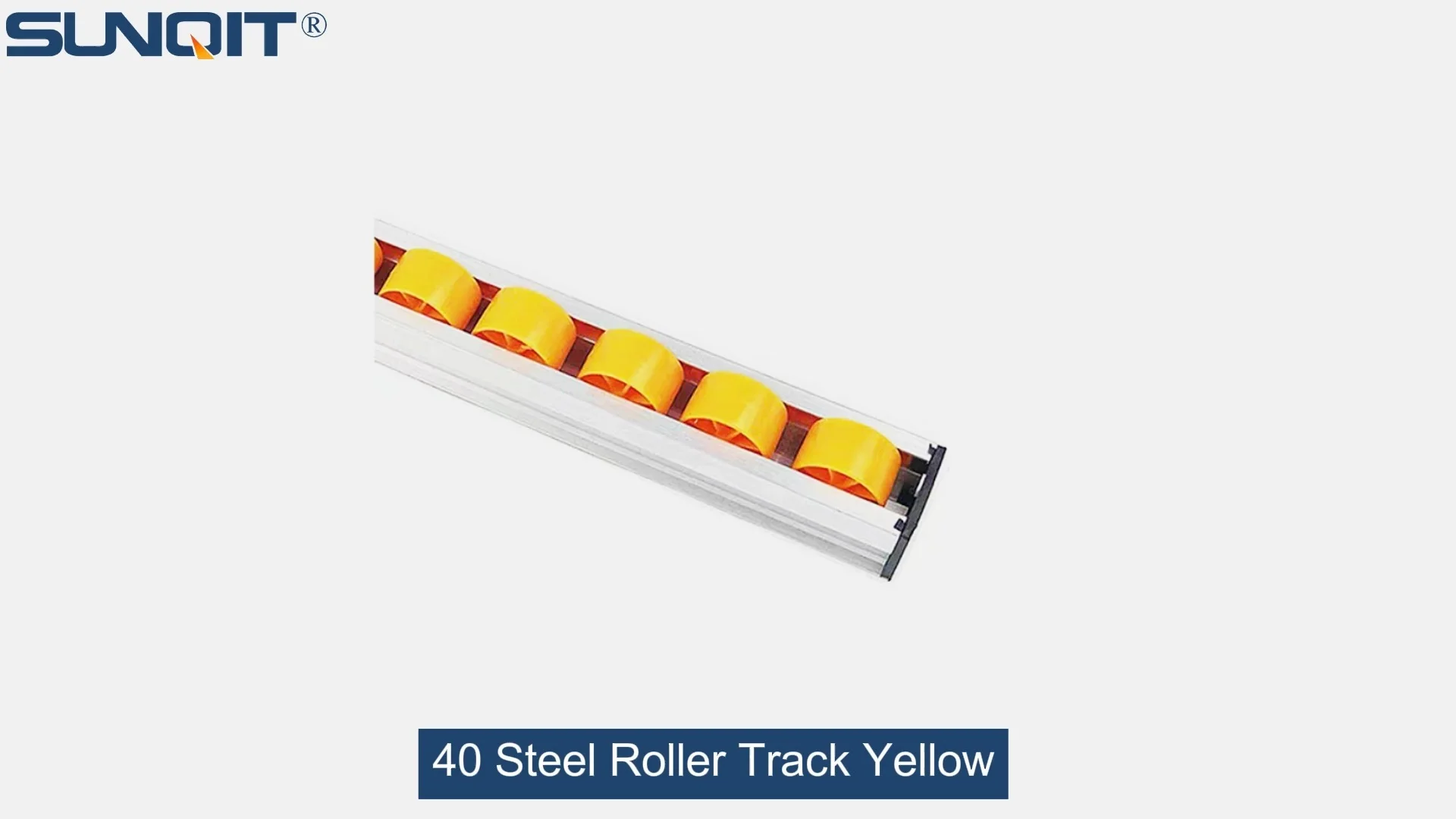
40 Steel Roller Track Yellow
The roller track can be installed with multiple accessories to create different slopes and configurations of flow racks.All steel conveyor 40 roller track accessories are engineered to perfectly fit the sliding rail.
Introduction
High-volume production lines are the backbone of modern manufacturing, driving efficiency and meeting the demands of global markets. However, they come with unique challenges: maintaining consistent throughput, minimizing downtime, and ensuring that materials move seamlessly from one station to the next. Material handling is often the unsung hero of these operations—inefficient systems can lead to bottlenecks, increased waste, and missed deadlines. This is where the 40 Steel Roller Track Yellow emerges as a game-changing component, designed to address these challenges and elevate the performance of high-volume production lines.
In industries like 3C assembly, automotive manufacturing, and warehousing logistics, the need for reliable material handling solutions is paramount. The 40 Steel Roller Track Yellow is specifically engineered to meet these needs, combining durability, smooth flow, and visibility to optimize production processes. Let's explore why this component is the ideal choice for high-volume lines.
What is 40 Steel Roller Track Yellow?
The 40 Steel Roller Track Yellow is a specialized material handling component crafted for high-demand manufacturing environments. At its core, it features a robust steel frame that provides exceptional strength and durability, paired with bright yellow wheels that facilitate smooth material flow. The "40" in its name typically refers to the diameter of the wheels (40mm), a standard size that ensures compatibility with a wide range of lean system components. The steel track itself is constructed from high-quality steel with a thickness that ranges from 1.2mm to 2.0mm, depending on the specific application, making it capable of supporting heavy loads without bending or warping.
The yellow wheels are made from premium-grade plastic or nylon, chosen for their low friction properties and resistance to wear. Unlike metal wheels, these plastic wheels reduce noise levels in the production line, creating a more comfortable working environment for employees. The bright yellow color is not just aesthetic—it serves a functional purpose by enhancing visibility, making the track easily identifiable in busy workspaces and reducing the risk of material handling errors.

Key Benefits for High-Volume Production Lines
1. Unmatched Durability
High-volume production lines operate around the clock, with materials moving continuously and heavy loads being transported regularly. The 40 Steel Roller Track Yellow is built to withstand this constant use. Its steel frame is resistant to impact, corrosion, and wear, ensuring that it maintains its structural integrity even after years of heavy use. Unlike plastic tracks that can crack or bend under pressure, steel tracks are designed to handle loads of up to several hundred kilograms per meter, making them ideal for transporting bulky items like automotive parts, electronic components, and large bins.
This durability translates to long-term cost savings. Manufacturers don't have to worry about frequent replacements or repairs, reducing downtime and maintenance costs. For example, a plastic track might need to be replaced every 6-12 months in a high-volume line, while a steel track can last 3-5 years or more, depending on usage.
2. Smooth and Consistent Material Flow
In high-volume production, every delay in material flow can lead to bottlenecks and reduced throughput. The yellow wheels of the 40 Steel Roller Track are engineered to provide minimal friction, allowing materials to glide along the track with ease. Even with heavy loads, workers can push or pull bins without exerting excessive force, which reduces fatigue and increases productivity.
The consistent flow ensured by these tracks also helps maintain a steady pace in the production line. For instance, in a 3C assembly line, components need to move quickly from the storage area to the assembly stations. The smooth flow of the roller track ensures that parts arrive exactly when needed, eliminating waiting times and keeping the assembly process on schedule.
3. Enhanced Visibility and Organization
The bright yellow color of the wheels stands out in busy production environments. This visibility helps workers quickly identify the correct material flow paths, reducing the risk of placing items on the wrong track or in the wrong location. In a high-volume line where hundreds of bins are moving daily, this can significantly reduce errors and improve overall efficiency.
Additionally, the yellow color aids in maintaining an organized workspace. By clearly marking the flow paths, manufacturers can create a more structured layout, which is essential for lean manufacturing practices. An organized workspace reduces waste, improves safety, and makes it easier to implement continuous improvement initiatives.
4. Seamless Integration with Lean Systems
The 40 Steel Roller Track Yellow is designed to work seamlessly with other lean system components, such as flow racks, conveyors, and workbenches. This compatibility makes it easy to integrate into existing production lines or design new ones from scratch. For example, it can be installed in flow racks to create a first-in-first-out (FIFO) system, which is critical for inventory management in high-volume production. FIFO ensures that older inventory is used first, reducing waste and ensuring product quality.
It also pairs well with conveyors to form continuous material handling lines. By connecting different stages of the production process, these lines eliminate the need for manual material transport, reducing labor costs and increasing efficiency. For instance, in an automotive assembly line, the roller track can be part of a conveyor system that moves car bodies from one station to the next, ensuring a smooth and continuous production flow.
5. Easy Maintenance and Repairability
Maintaining high-volume production lines requires components that are easy to service. The 40 Steel Roller Track Yellow is designed with this in mind. The steel frame is easy to clean and sanitize, making it suitable for industries like medical device manufacturing where hygiene is a priority. The wheels are replaceable, so if one wheel wears out, it can be swapped quickly without replacing the entire track. This minimizes downtime and keeps the production line running smoothly.
Regular maintenance is simple: periodic checks of the wheels and track to ensure they are in good condition, lubricating the wheels to maintain smooth flow, and tightening any loose bolts. These small steps can extend the life of the track and prevent major issues down the line.
6. Cost-Effectiveness
While the initial cost of the 40 Steel Roller Track Yellow may be higher than plastic alternatives, its long lifespan and low maintenance requirements make it a more cost-effective choice in the long run. For example, a plastic track costing $50 per meter might need replacement every year, totaling $500 over 10 years. A steel track costing $100 per meter could last 5 years, totaling $200 over 10 years. This difference in total cost is significant, especially for manufacturers with large production lines.
Additionally, the increased productivity and reduced downtime provided by the steel track further contribute to cost savings. A high-volume line that runs smoothly without interruptions can produce more units per day, increasing revenue and profitability.

Applications Across Industries
3C Assembly
The 3C (computers, communication, consumer electronics) industry is characterized by high-volume production of small, delicate components. The 40 Steel Roller Track Yellow is ideal for this sector because it provides smooth, gentle movement of parts. For example, in a smartphone assembly line, the track can be used to transport component bins from the storage area to the assembly stations. The smooth flow ensures that parts arrive quickly, allowing workers to focus on assembly rather than waiting for materials. The bright yellow color also helps in identifying the correct parts, reducing errors in assembly.
Automotive Manufacturing
Automotive manufacturing involves heavy parts and continuous production. The 40 Steel Roller Track Yellow's durability makes it perfect for this industry. It can handle the weight of engine components, body parts, and other bulky items. For instance, in a car assembly plant, the track can be part of a conveyor system that moves car bodies through different stages of production, from welding to painting to final assembly. The smooth flow ensures that the production line remains on schedule, even with high volumes.
Medical Device Production
Medical device manufacturing requires strict adherence to hygiene standards. The steel track is easy to sanitize, making it suitable for cleanrooms and other sterile environments. The yellow wheels are non-toxic and resistant to chemicals, ensuring that they don't contaminate sensitive medical devices. For example, in a facility producing surgical instruments, the track can be used to transport components between cleaning and assembly stations, maintaining a sterile environment throughout the process.
Warehousing and Logistics
In warehousing and logistics, efficient inventory management is key. The 40 Steel Roller Track Yellow is commonly used in flow racks to create FIFO systems. This ensures that older inventory is picked first, reducing waste and ensuring product freshness. For example, in a distribution center for consumer goods, the track can be installed in flow racks to store boxes of products. When new boxes are added to the top of the rack, older boxes slide down to the picking area, ensuring that they are shipped out first.

Case Study: Improving Efficiency in a 3C Assembly Line
Let's take a look at how a leading 3C assembly company improved their production efficiency using the 40 Steel Roller Track Yellow. The company was facing several challenges: frequent downtime due to broken plastic tracks, slow material flow leading to bottlenecks, and high error rates in material handling.
Before implementing the steel tracks, the company used plastic roller tracks in their flow racks. These tracks would break under the weight of heavy component bins, leading to 2-3 hours of downtime per week. The slow flow of materials also caused assembly stations to wait for parts, reducing throughput by 15%.
After switching to the 40 Steel Roller Track Yellow, the company noticed immediate improvements. The steel tracks didn't break, eliminating downtime related to track failures. The smooth flow of the yellow wheels reduced waiting times at assembly stations, increasing throughput by 20%. The bright yellow color also helped workers identify the correct parts more quickly, reducing material handling errors by 18%.
Over the course of a year, these improvements translated to an increase in production volume by 120,000 units and a reduction in operational costs by $150,000. The company also reported higher employee satisfaction due to the reduced physical strain and more organized workspace.
Comparison with Other Roller Track Options
To understand why the 40 Steel Roller Track Yellow is the best choice for high-volume production lines, it's helpful to compare it with other common options.
| Feature | 40 Steel Roller Track Yellow | Aluminum Roller Track | Plastic Roller Track |
|---|---|---|---|
| Durability | High (steel frame) | Medium (lighter than steel) | Low (prone to cracking) |
| Load Capacity | High (up to 300kg/m) | Medium (up to 150kg/m) | Low (up to 50kg/m) |
| Material Flow | Smooth (low friction wheels) | Smooth (similar wheels) | Variable (depends on plastic quality) |
| Visibility | High (yellow wheels) | Medium (silver color) | Low (neutral colors) |
| Maintenance | Easy (replaceable wheels) | Easy (similar to steel) | High (frequent replacements) |
| Long-term Cost | Low (minimal replacements) | Medium (moderate replacements) | High (frequent replacements) |
As the table shows, the 40 Steel Roller Track Yellow outperforms aluminum and plastic tracks in terms of durability, load capacity, and long-term cost-effectiveness, making it the ideal choice for high-volume production lines. While aluminum tracks are lighter, they can't handle the same weight as steel. Plastic tracks are the cheapest option but are not suitable for heavy use, as they break easily.
How to Integrate 40 Steel Roller Track Yellow into Your Production Line
Integrating the 40 Steel Roller Track Yellow into your production line is a straightforward process. Here are some steps to consider:
1. Assess Your Needs
First, determine the specific requirements of your production line. What is the average weight of the materials you need to transport? How long do the tracks need to be? What is the layout of your workspace? Answering these questions will help you choose the right length and configuration of the roller track.
2. Design the Layout
Work with a lean system expert to design the layout of the roller tracks. They can help you determine the best positions for the tracks to optimize material flow. For example, in a flow rack system, the tracks should be sloped slightly to allow gravity to move the materials. In a conveyor system, the tracks should be level to ensure consistent movement.
3. Install the Tracks
The 40 Steel Roller Track Yellow is easy to install. It can be mounted on existing racks or frames using brackets and bolts. Most tracks come with pre-drilled holes for easy installation. If you need custom lengths, the tracks can be cut to size using standard tools.
4. Test and Optimize
After installation, test the tracks to ensure they are working properly. Check the flow of materials, the stability of the tracks, and the visibility of the yellow wheels. Make any necessary adjustments to the layout or slope to optimize performance. Once the system is running smoothly, monitor it regularly to identify areas for improvement, as part of continuous improvement practices.
Conclusion
The 40 Steel Roller Track Yellow is a versatile and reliable component that can transform high-volume production lines. Its durability, smooth flow, visibility, compatibility with lean systems, and easy maintenance make it an excellent choice for manufacturers across industries. Whether you're in 3C assembly, automotive manufacturing, medical device production, or warehousing and logistics, this roller track can help you streamline operations, reduce costs, and increase productivity.
By choosing the 40 Steel Roller Track Yellow, you're investing in a solution that supports lean manufacturing principles, enhances efficiency, and contributes to long-term success. It's not just a component—it's a tool that helps you build a more efficient, productive, and profitable production line.
In today's competitive manufacturing landscape, every advantage counts. The 40 Steel Roller Track Yellow provides that advantage by ensuring that your material handling system is robust, efficient, and cost-effective. It's the perfect choice for any high-volume production line looking to optimize performance and stay ahead of the competition.