- Company Articles
- Products and Technology
- Product knowledge
- Why Choose 4080A EU Standard Aluminum Profile for Lean Production Systems?

Why Choose 4080A EU Standard Aluminum Profile for Lean Production Systems?
Related Product
4080A EU Standard Aluminum Profile
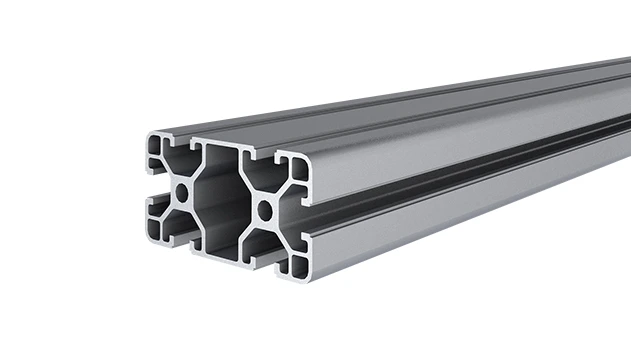
4080A is a 4.00x8.00 CM fractional 40 series square extrusion T-slot profile with two side open T-slots, each side with 4.00cm face, two side with 8.00cm face. The profile has align-a-grooves to assist in aligning connecting profiles.
In the fast-paced world of manufacturing, where every second counts and waste is the enemy, lean production systems have become the gold standard for efficiency. But here's the thing: even the best lean strategies can stumble if the tools and infrastructure supporting them aren't up to the task. Rigid workbenches that can't adapt to new workflows, flimsy material racks that bend under daily use, or clunky conveyor setups that slow down material flow—these are the silent productivity killers that turn well-intentioned lean initiatives into frustrating half-measures. That's where the 4080A EU Standard Aluminum Profile comes in. More than just a piece of metal, it's the backbone of a lean system that grows with your needs, reduces waste, and keeps your team moving forward. Let's dive into why this aluminum extrusion profile has become a go-to choice for manufacturers serious about operational excellence.
Understanding the Basics: What Is 4080A EU Standard Aluminum Profile?
Before we jump into its benefits, let's get clear on what the 4080A actually is. At its core, it's an aluminum extrusion profile—meaning it's shaped by forcing heated aluminum through a die to create a consistent, precise cross-section. The "4080" refers to its dimensions: 40mm in width and 80mm in height, making it a robust yet versatile option for structural frameworks. The "EU Standard" tag isn't just a marketing label; it's a promise of quality. EU standards for aluminum extrusion profiles enforce strict tolerances for straightness, wall thickness, and material composition, ensuring that every piece you receive is uniform and reliable. This consistency is critical in lean systems, where even small variations in parts can throw off assembly times or compromise structural integrity.
But what really sets the 4080A apart is its design. Like many modern aluminum profiles, it features T-slots—longitudinal grooves along its length that allow for easy attachment of aluminum profile accessories. No drilling, no welding, no hassle. Whether you're adding a bracket, a caster wheel, or a tool holder, the T-slots let you secure components with simple bolts or sliding nuts, making reconfiguration a breeze. This modularity is the first clue why it's such a hit in lean environments: lean thrives on adaptability, and the 4080A was built for exactly that.
Key Features of 4080A: Why It Stands Out in Lean Systems
1. Strength Without the Bulk
Lean production isn't just about cutting waste—it's about doing more with less. The 4080A delivers here by offering impressive strength-to-weight ratio. Aluminum is naturally lighter than steel, which means structures built with 4080A are easier to move, reposition, and install. But don't let the weight fool you: the 4080A's extrusion design, with internal reinforcing ribs, gives it remarkable load-bearing capacity. A typical 4080A profile can support hundreds of kilograms when properly braced, making it ideal for heavy-duty applications like workbenches, flow racks, or material handling trolleys. For example, a workbench built with 4080A frames and a sturdy aluminum honeycomb panel top can easily handle the weight of power tools, assembly components, and daily wear and tear without bending or warping.
This strength also translates to durability. Unlike plastic or wood, aluminum resists corrosion, dents, and scratches—common issues in busy manufacturing floors. Even in environments with oils, coolants, or humidity, the 4080A holds up, reducing the need for frequent replacements. In lean terms, that's less waste (fewer broken parts tossed in the scrap heap) and lower long-term costs (no need to rebuild structures every few years).
2. Modularity That Speeds Up Assembly (and Reassembly)
Imagine spending hours disassembling a steel workbench because your production line needs to shift from assembling small parts to larger components. Now, think about doing the same with a 4080A-based setup: loosen a few bolts, reposition the profiles, add new accessories, and you're back up and running in minutes. That's the power of modularity. The 4080A's T-slot system and compatibility with standard aluminum profile accessories—like 90° connectors, parallel brackets, or caster mounts—mean you can build, break down, and rebuild structures with minimal downtime. This is a game-changer for lean teams, where setup time is often a hidden source of waste. With the 4080A, you're not just building a workbench or a flow rack; you're building a system that can evolve as your production needs change.
Take flow racks, for example. A well-designed flow rack keeps materials moving smoothly to the production line, reducing pick times and minimizing worker movement (another lean win). With 4080A frames, you can adjust shelf heights, add roller tracks, or expand the rack's width by simply adding more profiles and accessories. If a new product requires taller bins, you don't need a whole new rack—just reposition the existing components. That's lean in action, and it's all thanks to the 4080A's flexible design.
3. Precision Engineering for Consistent Performance
In lean systems, consistency is king. When every second counts, you can't afford delays caused by ill-fitting parts or wobbly structures. The 4080A, being EU standard, is extruded with tight tolerances, ensuring that every profile is straight, every T-slot is aligned, and every accessory fits perfectly. This precision reduces assembly errors, speeds up build times, and ensures that structures like workbenches or material racks are stable and reliable. For instance, when constructing a workbench with 4080A, you can trust that the legs will be perfectly parallel, the top will sit flat, and the whole unit won't wobble—even under heavy use. This reliability is crucial for maintaining workflow efficiency; a shaky workbench isn't just annoying, it can slow down tasks or even compromise product quality.

How 4080A Enhances Lean Production: Real-World Benefits
Reducing Setup and Changeover Times
One of the biggest wastes in manufacturing is downtime—especially during changeovers between product runs. Lean teams are always looking for ways to shrink these gaps, and the 4080A helps by making reconfigurations fast and easy. Let's say your team needs to switch from assembling small electronics to larger mechanical parts. With a traditional steel workbench, this might involve unbolting heavy components, drilling new holes, or even replacing the entire bench. With a 4080A workbench? You simply slide off the old accessories, adjust the frame using aluminum profile connectors, and attach new components like a larger top or additional shelving. What might take hours with steel takes minutes with aluminum. Multiply that across multiple workstations or production lines, and the time savings add up quickly—time that can be spent making products instead of rearranging tools.
Minimizing Material Waste
Lean's "zero waste" goal isn't just about recycling; it's about designing systems that avoid waste in the first place. The 4080A contributes here in two ways. First, its durability means longer lifespans. Unlike wood, which can warp or rot, or plastic, which can crack under stress, aluminum profiles like the 4080A can last for decades with minimal maintenance. When you do need to reconfigure, you're not throwing away old parts—you're repurposing them. A profile from a retired workbench might find new life as part of a flow rack or a turnover trolley. Second, the precision of EU standard extrusion reduces scrap during assembly. No more cutting profiles to fit because they're slightly off-size; every piece works as intended, so you're not wasting material on do-overs.
Improving Ergonomics for Happier, More Productive Teams
Lean isn't just about machines and materials—it's about people. A comfortable, well-designed workspace reduces fatigue, lowers error rates, and boosts morale. The 4080A makes it easy to build ergonomic setups tailored to your team's needs. Want a workbench that adjusts to different heights? Use adjustable leveling feet or caster wheels with height settings. Need a material rack that brings parts to waist level, eliminating bending? The 4080A's modularity lets you design shelves at the perfect height. Even small touches, like adding a footrest or tilting the work surface, are simple with the right aluminum profile accessories.
Consider a scenario: A production line worker spends 8 hours a day reaching for parts on a low shelf. Over time, this leads to back strain and slower task completion. By rebuilding the shelf with 4080A profiles, you can raise it to elbow height, reducing reach time and physical stress. The result? Happier workers, fewer absences, and faster, more accurate work. That's the human side of lean, and the 4080A helps you deliver on it.
4080A in Action: Common Applications in Lean Systems
To really understand the 4080A's impact, let's look at how it's used in everyday lean setups. Here are a few key applications where it shines:
Workbenches: The Heart of the Production Line
Workbenches are where the magic happens in manufacturing, and the 4080A is the ideal frame material. A typical 4080A workbench might feature a sturdy top (like an aluminum honeycomb panel for lightweight durability), adjustable legs with anti-slip leveling feet, and integrated storage via T-slot-mounted shelves or tool holders. Add casters, and it becomes a mobile workbench that can be moved to where it's needed most—perfect for flexible production layouts. For ESD-sensitive environments (like electronics manufacturing), you can even pair it with an ESD workbench top and grounding accessories, all secured via the T-slots. The result is a workspace that's custom, durable, and easy to adapt as tasks change.
Flow Racks: Keeping Materials Moving
Flow racks are critical for "kanban" systems, where materials are replenished just-in-time. The 4080A's strength and modularity make it ideal for building these racks. By combining 4080A frames with roller tracks (another keyword from the list!), you create a gravity-fed system where bins slide forward as they're emptied, ensuring easy access and reducing pick times. The T-slots let you adjust the angle of the roller tracks for optimal flow speed, and you can add dividers or labels to keep parts organized. Best of all, if your material sizes change, you can reposition the tracks or add new sections without rebuilding the entire rack.
Material Handling Trolleys: From Station to Station
Moving materials around the shop floor shouldn't be a chore. 4080A-based turnover trolleys are lightweight yet strong, making them easy to push even when loaded. With caster wheels (secured via T-slots, of course), they glide smoothly over factory floors, reducing the physical strain on workers. Add shelves, bins, or even tool holders, and they become mobile storage units that keep everything needed for a task within arm's reach. Whether you're transporting parts between assembly stations or delivering finished goods to shipping, these trolleys are a lean essential—and the 4080A ensures they're built to last.
Comparing 4080A to Other Materials: Why Aluminum Wins for Lean
You might be wondering: Why not use steel, wood, or plastic instead? Let's break down the pros and cons with a quick comparison:
| Material | Strength | Weight | Reconfigurability | Durability | Cost (Long-Term) |
|---|---|---|---|---|---|
| 4080A Aluminum | High (strength-to-weight ratio) | Light | Excellent (T-slots, modular accessories) | High (corrosion-resistant, long lifespan) | Moderate upfront, low over time (reusable, minimal maintenance) |
| Steel | Very high | Heavy | Poor (requires welding/drilling) | High (but prone to rust without coating) | Low upfront, high over time (heavy, hard to reconfigure, maintenance costs) |
| Wood | Moderate | Medium | Poor (nails/screws damage wood when removed) | Low (prone to warping, rot, scratches) | Low upfront, very high over time (frequent replacement) |
| Plastic | Low | Very light | Limited (fewer accessory options) | Low (cracks under heavy load, UV damage) | Low upfront, high over time (short lifespan) |
As the table shows, 4080A aluminum strikes the perfect balance for lean systems: strong enough to handle the load, light enough to be mobile, reconfigurable enough to adapt, and durable enough to last. While steel might be stronger, its weight and lack of modularity make it a poor fit for environments where change is constant. Wood and plastic, meanwhile, simply can't keep up with the demands of daily manufacturing use.
Choosing the Right Partner: Why a Reliable Lean System Supplier Matters
Of course, even the best aluminum profile is only as good as the accessories and support behind it. That's why working with a trusted lean system supplier is crucial. A reputable supplier will offer not just 4080A profiles, but a full range of aluminum profile accessories—connectors, brackets, roller tracks, casters, and more—all designed to work together seamlessly. This ensures that when you need to reconfigure a workbench or build a new flow rack, you have the parts you need, when you need them, with consistent quality.
Look for suppliers who understand lean principles themselves. They should be able to offer guidance on design best practices, help you choose the right accessories for your needs, and even provide custom solutions if required. After all, lean is about partnership—between your team, your processes, and your suppliers. The right supplier won't just sell you parts; they'll help you build a lean system that drives real results.
Conclusion: 4080A—The Foundation of Future-Ready Lean Systems
In the end, lean production is about creating systems that are efficient, adaptable, and human-centered. The 4080A EU Standard Aluminum Profile checks all these boxes and more. Its strength, modularity, and precision make it the ideal building block for workbenches, flow racks, trolleys, and beyond—setups that reduce waste, speed up changeovers, and keep your team working at their best. By choosing 4080A, you're not just investing in a piece of aluminum; you're investing in a lean system that can grow and evolve with your business, ensuring you stay competitive in a world where efficiency is everything.
So, if you're looking to take your lean production to the next level, start with the foundation. Start with 4080A. Your team, your bottom line, and your future self will thank you.