- Company Articles
- Products and Technology
- Product knowledge
- Why Choose Aluminum Lean Pipe Clamps? Lightweight & Durable Advantages

Why Choose Aluminum Lean Pipe Clamps? Lightweight & Durable Advantages
Related Product
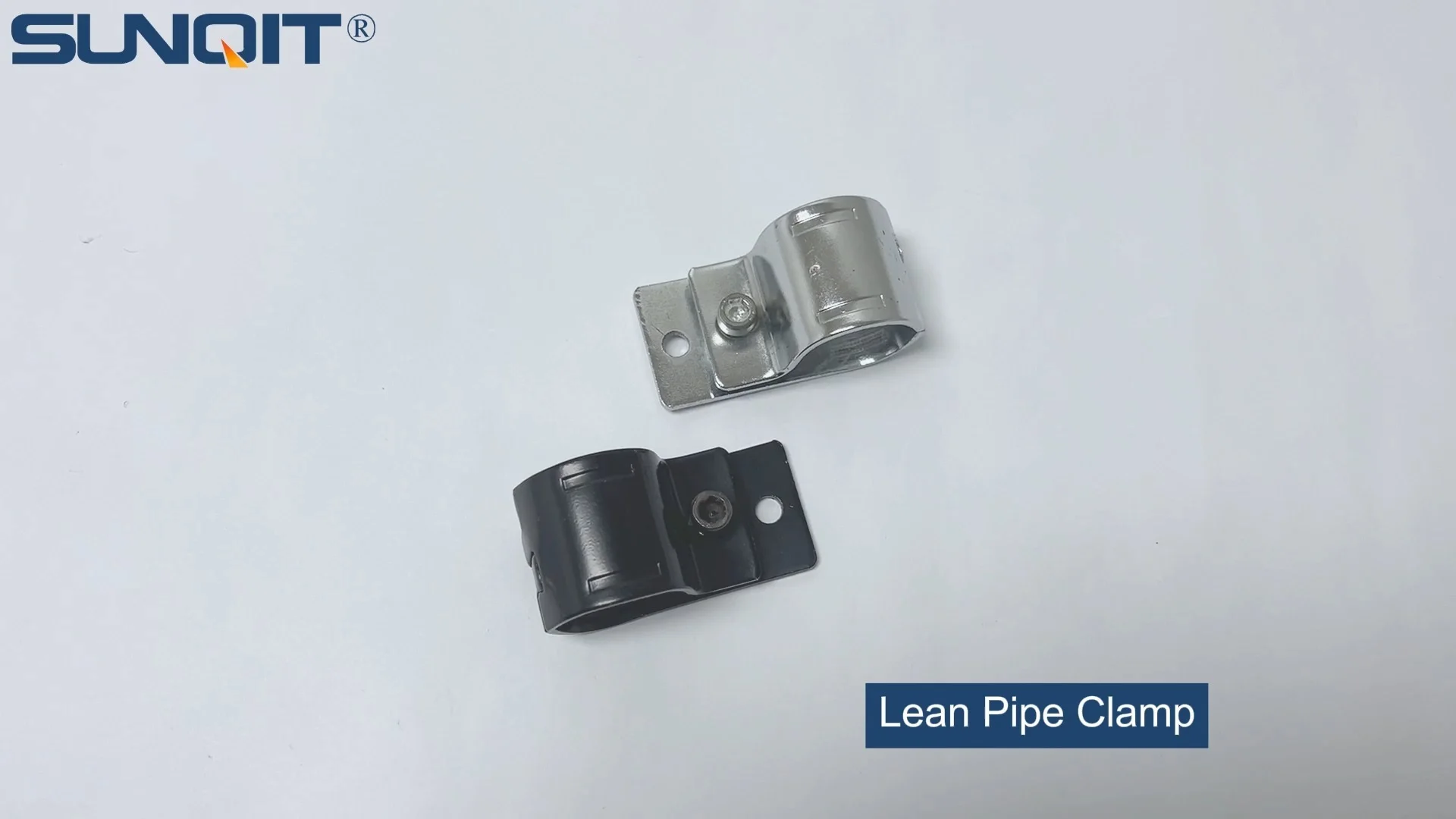
Lean Pipe Clamp
Lean pipe clamp is used for rack system hang monitor or other panel for workbenck, flowrack in production daily use.
Walk into any modern manufacturing facility, warehouse, or assembly workshop, and you'll notice a silent revolution happening on the factory floor. The cluttered, rigid workstations of the past are making way for sleek, adaptable setups that seem to reconfigure themselves overnight. Behind this transformation? Often, it's the unassuming heroes: aluminum lean pipe clamps . These small but mighty components are the backbone of flexible, efficient workspaces, yet they rarely get the spotlight they deserve. Today, let's pull back the curtain and explore why these clamps have become indispensable for teams aiming to build lean, responsive, and human-centered operations.
If you've ever worked in a workshop, you know the frustrations all too well. Heavy steel frames that take three people to move. Rusty connectors that seize up after a few months. Flimsy plastic parts that crack under daily use. These aren't just minor annoyances—they slow down production, increase worker fatigue, and make it nearly impossible to adapt to changing demands. That's where aluminum lean pipe clamps step in. They're designed to solve these exact pain points, blending lightweight flexibility with surprising durability. But what makes them so special? Let's dive in.
What Are Aluminum Lean Pipe Clamps, Anyway?
Before we get into their benefits, let's clarify what we're talking about. Aluminum lean pipe clamps are the connectors that hold aluminum lean pipe systems together. Think of them as the "glue" that turns simple tubes into workbenches, flow racks, material trolleys, or any custom structure your team needs. Unlike fixed welding or permanent bolts, these clamps create secure, yet removable joints—meaning you can take apart a workstation in the morning and rebuild it as a storage rack by afternoon, no power tools required.
But they're not just standalone parts. Aluminum lean pipe clamps are part of a larger ecosystem of aluminum pipe accessories : joints, brackets, casters, and panels that work together like building blocks. Pair a clamp with an aluminum profile, and suddenly you've got a sturdy frame. Add a caster wheel, and that frame becomes a mobile trolley. This modularity is key to their appeal—they don't lock you into one design, giving you the freedom to iterate as your needs change.
The Lightweight Advantage: Work Smarter, Not Harder
Why "Light" Doesn't Mean "Weak"
Let's start with the obvious: aluminum is light. Really light. Compared to steel, aluminum weighs about a third as much, and that difference is game-changing when you're assembling (or disassembling) a workstation. Imagine a team of two workers trying to move a steel-framed workbench across the shop floor—it's a struggle, maybe even a safety risk. Now swap that steel for aluminum lean pipe and clamps: suddenly, two people can lift and reposition the entire setup with ease. That's not just convenience—that's efficiency.
But here's the kicker: "lightweight" doesn't equal "flimsy." Aluminum lean pipe clamps are engineered to hold tight under pressure. The secret lies in their design: most clamps use a combination of friction and mechanical grip, with bolts or levers that tighten securely around the aluminum pipe. Even when supporting heavy tools, boxes of parts, or fully loaded workbenches, they stay put. I once visited a electronics assembly plant where workers had built a multi-level material rack using aluminum lean pipe and clamps. The rack held hundreds of pounds of circuit boards and components, yet a single worker could adjust its height in minutes by loosening a few clamps and sliding the pipes into new positions. No heavy lifting, no waiting for maintenance—just quick, on-the-fly customization.
Reducing Fatigue, Boosting Morale
Heavy equipment doesn't just slow down workflows—it wears people out. When workers spend hours wrestling with steel frames or tightening rusted bolts, they're more likely to get tired, make mistakes, or even injure themselves. Aluminum lean pipe clamps flip that script. Their light weight reduces physical strain, turning tedious setup tasks into quick, manageable jobs. A study by the National Institute for Occupational Safety and Health (NIOSH) found that reducing manual handling loads by just 10% can lower injury rates by up to 30%. For teams using aluminum clamps, that translates to fewer sick days, happier employees, and a more engaged workforce.
Take Maria, a line supervisor at a automotive parts plant I worked with a few years back. Her team used to spend every Friday afternoon reconfiguring their assembly line for the next week's production run. With steel clamps and pipes, the process took 4-5 hours and left everyone exhausted. After switching to aluminum lean pipe clamps, the same job took 1.5 hours, and the team actually looked forward to it. "It used to feel like punishment," Maria told me. "Now, we joke that we're 'workshop architects.' We can try new layouts, test what works, and if it flops, we just change it again. It makes us feel creative, not just tired."

Durability That Stands Up to the Grind
Corrosion Resistance: No More Rusty Headaches
Steel might be strong, but it's a diva when it comes to moisture, chemicals, or even just humid air. Leave a steel clamp in a damp warehouse for a few months, and you'll find it covered in rust—seizing up, staining your materials, and weakening the joint over time. Aluminum lean pipe clamps? They laugh at rust. Aluminum naturally forms a thin oxide layer that protects it from corrosion, even in wet or humid environments. That makes them ideal for facilities like food processing plants, pharmaceutical labs, or outdoor storage yards where steel would degrade quickly.
I visited a beverage bottling facility last year that had switched to aluminum lean pipe clamps for their bottle transport racks. Previously, they'd used steel clamps that rusted constantly, leaving orange streaks on their product packaging. "We were spending hours sanding and repainting those racks every quarter," the plant manager told me. "Now, with aluminum, we haven't touched them in two years. They still look brand new, and we've saved thousands on maintenance."
Strength in the Long Run
Durability isn't just about resisting rust—it's about standing up to daily wear and tear. Aluminum lean pipe clamps are built to handle the bumps, knocks, and constant adjustments that come with life on the factory floor. Unlike plastic clamps, which can crack or warp under stress, aluminum clamps maintain their shape and grip even after hundreds of assemblies and disassembly. And because they're made from high-grade aluminum alloys (often reinforced with additives for extra strength), they won't bend or deform under heavy loads.
Consider this: a typical aluminum lean pipe clamp can withstand up to 500 pounds of shear force (that's the force trying to slide the joint apart) and 800 pounds of tensile force (the force pulling it together). For context, that's more than enough to support a fully loaded workbench with tools, parts, and a worker leaning on it. And unlike welded joints, which weaken over time with stress, these clamps maintain their integrity because the connection is mechanical, not dependent on heat-affected metal.

Versatility: One Clamp, Endless Possibilities
The best tools are the ones that adapt to you, not the other way around. Aluminum lean pipe clamps excel here, thanks to their compatibility with a wide range of aluminum pipe accessories . Whether you're building a simple workbench or a complex automated flow system, these clamps play well with others, making customization a breeze.
From Workbenches to Trolleys: A World of Applications
Let's start with the basics: workbenches. A standard aluminum lean pipe workbench might use clamps to attach the legs to the tabletop frame, then add accessories like tool hooks, shelf brackets, or even ESD (electrostatic discharge) panels for sensitive electronics. Need to lower the height for a shorter worker? Loosen the clamps, adjust the legs, retighten—done. Want to add a second shelf for extra storage? Grab a few more clamps and pipes, and you're set in 10 minutes.
But their versatility doesn't stop there. Pair clamps with roller tracks, and you've got a flow rack that moves materials smoothly from one station to the next. Attach casters, and suddenly your workbench is a mobile cart that can follow a worker around the shop. I've seen teams use aluminum lean pipe clamps to build everything from packing stations with integrated conveyor belts to ergonomic standing desks that adjust to each user's height. The only limit is creativity.
Case Study: A Small Manufacturer's Big Win
A family-owned furniture manufacturer I worked with had a problem: their product line kept expanding, but their workshop space stayed the same. They needed a way to build temporary assembly stations during busy seasons and break them down when demand slowed. Steel workbenches were too heavy to store, and plastic tables weren't sturdy enough. Enter aluminum lean pipe clamps. They invested in a set of clamps, pipes, and accessories, and within a week, their team had built four custom workbenches. When the busy season ended, they disassembled the benches, stacked the pipes in a corner, and freed up 30% of their floor space. "We used to rent extra storage just for our steel tables," the owner told me. "Now, we can adapt on the fly without breaking the bank."

Aluminum vs. the Competition: Why It's the Clear Choice
You might be wondering: Why not stick with steel clamps? Or try plastic? Let's break it down. Steel is strong, but it's heavy, prone to rust, and hard to reconfigure. Plastic is light, but it lacks the strength for heavy-duty use and can degrade in extreme temperatures. Aluminum lean pipe clamps hit the sweet spot, offering a balance of weight, durability, and cost that's hard to beat. To illustrate, here's a quick comparison:
| Feature | Aluminum Lean Pipe Clamps | Steel Clamps | Plastic Clamps |
|---|---|---|---|
| Weight | Light (1/3 the weight of steel) | Heavy (fatigue risk during handling) | Light, but less rigid |
| Durability | Corrosion-resistant, maintains grip over time | Strong, but prone to rust and seized bolts | Weak under heavy loads; can crack or warp |
| Flexibility | Easy to disassemble and reconfigure | Fixed (often welded or permanently bolted) | Flexible, but limited load capacity |
| Cost (Long-Term) | Moderate upfront, low maintenance | Low upfront, high maintenance (rust, replacement) | Low upfront, high replacement cost (frequent breakage) |
The verdict? Aluminum lean pipe clamps offer the best of all worlds: the strength to handle tough jobs, the lightness to keep workers moving, and the flexibility to grow with your business. They're not just a purchase—they're an investment in efficiency, adaptability, and the well-being of your team.
Conclusion: Building a Leaner, Happier Workplace
At the end of the day, manufacturing and warehousing are about people. The tools we use should make their jobs easier, safer, and more fulfilling. Aluminum lean pipe clamps do exactly that. They're lightweight enough to reduce fatigue, durable enough to last for years, and versatile enough to adapt to any challenge. Whether you're a small shop looking to save space or a large factory aiming to boost productivity, these clamps are more than just connectors—they're the foundation of a lean, responsive, and human-centered operation.
So the next time you walk through your workshop, take a closer look at those unassuming aluminum joints holding everything together. They might not make a sound, but they're working hard to keep your team moving forward. And in the world of manufacturing, that's the ultimate measure of success.