- Company Articles
- Products and Technology
- Product knowledge
- Why Choose Aluminum Pipe with Tray Holder for Computer Peripheral Production?

Why Choose Aluminum Pipe with Tray Holder for Computer Peripheral Production?
Related Product
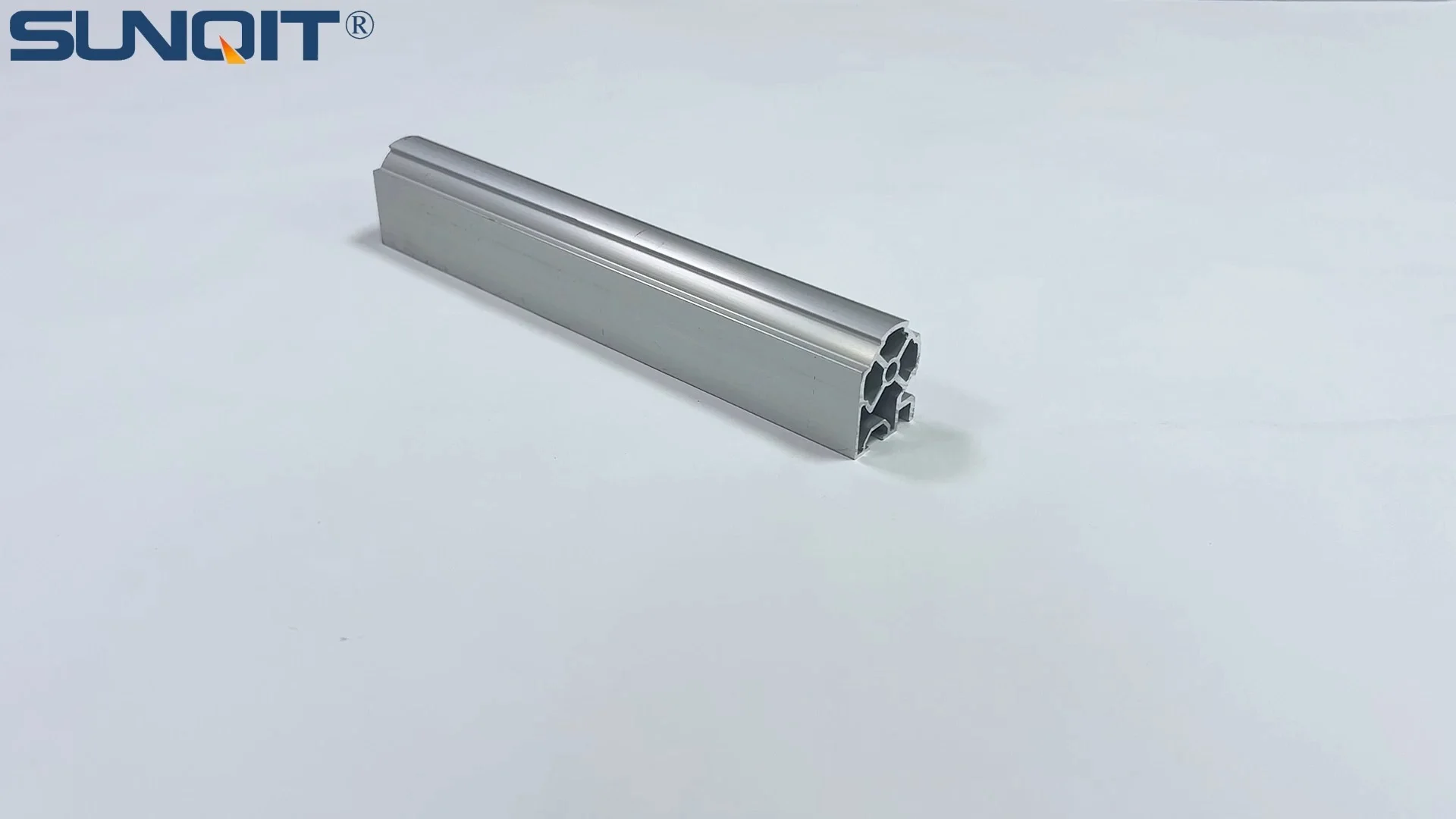
Aluminum Pipe with Tray Holder
Aluminum pipe with tray holder,the pipe one side connected by a joint, the other side with a slot which can hold a tray or a aluminum pannel.
Walk into any computer peripheral factory—whether they're churning out wireless mice, mechanical keyboards, or sleek monitors—and you'll notice a common rhythm: the hum of assembly lines, the clink of small components, and the steady movement of materials from station to station. But behind that rhythm lies a hidden challenge: keeping up with the ever-shifting demands of modern manufacturing. Product designs change overnight, production volumes spike unexpectedly, and let's not forget the critical need to protect sensitive electronics from static damage. In this fast-paced world, the tools and systems that hold everything together matter more than we often realize. That's where aluminum pipe with tray holder comes in—a humble yet transformative solution that's quietly revolutionizing how factories build, organize, and adapt.
The Demands of Computer Peripheral Production: Why "Good Enough" No Longer Cuts It
Computer peripherals might seem simple compared to, say, building a laptop or a smartphone, but their production is deceptively complex. Let's break it down. First, there's the variety: one day a factory might be assembling basic USB-C hubs, the next high-end gaming headsets with intricate wiring. Each product has its own set of parts—tiny screws, delicate PCBs, soft rubber grips—and each requires a specific setup to keep assembly efficient. Then there's the issue of static electricity. Even a small electrostatic discharge can fry a keyboard's circuit board or render a mouse sensor useless, making ESD (Electrostatic Discharge) protection non-negotiable. Add in the pressure to reduce waste, cut costs, and speed up production times, and it's clear: the old way of doing things—rigid steel frames, fixed workbenches, and one-size-fits-all storage—just isn't going to work anymore.
Production managers and facility engineers are constantly asking: How do we build systems that can adapt without breaking the bank? How do we keep components organized *and* accessible? And how do we ensure every workstation is safe for our products *and* our team? The answer, increasingly, is aluminum pipe with tray holder. It's not just a material choice—it's a mindset shift toward flexibility, safety, and long-term efficiency.
Understanding Aluminum Pipe with Tray Holder: What Makes It Unique?
Before we dive into why it works, let's clarify what we're talking about. Aluminum pipe with tray holder is exactly what it sounds like: lightweight aluminum pipes (often made from aluminum extrusion profiles) paired with customizable tray holders, all assembled using simple connectors and accessories. Unlike rigid steel frames or fixed plastic shelving, these systems are modular—think of them as industrial-grade building blocks. You can snap pipes together with joints, attach tray holders at any height, and reconfigure the entire setup in hours (not days) when needs change. The tray holders themselves come in various styles: some are open for easy access to tools, others have dividers for sorting tiny screws or capacitors, and many are designed with ESD-safe materials to protect sensitive components. It's a system built for adaptability, right down to the smallest detail.
But what really sets aluminum pipe with tray holder apart is its combination of strength and lightness. Aluminum extrusion profiles are engineered to be sturdy—they can support the weight of heavy monitors or stacks of circuit boards—yet they're light enough that a single worker can reposition a workstation without a forklift. Add in corrosion resistance (no rust, even in humid factory environments) and a smooth, clean finish that's easy to sanitize, and you've got a material that checks a lot of boxes for electronics manufacturing.

Key Benefits for Computer Peripheral Manufacturing: Why It's a Game-Changer
1. Flexibility: Adapt Fast, Stay Ahead
In computer peripheral production, change is the only constant. Last month, your team was assembling 10,000 basic wired keyboards; this month, it's a new wireless model with twice as many components. Suddenly, your assembly workstations feel cramped, and the storage racks for old parts are taking up valuable space. With traditional steel or fixed wooden systems, adapting would mean calling in contractors, cutting new frames, or even buying entirely new equipment—all costly and time-consuming. Aluminum pipe with tray holder flips that script.
Imagine this: You need to add three more tray holders to each workstation to accommodate the new wireless keyboard's extra capacitors and antenna modules. With aluminum pipes, you don't need tools beyond a hex key. Loosen the joints, slide the new tray holders into place, tighten them up, and you're done—all in 15 minutes per station. Later, when the next product rollout happens, you can disassemble those extra trays and repurpose them elsewhere. It's like having a production line that can "learn" and evolve with your needs. No more wasting money on one-off fixtures that become obsolete in six months.
2. ESD Safety: Protect What Matters Most
Here's a statistic that keeps electronics manufacturers up at night: even a static charge as small as 50 volts can damage a sensitive microchip—and you can't feel a static discharge until it's around 3,000 volts. For computer peripherals, which rely on tiny semiconductors and PCBs, static is a silent killer. That's why ESD workstations are non-negotiable in this industry. Aluminum pipe with tray holder plays a starring role here, and it's not by accident.
Aluminum is a natural conductor of electricity, which means it can safely dissipate static charges before they reach your components. Many aluminum pipe systems are even treated with special coatings to enhance this conductivity, ensuring they meet strict ESD standards (like ANSI/ESD S20.20). But it's the tray holders that really seal the deal. Most are made from ESD-safe plastic or rubber, which prevents static buildup when workers place or remove parts. Combine that with ESD mats on the workbench surface and grounded tools, and you've got a complete ESD protection ecosystem—all built around your aluminum pipe framework. Unlike plastic or wooden tray holders, which can *generate* static, these systems actively *prevent* it. For a factory producing $50 wireless mice or $200 mechanical keyboards, that translates to fewer defective units, lower scrap rates, and happier customers.
3. Durability Meets Lightweight Design: Less Effort, More Longevity
Let's talk about the day-to-day reality of factory work: equipment gets bumped, tools get dropped, and workstations take a beating. A flimsy system would buckle under the pressure, leading to wobbly shelves, broken tray holders, and constant repairs. On the flip side, a system that's *too* heavy—like traditional steel—becomes a liability when you need to reconfigure or move it. Aluminum pipe with tray holder strikes the perfect balance.
Aluminum extrusion profiles are surprisingly tough. They're resistant to dents, scratches, and corrosion (unlike steel, which rusts if not painted), so they'll look and perform like new for years—even in busy factories. And because they're lightweight, moving a workstation from one side of the factory to another doesn't require a team of workers or a pallet jack. A single operator can disassemble a small workstation, carry the pipes and tray holders to the new location, and reassemble it in under an hour. That's a huge win for efficiency, especially during floor rearrangements or production line expansions. No more downtime waiting for heavy machinery to move fixed structures—your team stays productive, and your deadlines stay on track.
4. Seamless Integration with Lean Systems: Cut Waste, Boost Productivity
Lean manufacturing isn't just a buzzword in computer peripheral production—it's a survival strategy. The goal is simple: eliminate waste (time, materials, space) and create value for the customer. Aluminum pipe with tray holder was practically designed for lean principles, starting with the 5S methodology (Sort, Set in Order, Shine, Standardize, Sustain).
Take "Set in Order," for example. With customizable tray holders, every tool and component has a designated spot—no more hunting for a misplaced screw driver or digging through a jumbled bin of USB ports. Workers spend less time searching and more time assembling, which adds up to hundreds of extra units produced per day. Then there's "Sustain": because the system is so easy to adjust, it's simpler to keep workstations organized long-term. If a new component is added to the bill of materials, just add a new tray holder—no need to overhaul the entire workstation. And when it comes to "Sort," aluminum pipe systems make it easy to eliminate clutter: old or unused tray holders can be quickly removed and repurposed, keeping floors clear and workflows smooth. It's lean manufacturing in action, one tray holder at a time.
5. Cost-Effectiveness: Save Now, Save Later
Let's address the elephant in the room: upfront costs. At first glance, aluminum pipe with tray holder might seem pricier than basic steel pipes or plastic shelving. But manufacturing isn't about upfront costs—it's about total cost of ownership (TCO). And when you factor in longevity, adaptability, and reduced labor, aluminum quickly becomes the more affordable choice.
Consider this: A traditional steel workstation might cost $500 upfront, but if you need to reconfigure it in six months, you'll spend another $300 on labor and materials. In two years, you might have to replace it entirely because it's rusted or bent. An aluminum system, by contrast, costs $700 upfront but can be reconfigured a dozen times with no extra materials (just labor from your existing team). It'll last 10+ years with minimal maintenance. When you run the numbers, the TCO of aluminum is often 30-40% lower over a five-year period. Plus, because aluminum is recyclable, you'll even get some value back when it's finally time to retire a system—unlike plastic, which often ends up in a landfill.

Real-World Applications: How Factories Are Using It Today
Theory is one thing, but seeing aluminum pipe with tray holder in action is where its value really hits home. Let's look at a few examples from computer peripheral factories that have made the switch.
Case Study 1: Wireless Mouse Assembly Line
A mid-sized factory in Vietnam producing wireless mice was struggling with two issues: static damage to the mice's internal sensors and inefficient material flow. Their old workstations were built with wooden shelves and plastic bins, which generated static and made it hard to sort the 20+ tiny components (buttons, springs, PCBs) needed for each mouse. They switched to aluminum pipe with ESD-safe tray holders, and the results were striking. Static-related defects dropped by 62% in the first month, and workers reported spending 20 minutes less per shift searching for parts. The team also reconfigured three workstations in a single afternoon to accommodate a new mouse model with a larger battery compartment—something that would have taken two days with their old setup.
Case Study 2: Mechanical Keyboard Production
A U.S.-based manufacturer of high-end mechanical keyboards needed to scale production quickly after a viral product launch. Their fixed steel assembly lines couldn't keep up with demand, and they were running out of space to store the hundreds of keycap designs and switch types they offered. They invested in aluminum pipe with adjustable tray holders and built modular workbenches that could expand as needed. Each workstation now has custom tray holders for different switch types (blue, red, brown) and keycap sizes, and the entire line can be extended by adding new aluminum sections in hours. Within three months, they increased output by 40% without expanding their factory footprint.
Case Study 3: Monitor Testing Stations
A monitor factory in China was facing ergonomic issues: workers had to strain to reach test equipment and cables, leading to fatigue and slower throughput. Their solution? Aluminum pipe with height-adjustable tray holders. They built testing workstations where the tray holders (holding power supplies, HDMI cables, and calibration tools) can be raised or lowered to match each worker's height. The result? A 35% reduction in reported muscle strain and a 15% faster testing process, as workers no longer waste time bending or stretching.
Comparing Alternatives: Why Aluminum Stands Out
To truly appreciate aluminum pipe with tray holder, it helps to see how it stacks up against the alternatives. Let's break down the pros and cons of common factory systems:
| Feature | Aluminum Pipe with Tray Holder | Traditional Steel Pipes | Plastic Shelving | Fixed Metal Frames |
|---|---|---|---|---|
| Weight | Light (easy to reposition) | Heavy (requires machinery to move) | Light but flimsy | Extremely heavy (permanent once installed) |
| ESD Safety | Excellent (conductive aluminum + ESD tray options) | Good (but prone to rust, which reduces conductivity) | Poor (generates static; hard to ground) | Good (but no ESD-specific design) |
| Reconfigurability | High (tools-free adjustments; reusable parts) | Low (requires cutting/welding; parts not reusable) | Medium (shelves adjust, but frames are fixed) | None (permanent structure) |
| Durability | High (resists corrosion, dents, and wear) | High (but rusts in humid environments) | Low (bends, cracks, and fades over time) | High (but inflexible) |
| Total Cost (5-Year TCO) | Low (high upfront, but minimal maintenance/replacement) | Medium (low upfront, high labor for changes) | High (low upfront, frequent replacement) | Very High (high upfront, no adaptability) |
As the table shows, aluminum pipe with tray holder isn't just better in one area—it's a balanced solution that excels across the board, especially for dynamic environments like computer peripheral production.
Choosing the Right System: What to Look For
Ready to explore aluminum pipe with tray holder for your factory? Here are the key factors to consider to ensure you get the right system for your needs:
1. Load Capacity: Know Your Weight Limits
Not all aluminum pipes are created equal. Thicker aluminum extrusion profiles (like 2.0mm walls) can support heavier loads—think stacks of monitors or large toolboxes—while thinner ones (1.2mm) are better for lightweight items like small components. Check the manufacturer's specs for vertical and horizontal load limits, and always factor in a safety margin (aim for 25% more capacity than you think you'll need).
2. Tray Holder Design: Function Over Form
Tray holders come in endless shapes, but focus on function first. Do you need dividers to sort tiny screws? Open or closed trays? ESD-safe materials? Adjustable heights? For computer peripherals, look for trays with smooth, rounded edges (to avoid damaging delicate PCBs) and non-slip surfaces (to keep parts from sliding during transport). Many suppliers also offer custom tray designs if your needs are unique.
3. Accessories: The Little Things That Matter
Don't overlook the accessories—they're what make the system truly customizable. Caster wheels turn a static workstation into a mobile one (great for line balancing). Aluminum profile connectors let you build angled or curved structures. Cable management clips keep messy wires off the floor. Even small add-ons like label holders can make a big difference in organization. Work with a supplier who offers a wide range of accessories to avoid getting locked into a one-size-fits-all setup.
4. Supplier Support: Partner, Not Just a Vendor
Finally, choose a supplier who understands your industry. Computer peripheral production has unique needs (ESD safety, small-part organization, rapid changeovers), so you want a partner who can offer guidance—like helping you design a workstation layout or troubleshoot static issues. Avoid generic "one-stop" hardware suppliers; instead, look for specialists in aluminum extrusion profiles and lean manufacturing systems. They'll save you time, money, and headaches in the long run.
The Future of Production: Why Aluminum Pipe with Tray Holder Is Here to Stay
As computer peripherals become more advanced—think foldable monitors, haptic-feedback mice, or AI-powered webcams—factories will need systems that can keep pace with innovation. Aluminum pipe with tray holder isn't just a trend; it's a foundation for the future of manufacturing. Its ability to adapt, protect, and perform in dynamic environments makes it an essential tool for any factory looking to stay competitive.
So, the next time you pick up a wireless keyboard or click a mouse, take a moment to appreciate the unseen systems that brought it to life. Chances are, somewhere in that production line, aluminum pipe with tray holder is hard at work—quietly, reliably, and flexibly—keeping the rhythm of innovation going strong.