- Company Articles
- Products and Technology
- Product knowledge
- Why Choose Aluminum Workbench A for Computer Peripheral Production Lines?

Why Choose Aluminum Workbench A for Computer Peripheral Production Lines?
Related Product
Aluminum Workbench A
Aluminum tube workbench is more flexible and durable, compared with traditional PE/ABS coated steel tube. It is easy to assemble, anti corrosion, rust protection, and recycle use after disassemble.
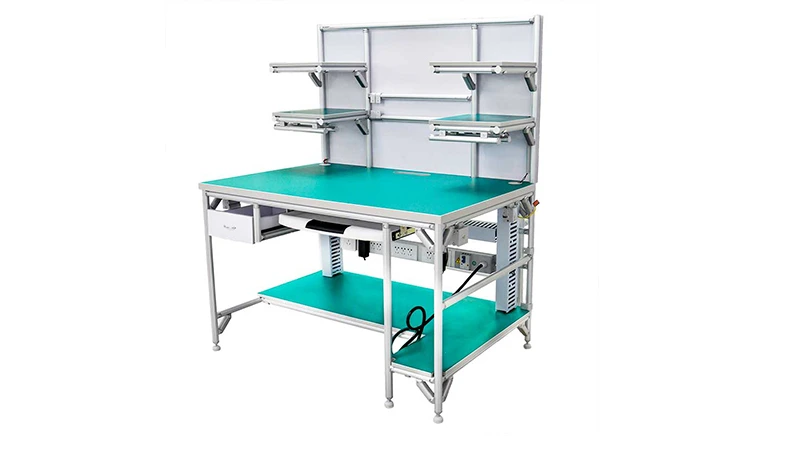
In the fast-paced world of computer peripheral manufacturing, every detail counts. From the precision of circuit boards to the safety of sensitive components, production lines demand tools that don't just keep up—they elevate efficiency, reliability, and adaptability. Enter Aluminum Workbench A: more than just a surface to work on, it's a cornerstone of lean system integration, a partner in ESD protection, and a bridge between chaos and streamlined workflow. Let's dive into why this workbench is becoming the go-to choice for manufacturers who refuse to compromise on quality or productivity.
The Challenges of Modern Computer Peripheral Production
Ask any production manager in the computer peripheral industry, and they'll likely list the same pain points: workbenches that feel stuck in the past, static electricity wreaking havoc on delicate components, and the constant need to reconfigure lines for new product launches. Traditional workbenches—often made of wood, steel, or generic plastic—fall short in key areas:
- Rigidity: Fixed heights and non-adjustable shelves mean workers strain to reach tools or materials, slowing down tasks and increasing ergonomic injuries.
- Static Risks: Without proper ESD protection, even a small electrostatic discharge can damage microchips in mice, keyboards, or USB drives—costing time, money, and customer trust.
- Poor Integration: Mismatched systems between workbenches and flow racks create bottlenecks, as materials get stuck in transit or fail to align with assembly steps.
- Limited Lifespan: Wood warps, steel rusts, and plastic cracks, leading to frequent replacements that disrupt production and inflate long-term costs.
These challenges aren't just inconveniences—they directly impact your bottom line. A single static-related defect can derail an entire batch, while a clunky workbench setup can turn a 5-minute task into a 15-minute ordeal. For manufacturers aiming to stay competitive, the solution needs to address all these issues at once. That's where Aluminum Workbench A comes in.
Aluminum Workbench A: Designed for the Way You Work
At first glance, Aluminum Workbench A might look like any other workbench—but a closer inspection reveals a design philosophy centered on adaptability . Built from high-grade aluminum profile, this workbench isn't just durable; it's a modular system that grows, changes, and evolves with your production line. Let's break down its key advantages:
1. Aluminum Profile: The Backbone of Durability and Flexibility
Aluminum profile isn't just a material choice—it's a game-changer. Unlike heavy steel, aluminum strikes the perfect balance between strength and weight, making the workbench easy to reposition (even without casters) while supporting up to 300kg of tools, components, and equipment. Its natural resistance to corrosion and rust means it holds up in humid factory environments, where spills or moisture might otherwise damage traditional workbenches.
But the real magic of aluminum profile lies in its modularity. Aluminum Workbench A uses T-slot aluminum extrusion profile, which allows for quick attachment of accessories—think tool hooks, monitor arms, or extra shelves—without drilling or welding. Need to add a bin for small screws? Snap on a bracket. Want to mount a keyboard tray for technicians? Slide it into the T-slot and secure with a simple fastener. This flexibility means your workbench isn't just a static piece of furniture; it's a customizable hub that adapts to new tasks, tools, or product lines in minutes, not days.
2. ESD Workstation Capabilities: Protecting What Matters Most
Computer peripherals are delicate. A single electrostatic discharge (ESD) can fry a keyboard's membrane or render a mouse sensor useless, leading to costly rework or scrap. Aluminum Workbench A addresses this head-on with built-in ESD workstation features that go beyond basic grounding:
- ESD-Safe Surface: The worktop is coated with a specialized material that dissipates static charges, preventing buildup that could jump to components.
- Integrated Grounding Points: Pre-installed grounding ports connect to your facility's ESD system, ensuring the entire workbench (and everything on it) stays at ground potential.
- Static-Dissipative Accessories: Even optional add-ons, like ESD-safe bins or wrist strap holders, are designed to work with the system, creating a fully protected workspace.
For manufacturers, this isn't just about avoiding defects—it's about peace of mind. When technicians assemble USB-C hubs or wireless headsets on Aluminum Workbench A, they can focus on precision, not worrying if a stray spark will ruin hours of work.
3. Lean System Integration: Streamlining Workflow from Start to Finish
Lean manufacturing isn't just a buzzword; it's a mindset focused on eliminating waste, optimizing flow, and empowering workers. Aluminum Workbench A is built with this in mind, acting as a central node in your lean system rather than a standalone piece of equipment.
Consider material flow: Aluminum Workbench A pairs seamlessly with flow racks, the unsung heroes of lean production. By aligning the workbench's height with your flow rack's roller tracks, materials glide directly from storage to assembly, reducing the need for workers to bend, reach, or carry heavy bins. This "just-in-time" access cuts down on motion waste—one of the seven wastes of lean—and keeps tasks moving at a steady pace.
But it's not just about movement; it's about organization. Aluminum Workbench A's modular design lets you implement 5S principles effortlessly: Sort (designate zones for tools vs. components), Set in Order (use custom shelves to keep frequently used items at eye level), Shine (aluminum's smooth surface wipes clean in seconds), Standardize (replicate the same setup across all workbenches), and Sustain (easily adjust as processes improve). The result? A workspace that feels intuitive, reduces errors, and makes training new technicians a breeze.

How Aluminum Workbench A Stacks Up: A Comparison
Still on the fence? Let's put Aluminum Workbench A side-by-side with traditional options to see how it measures up. The table below compares key features that matter most in computer peripheral production:
| Feature | Traditional Wood Workbench | Standard Steel Workbench | Aluminum Workbench A |
|---|---|---|---|
| Material | Particleboard or solid wood | Carbon steel | High-grade aluminum profile |
| ESD Protection | None (risk of static buildup) | Optional (adds cost and weight) | Built-in (surface coating + grounding ports) |
| Adjustability | Fixed height/shelves | Limited (bolt-on modifications) | Full modularity (T-slot accessories, tool-free adjustments) |
| Integration with Flow Racks | Poor (mismatched heights, no roller track compatibility) | Basic (requires custom brackets) | Seamless (aligns with roller track heights, connects via aluminum guide rails) |
| Durability | Low (warps, scratches, water damage) | High (but prone to rust without coating) | Excellent (corrosion-resistant, scratch-proof aluminum profile) |
| Long-Term Cost | Low upfront, high replacement cost (every 2-3 years) | High upfront, moderate replacement cost (every 5-7 years) | Moderate upfront, low replacement cost (10+ year lifespan with upgrades) |
The difference is clear: Aluminum Workbench A isn't just better than the alternatives—it's built for a different era of manufacturing. It's not about cutting corners; it's about investing in a system that grows with your business.

Real-World Impact: How Manufacturers Are Winning with Aluminum Workbench A
Numbers and specs tell part of the story, but real-world results speak louder. Let's look at two case studies of computer peripheral manufacturers that switched to Aluminum Workbench A—and the impact it had on their operations.
Case Study 1: A Keyboard Manufacturer Cuts Defects by 40%
A mid-sized manufacturer of mechanical keyboards was struggling with static-related defects. Their old steel workbenches lacked ESD protection, and workers reported frequent "zaps" when handling PCBs. Defect rates hovered around 8%, leading to rework costs of $15,000 per month.
After switching to Aluminum Workbench A, they integrated the ESD workstation features—grounding the benches to their facility's ESD system and adding dissipative mats. Within three months, defect rates dropped to 4.8%, saving over $7,000 monthly. But the benefits didn't stop there: the modular aluminum profile let them add tool holders and cable management trays, reducing time spent searching for tools by 20%. As the production manager put it: "We didn't just fix static issues—we turned our workbenches into productivity hubs."
Case Study 2: A USB Drive Producer Slashes Changeover Time by 50%
A company producing custom USB drives needed to reconfigure their lines weekly for different drive sizes (2.0, 3.0, USB-C). Their old wooden workbenches required disassembly and reassembly, taking 4 hours per line change—time that could have been spent producing.
Aluminum Workbench A changed the game. Using T-slot aluminum profile accessories, they could adjust shelf heights, add or remove bins, and reposition monitors in under 2 hours. The workbenches also aligned perfectly with their existing flow racks, so materials flowed directly from storage to assembly without manual lifting. "Changeovers used to feel like a headache," said the operations lead. "Now, we can switch from USB-A to USB-C in half the time, and workers actually enjoy setting up the line because it's so intuitive."
Beyond the Bench: Compatibility with Your Existing Ecosystem
One of the biggest concerns when adopting new equipment is whether it will play nice with your current setup. Aluminum Workbench A is designed to integrate seamlessly with the tools and systems you already use—no overhauls required.
Flow Racks: A Perfect Match for Material Flow
Flow racks are the backbone of lean material handling, using gravity to move components from receiving to assembly. Aluminum Workbench A's height-adjustable legs and compatibility with roller track guide rails (yellow or grey plastic, aluminum guide rail A/B) mean it aligns perfectly with your flow rack's roller tracks. This creates a "continuous flow" where materials glide directly onto the workbench, eliminating the need for workers to carry bins or bend to retrieve parts. For example, a 3-row, 3-floor material rack (like Material Rack B) can feed components to Aluminum Workbench A without a hitch, ensuring every part is exactly where it needs to be, exactly when it's needed.
Aluminum Profile Accessories: Endless Customization
Your workbench isn't alone—Aluminum Workbench A works with a full suite of aluminum profile accessories to tailor it to your needs. Need to add a light for precision work? Mount an LED strip using aluminum profile fixings. Want to organize cables? Use T-slot rubber seal covers to hide wires and prevent tangles. Even specialized parts, like internal rotatory aluminum joints or parallel aluminum joint A/B, let you create custom angles or double-deck setups for complex assembly tasks.
Casters and Mobility: When You Need to Move
While Aluminum Workbench A is available as a "single deck-without caster" model (Workbench E), it's easy to add mobility with compatible casters and accessories. Swivel caster wheels with brakes lock the bench in place during assembly, then release for quick repositioning during line reconfigurations. Heavy-duty casters handle the weight of the aluminum profile and equipment, ensuring smooth movement even on factory floors with minor unevenness.
Why Aluminum Workbench A Isn't Just a Purchase—It's an Investment
Let's talk about cost. At first glance, Aluminum Workbench A may have a higher upfront price than a basic wooden workbench. But manufacturing isn't about cutting initial costs—it's about maximizing long-term value. Here's why this workbench pays for itself:
- Longevity: Aluminum profile doesn't warp, rust, or degrade like wood or uncoated steel. With minimal maintenance (a quick wipe-down with a damp cloth), it will last 10+ years—outliving traditional workbenches by 3-5x.
- Adaptability: Instead of buying a new workbench when you launch a new product, you can reconfigure Aluminum Workbench A with new accessories. This saves thousands in replacement costs over time.
- Productivity Gains: Faster changeovers, reduced tool-search time, and fewer defects add up. Even a 5% increase in productivity can translate to tens of thousands in annual savings for a mid-sized production line.
- Ergonomic Benefits: Adjustable heights and customizable setups reduce worker strain, lowering absenteeism and workers' compensation claims. Happy, healthy workers are more productive—and retention improves, too.
When you factor in all these savings, Aluminum Workbench A isn't just a cost—it's an investment with a clear ROI. For manufacturers focused on lean system principles, this is a no-brainer: it aligns with the "reduce waste" mindset by eliminating the need for frequent replacements and inefficiencies.
Final Thoughts: Why Aluminum Workbench A Stands Out
In the world of computer peripheral production, where precision, speed, and adaptability are non-negotiable, Aluminum Workbench A rises above the competition. It's not just a workbench—it's a solution that addresses the unique challenges of your industry:
- Built from aluminum profile for unmatched durability and flexibility.
- Integrates seamlessly with lean systems and flow racks to streamline workflow.
- Offers ESD workstation protection to safeguard sensitive components.
- Customizes with accessories to grow with your production needs.
- Delivers long-term savings through longevity and productivity gains.
Whether you're assembling keyboards, mice, USB drives, or other peripherals, this workbench doesn't just keep up with your production line—it helps you lead the pack. It's time to stop settling for workbenches that hold you back and start investing in tools that propel you forward.
Aluminum Workbench A isn't just a piece of equipment. It's a commitment to better manufacturing—one that pays off in happier workers, fewer defects, and a bottom line that reflects the efficiency you've worked so hard to build. Ready to transform your production line? Your next step starts here.