- Company Articles
- Products and Technology
- Product knowledge
- Why Choose Chrome-Plated Five Way Straight Lean Pipe Joints for Material Racks?

Why Choose Chrome-Plated Five Way Straight Lean Pipe Joints for Material Racks?
Related Product
Five Way Straight Lean Pipe Joint
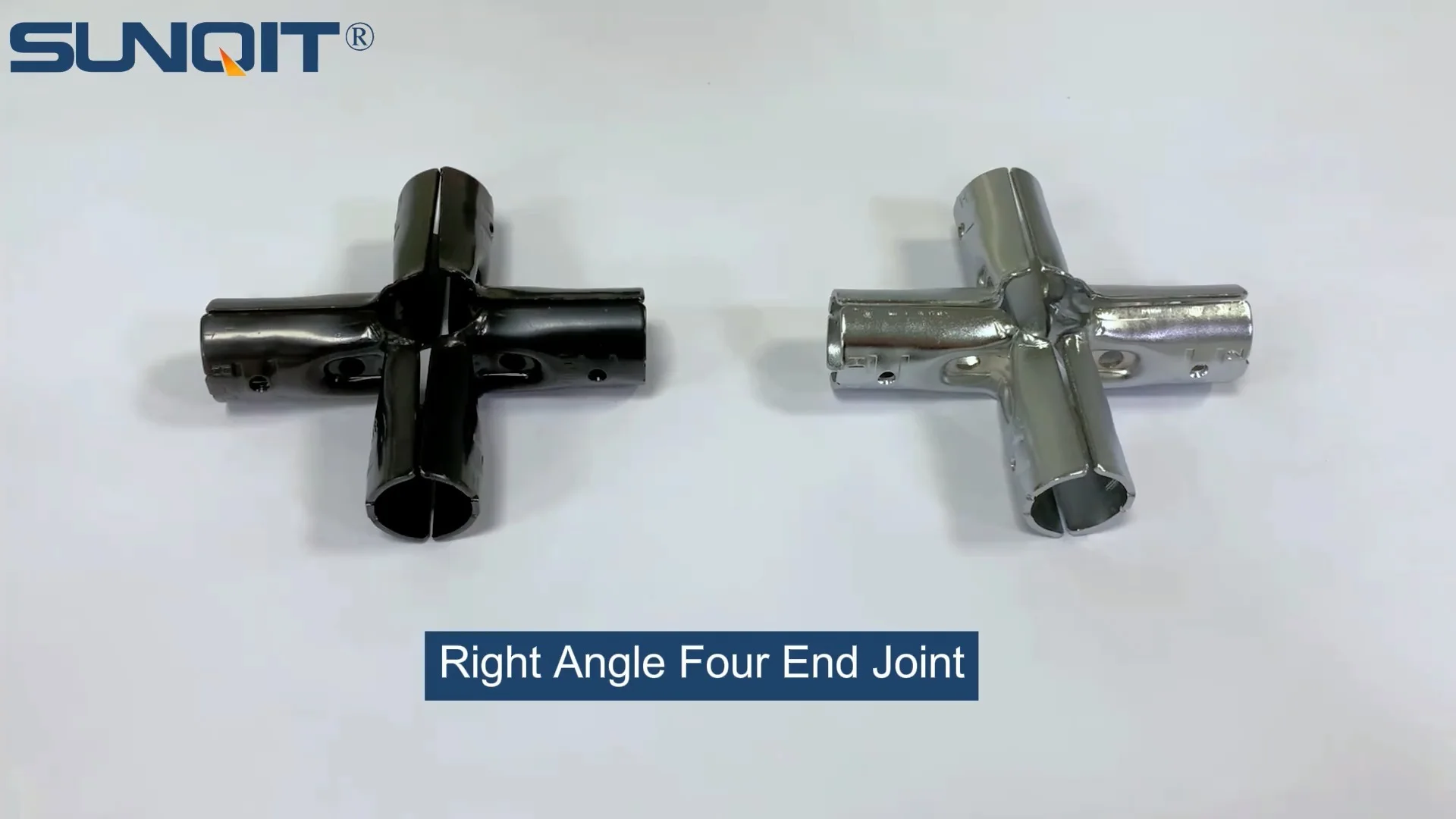
Five way straight lean pipe joint, for 5 pcs 28mm lean pipe connect in straight angle,which used widely in workbench, flow rack, hand trolley frame connection.
In the fast-paced world of manufacturing and warehousing, where every second counts and efficiency is the name of the game, material racks stand as the unsung heroes of daily operations. They hold the components that become finished products, keep inventory organized, and ensure that workers can grab what they need without wasted motion. But not all material racks are created equal. Traditional rigid racks—welded steel structures bolted to the floor—once ruled the factory floor, but they come with a fatal flaw: they can't keep up with change. A new product line requires taller shelves? A seasonal spike demands more storage? A workflow adjustment needs racks moved to a new location? With traditional racks, you're stuck. Welding, cutting, and rebuilding become inevitable, eating up time and money.
Enter the chrome-plated five way straight lean pipe joint—a small but mighty component that's quietly revolutionizing how material racks are built, used, and adapted. These unassuming connectors are the backbone of flexible, lean material handling systems, designed to turn ordinary lean pipes into dynamic, customizable structures that grow and change with your business. But what makes them so special? Why should manufacturers, warehouse managers, and operations teams choose these joints over the sea of alternatives? Let's dive in.
The Backbone of Modern Material Handling: Why Material Racks Matter
Before we get into the weeds of joints and pipes, let's take a step back. Material racks aren't just metal shelves—they're the circulatory system of your operation. A well-designed material rack reduces pick time by keeping items at eye level, minimizes errors by separating components, and frees up floor space by utilizing vertical storage. A poorly designed one? It becomes a bottleneck. Workers waste minutes hunting for parts. Inventory gets damaged from overcrowding. And when your needs change, that "permanent" rack becomes a permanent problem.
Lean manufacturing principles have only amplified the need for adaptable material handling. Lean is all about eliminating waste—whether it's time, space, or resources—and rigid racks are a breeding ground for waste. They force you to work around their limitations instead of designing workflows around efficiency. This is where modular systems, built with lean pipes and versatile joints, shine. And at the heart of these systems? The joints that hold it all together.
Meet the Star: What Is a Chrome-Plated Five Way Straight Lean Pipe Joint?
At first glance, a chrome-plated five way straight lean pipe joint looks like a simple metal connector. But its design is deceptively clever. Picture a central hub with five equally spaced ports—four radiating outward at 90-degree angles, and one running straight through the center—all sized to fit standard lean pipes. The exterior is coated in a bright, reflective chrome finish, while the interior features a precision-machined grip that locks onto lean pipes with surprising strength.
These joints are engineered for one primary purpose: to connect lean pipes (hollow metal or aluminum tubes) at multiple angles, creating sturdy, yet adjustable structures. Unlike traditional welded joints, which fix pipes in place permanently, these chrome-plated connectors allow for quick assembly, disassembly, and reconfiguration. Need to add a shelf? Slide a pipe into an open port. Want to shorten a rack? Loosen the joint, remove the pipe, and retighten. It's that simple.
But why "five way"? Most basic lean pipe joints offer two or three connection points, limiting design flexibility. A five-way joint, however, opens up a world of possibilities. With five ports, you can build multi-tiered material racks, add side extensions for tools, or integrate roller tracks for gravity-fed flow systems—all with a single connector. It's like upgrading from a basic toolbox to a Swiss Army knife for material handling.

Durability That Defies the Factory Floor: The Chrome-Plated Advantage
Factory floors are tough environments. Moisture from cleaning, chemicals from coolants, constant foot and equipment traffic, and the daily grind of heavy loads being placed and removed—all of these take a toll on material handling equipment. A flimsy joint will bend, rust, or break under pressure, turning your "flexible" rack into a safety hazard. That's where the chrome plating comes in.
Corrosion Resistance: Fighting the Elements
Chrome plating isn't just for shine (though it does look sharp). The electroplating process deposits a thin layer of chromium onto the joint's steel core, creating a barrier that repels moisture, oils, and corrosive substances. In warehouses where floors are hosed down nightly or manufacturing plants with high humidity, this is a game-changer. Traditional unplated steel joints might start rusting within months, weakening their grip and leaving unsightly stains on products. Chrome-plated joints? They stay bright and strong, even in damp conditions.
Wear and Tear: Built for the Long Haul
Every time you adjust a rack—adding a pipe, removing a shelf, or repositioning a joint—you're putting stress on the connection points. Over time, this can wear down the interior grip of the joint, leading to loose pipes and wobbly racks. Chrome plating adds hardness to the joint's surface, resisting scratches and deformation from repeated use. Tests show that chrome-plated joints can withstand hundreds of assembly-disassembly cycles without losing their locking strength, whereas plastic or unplated steel joints may start slipping after just a few dozen adjustments.
Impact Resistance: Handling the Unexpected
Let's be real: Accidents happen. A forklift bumps a rack. A heavy box slips and hits a joint. In these moments, a weak joint will crack or bend. Chrome-plated five way joints, made from high-grade steel with a reinforced core, are built to absorb impacts. The chrome layer, while thin, adds a degree of toughness that prevents dents and cracks, ensuring the joint maintains its structural integrity even after a mishap. For high-traffic areas where collisions are more likely, this durability isn't just a nice-to-have—it's a necessity.

Versatility Redefined: Five Ways to Build (and Rebuild) Better Racks
The true power of the chrome-plated five way straight lean pipe joint lies in its versatility. Traditional racks are one-trick ponies—built for a single purpose and useless when that purpose changes. These joints, however, turn material racks into chameleons, adapting to whatever your operation throws at them. Let's explore a few scenarios where this versatility shines.
Scenario 1: Multi-Tier Material Racks for Small Parts
Imagine a electronics manufacturer that assembles circuit boards. They need to store tiny components—resistors, capacitors, diodes—in organized bins, with each bin easily accessible to assembly line workers. A standard two-tier rack might work, but space is limited, and they need more storage without expanding their footprint. With five-way joints, they can build a vertical rack with three, four, or even five tiers, using the joints to connect horizontal support pipes at each level. Each tier can hold bins of different sizes, and the entire structure can be adjusted as component sizes change—no welding, no new racks, just a few turns of the joint.
Scenario 2: Mobile Flow Racks for Just-in-Time Production
In lean manufacturing, "just-in-time" (JIT) delivery means bringing materials directly to the production line exactly when they're needed, reducing inventory waste. To do this, many facilities use flow racks—tilted racks with roller tracks that let bins slide forward as the front one is removed. Building a mobile flow rack requires combining vertical supports, horizontal roller tracks, and casters for mobility. Five-way joints make this a breeze: use two joints to connect the vertical pipes, add horizontal pipes for the roller track supports, and attach caster mounting plates to the bottom. When production lines shift, just unlock the casters and roll the rack to its new location. Try doing that with a welded steel flow rack.
Scenario 3: Adjustable Workbench-Material Rack Hybrids
Sometimes, workers need more than just storage—they need a workspace right next to their materials. A five-way joint can turn a basic material rack into a hybrid workbench-rack combo: use the bottom ports for vertical supports, the middle ports for a workbench top (made from aluminum honeycomb panel or plywood), and the top ports for overhead material storage. When the workbench height needs to change (e.g., for taller workers or standing desks), simply adjust the vertical pipes using the joints. It's like having a custom workstation that evolves with your team.

Seamless Compatibility: Working with Lean Pipes and Accessories
A joint is only as good as the pipes and accessories it connects. The chrome-plated five way straight lean pipe joint is designed to play well with the entire ecosystem of lean manufacturing components, making it easy to integrate into existing systems or build new ones from scratch.
Lean Pipes: The Perfect Match
These joints are sized to fit standard lean pipe diameters, including 1.2mm, 1.5mm, and 2.0mm PE-coated lean pipes (the most common type, with a plastic coating for grip and corrosion resistance), as well as stainless steel and aluminum lean pipes. The interior of each port features a ribbed or serrated design that bites into the pipe when tightened, creating a secure hold that won't slip under load. Whether you're using budget-friendly PE-coated steel pipes or lightweight aluminum lean pipes for mobile applications, the joint locks on tight.
Accessories: From Casters to Roller Tracks
The best material handling systems aren't just racks—they're integrated solutions with accessories that boost functionality. Chrome-plated five way joints play nice with all the essentials:
- Casters and Wheels: Attach caster mounting plates to the bottom joints to turn static racks into mobile trolleys. Perfect for moving materials between workstations or storing overflow inventory in tight spaces.
- Roller Tracks: Connect roller track guide rails (yellow or grey plastic, or aluminum) to horizontal pipes using the joints, creating gravity-fed flow systems for JIT production.
- Workbench Tops: Mount aluminum honeycomb panels or wooden tops to horizontal pipes using pipe clamps, turning racks into workstations.
- Swivel Roller Balls: Add 1-inch or 0.5-inch swivel roller balls to the top of a rack using the joints, creating a smooth surface for sliding heavy boxes or pallets.
This compatibility means you're not locked into a single brand or system. Mix and match pipes, accessories, and joints from different suppliers—though we always recommend sticking with a reputable lean pipe supplier to ensure quality.
Ease of Assembly: Build Like a Pro (Even If You're Not One)
Welding a traditional rack requires skilled labor, heavy equipment, and a lot of time. Disassembling it? Even harder. Chrome-plated five way straight lean pipe joints, on the other hand, are designed for anyone to use—no welding certification required.
Most joints feature a simple tightening mechanism: a hex screw on the side of each port that, when turned, squeezes the interior grip against the pipe. With a basic Allen wrench (or even just your hands, for some models), you can secure pipes in seconds. Need to reconfigure? Loosen the screws, adjust the pipes, and retighten. It's tool-light assembly at its finest.
This ease of use translates to faster setup times. A small team can build a 10-foot material rack in under an hour, compared to half a day for a welded equivalent. And when your needs change—say, you need to add a shelf or shorten a side—reconfiguration takes minutes, not days. For manufacturers with tight deadlines or frequent product changes, this speed is a game-changer.
Cost-Effective: Spend Smart, Save More
At first glance, chrome-plated five way joints might seem pricier than basic plastic or unplated steel joints. And they are—slightly. But material handling equipment is an investment, not an expense, and these joints deliver ROI in ways cheaper alternatives can't match.
Long-Term Durability = Fewer Replacements
Cheap plastic joints crack under heavy loads. Unplated steel joints rust and seize up. When they fail, you have to replace not just the joint, but possibly the entire rack section. Chrome-plated steel joints, with their corrosion resistance and impact strength, last years longer. Over time, the savings from fewer replacements add up.
Adaptability = No New Racks
The biggest cost savings come from adaptability. Instead of buying a new rack every time your needs change, you reconfigure the one you have. A small manufacturer we worked with recently needed to expand storage for a new product line. Instead of purchasing $5,000 in new welded racks, they reconfigured their existing chrome-plated joint racks for $300 in additional pipes and joints. That's a 94% savings.
Reduced Downtime = More Production
Every minute spent rebuilding a traditional rack is a minute your team isn't producing. With quick-assembly joints, reconfiguration happens during breaks or between shifts, with zero disruption to production. For a facility running two shifts, that's potentially hundreds of extra production hours per year.
How Do They Stack Up? A Comparison of Joint Types
Still not convinced these joints are right for you? Let's put them head-to-head with common alternatives in a quick comparison:
| Feature | Chrome-Plated Five Way Straight Lean Pipe Joint | Standard 2-Way Steel Joint | Plastic Lean Pipe Joint | Welded Steel Joint |
|---|---|---|---|---|
| Connection Points | 5 (highly flexible) | 2 (limited) | 2-3 (moderate) | Fixed (no flexibility) |
| Durability | High (chrome-plated steel, corrosion/wear resistant) | Medium (unplated steel, prone to rust) | Low (plastic, cracks under load) | High (but permanent) |
| Reconfigurability | Excellent (tool-light, quick adjustments) | Poor (limited angles, hard to adjust) | Fair (adjustable but weakens over time) | None (permanent welds) |
| Cost (Long-Term) | Low (high initial, low replacement/adaptation costs) | Medium (low initial, high replacement costs) | High (low initial, frequent replacements) | Very High (high initial, must replace entire rack) |
| Compatibility | Wide (works with steel, aluminum, PE-coated pipes; accessories) | Limited (specific pipe sizes only) | Limited (small pipe sizes, few accessories) | Custom (only works with welded pipes) |
Choosing the Right Supplier: Quality Matters
Not all chrome-plated five way straight lean pipe joints are created equal. To get the durability and performance we've discussed, you need to choose a reputable lean pipe supplier. Here's what to look for:
- Material Quality: The joint should be made from high-grade steel (e.g., Q235) with a thick chrome plating (at least 8-10 microns) to ensure corrosion resistance.
- Precision Machining: Ports should be precisely sized to fit standard lean pipes, with no gaps or looseness when tightened.
- Testing Standards: Ask if the supplier tests joints for load capacity, corrosion resistance, and impact strength. A good supplier will have data to back up their claims.
- Accessory Compatibility: Ensure the supplier offers matching accessories (casters, roller tracks, workbench tops) for a seamless system.
The Bottom Line: Invest in Adaptability
In a world where manufacturing and warehousing never stand still, rigid material racks are a liability. Chrome-plated five way straight lean pipe joints offer a better way: durable, versatile, compatible, and cost-effective structures that adapt to your needs, not the other way around. They turn lean pipes into powerful tools for efficiency, helping you reduce waste, save time, and stay competitive.
So, why choose these joints for your material racks? Because they're not just connectors—they're investments in the future of your operation. A future where change is met with a quick adjustment, not a complete overhaul. A future where your material handling system grows with you, instead of holding you back. And in manufacturing, that's the difference between falling behind and leading the pack.