- Company Articles
- Products and Technology
- Product knowledge
- Why Choose Chrome-Plated Parallel Lean Pipe Joints for Flexible Workstations?

Why Choose Chrome-Plated Parallel Lean Pipe Joints for Flexible Workstations?
Related Product
Parallel Lean Pipe Joint
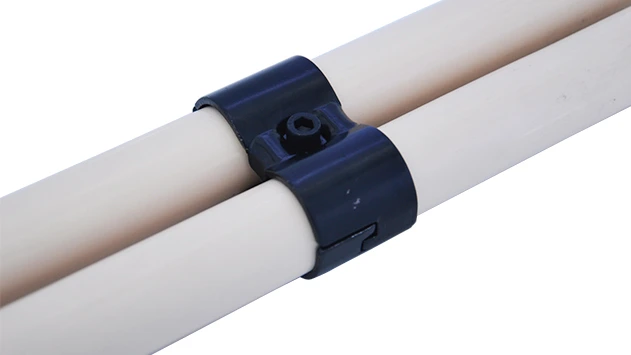
Parallel lean pipe joint used for 2 pcs 28MM lean pipe connection in parallel direction to enhance frame structure, usually for heavy payload requirement for workbench. flow rack, hand trolley.
Walk into any modern manufacturing facility, warehouse, or assembly line, and you'll notice a common thread: workstations that adapt. In an era where production needs shift overnight—new product lines, fluctuating demand, or sudden process tweaks—rigid, one-size-fits-all setups just don't cut it. That's where flexible workstations come in, and at the heart of their adaptability lies a small but mighty component: the chrome-plated parallel lean pipe joint . These unassuming connectors are the unsung heroes of lean manufacturing, quietly enabling teams to build, reconfigure, and optimize workspaces without the hassle of welding, drilling, or specialized tools. But why should you choose them over other joint types? Let's dive into the story of how these joints transform workstations from static obstacles into dynamic assets.
The Basics: What Are Chrome-Plated Parallel Lean Pipe Joints?
First, let's break down the terminology. "Lean pipe" (also called "flexible pipe" or "kitchen pipe" in some circles) refers to the lightweight, durable tubes—often steel or aluminum—used to build structures like workbenches, racks, and trolleys. "Parallel lean pipe joints" are the connectors that fasten these pipes together in parallel configurations, creating stable frames for shelves, tables, or flow racks. And "chrome-plated"? That's the finishing touch: a thin layer of chromium applied to the joint's surface, adding corrosion resistance, a sleek appearance, and extra durability. Think of them as the building blocks of a modular system—simple, versatile, and built to last.
Unlike traditional metal joints that require bolts, nuts, or welding, chrome-plated parallel joints use a friction-based design. Slide a pipe into the joint, tighten a screw or lever, and you've got a secure connection that can hold hundreds of pounds. Loosen it, and you can reposition the pipe in seconds. This simplicity is key. Imagine a team needing to adjust a lean pipe workbench height to accommodate a taller operator or add a shelf to a material rack for new inventory. With these joints, it's a 10-minute task, not a full day of disassembly and reconstruction.
5 Reasons Chrome-Plated Parallel Joints Stand Out
1. Durability That Keeps Up With Your Workflow
Manufacturing floors are tough environments. Grease, oil, moisture, and heavy loads are part of the daily grind. A flimsy joint here or there can bring an entire workstation crashing down—literally. Chrome-plated parallel joints are built to withstand this chaos. The chrome coating acts as a barrier against rust and corrosion, even in humid or damp settings, while the underlying metal (often high-grade steel) resists bending or warping under pressure. I once visited a automotive parts plant where a roller track system, held together with these joints, had been in constant use for over five years. The tracks still glided smoothly, and the joints showed no signs of wear—no rust, no loose connections, just reliable performance day in and day out.
Compare that to plastic joints, which can crack under heavy loads or degrade when exposed to chemicals, or unplated steel joints that rust after a few months in a moist warehouse. Chrome-plated parallel joints don't just last—they maintain their functionality and appearance, keeping workstations looking professional and operating safely.
2. Flexibility to Adapt Without Starting Over
The biggest pain point for many operations managers? Sunk costs in fixed infrastructure. A custom-welded workbench might be perfect today, but what happens when your team switches to a larger product? Suddenly, that bench is too short, too narrow, or just plain obsolete. With chrome-plated parallel joints, obsolescence is a thing of the past. These joints let you reconfigure on the fly. Need to add a second level to your material rack? Swap out a few pipes and joints. Want to turn a static workbench into a mobile trolley? Attach caster wheels to the base frame—no welding required. It's like having a workstation that can "learn" and grow with your business.
I spoke with a small electronics manufacturer last year that had just launched a new line of smart home devices. Their old assembly bench was too cramped for the new components, so they used chrome-plated parallel joints to extend the surface by 2 feet and add a side shelf for tools. Total time invested? 45 minutes. No contractors, no downtime, just a team solving a problem with the tools they already had. That's the power of flexibility.
3. Compatibility: Play Well With Others
A modular system is only as good as its ability to work with other components. Chrome-plated parallel joints shine here because they're designed to pair seamlessly with a wide range of accessories. Need to add a roller track to your workstation for smooth material flow? The joints connect directly to roller track brackets. Want to mount a tool holder or a monitor arm? There's an adapter for that. Even if you're mixing materials—say, combining steel lean pipes with aluminum lean pipe for a lighter setup—the joints adapt. This compatibility means you're not locked into a single brand or product line; you can mix and match to fit your exact needs.
Take warehouses, for example. Many use a combination of static racks (built with chrome-plated joints) and mobile trolleys (fitted with caster wheels) to move goods from storage to shipping. Because the joints work with both fixed and mobile components, the transition between systems is seamless. A single kit of pipes and joints can become a workbench one week, a picking cart the next, and a flow rack the month after—all without buying new parts.
4. Cost-Effective: Save Now, Save Later
Let's talk numbers. At first glance, chrome-plated parallel joints might cost a bit more than basic plastic or unplated steel joints. But consider the long-term savings: no need for expensive tools (a simple hex key is usually all you need), no labor costs for welding or assembly, and no replacement costs when your needs change. A welded workstation might cost $500 upfront, but if you need to modify it in six months, you're looking at another $300 in labor and materials. With a modular system using chrome-plated joints, that initial $500 investment grows with you—reconfigurations cost pennies on the dollar, and the joints themselves last for years.
Plus, think about downtime. Every hour a workstation is out of commission for repairs or reconfiguration is an hour of lost productivity. Chrome-plated parallel joints minimize that downtime. A recent study by the Lean Manufacturing Institute found that facilities using modular workstations reduced setup time by 67% compared to fixed setups—and a big chunk of that savings came from quick-connect joints like these.
5. Safety and Ergonomics: Protect Your Team
At the end of the day, the best workstation is one that keeps your team safe and comfortable. Chrome-plated parallel joints contribute to both. The smooth, chrome finish reduces sharp edges, lowering the risk of cuts or scrapes. The secure, wobble-free connections prevent structures from tipping, even under heavy loads. And because you can adjust heights, depths, and angles, you can build ergonomic workstations that reduce strain on shoulders, backs, and wrists—critical in industries where repetitive motion injuries are common.
One factory I worked with had a problem with employee fatigue from reaching across deep workbenches. Using chrome-plated joints, they reconfigured the benches to a "U" shape, bringing materials closer to the operators. Within a month, reported aches and pains dropped by 35%. That's not just a win for productivity—it's a win for employee well-being.

Chrome-Plated Parallel vs. the Alternatives: A Quick Comparison
Still on the fence? Let's put chrome-plated parallel joints head-to-head with two popular alternatives: aluminum lean pipe joints and plastic joints. The table below breaks down how they stack up in key areas:
| Feature | Chrome-Plated Parallel Lean Pipe Joints | Aluminum Lean Pipe Joints | Plastic Lean Pipe Joints |
|---|---|---|---|
| Material | Steel with chrome plating | Aluminum alloy | ABS or nylon plastic |
| Load Capacity | High (up to 500 lbs per joint) | Medium-High (up to 300 lbs per joint) | Low (up to 150 lbs per joint) |
| Corrosion Resistance | Excellent (chrome coating prevents rust) | Good (naturally resistant but can scratch) | Fair (prone to cracking in harsh chemicals) |
| Flexibility | High (easily reconfigurable) | High (similar design to chrome) | Medium (can loosen over time with frequent adjustments) |
| Cost | Moderate (higher upfront, lower long-term) | High (premium for aluminum) | Low (cheapest upfront, but needs replacement sooner) |
| Best For | Heavy-duty, high-use environments (manufacturing, warehouses) | Lightweight, cleanroom settings (pharmaceuticals, electronics) | Light loads, temporary setups (offices, small workshops) |
As the table shows, chrome-plated parallel joints strike a balance between strength, flexibility, and cost that's hard to beat—especially for environments where durability and adaptability are non-negotiable.

Real-World Applications: Where Chrome-Plated Joints Shine
To truly understand their value, let's look at how businesses are using chrome-plated parallel lean pipe joints every day:
1. Lean Pipe Workbenches: The Heart of the Operation
The lean pipe workbench is the most common application, and for good reason. Whether it's assembly, packaging, or quality control, these workbenches need to adapt. With chrome-plated joints, teams can adjust height, add shelves, mount tools, or integrate roller track for parts delivery. In one automotive plant, workers use a workbench built with these joints to assemble car door handles. When a new handle design was introduced, they reconfigured the bench to include a tilted surface for better visibility—no downtime, no extra cost.
2. Flow Racks and Material Handling
Flow racks rely on gravity to move materials from the back to the front, reducing picking time. Chrome-plated parallel joints provide the stable frame needed to support the roller track and heavy loads of inventory. A distribution center I visited uses these racks to store e-commerce packages, with joints that allow them to adjust the rack depth based on package size (small envelopes vs. large boxes). The result? 20% faster order fulfillment during peak seasons.
3. Mobile Trolleys and Carts
Trolleys fitted with caster wheels are essential for moving goods around a facility. Chrome-plated joints ensure the trolley frame is rigid enough to handle bumps and turns while remaining lightweight. A bakery uses these trolleys to transport dough from the mixing area to the oven—adjusting the shelf height to fit different pan sizes and adding a cover to keep dough fresh. The joints hold up to daily washing (a must in food environments) thanks to their corrosion-resistant chrome finish.
Tips for Getting the Most Out of Your Chrome-Plated Parallel Joints
Ready to invest? Here are a few pro tips to ensure you maximize their lifespan and performance:
- Don't Over-Tighten: The friction-based design works best with moderate torque. Over-tightening can strip the threads or damage the pipe.
- Clean Regularly: Wipe joints with a damp cloth and mild soap to remove grease or debris. Avoid abrasive cleaners that can scratch the chrome.
- Check Connections Monthly: In high-vibration environments (like near machinery), joints can loosen over time. A quick once-over with a hex key keeps things secure.
- Mix and Match Wisely: While joints are compatible with most pipes, stick to the same diameter (usually 28mm or 30mm) for best results.
- Plan for Growth: Buy extra joints and pipes upfront. It's cheaper than ordering more later, and you'll be ready for unexpected reconfigurations.
Choosing the Right Supplier: What to Look For
Not all chrome-plated parallel joints are created equal. When selecting a supplier, keep an eye out for:
Quality Materials: Look for joints made from high-grade steel with a thick chrome plating (at least 0.0005 inches). Avoid "chrome-like" finishes that chip easily.
Range of Accessories: A good supplier should offer more than just joints—think roller track , caster wheels , brackets, and adapters. The more options, the more flexible your system.
Customer Support: Modular systems can be tricky to design. Choose a supplier that offers design help, tutorials, or even sample kits to test before you buy.
Certifications: Look for ISO 9001 or other quality certifications. This ensures the joints meet industry standards for strength and durability.
Final Thoughts: More Than Just a Joint
At the end of the day, chrome-plated parallel lean pipe joints are more than just connectors—they're enablers. They enable teams to adapt, innovate, and thrive in a world of constant change. They turn frustrating, rigid workspaces into tools that grow with your business, save you time and money, and make work feel less like a chore and more like a collaboration. So the next time you're designing a workstation, ask yourself: Do I want a setup that holds me back, or one that moves forward with me? The answer, I think, is clear.
Whether you're running a small workshop or a large manufacturing plant, these joints prove that sometimes the smallest components make the biggest difference. Flexible, durable, and built to last—chrome-plated parallel lean pipe joints aren't just a choice; they're an investment in your team's ability to succeed, no matter what tomorrow brings.