- Company Articles
- Products and Technology
- Product knowledge
- Why Choose Internal Straight Aluminum Joints for Automotive Parts Assembly?

Why Choose Internal Straight Aluminum Joints for Automotive Parts Assembly?
Related Product
Internal straight aluminum joint
Aluminum pipe joint inside connection used for two pcs 28pcs aluminum pipe connection in straight angle,it connects two pcs pipe from inside.
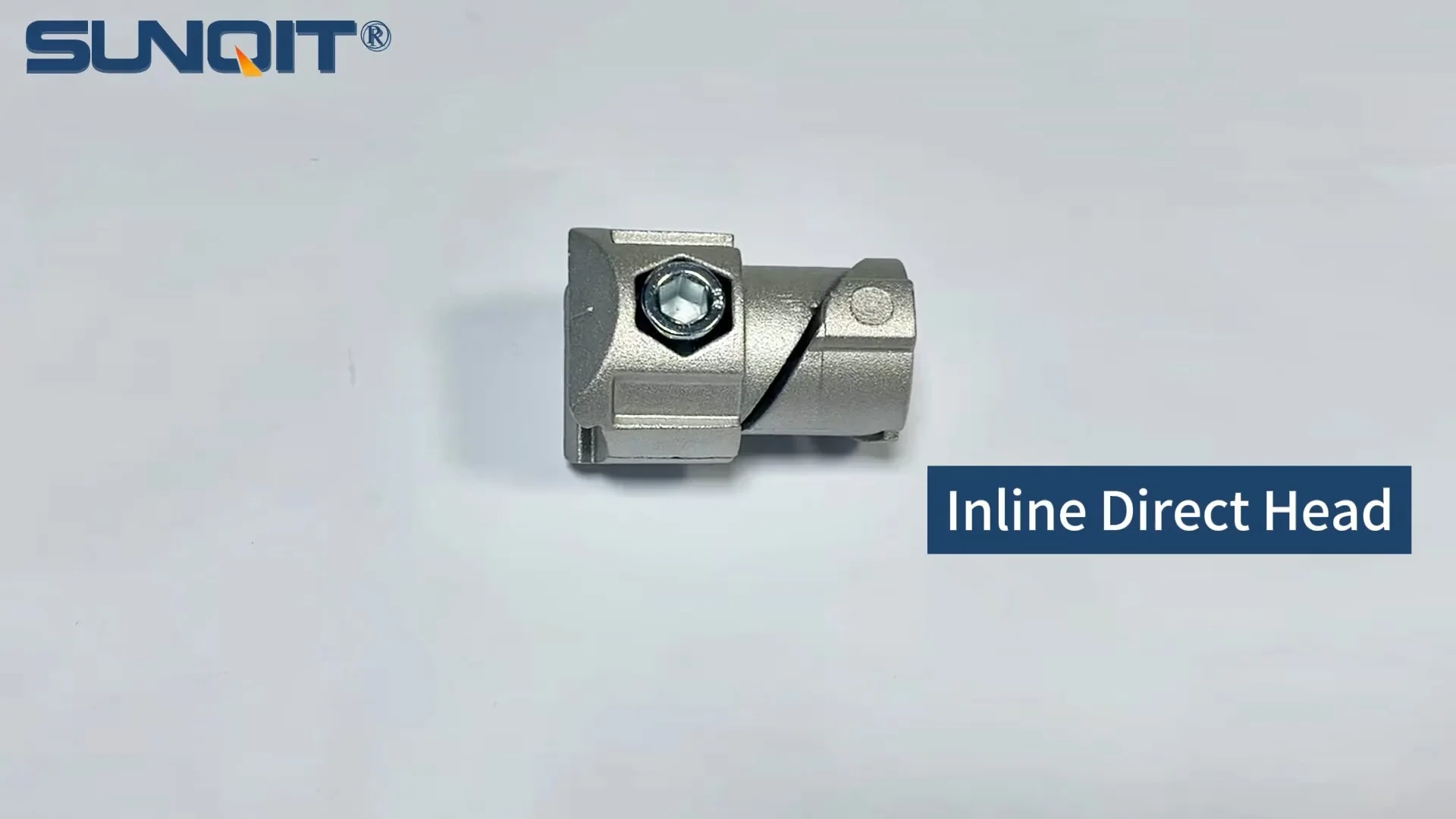
In the fast-paced world of automotive manufacturing, where precision, efficiency, and adaptability can make or break production targets, every component on the assembly line plays a critical role. From the smallest fastener to the largest conveyor system, each part contributes to the seamless flow of work that keeps factories running and vehicles rolling off the line. Among these components, one unsung hero stands out for its ability to transform how teams build, adapt, and optimize their workspaces: the internal straight aluminum joint . Often overlooked in favor of flashier machinery, this unassuming connector is a cornerstone of modern automotive assembly, offering a unique blend of strength, flexibility, and precision that traditional joints simply can't match. Let's dive into why automotive manufacturers are increasingly turning to internal straight aluminum joints to streamline their processes, reduce downtime, and stay ahead in an industry that never stops evolving.
The Automotive Assembly Challenge: Balancing Rigidity and Flexibility
Automotive parts assembly is a complex dance of moving parts—literally and figuratively. Factories must handle everything from delicate electronics to heavy engine components, all while adapting to frequent model changes, seasonal demand shifts, and the constant pressure to innovate. A single assembly line might produce multiple vehicle variants in a day, each requiring slightly different tooling, workbench setups, or conveyor configurations. This need for lean system principles—eliminating waste, streamlining workflows, and maximizing efficiency—has never been more critical. Yet, for decades, many manufacturers relied on rigid, one-size-fits-all solutions: steel frames welded into fixed structures, plastic joints that cracked under stress, or cumbersome connectors that made reconfiguration a time-consuming nightmare.
Consider the example of a workbench used for assembling door panels. If a new vehicle model requires a wider panel, the workbench must either be replaced entirely or undergo hours of modification, involving cutting, welding, or drilling. This downtime isn't just inconvenient—it's costly. According to industry estimates, every hour of unplanned downtime in automotive manufacturing can cost upwards of $22,000. Multiply that by dozens of workbenches, conveyor sections, or material racks across a plant, and the numbers quickly add up. The solution? A modular approach that allows teams to reconfigure their workspace on the fly, without sacrificing the stability needed to handle heavy automotive parts.
Enter the Internal Straight Aluminum Joint: Design That Delivers Precision
At first glance, the internal straight aluminum joint might seem like a simple piece of hardware, but its design is a masterclass in engineering for automotive needs. Unlike external joints, which clamp around the outside of pipes or aluminum profile , internal straight joints fit inside the hollow core of aluminum tubes, creating a connection that's both stronger and more streamlined. This internal structure eliminates bulky external hardware, reducing the risk of snags or interference with moving parts—critical when assembling components like wiring harnesses or upholstery that can catch on protruding connectors.
But the real genius lies in its precision. These joints are machined to tight tolerances, ensuring a snug, wobble-free fit that maintains alignment even under heavy loads. In automotive assembly, where millimeters matter (a misaligned workbench can lead to misdrilled holes or uneven component seating), this level of accuracy is non-negotiable. Imagine a conveyor system transporting engine blocks: if the rollers are even slightly misaligned due to loose joints, the blocks could shift, causing delays or damage. Internal straight aluminum joints, with their secure grip and consistent alignment, prevent this kind of issue before it starts.
Another key design feature is their versatility. Internal straight joints aren't limited to straight-line connections; when paired with aluminum pipe accessories like elbows, tees, or swivel brackets, they can form complex structures with ease. Need a 90-degree turn in a material rack? Add a corner joint. Want to adjust the height of a workbench to accommodate taller components? Swap out a short tube for a longer one using the same internal joint. This modularity is a game-changer for lean manufacturing, where the ability to adapt quickly directly impacts the bottom line.

Aluminum: The Material Advantage for Automotive Environments
While the design of internal straight joints is impressive, their effectiveness would be limited without the right material: aluminum. Aluminum brings a unique set of benefits that make it ideal for automotive assembly environments, where durability, weight, and resistance to harsh conditions are paramount.
First, aluminum is lightweight. A typical internal straight aluminum joint weighs 30-50% less than a comparable steel joint, making it easier for workers to handle during installation or reconfiguration. This might not sound like much on its own, but multiply it across a plant with hundreds of joints, and the ergonomic benefits add up: less strain on workers' backs, faster setup times, and fewer injuries from heavy lifting. In an industry where worker safety and productivity are top priorities, this is a significant advantage.
Second, aluminum is naturally corrosion-resistant. Automotive plants are tough environments: they're exposed to oils, coolants, cleaning chemicals, and sometimes even humidity (especially in regions with high moisture levels). Steel joints, unless heavily coated, can rust over time, weakening connections and creating debris that contaminates sensitive parts. Aluminum, on the other hand, forms a protective oxide layer when exposed to air, preventing rust and ensuring joints remain strong and reliable for years. This resistance to corrosion also extends the lifespan of equipment, reducing the need for frequent replacements—a critical factor in long-term cost management.
Finally, aluminum is highly machinable, allowing for the precision manufacturing of internal straight joints. Unlike brittle plastics, which can crack under pressure, or steel, which is harder to machine to tight tolerances, aluminum balances strength and workability. This means internal straight aluminum joints can be produced with the exact dimensions needed to fit standard aluminum profile tubes, ensuring compatibility across different components and suppliers. For manufacturers, this standardization reduces complexity: they can source tubes, joints, and accessories from multiple vendors without worrying about mismatched sizes.

Compatibility with Aluminum Profile and Accessories: Building a Complete System
An internal straight aluminum joint is only as useful as the system it connects. Fortunately, these joints are designed to work seamlessly with a wide range of aluminum profile and aluminum pipe accessories , creating a fully integrated solution for automotive assembly. Whether you're building a simple workbench, a complex conveyor system, or a material rack, the components work together like a well-oiled machine—pun intended.
Take aluminum profile tubes, for example. These hollow, extruded tubes come in various sizes (common widths include 20mm, 30mm, and 40mm) and are designed with T-slots along their length. These slots allow for easy attachment of accessories like brackets, clamps, or panels—perfect for mounting tools, lights, or storage bins on a workbench. When paired with internal straight aluminum joints, the tubes become the backbone of a modular structure that can be customized to any need. For instance, a workbench for assembling steering wheels might use 40mm aluminum profile tubes connected by internal straight joints, with T-slot accessories holding torque wrenches, cable organizers, and a small parts bin. If the steering wheel design changes, the accessories can be moved or swapped out in minutes, without altering the underlying frame.
Aluminum pipe accessories extend this flexibility further. Corner brackets, for example, let you create 90-degree angles without welding, while swivel joints allow for adjustable heights or angles. Even specialized components like roller track guides or caster mounts can be attached to the aluminum profile using compatible accessories, turning a basic frame into a fully functional conveyor or mobile cart. This interoperability means manufacturers aren't locked into a single supplier or system—they can mix and match components to create the perfect setup for their specific needs.
Internal Straight Aluminum Joints vs. Alternatives: A Comparison
To truly appreciate the value of internal straight aluminum joints, it helps to compare them to the alternatives commonly used in automotive assembly. Let's take a look at how they stack up against plastic joints, steel external joints, and welded steel connections in key areas like strength, flexibility, and cost.
| Feature | Internal Straight Aluminum Joint | Plastic Joints | Steel External Joints | Welded Steel Connections |
|---|---|---|---|---|
| Strength | High: Withstands heavy loads (up to 500kg per joint) | Low: Prone to cracking under stress or temperature changes | High: Strong but bulky | Very high: Permanent, but rigid |
| Flexibility | Excellent: Reconfigurable in minutes; reusable | Moderate: Some reusability, but wear reduces lifespan | Poor: Difficult to reconfigure; requires tools | None: Permanent; must be cut/welded to modify |
| Weight | Lightweight (30-50% lighter than steel) | Lightest, but low strength limits use cases | Heavy: Increases worker strain and transportation costs | Heaviest: Fixed weight adds to overall structure mass |
| Corrosion Resistance | High: Aluminum oxide layer prevents rust | High, but degrades in chemical/exposure-heavy environments | Low: Requires coating; prone to rust if scratched | Low: Requires regular maintenance to prevent rust |
| Cost (Lifetime) | Moderate initial; low long-term (reusable, low maintenance) | Low initial; high long-term (frequent replacement) | High initial; moderate long-term (maintenance, limited reusability) | High initial; very high long-term (no reusability, modification costs) |
As the table shows, internal straight aluminum joints strike a balance that's hard to beat: the strength to handle automotive-grade loads, the flexibility to adapt to changing needs, and the durability to withstand harsh factory conditions—all at a lifetime cost that makes them a smart investment. While plastic joints might be cheaper upfront, they fail quickly under the stress of daily use. Welded steel is strong but locks manufacturers into fixed configurations, making it impossible to adapt to new models or processes without starting over. Internal straight aluminum joints, by contrast, offer the best of all worlds: a modular, durable, and cost-effective solution that grows with your business.
Real-World Impact: How Internal Straight Aluminum Joints Transform Assembly Lines
Theory is one thing, but real-world results are what matter. Let's look at how internal straight aluminum joints have made a difference for automotive manufacturers already using them. Take the case of a mid-sized automotive supplier in Ohio that produces brake components for major OEMs. Before switching to internal straight aluminum joints, the company relied on welded steel workbenches and plastic-jointed material racks. Reconfiguring a single workbench for a new brake caliper model took 4-6 hours, involving cutting steel tubing, welding new supports, and repainting to prevent rust. With 12 workbenches on the line, a model change could take nearly a full week of downtime—a nightmare for meeting tight delivery deadlines.
After transitioning to aluminum profile frames with internal straight joints, the same reconfiguration process took less than 2 hours per workbench. Workers simply loosened the joints, swapped out the necessary tubes, and tightened them back into place—no welding, no cutting, no repainting. The result? The company reduced model changeover time by 75%, eliminated $150,000 in annual welding and maintenance costs, and saw a 12% increase in on-time deliveries. Perhaps even more importantly, workers reported less fatigue and higher job satisfaction, as the lighter aluminum components were easier to handle and adjust.
Another example comes from a European automaker's electric vehicle (EV) battery assembly line. EV batteries are heavy (often over 500kg) and require extremely precise alignment during assembly. The automaker initially used steel external joints to support the battery handling fixtures, but the joints' bulk made it hard to position sensors and alignment tools accurately. Switching to internal straight aluminum joints reduced the fixture weight by 40% and eliminated external hardware that blocked sensor lines of sight. This improved alignment precision by 95%, reducing battery assembly errors by 60% and cutting warranty claims related to misaligned batteries by nearly $1 million annually.
Installation and Maintenance: Simple, Even for Non-Experts
One of the most underrated benefits of internal straight aluminum joints is how easy they are to install and maintain. Unlike welded steel or complex mechanical connectors, which require specialized skills (and often certifications), internal straight joints can be handled by any worker with basic hand tools. This democratizes the assembly process, reducing reliance on specialized technicians and empowering line workers to make adjustments as needed.
Installation typically involves just three steps: 1) Slide the joint into the end of an aluminum profile tube; 2) insert the tube into another tube or accessory (like a corner bracket); 3) Tighten the set screws on the joint using a hex key to secure the connection. No drilling, no welding, no adhesives—just a simple, secure fit. This simplicity not only speeds up initial setup but also makes maintenance a breeze. If a joint becomes loose over time (a rare occurrence with aluminum's natural grip), a quick turn of the hex key tightens it back up. And if a joint is damaged (say, in a collision with a forklift), it can be replaced in minutes without disassembling the entire structure.
Maintenance is equally straightforward. Aluminum's corrosion resistance means joints rarely need painting or coating, even in environments with oil, coolant, or humidity. A quick wipe with a damp cloth is usually enough to keep them clean and functional. Compare this to steel joints, which require regular inspections for rust, repainting every 1-2 years, and often replacement after 3-5 years due to corrosion. The low-maintenance nature of internal straight aluminum joints translates to lower long-term costs and less downtime for upkeep.
The Future of Automotive Assembly: Modularity and Sustainability
As the automotive industry shifts toward electric vehicles, autonomous driving, and personalized manufacturing, the need for flexible, sustainable production solutions will only grow. Internal straight aluminum joints are perfectly positioned to meet this future head-on, thanks to their modular design and eco-friendly material.
Sustainability is a key driver here. Aluminum is 100% recyclable, and recycling it requires just 5% of the energy needed to produce new aluminum. This aligns with the automotive industry's aggressive sustainability goals—many OEMs have pledged to be carbon neutral by 2030-2040. By using aluminum joints and profiles, manufacturers reduce their reliance on virgin materials and cut down on waste from disposable plastic joints or unrepairable welded steel. Additionally, the longevity of aluminum components means fewer replacements, further reducing environmental impact.
Modularity will also be critical as automotive manufacturing becomes more personalized. Today's consumers want vehicles tailored to their preferences, which means shorter production runs and more frequent line changes. Internal straight aluminum joints, with their quick reconfiguration capabilities, make small-batch production feasible without sacrificing efficiency. Imagine a future where a single assembly line can produce 10 different vehicle variants in a day, with each workstation adjusting automatically using modular aluminum structures—a future that's already within reach, thanks to innovations like internal straight joints.
Conclusion: Why Internal Straight Aluminum Joints Are the Smart Choice
In the high-stakes world of automotive parts assembly, every component matters. Internal straight aluminum joints may not grab headlines, but they deliver tangible, bottom-line benefits that are impossible to ignore: precision that reduces errors, flexibility that cuts downtime, lightweight design that improves ergonomics, and durability that lowers long-term costs. By combining innovative design with the natural advantages of aluminum, these joints empower manufacturers to build leaner, more adaptable, and more sustainable assembly lines—exactly what's needed to thrive in an industry defined by constant change.
Whether you're assembling engines, EV batteries, or dashboard components, the message is clear: internal straight aluminum joints aren't just a hardware choice—they're a strategic investment in your company's future. They're the quiet innovators that let your team work smarter, adapt faster, and stay ahead of the competition. So the next time you walk through your assembly line, take a closer look at the joints holding it all together. Chances are, the ones making the biggest difference are the ones you might not have noticed—until now.