- Company Articles
- Products and Technology
- Product knowledge
- Why Choose Lean Pipe Clamp B? Cost-Effectiveness in Long-Term Projects

Why Choose Lean Pipe Clamp B? Cost-Effectiveness in Long-Term Projects
Related Product
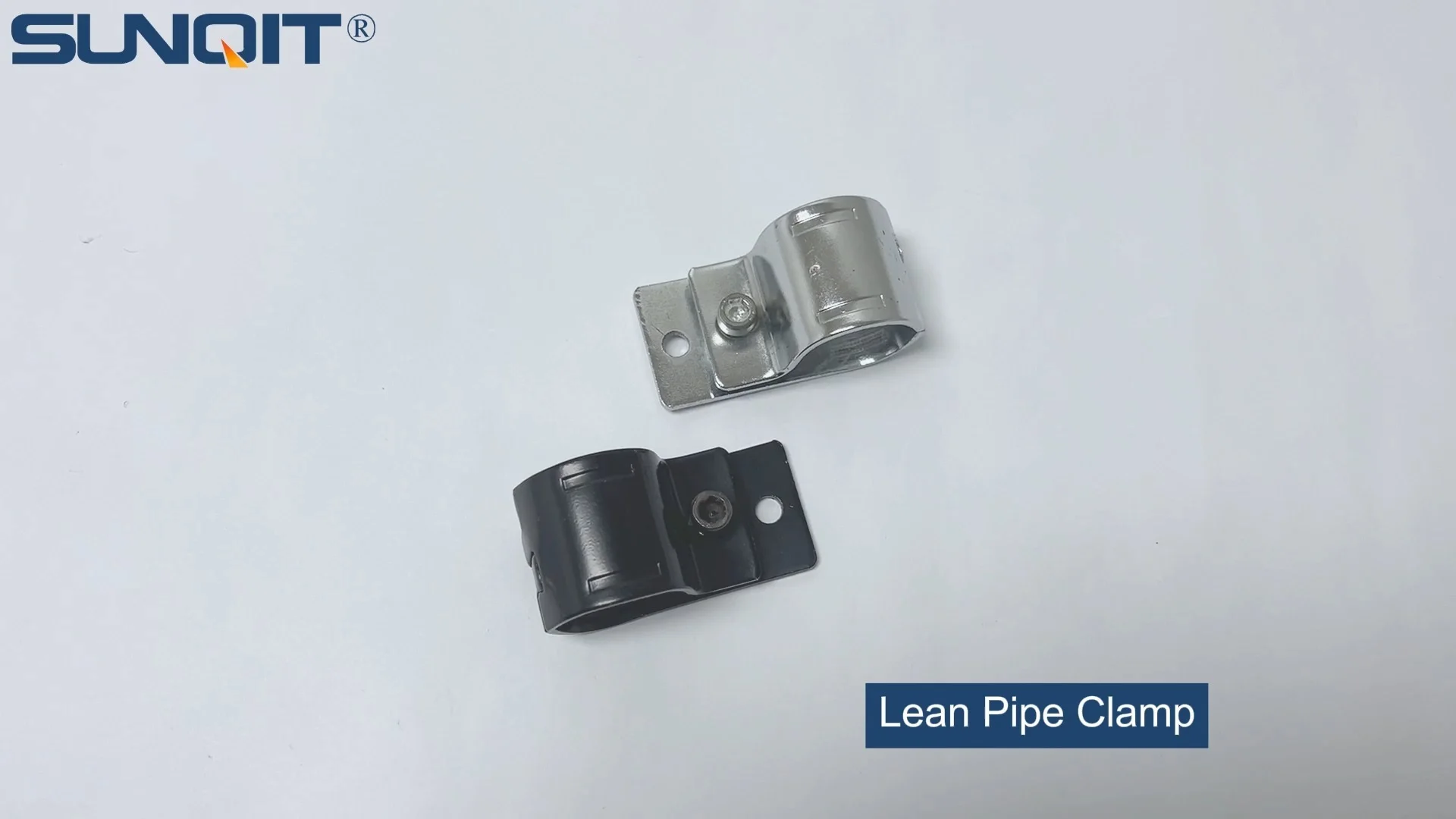
Lean Pipe Clamp
Lean pipe clamp is used for rack system hang monitor or other panel for workbenck, flowrack in production daily use.
When Sarah, a production manager at a mid-sized electronics firm, first considered upgrading her facility's workstations, she was overwhelmed by options. Metal frames felt rigid, plastic too flimsy, and custom solutions? Prohibitively expensive. That's until she discovered lean pipe systems—and more specifically, the unsung hero holding it all together: the lean pipe clamp b. "It was like finding a missing puzzle piece," she recalls. "Suddenly, building a workstation that could grow with us didn't seem impossible. And the best part? We didn't have to break the bank to do it."
In the world of manufacturing, warehousing, and production, the term "lean" is thrown around a lot. But at its core, lean isn't just a buzzword—it's a philosophy about maximizing efficiency, minimizing waste, and creating systems that adapt to change. Lean pipe systems embody this philosophy, offering modular, flexible structures that can be reconfigured on the fly. Yet, for all their innovation, these systems rely on a critical, often overlooked component: the clamps that secure the pipes, joints, and accessories together. And among these, lean pipe clamp b stands out as a game-changer for long-term projects. Let's dive into why.
1. Lean Pipe Systems: The Backbone of Modern Workspaces
Before we zoom in on the clamp itself, let's take a step back to understand the bigger picture: lean pipe systems. Also known as "flexible pipe systems" or "kitchen pipe systems" (a nod to their early use in Japanese kitchens), these setups use lightweight, durable pipes and joints to build everything from workbenches and material racks to conveyor lines and assembly stations. What makes them revolutionary? Their modularity. Unlike fixed metal or wooden structures, lean pipe systems can be disassembled, reconfigured, or expanded with minimal effort—no welding, no heavy tools, no lengthy downtime.
At the heart of every lean pipe system are three key components: the pipes (often coated steel, aluminum, or stainless steel), the joints (which connect pipes at various angles), and the clamps (which secure these connections, add stability, or attach accessories like shelves or wheels). While pipes and joints get most of the attention, clamps are the glue that holds the system's flexibility together. A weak clamp can turn a sturdy workstation into a wobbly liability; a well-designed one ensures the system adapts without sacrificing safety or durability.
2. Meet Lean Pipe Clamp B: More Than Just a "Clamp"
So, what exactly is lean pipe clamp b, and why does it matter? Let's start with the basics. Lean pipe clamp b is a specialized connector designed to fasten lean pipes to joints, secure accessories (like shelves or guide rails), or reinforce connections in modular systems. Unlike generic clamps, which often prioritize cost over performance, clamp b is engineered with the unique demands of lean environments in mind: adaptability, strength, and long-term reliability.
Design That Prioritizes Practicality
Walk into any production facility using lean pipe systems, and you'll notice a common frustration: clamps that loosen over time, require special tools to tighten, or break when you try to reposition them. Lean pipe clamp b addresses all three issues. Its design features a ergonomic, hand-tightenable knob that eliminates the need for wrenches or screwdrivers—meaning your team can adjust the system during a shift without pausing production. The clamp's grip is reinforced with a rubberized inner lining that prevents slipping, even under heavy loads, and its zinc-plated steel construction resists corrosion, a must in environments where spills or humidity are common.
Mike, a technical lead at a lean pipe supplier with over a decade of experience, puts it simply: "We test hundreds of clamp designs, and clamp b consistently outperforms. It's the only clamp we recommend for clients who plan to reconfigure their systems regularly. Why? Because it doesn't wear out from repeated adjustments. I've seen clamp b units that are five years old still holding tight, while cheaper alternatives start cracking after six months."
Strength Without Sacrificing Flexibility
One of the biggest myths about lean systems is that "flexible" equals "flimsy." Lean pipe clamp b shatters that misconception. When properly installed, it can support loads up to 150 kg per connection—more than enough for most workbench tools, material bins, or even small assembly equipment. This strength comes from its unique "double-lock" mechanism: the clamp not only tightens around the pipe but also engages with the grooves in lean pipe joints, creating a connection that resists both vertical and lateral movement.
Consider this scenario: A material rack built with standard clamps might start sagging after months of holding heavy boxes. With clamp b, the same rack can support the same load for years, even as you add more shelves or reposition the rack to a new location. For long-term projects, this durability translates to fewer replacements, less maintenance, and a system that grows with your needs instead of holding you back.

3. Cost-Effectiveness: The Hidden Savings of Choosing Right
Let's get to the bottom line: cost. At first glance, lean pipe clamp b might seem pricier than generic clamps. A pack of 10 generic steel clamps could cost $20, while clamp b might run $35 for the same quantity. On paper, that's a 75% markup—and for budget-conscious teams, that difference can feel like a dealbreaker. But here's the thing: in long-term projects, the initial price tag is rarely the true cost. To understand clamp b's value, we need to look at the bigger picture: total cost of ownership (TCO).
Breaking Down Total Cost of Ownership (TCO)
Total cost of ownership includes not just the upfront cost of a component, but also the expenses incurred over its lifetime: replacement costs, maintenance time, downtime from failures, and labor for reconfigurations. Let's break this down for a typical 5-year project using 100 clamps (a modest setup for a small production line):
- Initial cost: Generic clamps ($20/10 pack) = $200 total. Clamp b ($35/10 pack) = $350 total. Difference: +$150 for clamp b.
- Replacement costs: Generic clamps often loosen or crack after 1–2 years of regular use. Assuming 50% need replacement every 2 years, that's 2 replacements over 5 years: 100 clamps x 50% x 2 = 100 replacements = $200. Clamp b, with a 5+ year lifespan, needs 0 replacements. Difference: -$200 for clamp b.
- Maintenance time: Loose generic clamps require monthly tightening (10 minutes per clamp, 100 clamps = 1000 minutes/year = ~17 hours/year). At $30/hour labor cost, that's $510/year x 5 = $2550. Clamp b tightens once and stays tight; maintenance time = ~2 hours total (occasional inspections). Cost: $60. Difference: -$2490 for clamp b.
- Downtime from failures: A failed generic clamp can cause a workstation to collapse, leading to 1–2 hours of downtime. If this happens twice over 5 years, that's 4 hours of lost production. At $500/hour (average manufacturing line cost), that's $2000. Clamp b failures? Virtually unheard of. Difference: -$2000 for clamp b.
Add it all up: Generic clamps cost $200 (initial) + $200 (replacements) + $2550 (maintenance) + $2000 (downtime) = $4950 over 5 years. Clamp b costs $350 (initial) + $0 (replacements) + $60 (maintenance) + $0 (downtime) = $410. That's a savings of $4540 over 5 years. Suddenly, that "75% markup" looks like a steal.
Flexibility = Future-Proofing Your Investment
Long-term projects rarely stay "long-term" without changes. Your business grows, product lines expand, or new regulations require workspace adjustments. Here's where clamp b's flexibility becomes a secret weapon: it lets you reconfigure your lean pipe system without replacing the clamps themselves. Need to turn a single-deck workbench into a double-deck one? Loosen the clamp b, adjust the height, retighten, and you're done. With generic clamps, you'd likely need to replace bent or stripped clamps after just one reconfiguration.
Take Sarah's example again: her electronics firm added a new product line six months after installing their lean pipe workstations. With clamp b, her team disassembled three workstations, added extra shelves, and reassembled them in a day—using the same clamps. "If we'd used the cheap clamps we had before, we would've had to buy new ones for half the connections," she says. "Clamp b saved us $800 in parts alone, not counting the time we didn't spend waiting for deliveries."

3. Compatibility: Clamp B Plays Well with Others
A clamp is only as useful as its ability to work with the rest of your system. Lean pipe clamp b isn't just designed for strength—it's designed to integrate seamlessly with the components you already use (or might use in the future). Let's look at key compatibility features:
Works with Standard Lean Pipes and Joints
Whether you're using 1.2mm pe coated lean pipe, 1.5mm stainless steel pipe, or aluminum lean pipe, clamp b fits standard pipe diameters (typically 28mm–30mm). It also pairs perfectly with common lean pipe joints, including 90° fixed joints, 135° rotating joints, and three-way connectors. This means you don't need to overhaul your entire system to switch to clamp b—just swap out the old clamps and keep building.
Adapts to Accessories and Upgrades
Lean pipe systems aren't just about pipes and joints—they're about the accessories that make them functional: roller tracks for material flow, casters for mobility, or ESD (electrostatic discharge) workbench tops for sensitive electronics. Clamp b is engineered to attach these accessories securely. For example, when mounting a plastic roller track guide rail (yellow or grey) to a lean pipe frame, clamp b's wide, flat gripping surface distributes weight evenly, preventing the rail from warping or slipping. Similarly, when adding casters to a turnover trolley, clamp b ensures the wheels stay aligned, even when the trolley is loaded to capacity.
This compatibility is critical for long-term projects. As your needs evolve—say, adding ESD protection to a workstation or installing a roller track for faster material handling—clamp b grows with you, avoiding the need for specialized connectors or custom fabrication.

4. How Clamp B Stacks Up Against Alternatives
To truly appreciate lean pipe clamp b, it helps to compare it to the alternatives. Let's put it head-to-head with two common options: generic steel clamps and aluminum profile clamps (a popular choice for higher-end systems).
| Feature | Generic Steel Clamps | Aluminum Profile Clamps | Lean Pipe Clamp B |
|---|---|---|---|
| Initial Cost (10-pack) | $15–$25 | $40–$60 | $30–$35 |
| Expected Lifespan | 1–2 years (regular use) | 5–7 years | 5+ years |
| Installation Time (per clamp) | 5–10 minutes (requires tools) | 8–12 minutes (specialized tools) | 2–3 minutes (hand-tightenable) |
| Flexibility (Reconfigurations) | Poor (loosens/cracks after 1–2 reconfigs) | Good (but requires profile-specific joints) | Excellent (unlimited reconfigs without damage) |
| Compatibility | Limited (fits only specific pipe sizes) | High (but only with aluminum profiles) | High (works with steel, aluminum, stainless pipes; accessories) |
| 5-Year TCO (100 clamps)* | ~$4,950 | ~$1,200 | ~$410 |
*TCO includes initial cost, replacements, maintenance, and downtime (based on average manufacturing conditions).
As the table shows, aluminum profile clamps offer similar longevity to clamp b but at a higher initial cost and with limited compatibility (they only work with aluminum profiles, not standard lean pipes). Generic clamps are cheap upfront but cost exponentially more over time. Lean pipe clamp b hits the sweet spot: affordable enough for small budgets, durable enough for long-term use, and flexible enough to adapt as your project evolves.
5. Real-World Success Stories: Clamp B in Action
Numbers tell a story, but real-world examples bring it to life. Let's look at three businesses that chose lean pipe clamp b for long-term projects—and the results they saw.
Case Study 1: Automotive Parts Manufacturer
A Michigan-based automotive parts manufacturer needed to build 20 material racks to store heavy engine components. They initially considered wooden pallets (cheap but short-lived) or welded steel racks (durable but fixed). Instead, they opted for lean pipe systems with clamp b. Over 5 years, they reconfigured the racks three times to accommodate new part sizes, replaced zero clamps, and saved an estimated $45,000 in labor and replacement costs compared to welded racks.
Case Study 2: Electronics Assembly Plant
A California electronics plant installed 50 ESD workstations using lean pipe systems with clamp b. When they expanded production to include larger circuit boards, they raised the workbench heights and added extra shelves—all using the same clamps. "We avoided buying 50 new workstations, which would've cost $75,000," says the plant manager. "Clamp b made the reconfiguration so easy, even our interns could help."
Case Study 3: Warehouse Distribution Center
A national retail distributor needed roller track systems to move packages between sorting stations. They used clamp b to secure plastic roller track guide rails to aluminum profiles. Over 3 years of 24/7 operation, the system required zero clamp replacements, and downtime due to track issues dropped by 90% compared to their previous metal track setup.
6. Common Misconceptions About Lean Pipe Clamp B
Despite its benefits, some teams hesitate to choose clamp b. Let's address the most common myths:
Myth: "It's Just a Clamp—Why Pay More?"
As we've seen, clamp b isn't "just a clamp." It's a critical component that impacts your system's safety, flexibility, and long-term cost. Skimping on clamps is like using cheap screws in a house—eventually, the structure weakens.
Myth: "Aluminum Clamps Are Better for Durability"
Aluminum clamps are durable but heavier and less flexible. Clamp b's zinc-plated steel offers comparable durability at a lower weight and cost, with better grip on standard lean pipes.
Myth: "We Don't Need Flexibility—Our Project Is Fixed"
Even "fixed" projects change. New products, team size shifts, or efficiency upgrades often require workspace tweaks. Clamp b ensures you're not stuck tearing down and rebuilding from scratch.
7. Conclusion: Clamp B—An Investment in Your Project's Future
When it comes to long-term projects, every component matters. Lean pipe clamp b may seem like a small part of the puzzle, but its impact is huge: lower costs over time, unmatched flexibility, and the peace of mind that comes with a system built to adapt. As Sarah, the production manager, puts it: "Clamp b isn't just a tool—it's a partner in our growth. It's the reason we can focus on making great products instead of worrying about our workspaces."
So, if you're building a system that needs to last, grow, and adapt—whether it's a single workbench or an entire production line—don't overlook the clamp. Choose lean pipe clamp b, and build a foundation that lasts.