- Company Articles
- Products and Technology
- Product knowledge
- Why Choose Modular Aluminum Pipe with Board Holder?

Why Choose Modular Aluminum Pipe with Board Holder?
Related Product
Aluminum Pipe with Board Holder
The linear rolling assembly can be arbitrarily connected in the protruding part of the card slot to increase the rigidity of the track.
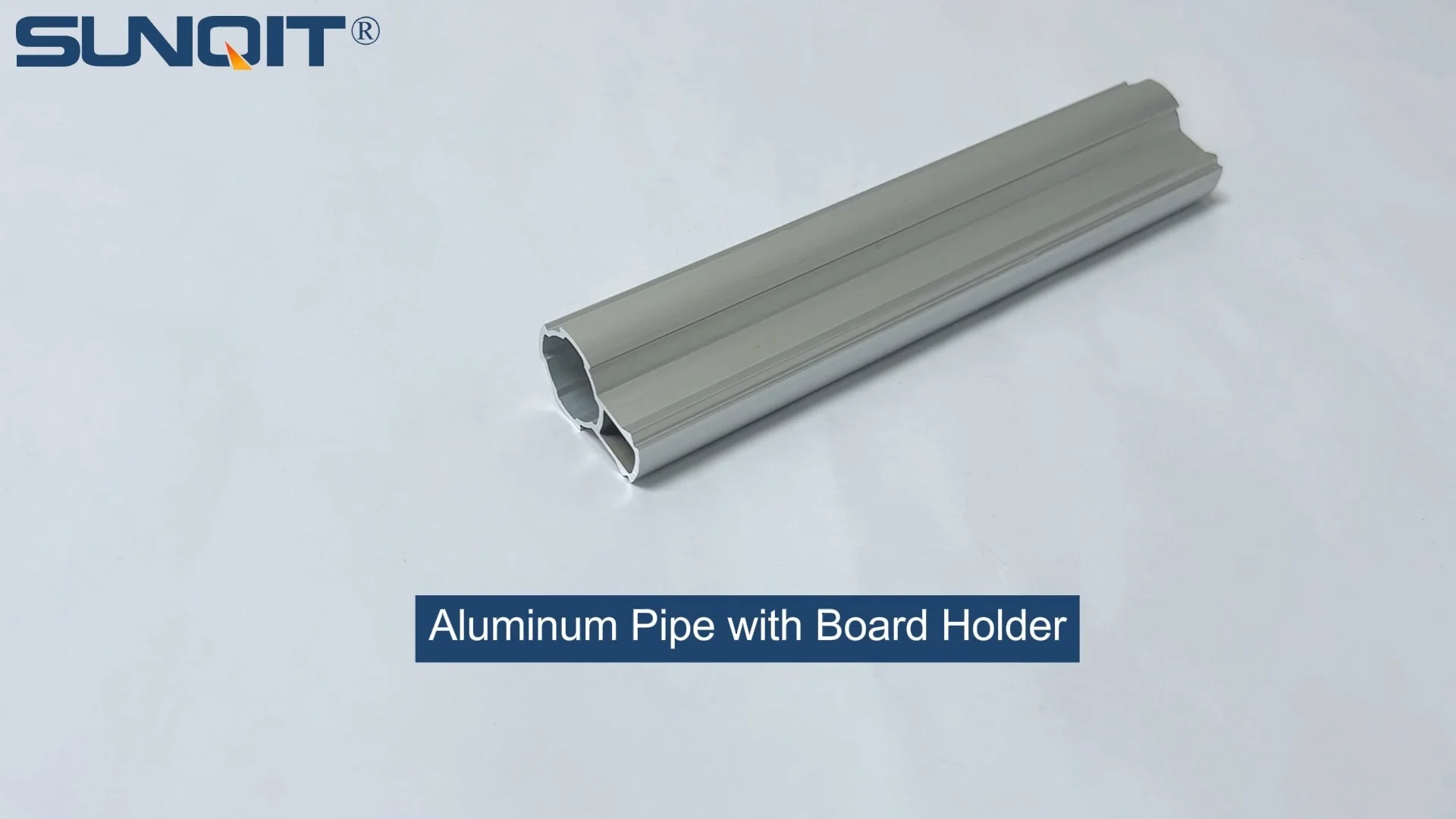
In the fast-paced world of manufacturing, assembly lines, and workshop management, the tools and systems we rely on can make or break productivity. If you've ever stood in a busy workspace and thought, "There has to be a better way to organize this," you're not alone. Traditional workstations—often built from fixed materials like wood, welded steel, or heavy plastic—can feel like anchors holding back your team's efficiency. They're hard to adjust, expensive to replace, and rarely grow with your changing needs. But what if there was a solution that adapts as quickly as your workflow does? Enter the modular aluminum pipe with board holder: a flexible, durable, and surprisingly versatile system that's transforming how teams build, organize, and optimize their workspaces.
The Problem with "One-and-Done" Workstations
Let's start with the obvious: traditional workstations are designed to be permanent. A wooden workbench, for example, is built to a specific height, with a fixed surface and maybe a few shelves bolted into place. If your team suddenly needs to assemble a larger product, or rearrange the line to cut down on movement, that wooden bench becomes a problem. You either live with inefficiency, spend hours (and money) modifying it, or replace it entirely. Welded steel workstations are even worse—heavy, rigid, and nearly impossible to reconfigure without professional tools.
Then there's the issue of scalability. A small startup might begin with a single workbench, but as orders pick up, they need three more—each slightly different to handle new tasks. Traditional systems force you to buy new units, each with its own set of limitations. Over time, this leads to a hodgepodge of mismatched workstations, wasted space, and a workflow that feels more like a maze than a streamlined process. It's no wonder so many managers feel stuck between "making do" and overspending on quick fixes.
Modular Aluminum Pipe with Board Holder: A Better Way to Build
So, what makes modular aluminum pipe with board holder different? At its core, it's a system built on simplicity and adaptability. Imagine (oops, scratch that—let's describe ) a set of lightweight but strong aluminum pipes, paired with easy-to-use connectors and a clever board holder that secures work surfaces like plywood, metal sheets, or even anti-static panels. No welding, no drilling, no special tools required. You snap the pipes into the connectors, attach the board holder, and suddenly you have a fully functional workstation—one that can be taken apart, rearranged, or expanded in minutes.
But this isn't just about "easy assembly." The real magic is in how the system grows with you. Need to raise the work surface by 6 inches? Swap out a few pipes for longer ones. Want to add a shelf above for tools? Connect a few horizontal pipes and slide on a board. Moving to a new facility? Disassemble the entire system, pack it in a box, and rebuild it in the new space—no waste, no hassle. It's like building with industrial-grade Legos, but designed for the demands of real-world work.

Traditional vs. Modular: A Clear Comparison
To really see the difference, let's put traditional workstations head-to-head with modular aluminum pipe with board holder systems. The table below breaks down key factors that matter most to workshop managers, from flexibility to long-term cost:
| Feature | Traditional Workstations (Wood/Steel/Plastic) | Modular Aluminum Pipe with Board Holder |
|---|---|---|
| Flexibility | Fixed design; nearly impossible to reconfigure without major modifications. | 100% adjustable: change height, add/remove shelves, swap surfaces, or rebuild entirely in minutes. |
| Assembly Time | Hours (or days) of building, drilling, or welding; requires skilled labor. | Minutes to hours (depending on size); no special skills needed—just snap-and-lock connectors. |
| Durability | Wood warps; steel rusts; plastic cracks under heavy use. | Aluminum profile resists corrosion, dents, and wear; built to last decades with minimal maintenance. |
| Cost Over 5 Years | High: frequent replacements, modifications, and wasted space add up. | Low: initial investment pays off via reusability; adapt to new needs without buying new systems. |
| Lean System Alignment | Poor: rigid design creates waste (e.g., unused space, excess movement). | Excellent: supports 5S, continuous improvement, and waste reduction by adapting to workflow changes. |

Why Aluminum Profile? The Secret to Strength and Lightweight Design
At the heart of this modular system is aluminum profile—a material that's often overlooked but deserves the spotlight. Unlike steel, which is strong but heavy and prone to rust, aluminum profile strikes the perfect balance: it's lightweight enough to move by hand (no forklifts needed for reconfiguration) but strong enough to support heavy tools, materials, and daily use. Its natural resistance to corrosion means it holds up in damp environments, workshops with coolants, or even outdoor settings—no need for painting or rust-proofing.
Aluminum profile also cleans up easily. Wipe it down with a damp cloth, and it looks as good as new—a small detail that matters in environments where cleanliness is key (like electronics assembly or food processing). Compare that to wood, which stains easily, or welded steel, which traps dirt in crevices. For teams following lean system principles, where "shine" (one of the 5S pillars) is critical, this is a game-changer.
But perhaps the best part? Aluminum profile is infinitely recyclable. If you ever do need to retire a section of your system, the materials can be repurposed or recycled—aligning with sustainability goals that matter more than ever to modern businesses.
Lean System Integration: Building a Workspace That Follows Your Flow
Lean system principles—focused on eliminating waste, optimizing flow, and continuous improvement—are the backbone of efficient operations. But lean isn't just a set of ideas; it requires tools that can keep up with those ideas. Modular aluminum pipe with board holder systems are practically built for lean environments, and here's why:
Waste Reduction: In lean terms, "waste" includes anything that doesn't add value—like excess movement, unused space, or waiting for tools. With a modular system, you can design workstations around the task, not the other way around. Need a workbench that's 36 inches high for assembly and 42 inches for packaging? Adjust it. Want tools within arm's reach to cut down on walking? Add a hanging shelf right above the board holder. No more wasted steps, no more cluttered spaces.
Continuous Improvement: Lean thrives on iteration. Today's perfect workflow might need tweaking tomorrow when a new product line launches. With traditional workstations, that tweak could take days. With modular aluminum pipe, it takes hours. For example, a team assembling small electronics might start with a single workbench, but as demand grows, they can quickly add two more stations, each mirroring the first for consistency. If a bottleneck emerges, rearrange the line in the afternoon—no downtime, no lost production.
5S Made Simple: The 5S methodology (Sort, Set in Order, Shine, Standardize, Sustain) is all about creating a workspace that's organized, clean, and efficient. The board holder, paired with aluminum pipe accessories like tool hooks, bins, and label holders, makes "Set in Order" a breeze. Every tool has a home, every material has a place, and because the system is visible (no hidden shelves or cluttered corners), "Sustain" becomes second nature—team members notice when something is out of place and fix it quickly.
Customization: Your Workbench, Your Rules
One of the biggest frustrations with off-the-shelf workstations is that they're designed for the "average" user—but no two teams are average. Your team might need a workbench with a heat-resistant surface for soldering, while another needs an anti-static board to protect sensitive components. The modular aluminum pipe with board holder system adapts to these unique needs, starting with the board holder itself.
The board holder is designed to secure almost any surface: plywood for general use, metal sheets for heavy-duty tasks, ESD (electrostatic discharge) panels for electronics, or even magnetic boards for tool storage. It adjusts to different thicknesses (from ½ inch to 2 inches) and locks securely in place, so you never have to worry about the surface shifting during use. And if you need to switch surfaces? Just loosen the holder, swap the board, and tighten—done in 5 minutes.
But customization goes beyond the surface. Add casters to turn a stationary workbench into a mobile cart that follows your team across the floor. Attach side rails to hold longer materials like pipes or rods. Mount LED lights above the board for better visibility during detailed work. The possibilities are nearly endless, thanks to a wide range of aluminum pipe accessories—from right-angle connectors to parallel brackets—that snap into place without tools.
Take, for example, a small electronics repair shop. They start with a basic workbench: aluminum pipes, a board holder with an ESD surface, and a few shelves for tools. As they expand into phone repairs, they add a vertical pipe with hooks for charging cables. When laptop repairs become a bigger part of their business, they adjust the height to reduce hunching and add a second tier for parts bins. A year later, they're repairing tablets—so they swap the ESD board for a softer surface to prevent scratches. Not once do they buy a new workbench; they just evolve the one they have.
Long-Term Savings: Investing in a System That Grows with You
Let's talk about the bottom line. At first glance, modular aluminum pipe with board holder systems might seem pricier than a basic wooden workbench. But that initial cost is an investment, not an expense. Here's why:
Reusability: Traditional workstations are one-and-done. When you outgrow them, they end up in a landfill or storage. Modular systems, though? They're built to be taken apart and rebuilt. Move to a new location? Pack up the pipes and connectors, and rebuild your workspace in the new shop. Launch a new product line? Reconfigure the old assembly bench into a testing station. The average modular system lasts 10–15 years, with parts that can be reused indefinitely.
Reduced Downtime: Time is money, and traditional workstation modifications eat up time. Welding a new shelf onto a steel bench might take a full day (and a skilled welder). With modular pipes, that same shelf takes 30 minutes—no special skills required. For a team that runs two 8-hour shifts, that's 15.5 hours of lost productivity avoided. Multiply that by a few modifications a year, and the savings add up fast.
Lower Storage Costs: If you've ever had to store old workstations "just in case," you know how much space they take up. Modular systems collapse into compact bundles—pipes stack, connectors fit in bins—freeing up storage for materials and tools that actually make you money.
Final Thoughts: More Than a Workbench—A Workspace Partner
At the end of the day, the modular aluminum pipe with board holder system isn't just a tool—it's a partner in your team's success. It adapts when you grow, simplifies when you need efficiency, and lasts when you need reliability. It aligns with lean system principles, supports customization, and saves you money in the long run. Whether you're running a small workshop, a bustling assembly line, or a high-tech lab, this system doesn't just keep up with your workflow—it elevates it.
So, why choose modular aluminum pipe with board holder? Because your workspace shouldn't hold you back. It should grow with you, adapt to you, and make every day a little more efficient. And in today's world, that's not just a nice-to-have—it's a must.