- Company Articles
- Products and Technology
- Product knowledge
- Why Choose One Side Rotatory Chrome Coated Parallel Lean Pipe Joints?

Why Choose One Side Rotatory Chrome Coated Parallel Lean Pipe Joints?
Related Product
Parallel Lean Pipe Joint
Parallel lean pipe joint used for 2 pcs 28MM lean pipe connection in parallel direction to enhance frame structure, usually for heavy payload requirement for workbench. flow rack, hand trolley.
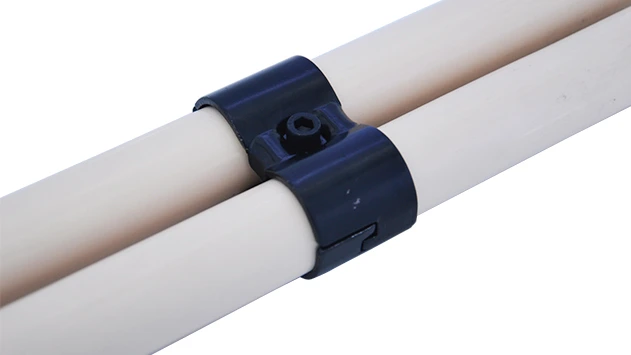
Imagine walking into a busy manufacturing plant. The air hums with the rhythm of machines, workers move with purpose, and every corner seems optimized for speed—until you hit a bottleneck. A team is struggling to reconfigure a workbench for a new product line; bolts are stuck, tools are scattered, and the clock is ticking. Downtime here isn't just a delay—it's lost opportunities, missed deadlines, and frustrated teams. This scenario plays out in factories worldwide, and it's often rooted in one overlooked detail: the components that hold their lean systems together. Today, we're diving into a small but mighty hero of lean manufacturing: the one side rotatory chrome coated parallel lean pipe joint . Why does this unassuming piece matter? Let's unpack the story.
Lean Systems: More Than a Buzzword—A Revolution in Efficiency
First, let's ground ourselves in what a lean system really is. It's not just about cutting costs or trimming fat (though those are perks). At its core, lean manufacturing is a philosophy: eliminate waste, empower teams, and build systems that adapt as your needs change. Whether you're assembling electronics, packaging goods, or building automotive parts, a lean system keeps your operations agile. But here's the thing: lean systems are only as strong as their weakest link. And more often than not, that link is the hardware connecting your workbenches, material racks, and conveyor lines.
Think about it: Your lean pipe workbench is where your team spends 8 hours a day assembling products. Your turnover trolleys ferry materials across the plant. Your flow racks keep components within arm's reach. All of these rely on joints—the pieces that connect lean pipes, aluminum profiles, and accessories into functional structures. If those joints are rigid, flimsy, or hard to adjust, your "lean" system quickly becomes a clunky, static obstacle. That's where the one side rotatory chrome coated parallel lean pipe joint steps in.
The Design That Changes the Game: What Makes These Joints Unique?
Let's break down the name—because every word hints at why this joint is a game-changer. "One side rotatory" means one end of the joint can pivot, allowing for angular adjustments without disassembling the entire structure. "Chrome coated" adds a layer of protection and durability. "Parallel" ensures stability when two pipes need to run side-by-side, like in a workbench frame or material rack. Together, these features solve three critical pain points in manufacturing: inflexibility, wear and tear, and time wasted on reconfigurations.
1. Rotatory Function: Adaptability at Your Fingertips
Traditional fixed joints lock pipes into place at a set angle—great for static setups, but disastrous when you need to tweak your production assemble line for a new product. With a one-side rotatory joint, you can adjust the angle of a pipe with a simple twist, no tools required. Need to tilt a material rack to better feed parts into a conveyor? Rotate the joint. Want to lower a section of your workbench to fit a taller component? A quick turn, and you're done. This isn't just convenience—it's the difference between a team spending 2 hours reconfiguring a workbench and 10 minutes. In a world where product cycles shrink by the month, that agility is gold.
2. Chrome Coating: Built to Outlast the Grind
Manufacturing floors are tough environments. Oils, coolants, dust, and constant handling take a toll on unprotected metal. Chrome coating isn't just about shine—it's a shield. Chrome resists corrosion, so your joints won't rust when exposed to spills or humidity. It's also harder than bare steel, meaning less wear from repeated adjustments or heavy loads. Compare that to a standard zinc-plated joint, which might start showing rust after 6 months in a busy plant, or a plastic joint that cracks under stress. A chrome coated joint? It'll still look and function like new after years of use. That durability translates to fewer replacements, lower maintenance costs, and less downtime—all lean wins.
3. Parallel Design: Stability Without Sacrifice
Parallel joints are designed to connect two pipes side-by-side, keeping them aligned and sturdy. But not all parallel joints are created equal. The ones we're focusing on combine this stability with the rotatory feature, so you don't have to choose between strength and flexibility. Whether you're building a double-deck lean pipe workbench or a multi-tier material rack, these joints keep the structure rigid under load while still letting you adjust individual sections. No more wobbly workbenches or sagging racks—just rock-solid stability that adapts as your needs do.

How Do They Stack Up? A Comparison You Can't Ignore
Still on the fence? Let's put these joints head-to-head with common alternatives. The table below compares key features to show why the one side rotatory chrome coated parallel joint is worth the investment:
| Feature | One Side Rotatory Chrome Coated Parallel Joint | Standard Fixed Joint | Non-Chrome Parallel Joint |
|---|---|---|---|
| Adjustability | 360° rotation on one side; easy angle changes without tools | Fixed angle (no adjustment possible) | Parallel alignment only; no rotation |
| Durability | Chrome coating resists corrosion, wear, and impact | Basic zinc plating; prone to rust in humid/dirty environments | Uncoated steel; rusts quickly; paint chips off |
| Installation Time | 5 minutes (hand-tightened; no drilling/bolting) | 10–15 minutes (requires tools to tighten bolts) | 8–10 minutes (needs alignment tools for parallel setup) |
| Maintenance Needs | Low (occasional wipe-down; no lubrication needed) | Medium (bolts loosen over time; may need re-tightening) | High (prone to rust; may need replacement after 1–2 years) |
| Best For | Dynamic environments with frequent reconfigurations (e.g., custom production lines) | Static setups (e.g., permanent storage racks) | Temporary structures with low load requirements |
Real-World Impact: How a Electronics Plant Cut Downtime by 40%
Let's bring this to life with a story. A mid-sized electronics manufacturer in Ohio was struggling to keep up with demand for their smart home devices. Their production line, built with standard fixed joints, took 4 hours to reconfigure whenever they switched from routers to smart speakers. The team was working overtime, and morale was plummeting. Then, they switched to one side rotatory chrome coated parallel joints. Here's what happened:
- Reconfiguration time dropped to 90 minutes : Instead of disassembling the entire workbench, workers adjusted the rotatory joints to reposition conveyor rails and material bins.
- Maintenance requests fell by 65% : The chrome coating resisted the solder flux and cleaning solvents used on the line, so joints no longer jammed or rusted.
- Worker satisfaction rose : Teams felt empowered to tweak their workstations for comfort (e.g., adjusting the height of tool racks) without waiting for maintenance.
The result? They eliminated 120 hours of annual downtime and increased output by 18%—all from upgrading a component most people never think about.

Beyond the Joint: Compatibility with Your Lean Ecosystem
A great joint shouldn't complicate your existing setup. The beauty of these rotatory chrome coated joints is how well they play with others. They're designed to work seamlessly with standard lean pipe and accessories , including aluminum lean pipe, stainless steel pipes, and even aluminum extrusion profiles. Whether you're adding them to a new lean pipe workbench or retrofitting an old material rack, they fit standard pipe diameters (1.5mm to 2.0mm) and pair perfectly with caster wheels, roller tracks, and workbench panels.
Worried about aluminum vs. steel? No problem. These joints grip both materials securely, thanks to their precision-machined clamps. And if you're using aluminum lean pipe (a lightweight, corrosion-resistant alternative), the chrome coating won't react with the aluminum—no galvanic corrosion, no weak points. It's a match made in lean heaven.
Addressing the Elephant in the Room: Cost vs. Value
Let's be honest: These joints cost more upfront than basic plastic or zinc-plated versions. A standard fixed joint might run $2–$3, while a one side rotatory chrome coated parallel joint could be $5–$7. It's natural to hesitate—until you do the math. Consider this: If a single reconfiguration with fixed joints takes 4 hours (at $50/hour labor cost), that's $200 in downtime. With rotatory joints, that same reconfiguration takes 1 hour ($50). Over a year of 12 product changes, you've saved $1,800—more than enough to cover the cost of upgrading 300+ joints. Add in lower maintenance and replacement costs, and the ROI becomes a no-brainer.
Final Thoughts: Lean Isn't Just About Systems—It's About the Details
At the end of the day, choosing the right joint is about choosing progress. A lean system thrives on continuous improvement, and that starts with components that don't hold you back. The one side rotatory chrome coated parallel lean pipe joint isn't just a hardware upgrade—it's a commitment to your team, your customers, and your ability to adapt in a fast-changing world.
So, the next time you're evaluating your production line, don't overlook the joints. They might be small, but their impact is huge. After all, in lean manufacturing, the difference between good and great often comes down to the details.