- Company Articles
- Products and Technology
- Product knowledge
- Why Choose One Way Rotatory Straight Lean Pipe Joints for Lean Manufacturing?

Why Choose One Way Rotatory Straight Lean Pipe Joints for Lean Manufacturing?
Related Product
One Way Rotatory Straight Lean Pipe Joint
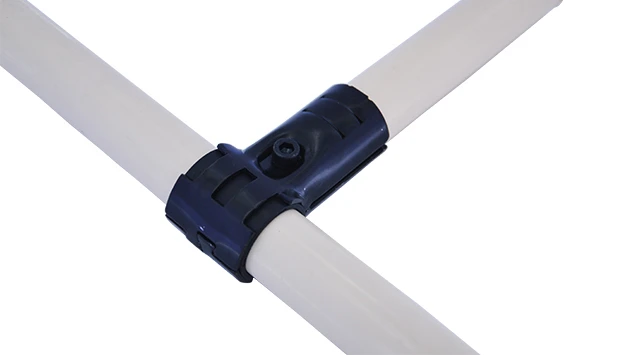
Two way lean pipe joint for 2 pcs 28MM lean pipe connection in straight angle with rotatory fucntion, which used widely in workbench, flow rack, hand trolley frame connection.
In the fast-paced world of manufacturing, where every second counts and efficiency can make or break a business, lean manufacturing has become more than just a buzzword—it's a survival strategy. At its core, lean is about stripping away waste, streamlining processes, and creating systems that adapt as quickly as market demands shift. But here's the thing: even the best lean strategies can falter if the physical tools supporting them are rigid, outdated, or one-size-fits-all. That's where modular solutions like lean pipe systems come into play, and at the heart of these systems lie the unsung heroes: lean pipe joints. Today, we're zeroing in on a game-changer in this space: the one way rotatory straight lean pipe joint. Why does this specific joint deserve a spot in your lean system? Let's dive in.
Lean Manufacturing: The Need for Systems That Move at Your Pace
First, let's ground ourselves in what lean manufacturing really demands. Imagine a production floor where change is constant: a new product line with different dimensions, a sudden spike in demand for a variant, or a shift to smaller batch sizes to reduce inventory. In such an environment, fixed workstations, rigid material racks, and inflexible assembly lines become liabilities. They trap you in outdated workflows, create bottlenecks when processes need to pivot, and even lead to unnecessary waste—whether that's time spent reworking a station, space wasted on unused equipment, or labor tied up in non-value-adding tasks.
Lean principles teach us that flow is everything. Materials should move seamlessly from one step to the next, workers should have tools within arm's reach, and the workspace should evolve as needs change. This is where modular lean systems shine. Built from lightweight pipes, joints, and accessories, these systems are like industrial Legos—you can assemble, disassemble, and reconfigure them without welding, heavy tools, or specialized labor. But the magic isn't just in the pipes; it's in how they connect. Joints are the linchpin. A poorly designed joint can turn a "modular" system into a frustrating, time-consuming hassle. A well-designed one? It becomes an enabler—letting you adapt on the fly, reduce downtime, and keep your lean goals on track.
Lean Pipe Joints: More Than Just Connectors
Lean pipe joints come in all shapes and sizes, each tailored to specific needs. There are fixed joints for stability, multi-way joints for branching structures, and rotatory joints for flexibility. But not all rotatory joints are created equal. The one way rotatory straight lean pipe joint stands out for its unique blend of control and adaptability. Let's break down what makes it different.
Traditional fixed joints lock pipes into place at a set angle—great for stability but useless when you need to tilt a workbench surface for better ergonomics or adjust the slope of a flow rack to speed up material flow. Multi-way rotatory joints, on the other hand, offer 360-degree rotation but can sometimes be overly complex, requiring tools to tighten or risking unintended movement if not secured properly. The one way rotatory straight joint hits the sweet spot: it allows controlled rotation in one direction (say, up and down or side to side) while maintaining rigidity when locked, giving you just the right amount of flexibility without sacrificing stability.

Inside the One Way Rotatory Straight Lean Pipe Joint: Design That Works as Hard as You Do
To understand why this joint is a lean superstar, let's get into its design. Typically made from high-grade steel with a chrome-plated finish (for corrosion resistance and durability), the one way rotatory straight joint is engineered for both strength and simplicity. Here's how it works: two cylindrical sleeves (to hold the lean pipes) are connected by a rotating mechanism that allows movement along a single axis—think of it like a door hinge, but sturdier and designed for industrial use. A locking lever or setscrew lets you fix the angle once you've positioned the pipes, ensuring the structure stays stable during operation.
What does this mean in practice? Let's say you're building a workbench for electronics assembly. Early in the week, your team is assembling small circuit boards, so the work surface needs to be flat. Mid-week, they switch to larger components that require a slight tilt to prevent parts from sliding off. With a fixed joint, you'd need to disassemble and rebuild the bench. With a one way rotatory joint? Loosen the locking lever, tilt the surface to 15 degrees, lock it back, and you're done—all in under a minute, no tools required (in some models). That's the kind of agility lean manufacturing thrives on.

5 Key Benefits of Choosing One Way Rotatory Straight Lean Pipe Joints
Now, let's translate that design into tangible benefits for your operation. Why should you prioritize this joint over others when building your lean system?
1. Unmatched Flexibility Without Compromising Stability
Lean systems live and die by their ability to adapt, but adaptability shouldn't mean sacrificing safety or reliability. The one way rotatory joint's controlled rotation lets you angles and positions to match evolving tasks—whether that's adjusting the height of a conveyor feed, tilting a flow rack to optimize gravity flow, or repositioning a tool holder for better worker ergonomics. And once locked, it stays put. Unlike some multi-axis joints that can "wobble" under heavy loads, this joint's single-axis design ensures stability, even in high-throughput environments. For example, a automotive parts manufacturer we worked with uses these joints on their flow racks: during peak production, they angle the racks steeper to speed up part delivery; during slower periods, they flatten them to reduce jostling—all without compromising the rack's structural integrity.
2. Reduced Downtime, Increased Productivity
In manufacturing, downtime is the enemy of lean. Every minute spent reconfiguring a workstation is a minute not spent adding value. Traditional fixed joints require tools, time, and sometimes even a second pair of hands to disassemble and rebuild. The one way rotatory joint? Most models can be adjusted by a single operator in 30 seconds or less. No wrenches, no bolts, no hassle. A food packaging plant in Ohio reported cutting reconfiguration time for their assembly line workbenches by 75% after switching to these joints—from 2 hours per workstation to just 30 minutes. That's hours of saved labor each week, not to mention the ability to pivot quickly when a new order comes in.
3. Durability That Stands Up to Industrial Wear
Let's talk longevity. Lean systems are investments, and you need components that can handle the daily grind. The one way rotatory straight lean pipe joint is built for this. Chrome-plated steel resists rust and corrosion, even in humid or dusty environments (think warehouses or production floors with coolant mist). The rotating mechanism uses precision bearings (in higher-end models) that minimize friction, ensuring smooth movement even after years of use. We've seen these joints last 5+ years in 3-shift operations, outperforming plastic or low-grade steel alternatives that crack or seize up. For a lean system to deliver long-term ROI, durability isn't optional—it's essential.
4. Cost Savings: Reuse, Don't replace
Lean is about eliminating waste, and that includes wasteful spending on new equipment. The beauty of modular systems is that components can be repurposed. A workbench today can become a material trolley tomorrow, and the one way rotatory joint makes this repurposing easier. Because it's adjustable, you don't need to buy new joints when your needs change—just reconfigure the existing ones. A furniture manufacturer in North Carolina told us they saved $12,000 in a single year by repurposing old lean pipe structures with these joints instead of buying new workstations. Plus, the reduced downtime during reconfigurations translates to more production time, which directly boosts your bottom line.
5. Worker Empowerment: Put Control in the Hands of Your Team
Here's a less talked-about but critical benefit: these joints empower your frontline workers. When operators can adjust their workstations to fit their needs—whether that's tilting a surface to reduce neck strain or repositioning a tool rack to avoid reaching—they feel more in control of their environment. This not only improves morale but also reduces ergonomic injuries, which are a major source of downtime in manufacturing. A study by the Manufacturing Institute found that workplaces with adjustable workstations report 23% fewer musculoskeletal disorders and 18% higher productivity. The one way rotatory joint puts that adjustability at their fingertips, turning "this workstation doesn't work for me" into "I can fix this in 30 seconds."
Real-World Applications: Where One Way Rotatory Joints Shine
To make this concrete, let's walk through two common applications where these joints deliver outsized value: workbenches and flow racks.
Application 1: Adaptive Workbenches for Dynamic Assembly Lines
Workbenches are the heartbeat of any assembly operation, and their design directly impacts efficiency. A static workbench works for repetitive, unchanging tasks—but in today's custom manufacturing world, tasks rarely stay the same. Enter the lean pipe workbench built with one way rotatory joints. For example, a medical device manufacturer uses these workbenches for assembling surgical tools. Each tool has unique assembly steps: some require precision work (flat surface), others need parts to slide into place (slight tilt), and some involve heavy components (lower height to reduce lifting strain). With one way rotatory joints at the bench's frame and surface, operators can adjust the height (via vertical rotation) and angle (via horizontal rotation) in seconds, matching the bench to the task. The result? A 30% reduction in assembly time per unit and a 40% drop in operator complaints about discomfort.
Application 2: Gravity Flow Racks That Keep Up With Demand
Flow racks are a staple in lean warehouses, using gravity to move materials from the "load" end to the "pick" end. But gravity is a finicky partner—too steep, and parts slide too fast (risking damage); too flat, and they get stuck (causing delays). The one way rotatory joint solves this by letting you adjust the rack's slope. A e-commerce fulfillment center we consulted for uses these joints on their flow racks for small electronics. During the holiday rush, they steepen the racks to keep up with high order volumes; post-holiday, they flatten them to reduce wear on delicate items like smartphone cases. The joints also make it easy to reconfigure the rack's layout—adding or removing lanes as product mixes change. No more buying new racks or hiring contractors to rebuild them; the team does it in-house, in hours instead of days.
How Do They Compare to Other Lean Pipe Joints? A Quick Breakdown
To help you decide if this joint is right for your needs, let's compare it to two common alternatives: fixed lean pipe joints and multi-way rotatory joints. The table below highlights key differences in flexibility, assembly time, cost, and ideal use cases.
| Joint Type | Flexibility (Adjustability) | Assembly/Reconfiguration Time | Cost (Relative) | Ideal For |
|---|---|---|---|---|
| Fixed Lean Pipe Joint | Low (angle fixed during assembly) | High (requires disassembly/rebuilding to change) | Lowest | Static, long-term setups (e.g., permanent storage racks) |
| Multi-Way Rotatory Joint | Very High (360° rotation on multiple axes) | Moderate (complex to adjust; risk of over-tightening) | Highest | Highly dynamic systems (e.g., robotic work cells with frequent retooling) |
| One Way Rotatory Straight Lean Pipe Joint | High (controlled single-axis rotation) | Low (30 seconds or less per adjustment) | Moderate | Most lean systems (workbenches, flow racks, conveyors) needing adaptability without complexity |
As the table shows, the one way rotatory joint strikes a balance: more flexible than fixed joints, simpler and more cost-effective than multi-way rotatory joints. For most lean manufacturing applications—where adaptability, speed, and reliability are key—this middle ground is exactly what you need.
Why Lean System Suppliers Prioritize This Joint
If you're working with a reputable lean pipe supplier, chances are they'll recommend one way rotatory straight joints for most applications. Why? Because they've seen firsthand how these joints solve the most common pain points manufacturers face. Suppliers aren't just selling parts—they're selling solutions, and these joints consistently deliver results. A quick chat with any supplier will reveal themes like "customer demand for faster reconfigurations" and "fewer returns due to instability." One supplier we spoke to noted that 70% of their workbench orders now include at least one of these joints, up from 30% five years ago. As manufacturers embrace more agile production models, the demand for adaptable components like this joint has skyrocketed.
Conclusion: The Small Component That Drives Big Lean Wins
In the grand scheme of lean manufacturing, a single pipe joint might seem. But as we've explored, it's the small, thoughtful components that often make the biggest difference in operational efficiency. The one way rotatory straight lean pipe joint isn't just a connector—it's a tool for empowerment, a catalyst for flexibility, and a cornerstone of systems that grow with your business. It lets you turn rigid workspaces into dynamic environments that respond to change, reduce waste, and put your team in control.
So, if you're building or upgrading your lean system, don't overlook the joints. Choose ones that match your need for adaptability, durability, and simplicity. Choose one way rotatory straight lean pipe joints—and watch your lean goals move from aspiration to reality.