- Company Articles
- Products and Technology
- Product knowledge
- Why Choose Swivel Stem Caster Wheels with Brake for Lean Pipe Systems?

Why Choose Swivel Stem Caster Wheels with Brake for Lean Pipe Systems?
Related Product
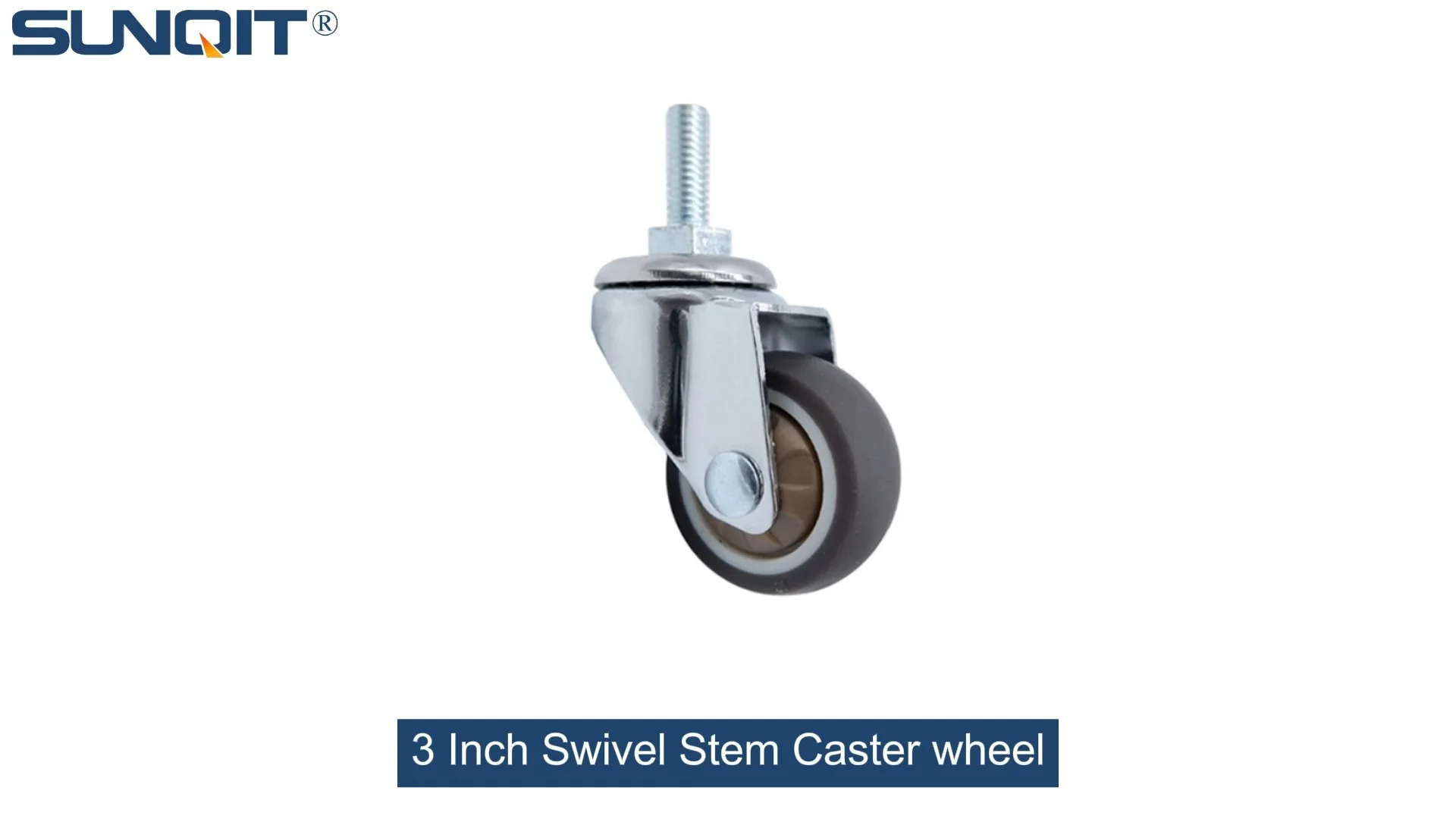
Swivel Stem Caster wheel
360 Degree Swivel Stem Caster. Threaded-post mount design, castors diameter 3 inch.Each swivel caster wheels loading 70KGS. Heavy enough and widely suit for carts, chairs, cabinet, flow rack, workbench, turnover rolley.
In the fast-paced world of manufacturing and warehousing, where every second counts and efficiency is the name of the game, lean pipe systems have emerged as quiet revolutionaries. These versatile, modular setups—built from simple pipes, joints, and accessories—are the backbone of agile production lines, flexible workstations, and streamlined material handling. But here's the thing: even the most well-designed lean pipe system is only as good as its ability to move when needed and stay put when it matters. That's where the unsung heroes come in: caster wheels. And not just any casters—swivel stem caster wheels with brake. Let's dive into why these small but mighty components are non-negotiable for anyone serious about maximizing the potential of their lean pipe system.
First, Let's Talk Lean Pipe Systems
Before we get into the nitty-gritty of casters, let's make sure we're all on the same page about what a lean pipe system actually is. At its core, it's a modular framework made from lightweight yet durable pipes (often steel or aluminum) and a variety of joints and accessories. Think of it as industrial Legos for grown-ups—you can build almost anything: workbenches, flow racks, turnover trolleys, material racks, and more. The beauty lies in its flexibility: need to reconfigure your assembly line for a new product? Disassemble, rearrange, and rebuild in hours, not days. This adaptability is why lean pipe systems are the go-to for industries from automotive to electronics, where change is constant and downtime is costly.
But here's the catch: a lean pipe system's flexibility isn't just about how it's built—it's about how it moves. A workbench bolted to the floor might be stable, but if your team needs to shift it three feet to the left to align with a new conveyor belt, that "stability" becomes a liability. Similarly, a flow rack loaded with parts that can't be easily repositioned to keep up with a faster assembly line? That's wasted time and frustrated workers. Mobility, in short, is the secret sauce that turns a static setup into a truly lean operation.
Why Caster Wheels Are More Than Just "Wheels"
If mobility is so critical, why not just slap any old wheels on your lean pipe structures? Because not all casters are created equal. In a lean environment, every component has a job to do—and caster wheels have two big ones: movement and control . You need to move heavy workbenches or loaded trolleys with minimal effort, but you also need to stop them precisely where they're needed, without any unwanted rolling. That's where swivel stem caster wheels with brake step up to the plate.
Let's break it down. "Swivel" means the wheel can rotate 360 degrees, making it easy to maneuver tight corners or navigate around obstacles on a busy factory floor. "Stem" refers to how the caster attaches to the structure—usually a threaded stem that screws into a mounting plate or directly into the lean pipe joint, ensuring a secure fit. And "with brake"? That's the game-changer. A simple foot pedal or lever that locks the wheel (or the swivel mechanism) in place, turning a mobile unit into a rock-solid workstation in seconds.
Imagine (oops, scratch that— think about ) a scenario: Maria, an assembly line worker, needs to move her lean pipe workbench closer to the conveyor belt to reduce the distance she reaches for parts. Without swivel casters, she'd have to wrestle the bench into position, maybe even get a coworker to help. With swivel casters, she can push it smoothly with one hand, pivot around a pallet of supplies, and glide it right where she needs it. Then, with a quick tap of her foot on the brake pedal, the bench stays put—no slipping, no sliding, no worrying about it shifting mid-task. That's efficiency. That's safety. That's the difference these casters make.

5 Unbeatable Benefits of Swivel Stem Caster Wheels with Brake
1. Maneuverability That Saves Time (and Sanity)
In a typical factory or warehouse, space is at a premium. Machinery, pallets, and workers are all sharing the same floor, which means your lean pipe structures need to be able to navigate tight spots. Swivel stem casters excel here. Their 360-degree rotation lets you turn on a dime—perfect for squeezing a material rack b (3 row and 3 floor) between two workstations or repositioning a lean pipe workbench to face a new assembly direction. Unlike rigid casters (which only move forward and backward), swivel casters eliminate the need for "shuffling" a heavy unit into place. One person can handle it, no sweat. That translates to less time wasted on reconfiguration and more time spent on actual production.
2. Safety First: No More Unintended Movement
A workbench rolling away mid-assembly isn't just annoying—it's dangerous. Loose parts could fall, workers could trip, and delicate components (like those on an ESD workbench) might get damaged. The brake mechanism on these casters is your first line of defense. When engaged, it locks the wheel securely, so even if someone bumps the bench or the floor vibrates from nearby machinery, it stays put. And let's not forget loading and unloading: when you're stacking parts onto a flow rack or placing tools on a workbench, the last thing you want is the unit shifting under you. The brake gives you stability you can trust, which means fewer accidents and more confidence for your team.
3. Adaptability to Any Lean Setup
Lean pipe systems are all about customization, and your casters should be too. Swivel stem caster wheels with brake play well with just about every lean component you can think of. Need to add them to a workbench E (single deck-without caster)? Screw the stem into the mounting plate, and you're done. Building a turnover trolley? Attach a set to the base, and suddenly you've got a mobile storage unit that can follow the assembly line. Even specialized setups like ESD workstations (which require static control) can benefit—many models come with ESD-compliant wheels that prevent static buildup, keeping sensitive electronics safe.
And it's not just about the structures—these casters adapt to different floor types too. Rubber wheels are gentle on concrete, polyurethane wheels handle smooth warehouse floors without marking, and heavy-duty steel wheels can tackle rough surfaces. No matter what your facility looks like, there's a swivel stem caster with brake that fits.
4. Durability That Keeps Up with Your Workflow
Let's be real: factory floors are tough on equipment. Casters take a beating—constant rolling, heavy loads, occasional impacts with pallets or walls. That's why cheap, flimsy casters just won't cut it. Swivel stem caster wheels with brake are built to last. The stems are usually made from hardened steel, the wheels from high-quality rubber, polyurethane, or steel, and the brake mechanisms are designed for thousands of engagements without failing. Many suppliers even offer caster accessories like replacement wheels or brake pads, so you can extend the life of your casters instead of replacing the whole unit when something wears out. When you invest in these casters, you're not just buying mobility—you're buying reliability.
5. They Speak the Language of Lean
At the end of the day, lean manufacturing is about eliminating waste—waste of time, waste of effort, waste of space. Swivel stem caster wheels with brake are lean in every sense. They reduce the time wasted moving heavy equipment. They eliminate the effort of wrestling with immobile workbenches. They let you reconfigure your space on the fly, so you're never stuck with a layout that doesn't fit your current needs. Even the little things add up: a brake that engages with a light tap of the foot (no bending over) saves workers from unnecessary strain, reducing fatigue and boosting productivity. When you choose these casters, you're not just adding wheels—you're embedding lean principles into the very structure of your operation.

Swivel Stem Caster with Brake vs. Other Caster Types: A Quick Comparison
| Caster Type | Maneuverability | Stability (with Load) | Safety Features | Best For |
|---|---|---|---|---|
| Swivel Stem with Brake | Excellent (360° rotation, tight turns) | High (brake locks wheel in place) | Brake prevents unintended movement; some ESD options | Lean pipe workbenches, flow racks, turnover trolleys—any setup needing mobility + stability |
| Rigid Caster (No Swivel) | Poor (only moves forward/backward) | Medium (no swivel "play," but no brake) | None—can roll if bumped | Straight-line movement only (e.g., fixed conveyor paths) |
| Swivel Caster (No Brake) | Excellent (same as with brake) | Low (can roll if bumped or on uneven floors) | None—risk of unintended movement | Temporary setups where constant movement is needed (rare in lean environments) |
| Heavy-Duty Industrial Caster | Good (but bulkier, harder to pivot) | Very High (sturdy build, often with brake) | Brake included, but overkill for most lean systems | Extremely heavy loads (e.g., 1000+ lbs)—not ideal for frequent reconfiguration |
As you can see, swivel stem caster wheels with brake strike the perfect balance of maneuverability, stability, and safety—making them the clear choice for lean pipe systems.

Real-World Wins: How These Casters Transform Workflows
Let's get concrete. How do these casters actually make a difference on the factory floor? Let's look at a few scenarios:
Case 1: The Electronics Assembly Line
A mid-sized electronics manufacturer was struggling with their assembly process for circuit boards. Their lean pipe workbenches were fixed in place, so workers had to carry components back and forth from the flow rack to their stations—a daily walk of over a mile per person, by their estimates. They added swivel stem caster wheels with brake to both the workbenches and the flow racks. Now, workers can roll the flow rack right next to their bench, lock the brakes, and grab parts without moving. Result? A 25% reduction in time spent fetching materials, and happier workers who no longer came home with sore feet.
Case 2: The Automotive Parts Warehouse
A warehouse storing automotive parts used static flow racks that were bolted to the floor. When a new car model was introduced, they needed to rearrange the racks to prioritize the new parts—but unbolting, moving, and rebolting took an entire weekend, shutting down operations. They switched to flow racks mounted on swivel stem casters with brake. Now, reconfiguration takes a few hours: unlock the brakes, roll the racks into new positions, lock them down, and they're ready to go. The warehouse now handles model changes without losing a day of work.
Case 3: The Medical Device Startup
A small medical device startup had limited floor space, so they needed their lean pipe workbenches to double as both assembly stations and packing tables. Without casters, they had to clear the bench, carry it to the packing area, and set it up again—wasting 30 minutes per switch. With swivel stem casters, one worker can wheel the bench between areas in 2 minutes, lock the brake, and start packing. They now use the same benches for two tasks, saving space and time.
Keeping Your Casters Rolling: Simple Maintenance Tips
Like any equipment, swivel stem caster wheels with brake need a little TLC to keep performing their best. Here's how to make sure they last:
- Clean the wheels regularly: Dust, debris, and small metal shavings can get stuck in the wheel bearings, making them hard to roll. Wipe them down with a damp cloth weekly, and use a brush to dislodge any gunk.
- Check the brakes: Test the brake pedal/lever periodically to make sure it engages smoothly and locks the wheel tightly. If it feels loose or doesn't lock, tighten the bolts or replace the brake pad (most suppliers sell caster accessories like replacement brakes).
- Lubricate the swivel joint: A little silicone spray or lubricating oil on the swivel mechanism every month will keep the caster turning smoothly, preventing squeaks and reducing wear.
- Inspect the stem and mounting: Make sure the stem is tight in the mounting plate—loose stems can wobble, causing instability. Tighten the mounting bolts if they're loose.
- replace worn wheels: If the wheels start to crack, flatten, or lose traction, swap them out. Most casters let you replace just the wheel, not the entire unit—saving you money.
How to Choose the Right Swivel Stem Caster Wheel with Brake
Not all swivel stem casters are created equal, so it's important to pick the right one for your needs. Here's what to consider:
Load Capacity
First, figure out how much weight the caster will need to support. This includes the weight of the lean pipe structure itself plus the maximum load it will carry (tools, parts, etc.). Casters are rated for a specific weight—don't skimp here. A caster rated for 200 lbs shouldn't be used for a workbench that holds 300 lbs of equipment; it will wear out quickly and could fail.
Floor Type
Match the wheel material to your floor:
- Concrete floors: Rubber or polyurethane wheels (gentle on concrete, good traction).
- Smooth warehouse floors (vinyl, epoxy): Polyurethane or nylon wheels (won't leave marks).
- Rough or uneven floors: Steel wheels (durable, can handle bumps).
Environment
If you work with sensitive electronics, look for ESD-compliant casters to prevent static damage. For wet or corrosive environments (like food processing), choose stainless steel casters that resist rust. And if your facility is extra noisy, rubber wheels can help dampen rolling sounds.
Supplier Reliability
Finally, buy from a reputable lean pipe supplier. They'll help you choose the right caster for your setup, offer replacement parts (like caster accessories), and stand behind their products. A good supplier can make all the difference between a caster that lasts 6 months and one that lasts 5 years.
The Bottom Line: Mobility + Stability = Lean Success
Lean pipe systems are all about flexibility, efficiency, and adaptability. But without the right casters, that flexibility is just a promise. Swivel stem caster wheels with brake turn that promise into reality. They let you move your lean pipe workbenches, flow racks, and trolleys with ease, lock them down securely when needed, and adapt to changing workflows in minutes—not days. They save time, reduce frustration, and keep your team safe. In short, they're the missing piece that makes your lean system truly lean.
So if you're building or upgrading a lean pipe system, don't overlook the casters. Choose swivel stem caster wheels with brake. Your workers will thank you, your productivity will soar, and your bottom line will reflect the difference. After all, in the world of lean, it's the small, smart choices that add up to big results.