- Company Articles
- Products and Technology
- Product knowledge
- Why Chrome Coating Matters for One Side Rotatory Parallel Lean Pipe Joints

Why Chrome Coating Matters for One Side Rotatory Parallel Lean Pipe Joints
Related Product
Parallel Lean Pipe Joint
Parallel lean pipe joint used for 2 pcs 28MM lean pipe connection in parallel direction to enhance frame structure, usually for heavy payload requirement for workbench. flow rack, hand trolley.
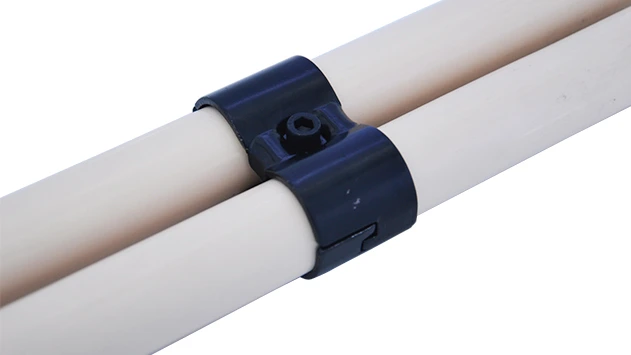
Walk into any modern manufacturing facility, warehouse, or assembly plant, and you'll likely spot an array of workbenches, flow racks, and material handling systems that seem to effortlessly adapt to the needs of the operation. Behind this flexibility lies a humble but crucial component: the lean pipe joint. Specifically, the one side rotatory parallel lean pipe joint —a small part that plays a big role in keeping lean systems running smoothly. But not all joints are created equal. Today, we're diving into why chrome coating on these particular joints isn't just a cosmetic choice, but a game-changer for durability, efficiency, and long-term cost savings in lean manufacturing.
First Things First: What Are One Side Rotatory Parallel Lean Pipe Joints?
Before we get into the "why" of chrome coating, let's make sure we're all on the same page about the "what." Lean pipe systems—often called "flexible pipe systems"—are the backbone of many lean manufacturing setups. They're built using lightweight, modular pipes and joints that can be easily assembled, disassembled, and reconfigured to create everything from workbenches and flow racks to turnover trolleys and material racks. Think of them as the industrial equivalent of building blocks for adults.
Within these systems, the parallel lean pipe joint one side rotatory is a standout. As the name suggests, it's designed to connect two parallel lean pipes while allowing rotation on one side. This rotation is key: it lets workers adjust angles, fold components out of the way, or reposition shelves and rails without having to disassemble the entire structure. Imagine a workbench with a side extension that can swing up when you need extra space and fold down when you don't—that's the magic of a one side rotatory joint in action.
But here's the thing: these joints take a lot of abuse. They're twisted, turned, and loaded with weight day in and day out. They're exposed to dust, moisture, and sometimes even chemicals. Over time, this wear and tear can turn a smooth, functional joint into a stiff, rusty hassle. That's where chrome coating steps in.
The Role of Chrome Coating: More Than Just Shiny Metal
Chrome coating—technically known as chromium plating—is a process where a thin layer of chromium is electroplated onto the surface of a metal part. At first glance, it might seem like just a way to make the joint look nicer (and yes, that mirror-like finish does add a professional touch). But dig deeper, and you'll find that chrome brings a host of practical benefits that directly impact the performance and lifespan of these critical lean system components.
Let's break down why this coating matters, especially for one side rotatory parallel lean pipe joints.
1. Corrosion Resistance: Fighting the Silent Enemy
Rust and corrosion are the arch-nemeses of any metal component, and lean pipe joints are no exception. In manufacturing environments, joints are often exposed to humidity (from cooling systems or washdowns), condensation, or even spilled liquids. Uncoated steel joints start to rust quickly under these conditions, and once rust takes hold, it doesn't just look bad—it weakens the metal, causes sticking, and eventually leads to failure.
Chrome changes the game. Chromium is naturally resistant to oxidation, meaning it doesn't react with oxygen in the air to form rust. When electroplated onto a joint, it creates a barrier that seals the underlying metal from moisture and corrosive elements. Picture this: a flow rack in a warehouse that's located near a loading dock, where rain and humidity seep in during storms. An uncoated joint might start showing rust spots within months, but a chrome-coated one? It could look and function like new for years.
This resistance isn't just about longevity—it's about safety, too. A rusted joint is a weak joint, and a weak joint in a workbench or material rack could lead to collapse, damaging products or injuring workers. Chrome coating helps prevent that risk entirely.
2. Wear Resistance: Standing Up to Constant Motion
One side rotatory parallel lean pipe joints are made to move. Every time a worker adjusts a flow rack's angle, swings a shelf out of the way, or reconfigures a workbench, that joint is rotating. Over thousands (or millions) of rotations, the metal surfaces rub against each other, causing wear. Without protection, this wear can make the joint loose, wobbly, or even stuck.
Chrome is hard—really hard. On the Rockwell hardness scale, chrome plating typically scores between 65 and 70 HRC (Hardness Rockwell C), which is harder than most uncoated steels. This hardness means the joint's moving parts resist abrasion, even with constant use. Think of it like adding a layer of armor to the areas that rub together. Instead of the metal wearing down to a rough, pitted surface, the chrome stays smooth, ensuring the joint rotates freely for years longer than its uncoated counterparts.
In lean systems, where downtime is the enemy, this wear resistance is priceless. A stiff or stuck joint might take minutes to fix—minutes that add up to hours of lost productivity over a year. Chrome-coated joints keep operations moving without those frustrating interruptions.
3. Smooth Operation: Keeping Adjustments Effortless
Have you ever tried to adjust a folding chair that's been left out in the rain? It's stiff, squeaky, and takes way more effort than it should. Now imagine that same struggle, but with a 200-pound flow rack loaded with parts. Not fun.
Chrome coating solves this problem by creating an ultra-smooth surface. Unlike uncoated metal, which can develop micro-scratches and imperfections over time, chrome's mirror-like finish stays slick. This reduces friction between the joint's moving parts, making rotation feel effortless. For workers on the factory floor, this means less physical strain and faster adjustments. Need to tilt a flow rack to speed up material flow? A quick twist of the chrome-coated joint, and it's done. No grunting, no tools, no wasted time.
This smoothness also reduces noise. Uncoated joints, when worn, can squeak or grind as they move—a constant background irritation that adds up over a shift. Chrome-coated joints, with their low-friction surfaces, operate quietly, creating a more pleasant work environment.
4. Hygiene and Cleanliness: A Must for Sensitive Industries
Not all manufacturing environments are created equal. In industries like food processing, pharmaceuticals, or electronics assembly, cleanliness is non-negotiable. Even a tiny speck of dust or bacteria can ruin a batch of products or compromise a circuit board. That's where chrome coating's non-porous surface becomes a huge advantage.
Uncoated metal joints have tiny pores and crevices where dirt, grease, and bacteria can hide. Cleaning them thoroughly is a hassle—you'd need brushes, solvents, and plenty of time. Chrome, on the other hand, is non-porous. Its smooth surface leaves nowhere for contaminants to cling, making it easy to wipe clean with a damp cloth or disinfectant. This is a game-changer for facilities that need to meet strict (hygiene standards) or comply with regulations like FDA guidelines.
Take a pharmaceutical packaging line, for example. The workbench where pills are bottled might need daily sanitization. A chrome-coated joint can be wiped down in seconds, ensuring the area stays sterile without disrupting production. Uncoated joints? They'd require scrubbing and might still harbor bacteria, putting the entire batch at risk.
5. Longevity: Saving Money in the Long Run
Let's talk numbers. Chrome-coated lean pipe joints do cost a bit more upfront than uncoated ones—usually 10-15% extra. At first glance, that might make you think, "Why not save the money?" But here's the catch: uncoated joints have to be replaced far more often. A typical uncoated one side rotatory parallel joint might last 1-2 years in a busy facility before it rusts, wears out, or gets stuck. A chrome-coated one? It can easily last 5-7 years—sometimes longer with basic maintenance.
Do the math: If an uncoated joint costs $5 and needs replacement every 2 years, that's $2.50 per year. A chrome-coated joint might cost $6 but lasts 6 years, working out to $1 per year. Over time, you're saving money. Plus, you're avoiding the hidden costs of downtime for replacements, the labor to swap out old joints, and the risk of damaged products from unstable equipment. In lean manufacturing, where every penny and minute counts, that's a no-brainer.

Chrome-Coated Joints in Action: Real-World Applications
To really understand the impact of chrome coating, let's look at how these joints perform in two common lean system setups: the workbench and the flow rack.
Workbenches: Where Precision Meets Flexibility
Workbenches are the heart of assembly lines, where workers spend hours piecing together products. Many modern workbenches use one side rotatory parallel lean pipe joints to attach accessories like tool holders, monitor arms, or side shelves. These accessories need to be adjustable—sometimes multiple times a day—as workers switch between tasks.
Imagine a worker assembling smartphones on a lean pipe workbench. In the morning, they need a tool holder swung out to the left for easy access. In the afternoon, they switch to a larger component and need the holder moved to the right. With a chrome-coated joint, this adjustment takes two seconds: a quick twist, and the holder is in place. The smooth rotation doesn't jostle the tools, and the joint stays tight, so the holder doesn't sag mid-task.
Now, picture the same scenario with an uncoated joint. After a few months of use, rust starts to build up, making rotation stiff. The worker has to use both hands to yank the holder into position, spilling a screwdriver in the process. Over time, the joint wears down, and the holder starts to wobble, making it hard to keep tools organized. Productivity dips, frustration rises—all because of a small, uncoated part.
Flow Racks: Keeping Materials Moving Efficiently
Flow racks are designed to gravity-feed materials to assembly lines, reducing the need for workers to walk to storage areas. They rely on angled rails that let bins or boxes slide down as items are taken from the front. The angle of these rails is critical—too steep, and items might slide too fast and tip over; too shallow, and they get stuck.
One side rotatory parallel lean pipe joints are often used to adjust the angle of flow rack rails. With a chrome-coated joint, a supervisor can tweak the angle in seconds to optimize material flow. Even after months of vibrations from sliding boxes and exposure to warehouse humidity, the joint remains smooth and corrosion-free. The rails stay at the perfect angle, and materials keep moving.
An uncoated joint in the same flow rack? Moisture from the warehouse air causes it to rust, making angle adjustments a chore. Over time, the rust eats away at the joint, and the rail starts to sag. Bins get stuck, workers have to manually push them, and the flow rack becomes more of a hassle than a help. That's the opposite of lean manufacturing—and it all starts with a joint that wasn't protected.

Chrome vs. the Alternatives: Why Not Paint or Zinc?
You might be wondering: If corrosion resistance is the goal, why not just paint the joint or use zinc plating instead of chrome? It's a fair question, and the answer lies in how well these alternatives hold up in real-world conditions.
| Coating Type | Corrosion Resistance | Wear Resistance | Smoothness | Maintenance Needs | Typical Lifespan |
|---|---|---|---|---|---|
| Chrome Plating | Excellent (resists rust, chemicals, humidity) | High (hard, abrasion-resistant surface) | Very High (mirror-like finish, low friction) | Low (occasional wiping with a damp cloth) | 5-7 years |
| Paint | Poor (chips easily, moisture seeps under paint) | Low (paint wears off with rotation) | Low (rough surface, friction increases as paint wears) | High (needs repainting every 6-12 months) | 0.5-1 year |
| Zinc Plating | Good (resists rust in dry environments) | Medium (softer than chrome, wears faster) | Medium (smooth initially, but dulls with wear) | Medium (may need re-plating after 2-3 years) | 2-3 years |
As the table shows, chrome outperforms paint and zinc in almost every category. Paint chips easily, especially on moving parts, and once it chips, rust sets in. Zinc is better than paint but still softer than chrome, so it wears down faster with repeated rotation. Neither offers the same level of smoothness or longevity as chrome. For joints that need to move, last, and stay clean, chrome is the clear winner.
Caring for Chrome-Coated Joints: Simple Maintenance Tips
Chrome-coated joints are tough, but they're not invincible. A little maintenance goes a long way in keeping them performing at their best. Here's what you need to do:
- Wipe them down regularly: Dust and grease can build up on the joint's surface, which can attract moisture over time. Once a week, wipe the joint with a damp cloth (mild soap is fine for stubborn grease). This takes 10 seconds and prevents grime from eating away at the coating.
- Lubricate sparingly: Every 3-6 months, apply a drop of light machine oil (like 3-in-1 oil) to the joint's moving parts. This keeps rotation smooth and prevents any minor friction from wearing down the chrome. Just don't overdo it—too much oil attracts dust.
- Check for damage: Inspect joints monthly for chips or scratches in the chrome. If you find one, clean the area and apply a small amount of clear nail polish to seal it. This prevents moisture from reaching the underlying metal and causing rust.
That's it! No fancy tools, no expensive cleaners—just basic care that fits easily into a regular maintenance routine.
Conclusion: Chrome Coating—A Small Detail with Big Returns
When you're building or upgrading a lean system, it's easy to focus on the big-ticket items: the pipes, the workbench tops, the flow rack rails. But the smallest components—like the one side rotatory parallel lean pipe joint—can make the biggest difference in how well the system performs.
Chrome coating isn't just about making joints look shiny. It's about protecting against corrosion, reducing wear, ensuring smooth operation, and extending lifespan. It's about saving time, money, and frustration in the long run. Whether you're setting up a new workbench, a flow rack, or an entire lean manufacturing line, choosing chrome-coated joints is a decision that pays off every day in smoother operations, fewer breakdowns, and a more efficient workflow.
So the next time you're perusing lean pipe components, remember: the best lean systems aren't just built on flexibility—they're built on durability. And when it comes to durability, chrome coating on one side rotatory parallel lean pipe joints is an investment that's hard to beat.