- Company Articles
- Products and Technology
- Product knowledge
- Why Chrome Plating Matters for Lean Pipe Clamps: Benefits and Properties

Why Chrome Plating Matters for Lean Pipe Clamps: Benefits and Properties
Related Product
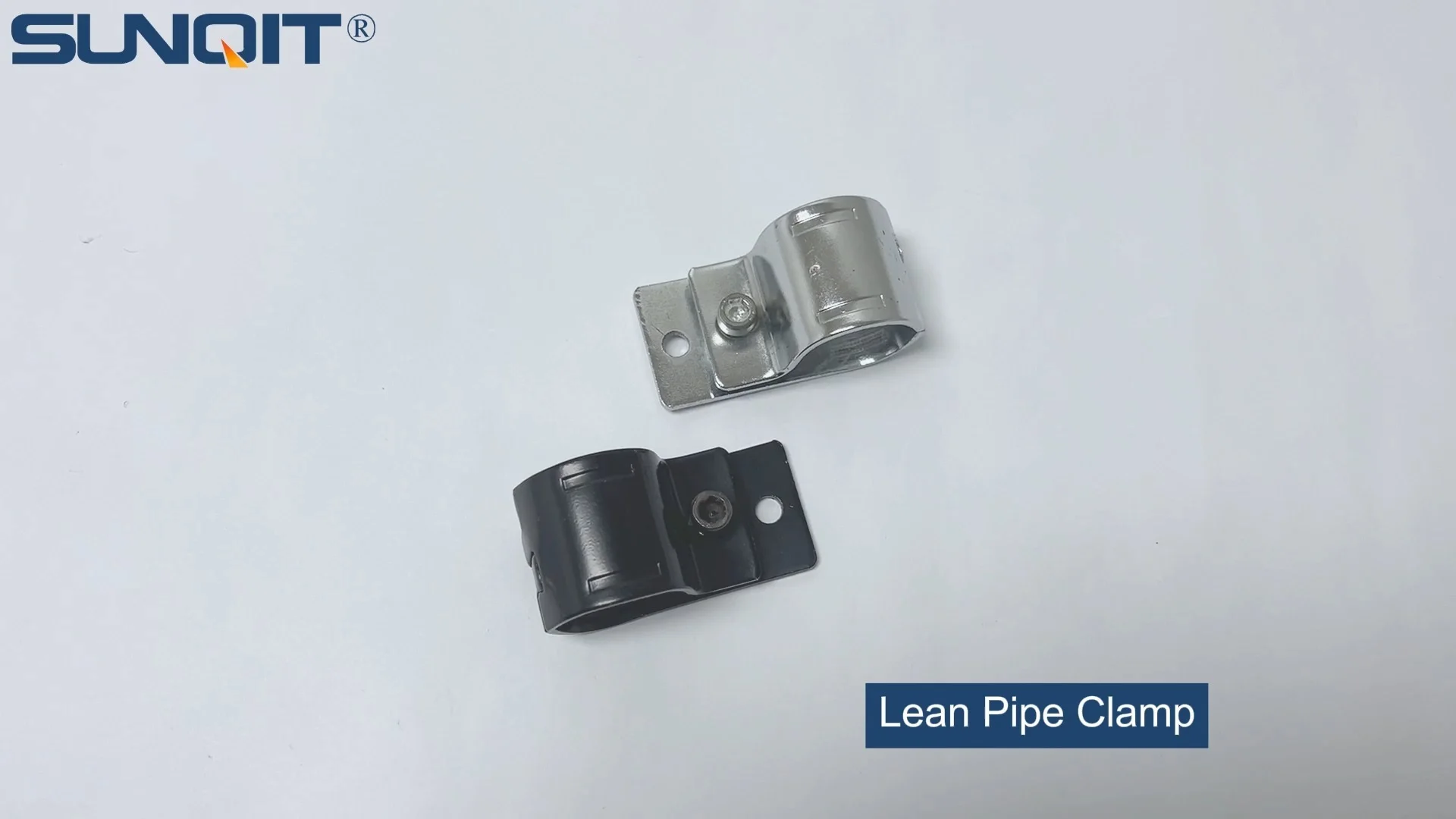
Lean Pipe Clamp
Lean pipe clamp is used for rack system hang monitor or other panel for workbenck, flowrack in production daily use.
Walk into any modern manufacturing facility, and you'll likely hear the hum of efficiency: conveyor belts gliding, workers moving with purpose, and materials flowing seamlessly from one station to the next. Behind this orchestrated chaos lies a silent hero of lean manufacturing: the lean system. These modular, flexible setups—whether they're workbenches where assemblies take shape, flow racks that keep parts within arm's reach, or conveyors that eliminate manual material handling—are the backbone of waste reduction and productivity. But ask any plant manager what keeps these systems from falling apart, and they'll point to a small but mighty component: the lean pipe clamp. These unassuming connectors hold the entire structure together, bearing weight, absorbing vibration, and adapting to constant reconfigurations. Yet not all clamps are created equal. The difference between a clamp that lasts months and one that endures years? Often, it's the coating. And when it comes to durability, reliability, and performance, chrome plating stands in a league of its own.
1. Lean Systems: The Backbone of Modern Manufacturing
Before diving into the specifics of chrome plating, let's ground ourselves in why lean systems matter. Lean manufacturing, at its core, is about doing more with less—less waste, less time, less resources—while delivering more value to customers. Traditional rigid production lines, with their fixed structures and inflexible workflows, struggle to keep up with today's fast-changing demands: shorter product lifecycles, custom orders, and the need to pivot quickly. Enter lean pipe systems. Built from lightweight pipes, joints, and clamps, these systems are modular by design. Need to reconfigure a workbench for a new product? Swap out a few pipes. Expand a flow rack to accommodate more inventory? Add a section in hours, not days. This adaptability is why lean systems have become indispensable in industries from automotive to electronics, where agility is non-negotiable.
But here's the thing: a lean system is only as strong as its weakest link. And more often than not, that link is the clamp. Think about it: every connection in a workbench, every joint in a flow rack, relies on clamps to hold pipes securely. A loose clamp can cause a shelf to sag, risking product damage or worker injury. A corroded clamp might seize up, making reconfiguration impossible. A worn clamp could snap under stress, bringing an entire line to a halt. In a world where downtime costs manufacturers thousands of dollars per minute, the reliability of these small components becomes a big deal. That's where chrome plating steps in—not as a luxury, but as a necessity.
2. The Science of Chrome Plating: More Than Just Shine
Chrome plating isn't just about giving clamps a glossy finish (though that's a nice bonus). It's a precision engineering process that transforms the surface of a clamp to enhance its performance. At its core, chrome plating is an electroplating technique where a thin layer of chromium is deposited onto the surface of a metal (usually steel) through an electrochemical reaction. The process starts with cleaning the clamp to remove oils, rust, or debris—any impurity can disrupt the plating adhesion. Then, the clamp is submerged in a bath of chromic acid solution, with an electric current passing through it. The current causes chromium ions in the solution to bond to the clamp's surface, forming a hard, uniform layer. The result? A coating that's not just stuck on, but chemically bonded to the metal, ensuring it won't chip or peel under stress.
But why chromium? Chromium is a transition metal with unique properties that make it ideal for this role. It's naturally resistant to corrosion, thanks to a thin oxide layer that forms on its surface when exposed to air—this layer acts as a barrier, preventing moisture and chemicals from reaching the underlying steel. It's also incredibly hard: chrome-plated surfaces typically have a hardness of 800–1000 Vickers (for context, stainless steel averages around 200–300 Vickers), meaning they can withstand heavy wear and abrasion. And unlike some coatings that dull over time, chromium retains its smooth, low-friction surface, even after repeated use. These properties aren't just technical specs—they translate directly to better performance in the real world.

3. The Benefits of Chrome-Plated Lean Pipe Clamps
3.1 Corrosion Resistance: Fighting the Silent Enemy
Walk through any factory, and you'll notice one constant enemy: corrosion. Whether it's humidity in the air, oils from machinery, cleaning chemicals, or even sweat from workers' hands, metal components are under constant attack. Uncoated steel clamps? They'll start rusting within weeks. Zinc-plated clamps might hold up a bit longer, but their thin coating can wear off, leaving the steel exposed. Chrome plating, however, is a corrosion-fighting powerhouse. The chromium oxide layer we mentioned earlier acts like a shield, repelling water, oils, and most industrial chemicals. In high-moisture environments—think food processing plants or facilities near the coast—this is a game-changer. A chrome-plated clamp won't develop the flaky rust that gums up threads or weakens the connection. It stays tight, reliable, and ready to perform, even in harsh conditions.
3.2 Wear Resistance: Built to Withstand the Grind
Lean systems are meant to be reconfigured. A workbench might be adjusted a dozen times a month as teams switch between projects. A flow rack could be disassembled and rebuilt to fit a new layout. Each time you loosen or tighten a clamp, you're putting stress on its surface. Over time, this repeated friction can wear down uncoated or poorly coated clamps, stripping threads, deforming the metal, or creating rough edges that make future adjustments harder. Chrome plating, with its extreme hardness, laughs in the face of this wear. The hard chromium layer resists abrasion, so even after hundreds of tighten-loosen cycles, the clamp's threads remain crisp, and its surface stays smooth. This isn't just about longevity—it's about maintaining functionality. A clamp that still adjusts easily after a year of use means less frustration for workers and less downtime for the line.
3.3 Low Friction: Smoother Adjustments, Less Effort
Ever tried to slide a rusted clamp along a pipe? It's like trying to push a boulder uphill. The friction slows you down, increases the effort required, and can even damage the pipe's surface. Chrome-plated clamps, with their mirror-like finish, have inherently low friction. This makes reconfiguring lean systems faster and easier. Workers don't have to strain to adjust a clamp; it glides into place smoothly. Less effort means less fatigue, which translates to more productivity. Plus, the low friction reduces wear on the pipes themselves—no more scratches or dents from rough clamp surfaces. It's a win-win: easier for your team, gentler on your equipment.
3.4 Cleanliness and Aesthetics: More Than Just Looks
In industries like electronics manufacturing or pharmaceuticals, cleanliness isn't optional—it's regulated. Dust, rust flakes, or grime from equipment can contaminate products, leading to defects or even safety violations. Chrome-plated clamps shine here (literally). Their smooth, non-porous surface doesn't trap dirt or bacteria, making them easy to wipe clean with a damp cloth. Unlike painted or powder-coated clamps, which can chip and harbor debris in the cracks, chrome stays intact, maintaining a sterile appearance. And let's not overlook the psychological factor: a clean, well-maintained workspace boosts morale. Workers take pride in environments that look professional, and chrome-plated clamps add a touch of polish that signals attention to detail. It's a small thing, but small things add up to a culture of excellence.
3.5 Longevity: Saving Money in the Long Run
Let's talk dollars and cents. Chrome-plated clamps often cost more upfront than their uncoated or zinc-plated counterparts. At first glance, that might seem like a downside. But lean manufacturing is about long-term value, not short-term savings. A chrome-plated clamp can last 3–5 times longer than an uncoated one. Think about it: if you replace uncoated clamps every 6 months, versus chrome-plated ones every 3 years, the math quickly favors chrome. Factor in the cost of downtime when a clamp fails, the labor to replace it, and the risk of damaged products from a collapsed structure, and the investment in chrome plating becomes a no-brainer. It's not just about saving money on clamps—it's about protecting your entire lean system's integrity.

4. Real-World Impact: How Chrome Plating Elevates Lean Systems
To put these benefits into perspective, let's look at two common applications of lean pipe clamps: workbenches and flow racks. These are the workhorses of the factory floor, and they rely heavily on clamps to function.
4.1 Workbenches: Where Precision Meets Durability
A typical assembly workbench in an electronics plant might hold sensitive components, tools, and even automated equipment. The surface needs to be stable—no wobbling, no sagging—because a single mistake during assembly can ruin a product. The clamps holding the bench's frame together are under constant stress: the weight of the bench top, the tools, and the workers leaning on it. Over time, this static load can cause uncoated clamps to stretch or corrode, leading to a wobbly bench. Chrome-plated clamps, with their high tensile strength and corrosion resistance, maintain their grip. Even after years of use, the bench stays level, ensuring precision in every assembly. And when the team needs to add a shelf or adjust the height? The clamps loosen smoothly, no rusted threads or stuck joints, allowing for quick changes without disrupting the workflow.
4.2 Flow Racks: Keeping Materials Moving
Flow racks are all about movement. They use gravity or rollers to feed materials to workers, reducing the need to bend, reach, or walk—key for ergonomics and speed. But a flow rack's efficiency depends on its structure staying rigid. If a clamp loosens, the rack might tilt, causing materials to jam or slide unevenly. In a busy automotive plant, where thousands of parts move through flow racks daily, a single jam can halt production. Chrome-plated clamps excel here. Their wear resistance means they don't loosen from the constant vibration of materials sliding down the rollers. Their corrosion resistance stands up to the lubricants used on the rollers and the occasional spill. And their low friction makes it easy to reposition sections of the rack as production needs change. The result? A flow rack that keeps materials moving, day in and day out, with minimal maintenance.

5. Chrome Plating vs. Alternatives: A Closer Look
You might be wondering: are there other coatings that can deliver similar benefits? Let's compare chrome plating to three common alternatives—zinc plating, powder coating, and nickel plating—to see how they stack up.
| Property | Chrome Plating | Zinc Plating | Powder Coating | Nickel Plating |
|---|---|---|---|---|
| Corrosion Resistance | Excellent (resists moisture, oils, chemicals) | Good (but thin coating wears off quickly) | Fair (prone to chipping, which exposes steel) | Very Good (but less durable than chrome) |
| Wear Resistance | Excellent (hardness: 800–1000 Vickers) | Poor (soft coating; scratches easily) | Fair (thick but brittle; chips under stress) | Good (hardness: 400–600 Vickers) |
| Friction | Low (smooth, glossy surface) | Moderate (matte finish; higher friction) | High (textured surface) | Low (similar to chrome, but less durable) |
| Maintenance | Low (easy to clean; no chipping) | High (needs re-plating after wear) | High (touch-ups needed for chips) | Moderate (prone to tarnishing) |
| Best For | High-wear, high-moisture environments (factories, warehouses) | Light-duty, dry environments | Aesthetic applications (non-structural parts) | Decorative or low-wear industrial use |
As the table shows, chrome plating outperforms alternatives in the areas that matter most for lean pipe clamps: corrosion resistance, wear resistance, and low maintenance. While other coatings might be cheaper upfront, they can't match chrome's ability to stand up to the demands of a busy manufacturing environment.
6. Choosing the Right Chrome-Plated Clamp: What to Look For
Not all chrome-plated clamps are created equal. To ensure you're getting the full benefits, here are a few key factors to consider when sourcing from a lean pipe clamp supplier:
- Plating Thickness : A good chrome plating should be between 5–20 microns thick. Too thin, and it won't offer enough protection; too thick, and it might crack under stress.
- Adhesion : The plating should bond tightly to the steel. Ask suppliers about their pre-plating cleaning process—proper cleaning ensures better adhesion.
- Hardness : Look for a Vickers hardness rating of at least 800. This ensures the coating can withstand heavy wear.
- Surface Finish : A smooth, uniform finish indicates quality plating. Avoid clamps with pits, bubbles, or uneven coloring—these are signs of poor workmanship.
Working with a reputable lean pipe clamp supplier is also critical. Suppliers with experience in lean manufacturing understand the unique demands of these systems and will prioritize quality in their plating process. They'll also offer consistent batch quality, so you don't end up with clamps that vary in performance.
7. Conclusion: Chrome Plating—A Small Investment with Big Returns
In the world of lean manufacturing, every component is a piece of the efficiency puzzle. Lean pipe clamps might seem small, but they play a vital role in keeping systems flexible, stable, and productive. Chrome plating elevates these clamps from mere connectors to reliable workhorses, offering unmatched corrosion resistance, wear resistance, and longevity. It's not just about making clamps look good—it's about making them perform better, last longer, and save money in the long run. Whether you're building a workbench, a flow rack, or an entire production line, chrome-plated lean pipe clamps are an investment in the future of your operation. They're a testament to the lean principle that excellence lies in the details—and sometimes, the smallest details make the biggest difference.
So the next time you walk through your facility, take a moment to look at those clamps. They might be silent, but they're working hard. And with chrome plating, they'll keep working hard—for years to come.