- Company Articles
- Products and Technology
- Product knowledge
- Why Communication Equipment Manufacturers Rely on Two Way Aluminum Pipe Joints

Why Communication Equipment Manufacturers Rely on Two Way Aluminum Pipe Joints
Related Product
Two Way Aluminum Pipe Joint
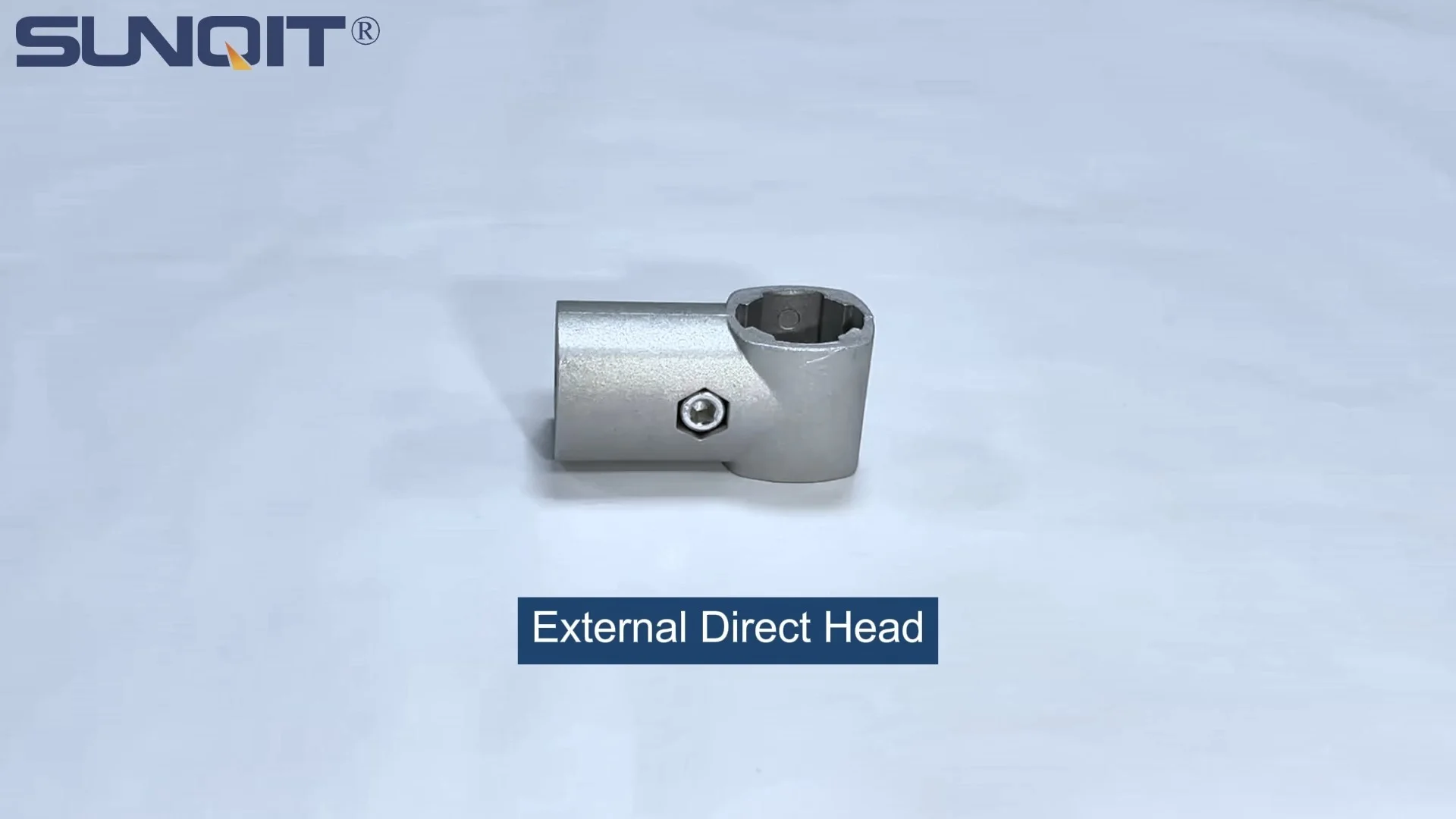
Aluminum 2 way pipe joint for 28mm aluminum pipe connection in 2 direction.
Walk into any modern communication equipment manufacturing plant, and you'll be met with a symphony of precision: the soft hum of circuit board testers, the rhythmic click of assembly line tools, and the steady glide of components moving from station to station. These facilities—churning out 5G routers, fiber optic transceivers, and satellite communication gear—operate at the intersection of speed and accuracy. A single misaligned workbench or a jammed flow rack can disrupt production timelines, delay product launches, and even compromise the reliability of the tech that keeps our world connected. In this high-stakes environment, manufacturers aren't just investing in cutting-edge machinery; they're rethinking the very structures that hold their operations together. And increasingly, the unsung hero of this transformation is the two way aluminum pipe joint.
At first glance, a joint might seem like a trivial part of the production puzzle. But in reality, it's the quiet architect of efficiency. Communication equipment manufacturing demands flexibility—lines that can switch from assembling small IoT sensors to large (base stations) in hours, not days. It requires durability to withstand the daily wear of heavy components and constant adjustments. And it needs compatibility with the lightweight, corrosion-resistant materials that define modern lean systems. Two way aluminum pipe joints check all these boxes, and then some. Let's dive into why they've become indispensable for manufacturers striving to stay ahead in an industry where innovation waits for no one.
The Pressure Cooker of Communication Equipment Production
To understand the role of two way aluminum pipe joints, we first need to grasp the unique challenges of building communication equipment. Unlike consumer electronics, which often follow standardized designs, communication gear is a moving target. 5G technology evolves monthly, fiber optic standards shift, and customer demands for smaller, more powerful devices grow relentless. A factory might produce 10,000 units of a router model one quarter, then need to retool entirely for a next-gen version the next—all while maintaining strict quality control (QC) standards. "We used to have production lines that stayed the same for years," says a plant manager at a leading telecom manufacturer. "Now, if we can't reconfigure a workbench or adjust a flow rack in a morning, we're already behind."
Add to this the complexity of the products themselves. A typical 5G router contains hundreds of tiny components: capacitors, resistors, microchips, and delicate circuit boards. These parts must move smoothly from storage to assembly stations, where workers (or robots) place them with sub-millimeter precision. Any friction in this flow—say, a workbench that's too low for ergonomic assembly, or a flow rack with misaligned roller tracks—slows down production and increases the risk of errors. "Our QC team once found a batch of routers with faulty antenna connections," recalls a production supervisor. "Turns out, the workbench had started to wobble because the joints holding it together had loosened. We had to recall 200 units. That's when we started looking for better solutions."
Then there's the matter of space. Communication equipment factories are often (crowded), with limited floor space for storage and assembly. Lean manufacturing principles—focused on minimizing waste and maximizing flow—have become critical here. Lean systems rely on modular structures: workbenches that can expand or shrink, flow racks that tuck into tight corners, and mobile carts that deliver materials exactly where they're needed. Traditional steel joints, once the industry standard, struggle here. They're heavy, require welding or drilling to adjust, and corrode over time in humid factory environments. Enter two way aluminum pipe joints: lightweight, tool-free, and built for the demands of a lean, fast-paced floor.
What Makes Two Way Aluminum Pipe Joints Different?
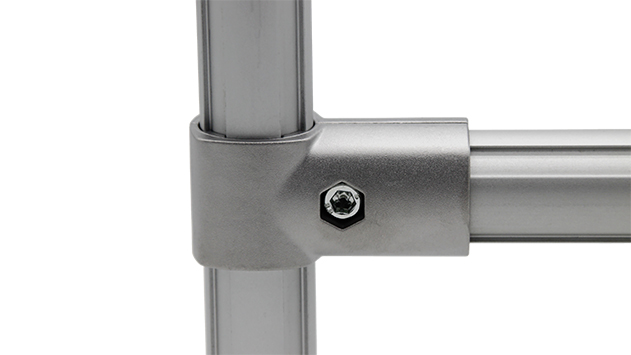
Let's start with the basics: A two way aluminum pipe joint is a connector designed to link two aluminum pipes (or aluminum profiles) at various angles—most commonly 90 degrees, but often adjustable to 45 or 135 degrees with simple tweaks. Unlike rigid steel joints, which are fixed once installed, these aluminum joints use a combination of internal locking mechanisms and friction-fit designs to create secure, yet reconfigurable connections. They're typically made from high-grade aluminum alloy, treated with anodized coatings to resist scratches and corrosion. And perhaps most importantly, they're designed to work seamlessly with aluminum profiles—the lightweight, T-slot extrusions that form the backbone of modern workbenches, flow racks, and material carts.
But why aluminum? Steel is stronger, right? While steel has its place in heavy-industry applications, communication equipment manufacturing rarely requires the brute strength of steel. What it needs is a balance of strength, weight, and adaptability. Aluminum delivers this in spades. It's 30% lighter than steel, making structures easier to move and reposition. It's naturally resistant to rust, a boon in factories with climate-controlled environments (many communication components are sensitive to humidity, so AC units run constantly, creating condensation). And when paired with the right joint, it becomes surprisingly rigid—rigid enough to support a 50kg circuit board tester on a workbench, or a flow rack loaded with 20kg component bins.
The "two way" designation is key here. Unlike multi-way joints (which connect three or more pipes), two way joints are streamlined for simplicity. They're the workhorses of the production line, used in everything from the legs of a workbench to the side rails of a flow rack. Their simplicity translates to speed: a worker with no special training can assemble a basic workbench using two way joints in under an hour, compared to half a day with traditional steel welding. "We used to have a dedicated maintenance crew just for reconfiguring workbenches," says a facilities coordinator. "Now, the assembly team does it themselves during breaks. That's a game-changer for labor efficiency."
5 Ways Two Way Aluminum Pipe Joints Solve Manufacturing Headaches
To truly appreciate their impact, let's break down the benefits of two way aluminum pipe joints in action. These aren't just theoretical advantages—they're the reasons manufacturers are swapping out old steel systems en masse.
1. Flexibility That Keeps Up With Change
Remember the plant manager who needed to reconfigure lines in hours? Two way aluminum pipe joints make that possible. Unlike steel joints, which require welding torches or power tools to adjust, aluminum joints often twist-lock into place. Loosen a setscrew, rotate the joint, and retighten—that's it. This means a workbench built with two way joints can go from holding small circuit boards to supporting large chassis by simply adjusting the height of its legs or adding extra crossbars. "Last month, we had a rush order for outdoor routers, which are bulkier than indoor models," says an assembly line lead. "We took our existing workbenches, added two extra aluminum pipes using two way joints, and had them ready for the new size by lunch. With steel joints, that would've taken a full day and a maintenance team."
This flexibility extends to flow racks, too. Communication equipment factories rely on flow racks to gravity-feed components to assembly stations—think of a sloped rack where bins slide down as the front one is emptied. The angle of this slope is critical: too steep, and bins crash; too shallow, and they get stuck. With two way aluminum joints, adjusting the slope is a 5-minute job. Loosen the joints holding the rack's side rails, tilt them slightly, and retighten. No drilling new holes, no welding new supports. "We used to have flow racks that were 'set and forget'," says a materials handler. "Now, if a new bin design is heavier, we tweak the angle on the spot. Components flow smoother, and we rarely have jams anymore."
2. Lightweight Strength That Reduces Fatigue and Injury
Steel joints add significant weight to structures. A basic workbench with steel legs and joints can weigh 200kg or more—so heavy that moving it requires a forklift or multiple workers. This isn't just inconvenient; it's a safety risk. "We had a incident where two workers strained their backs trying to shift a steel workbench," says a safety officer at a manufacturing plant. "OSHA (Occupational Safety and Health Administration) fines aside, it's just not worth putting our team at risk."
Aluminum changes the game. A two way aluminum pipe joint weighs roughly 1/3 of a comparable steel joint, and aluminum pipes (or profiles) are similarly lighter. A workbench built with aluminum joints and profiles might weigh 70kg—light enough for two workers to move by hand, or even one person with a dolly. This reduces the risk of injuries and makes it feasible to rearrange lines without heavy machinery. "Our assembly team loves it," the safety officer adds. "They can adjust their workbenches to their height preferences—no more hunching or reaching. Ergonomics have improved, and so has morale."
Don't mistake lightweight for flimsy, though. High-grade aluminum alloys (like 6061-T6, commonly used in manufacturing) have a tensile strength of 310 MPa—strong enough to support the heaviest communication components. "We tested a workbench with two way aluminum joints by stacking 100kg of lead weights on it," says an engineer at an aluminum profile supplier. "It didn't budge. The joints held tight, and the aluminum profiles showed no signs of bending. These systems are built to last."
3. Corrosion Resistance for Longevity in Harsh Environments
Communication equipment factories are not gentle places for metal. Many use coolants to keep machinery from overheating, and AC systems to control humidity (critical for protecting circuit boards). This moisture, combined with dust and occasional spills, can wreak havoc on steel. Over time, steel joints rust, seize up, or weaken—compromising the stability of workbenches and racks. "We used to replace steel joints every 6-8 months," says a maintenance technician. "They'd start to squeak, then loosen, and eventually we'd have to cut them off with a saw. It was a constant battle."
Aluminum, by contrast, forms a natural oxide layer when exposed to air, which acts as a barrier against corrosion. Most two way aluminum pipe joints are also anodized—an electrolytic process that thickens this oxide layer, making them even more resistant to moisture, chemicals, and scratches. "We've had aluminum joints in our factory for three years now," the technician notes. "They still look brand new. No rust, no squeaking, and they tighten just as easily as the day we installed them."
This longevity translates to cost savings, too. Fewer replacements mean less downtime, lower maintenance costs, and fewer purchases of new joints. For a mid-sized factory with 50 workbenches and 30 flow racks, switching to aluminum joints can save tens of thousands of dollars annually in upkeep alone.
4. Tool-Free Assembly That Slashes Setup Time
Traditional steel joints require specialized tools: wrenches, drills, sometimes even welding torches. Assembling a single workbench could take a team of two workers half a day. If a joint needed adjustment later, the same tools (and often the same team) were required. "We had a rule: no reconfiguring lines during production hours," says a former plant manager. "It was too disruptive. So we'd work weekends, paying overtime, just to tweak a few racks. It was inefficient, to say the least."
Two way aluminum pipe joints eliminate this hassle. Most use a simple (twist-lock) mechanism or hand-tightened setscrews. A worker with a basic Allen wrench (or sometimes just their hands) can assemble a workbench in under an hour. "I trained our night shift team to build flow racks using aluminum joints," says a production supervisor. "They'd never done it before, but after 15 minutes of instruction, they were putting together racks that would've taken our maintenance crew all day with steel. It's that intuitive."
This speed is a lifesaver during product launches. When a new router model arrives, manufacturers need to build dedicated assembly stations quickly. With aluminum joints, they can have a line up and running in a day, not a week. "Last quarter, we got a rush order for 5,000 outdoor 5G units," recalls the plant manager. "We needed three new workbenches and two flow racks—fast. Our team built them from scratch in 6 hours using aluminum joints. With steel, that would've taken 3 days. We shipped on time, and the customer was thrilled."
5. Compatibility with Aluminum Profiles: Building a Lean Ecosystem
Two way aluminum pipe joints don't work in isolation—they're part of a larger ecosystem built around aluminum profiles. These profiles, with their T-slot design (a groove running along their length), allow for endless customization. Attach a shelf to a workbench by sliding brackets into the T-slot. Add a lamp or a tool holder with a simple bolt. Run wires through the slot to keep them organized. And because two way aluminum joints are designed to fit these profiles perfectly, the possibilities are nearly limitless.
Take the humble workbench, for example. A basic model might have aluminum profile legs connected by two way joints, a honeycomb panel top, and a shelf halfway up for tools. But with the T-slot system, you can add side rails (using more two way joints) to hold circuit boards, attach a monitor arm for digital work instructions, or even mount a small conveyor belt to feed components directly to the assembly area. "We built a custom workbench for testing fiber optic modules," says an engineer. "It has a tiltable top (adjusted via two way joints), a built-in ESD mat, and a shelf with dividers for test equipment. None of that would've been possible with steel—it would've been too heavy and too rigid."
Flow racks benefit similarly. Aluminum profiles form the frame, two way joints hold the roller tracks in place, and T-slot accessories (like label holders or bin dividers) keep everything organized. "We use color-coded bins for different components," says a materials handler. "With the T-slot system, we can clip labels right onto the flow rack's aluminum rails. No more hunting for parts—everything's visible and accessible."

Traditional Joints vs. Two Way Aluminum Pipe Joints: A Side-by-Side Comparison
Still not convinced? Let's put two way aluminum pipe joints head-to-head with traditional steel joints in the features that matter most to communication equipment manufacturers:
| Feature | Traditional Steel Joints | Two Way Aluminum Pipe Joints |
|---|---|---|
| Flexibility | Fixed; require welding/drilling to adjust. Reconfiguration takes days. | Tool-free adjustment. Reconfigure in minutes/hours with twist-lock or setscrews. |
| Weight (per joint) | ~300g (example: 1" steel joint) | ~100g (example: 1" aluminum joint) |
| Corrosion Resistance | Poor; prone to rust in humid environments. Requires regular painting/coating. | Excellent; natural oxide layer + anodized coating. Resists rust and chemicals. |
| Assembly Time (Basic Workbench) | 4-6 hours (with welding/drilling) | 45-60 minutes (with hand tools) |
| Compatibility with Aluminum Profiles | Limited; requires adapters or custom fabrication. | Seamless; designed to fit T-slot aluminum profiles without modifications. |
| Longevity | 2-3 years (before rust/loosening) | 10+ years (with minimal maintenance) |

Real-World Impact: How Manufacturers Are Winning with Aluminum
Numbers and features tell part of the story, but real-world results speak louder. Let's look at how two way aluminum pipe joints have transformed operations for three communication equipment manufacturers:
Case Study 1: A Mid-Sized Router Manufacturer
Before aluminum, this manufacturer relied on steel workbenches and flow racks. Their biggest pain point? Switching between router models. Each new model required different tooling, and reconfiguring steel workbenches took 2-3 days—delaying production. "We were losing 10% of our monthly capacity to retooling," says the operations director. "It was killing our margins."
They switched to aluminum profiles and two way joints. The results were immediate: Retooling time dropped to 4 hours. Workbench ergonomics improved, cutting assembly errors by 15%. And because the aluminum systems were lighter, they could rearrange lines to free up 20% of floor space for new equipment. "We've increased output by 25% without adding square footage," the director adds. "The ROI on the aluminum joints paid for itself in 3 months."
Case Study 2: A Fiber Optic Component Supplier
Fiber optic components are delicate—even a small scratch can ruin a cable. This supplier struggled with flow racks that jammed, causing components to scrape against each other. Their steel racks had fixed angles, and the joints would loosen over time, misaligning the roller tracks. "We were scrapping 5% of our fiber optic connectors due to damage," says the QA manager. "That's thousands of dollars in waste."
Aluminum flow racks with two way joints solved the problem. The adjustable angles kept components flowing smoothly, and the corrosion-resistant joints maintained alignment for years. Scrap rates dropped to 0.5%. "Our customers noticed the difference," the QA manager says. "Fewer defects mean happier clients, and happier clients mean more orders."
Case Study 3: A 5G Base Station Builder
Base stations are large, heavy, and require specialized testing. This manufacturer's steel test benches were difficult to move, so they had dedicated areas for testing—wasting time as workers transported units back and forth. "We had a 30-minute bottleneck just moving base stations to the test area," says the production lead.
Aluminum test benches with two way joints changed everything. Light enough to roll (with caster wheels), the benches could be moved directly to the assembly line. Testing now happens in-place, cutting the bottleneck to 5 minutes. "We're shipping base stations 20% faster," the lead notes. "And our test engineers love that they can adjust the bench height to avoid kneeling on the floor."
Beyond Joints: Building the Future of Lean Manufacturing
Two way aluminum pipe joints are more than a replacement for steel—they're a gateway to smarter, more adaptive manufacturing. As communication equipment continues to evolve, manufacturers will need systems that can keep up. Imagine a factory where workbenches adjust automatically via sensors, flow racks reconfigure based on real-time demand data, and mobile carts navigate autonomously—all built on a foundation of lightweight, flexible aluminum joints and profiles. It's not science fiction; it's the direction the industry is heading.
"We're already seeing customers integrate aluminum systems with IoT," says an innovation director at an aluminum supplier. "They're adding sensors to flow racks to track component levels, or mounting cameras on workbenches for AI-powered QC. The T-slot aluminum profiles make it easy to attach these tech tools—no drilling, no wiring mess. It's lean manufacturing 2.0."
For communication equipment manufacturers, the message is clear: The structures holding your operations together matter as much as the equipment on them. Two way aluminum pipe joints offer the flexibility, durability, and efficiency needed to thrive in a fast-changing industry. They're not just joints—they're the building blocks of connectivity.
Final Thoughts: The Joint That Connects It All
Next time you pick up your phone or connect to Wi-Fi, take a moment to appreciate the technology that makes it possible. Behind every router, every fiber optic cable, and every 5G tower is a manufacturing plant working tirelessly to build reliable, cutting-edge gear. And behind those plants? Two way aluminum pipe joints—quietly holding together the workbenches, flow racks, and systems that keep the world connected.
In an industry where innovation is the only constant, flexibility isn't a luxury; it's survival. Two way aluminum pipe joints don't just provide flexibility—they enable it. They let manufacturers adapt, grow, and thrive in a world where the next big thing is always just around the corner. So here's to the unsung heroes: the joints that keep us connected.