- Company Articles
- Products and Technology
- Product knowledge
- Why Flat Adjustable Swivel Castor Wheels Are Ideal for Lean Tube Material Racks

Why Flat Adjustable Swivel Castor Wheels Are Ideal for Lean Tube Material Racks
Related Product
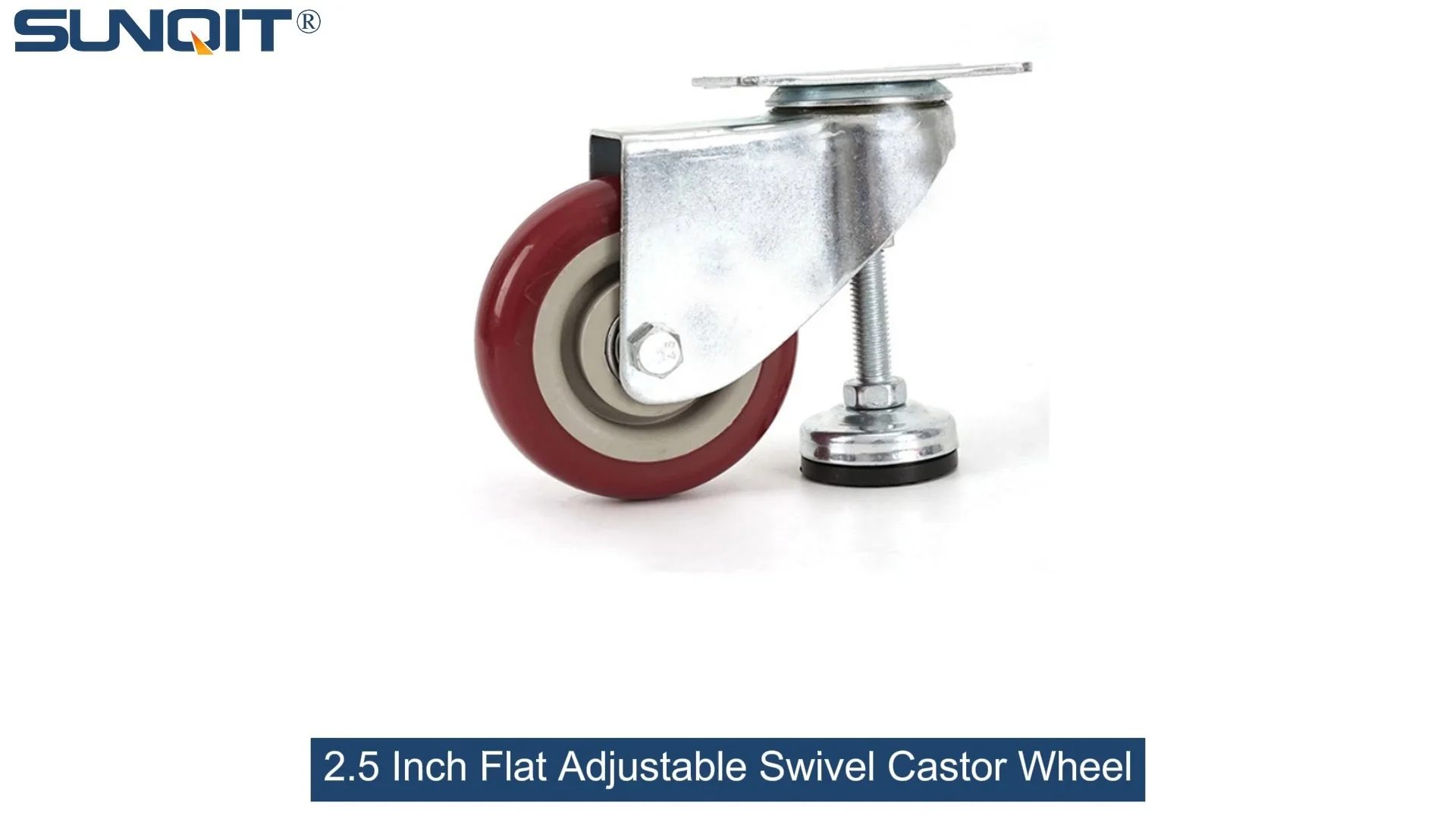
Flat Adjustable Swivel Castor Wheel
Swivel Chair Casters Ball Bearing Wheels Rubber Base with adjustable height function. Resistant to abrasion, impact and corrosion. Heavy payload can hold 80Kgs per pcs,which can make it works at a stable and smooth status.
Introduction: Lean Manufacturing and the Heart of Material Handling
In the fast-paced world of modern manufacturing, where efficiency is king and waste is the enemy, lean manufacturing has emerged as more than just a buzzword—it's a philosophy that shapes how factories, warehouses, and production lines operate. At its core, lean is about creating more value with less work: eliminating unnecessary steps, reducing downtime, and ensuring every resource, from time to materials, is used to its fullest potential. But here's the thing: lean principles don't just apply to workflows or inventory management. They extend to the very tools and structures that keep operations running smoothly. And when it comes to material handling—the backbone of any production environment—one piece of equipment stands out for its ability to make or break lean success: the lean tube material rack .
Lean tube material racks, often built from lightweight yet durable lean tube (a coated steel or aluminum tubing system with modular joints), have become a staple in lean environments. Their appeal lies in their flexibility: they can be quickly assembled, disassembled, and reconfigured to adapt to changing production needs. Need a rack for small parts today and a trolley for bulky components tomorrow? A lean tube system can do both. But here's the catch: even the most flexible rack is only as effective as its ability to move. In a lean system , materials need to flow to the point of use, not the other way around. That's where mobility comes in—and that's where the unsung hero of lean material handling takes center stage: the flat adjustable swivel castor wheel.
In this article, we'll explore why flat adjustable swivel castor wheels aren't just an accessory for lean tube material racks—they're a critical component that transforms static storage into dynamic, lean-friendly workspaces. We'll dive into their design, their benefits, and how they align with the core principles of lean manufacturing. By the end, you'll understand why choosing the right castor wheel isn't just about rolling things around—it's about rolling toward a more efficient, productive, and sustainable operation.
Understanding Lean Tube Material Racks: The Backbone of Flexible Workspaces
Before we jump into castor wheels, let's take a closer look at the star of the show: the lean tube material rack. At first glance, it might seem like a simple structure—just tubes and joints bolted together to hold materials. But its simplicity is its strength. Lean tube, also known as "flexible pipe" or "kitchen pipe" (thanks to its early use in restaurant kitchens), is typically made of steel with a plastic coating (like PE) or aluminum, making it lightweight, corrosion-resistant, and easy to handle. What really sets it apart, though, is the modular joint system. These joints—think T-joints, L-joints, or swivel joints—allow users to connect tubes at any angle, creating racks, workbenches, trolleys, or even flow racks with minimal tools and no welding.
Imagine a small electronics factory that produces both smartphones and tablets. One week, they're assembling 500 smartphones, requiring racks for tiny circuit boards and battery components. The next week, they switch to tablets, which need larger storage spaces for screens and casings. With a traditional fixed metal rack, they'd either need to buy a new rack (wasting money) or spend hours reconfiguring (wasting time). With a lean tube rack? They can disassemble the old structure and build a new one in under an hour. That's flexibility in action—and flexibility is the cornerstone of lean.
But here's the problem: even the most flexible rack is useless if it's stuck in one spot. In a lean environment, materials should be stored as close to the production line as possible. If a rack full of components is 20 feet away from the assembly station, workers waste time walking back and forth—a classic example of "motion waste," one of the eight wastes of lean. That's why mobility isn't just a convenience; it's a necessity. And that's where castor wheels come into play. By adding wheels to a lean tube rack, you turn it into a mobile unit that can be rolled right to the assembly line, reducing motion waste and keeping workers focused on value-adding tasks.

Why Mobility Matters in Lean Systems: The Unsung Hero of Efficiency
Let's talk about motion waste for a second. In lean terminology, "motion waste" refers to any unnecessary movement of people or equipment. It's the worker who walks 50 steps to grab a tool, the forklift that makes three trips when one would suffice, or the material handler who struggles to move a heavy rack across the factory floor. These might seem like small inefficiencies, but they add up. Over a day, a week, a year, they eat into productivity, increase fatigue, and even raise the risk of workplace injuries.
Mobile material racks solve this by bringing materials to the worker, not the other way around. But not all mobility is created equal. A rack with cheap, rigid wheels might roll in a straight line, but try turning it around a corner or navigating through a crowded production floor, and you'll quickly run into problems. A rack with wheels that lock up or get stuck on uneven floors? It becomes more of a hassle than a help. That's why the type of castor wheel you choose matters—and why flat adjustable swivel castor wheels are the gold standard for lean tube racks.
Consider this scenario: A car parts manufacturer uses lean tube racks to store brake assemblies. Each rack holds 20 assemblies, and the assembly line is 30 feet away. Without mobile racks, workers spend 2 minutes per hour walking to the rack and back. With a basic mobile rack (rigid wheels), they can roll the rack closer, but the wheels only move forward and backward—so positioning it exactly next to the line takes extra time. With a flat adjustable swivel castor wheel, though? The rack can swivel 360 degrees, making it easy to maneuver into tight spaces. The adjustable height ensures it sits level with the assembly table, so workers can slide parts directly from the rack to the line without bending or lifting. The result? Less time wasted, less physical strain, and a smoother workflow—all hallmarks of a lean system .

Flat Adjustable Swivel Castor Wheels: A Closer Look at the Design
Now that we understand why mobility is critical, let's dive into what makes flat adjustable swivel castor wheels so special. These aren't your average shopping cart wheels. They're engineered with lean principles in mind, combining three key features: adjustability, swivel functionality, and a flat, low-profile design. Let's break them down.
Adjustability: More Than Just Height
The "adjustable" in flat adjustable swivel castor wheels refers to their ability to change height. Most models come with a threaded stem or a lever that allows you to raise or lower the wheel by a few inches. Why does this matter? Factory floors are rarely perfectly level. Even a small dip or bump can cause a rack to wobble, making it hard to roll or, worse, unstable. An adjustable castor lets you level the rack, ensuring all four wheels touch the ground evenly. This isn't just about stability—it's about safety. A wobbly rack is a hazard, especially if it's holding heavy materials. Adjustability also means you can align the rack with workbenches or conveyor belts, making it easier to load and unload materials without lifting.
For example, imagine a material rack holding delicate circuit boards. If the rack is tilted because of an uneven floor, the boards might slide off or get damaged. With adjustable castors, you can tweak each wheel's height until the rack is perfectly level, protecting the materials and ensuring smooth movement.
Swivel Functionality: 360-Degree Freedom
The "swivel" part is what makes these castors so maneuverable. Unlike rigid castors, which only move forward and backward, swivel castors have a rotating joint that allows the wheel to turn 360 degrees. This means you can pivot the rack in place, navigate tight corners, and even roll it sideways in narrow aisles. In a busy factory with limited space, this is a game-changer. Instead of having to backtrack or make wide turns, you can maneuver the rack with minimal effort, saving time and reducing the risk of collisions with other equipment or workers.
Swivel castors often come with a brake feature, too. Once you've positioned the rack where you need it, you can lock the swivel joint (or the wheel itself) to prevent it from moving. This is crucial for safety—you don't want a rack rolling away while someone is loading it. It also adds stability during use, ensuring the rack stays put until you're ready to move it again.
Flat Design: Stability Meets Space-Saving
The "flat" in flat adjustable swivel castor wheels refers to the mounting plate—the part that attaches the wheel to the rack. Flat mounting plates are low-profile, meaning they don't add unnecessary height to the rack. This is important for two reasons: stability and space. A lower center of gravity makes the rack less likely to tip over, even when fully loaded. And a shorter overall height means the rack can fit under workbenches or in tight storage spaces when not in use.
Flat mounting plates also tend to be more durable than other designs. They distribute the weight of the rack evenly across the plate, reducing stress on the connection points. This is especially important for lean tube racks, which are often assembled with modular joints. A strong, flat mounting plate ensures the castor stays securely attached to the rack, even with heavy loads or frequent movement.
Durability: Built for the Factory Floor
Let's not forget about durability. Factory floors are tough environments—concrete, oil spills, metal shavings, and constant foot and equipment traffic can take a toll on even the sturdiest wheels. Flat adjustable swivel castor wheels are designed to withstand this abuse. The wheels themselves are often made of polyurethane, a material that's resistant to oil, chemicals, and abrasion. Polyurethane also provides good traction, so the wheels don't slip, and it's soft enough to protect floors from scratches (unlike hard rubber or metal wheels). The brackets and mounting plates are usually made of steel or aluminum, coated to prevent rust, ensuring the castors last for years even in harsh conditions.

The Synergy Between Flat Adjustable Swivel Castor Wheels and Lean Tube Racks
Now that we've covered the design features of flat adjustable swivel castor wheels, let's talk about how they work hand-in-hand with lean tube racks. Remember, lean tube systems are all about flexibility and adaptability. The castors need to match that flexibility to create a truly lean solution.
Seamless Integration with Lean Tube Structures
Lean tube racks are built using modular joints, which means adding castors should be just as easy as adding a shelf or a crossbar. Most flat adjustable swivel castors come with mounting plates that are compatible with lean tube joints or require minimal adapters (like caster accessories such as mounting brackets or stem adapters). This means you don't need to drill holes or weld anything—simply attach the castor to the rack's base using the existing joints, and you're ready to go. This ease of integration aligns perfectly with lean's focus on quick setup and reconfiguration.
For example, if you need to turn a static rack into a mobile trolley, you can swap out the fixed feet for castors in minutes. When the project is done, you can remove the castors and turn the trolley back into a static rack. This versatility means you get more use out of your lean tube system, reducing the need to buy separate equipment.
Enhancing Workflow with Smooth Movement
In lean manufacturing, "flow" is everything. Materials should flow from storage to production to shipping with minimal stops. A mobile rack with flat adjustable swivel castors keeps this flow going. Workers can roll the rack to the assembly line, unload materials, and roll it back—all without breaking stride. The swivel function ensures the rack doesn't get stuck in doorways or around machinery, and the adjustable height means it can be aligned with conveyor belts or workbenches for seamless transfer. This reduces the time between material retrieval and production, keeping the line moving and reducing bottlenecks.
Reducing Physical Strain on Workers
Lean isn't just about efficiency—it's about people. A tired, strained worker is less productive and more prone to mistakes. Flat adjustable swivel castor wheels reduce physical strain by making racks easier to move. Unlike rigid wheels, which require force to push or pull, swivel castors glide smoothly, even with heavy loads. The adjustable height also means workers don't have to bend or reach as far to access materials, reducing the risk of back injuries. This not only improves morale but also reduces downtime due to injuries, keeping the workforce healthy and productive.
Comparing Castor Wheels: Why "Flat Adjustable Swivel" Stands Out
Not all castor wheels are created equal. To understand why flat adjustable swivel castors are ideal for lean tube racks, let's compare them to other common types of castors used in material handling. The table below breaks down key features and use cases:
| Castor Type | Adjustability | Swivel Range | Stability | Best For |
|---|---|---|---|---|
| Rigid Castors | None | 0° (only forward/backward) | High (no swivel joint to wobble) | Straight-line movement; heavy, stable loads |
| Swivel Castors (Non-Adjustable) | None | 360° | Medium (can wobble on uneven floors) | Light loads; frequent turning in open spaces |
| Heavy-Duty Fixed-Height Swivel Castors | None | 360° | High (sturdy build) | Heavy loads; even floors; infrequent repositioning |
| Flat Adjustable Swivel Castors | Yes (height-adjustable) | 360° | High (adjustable to level floors) | Lean tube racks; variable loads; uneven floors; frequent reconfiguration |
As you can see, flat adjustable swivel castors offer the best of all worlds: adjustability to handle uneven floors, swivel functionality for maneuverability, and stability for heavy loads. They're the only type that truly meets the demands of a lean environment, where flexibility, efficiency, and safety are all priorities.
Real-World Applications: How These Castors Transform Workspaces
Let's look at some real-world examples of how flat adjustable swivel castor wheels have improved efficiency in lean environments. These aren't just hypothetical scenarios—they're stories from factories and warehouses that have embraced mobile lean tube racks with the right castors.
Automotive Assembly Lines: Adapting to Changing Models
A major automotive manufacturer produces multiple car models on the same assembly line. Each model requires different parts, and the production schedule changes weekly. Before using mobile racks with flat adjustable swivel castors, the factory used fixed racks along the line. When switching models, workers had to spend 2–3 hours moving parts to the correct stations, often using forklifts (which added to traffic and risk). After switching to lean tube racks with flat adjustable swivel castors, they could pre-load racks with parts for the next model and roll them into place overnight. The swivel castors made it easy to navigate the racks around equipment, and the adjustable height ensured the racks aligned with the assembly line, reducing loading time by 75%. The result? Faster model changes, less downtime, and fewer forklift accidents.
Electronics Manufacturing: Protecting Sensitive Components
An electronics factory produces circuit boards for medical devices, where precision and cleanliness are critical. They use ESD (electrostatic discharge) workstations to protect sensitive components from static electricity. Before mobile racks, components were stored in fixed ESD cabinets 50 feet from the workstations, requiring workers to wear ESD wristbands and walk back and forth. By adding flat adjustable swivel castors to ESD-compliant lean tube racks, they created mobile component stations that could be rolled right next to the workstations. The adjustable height ensured the racks were at waist level, reducing bending, and the polyurethane wheels prevented static buildup. Workers reported a 30% reduction in fatigue, and the factory saw a 15% decrease in component damage due to reduced handling.
Warehousing: Maximizing Space and Accessibility
A third-party logistics warehouse handles small parts for e-commerce clients. The warehouse has limited floor space, so they need to store as much inventory as possible without blocking access. Fixed racks took up permanent space, leaving narrow aisles that were hard to navigate. By switching to lean tube racks with flat adjustable swivel castors, they created "mobile aisles." During picking hours, racks are spread out for easy access; after hours, they're rolled together to free up space for other operations (like receiving new shipments). The swivel castors make it easy to reposition racks quickly, and the adjustable height ensures even tall racks don't tip over. The warehouse increased storage capacity by 20% and reduced picking time by 25%.
Maintenance Tips: Keeping Your Castors Rolling Smoothly
Like any piece of equipment, flat adjustable swivel castor wheels require regular maintenance to keep them performing at their best. Here are some simple tips to ensure your castors last longer and keep your lean tube racks moving smoothly:
Regular Inspections
Check your castors weekly for signs of wear: loose bolts, cracked wheels, or debris stuck in the swivel joint. Tighten any loose bolts and remove debris (like metal shavings or dirt) with a brush or compressed air. Catching issues early prevents them from turning into bigger problems (like a wheel locking up mid-roll).
Cleaning and Lubrication
Clean the wheels and swivel joints monthly with a mild detergent and water to remove oil, grease, or chemicals that can degrade the wheel material. After cleaning, lubricate the swivel joint and wheel bearings with a light machine oil or silicone spray. This keeps the swivel action smooth and prevents rust.
Replacing Worn Parts
Even the best castors wear out eventually. If a wheel is cracked, flat, or losing traction, replace it immediately (many manufacturers sell replacement wheels as caster accessories ). Similarly, if the swivel joint becomes stiff or wobbly, replace the bearing or the entire castor. Don't wait for a castor to fail—this can damage the rack, the materials, or even cause an accident.
Training Workers on Proper Use
Finally, make sure your team knows how to use the castors properly. Teach them to lock the brakes when loading/unloading, to push (not pull) heavy racks to avoid strain, and to avoid overloading the rack beyond the castors' weight capacity. Proper use extends the life of the castors and keeps everyone safe.
Conclusion: Investing in the Right Wheels for Lean Success
At the end of the day, lean manufacturing is about the details—the small choices that add up to big improvements in efficiency, safety, and productivity. Flat adjustable swivel castor wheels might seem like a small detail, but they play a huge role in making lean tube material racks truly effective. By combining adjustability, swivel functionality, and durability, these castors transform static storage into dynamic, mobile workspaces that bring materials to the point of use, reduce waste, and keep workers happy and healthy.
Whether you're running an automotive plant, an electronics factory, or a warehouse, the right castor wheels can make a world of difference. They're not just a tool—they're an investment in your lean journey. So the next time you're setting up a lean tube rack, don't overlook the wheels. Choose flat adjustable swivel castor wheels, and watch your operation roll toward greater efficiency, one smooth move at a time.