- Company Articles
- Products and Technology
- Product knowledge
- Why Flat Rigid Castor Wheels Are Essential for Fixed Conveyor Systems in Factories

Why Flat Rigid Castor Wheels Are Essential for Fixed Conveyor Systems in Factories
Related Product
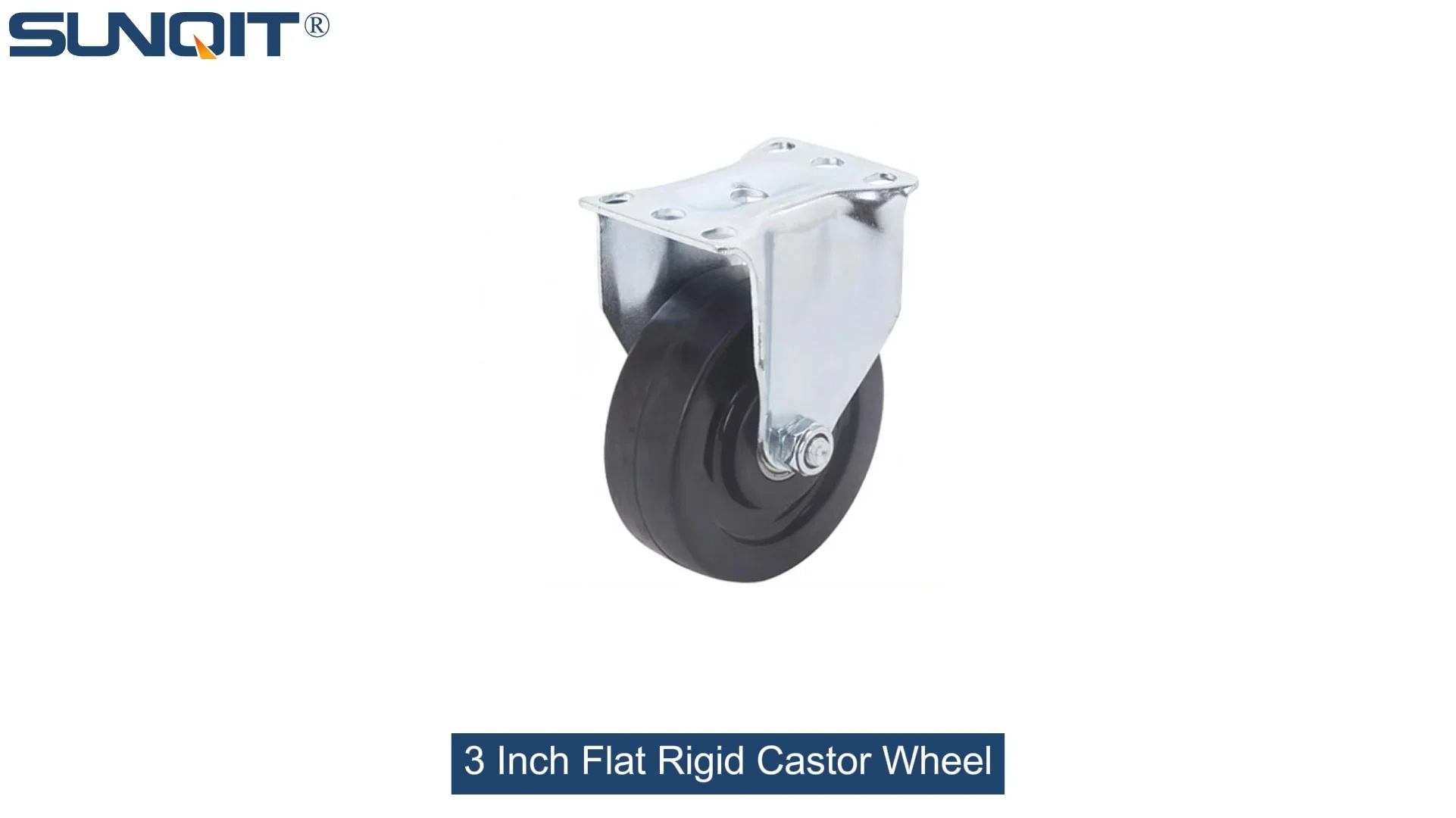
Flat Rigid Castor Wheel
Chair Casters Ball Bearing Wheels Rubber Base. Resistant to abrasion, impact and corrosion. Heavy payload can hold 70Kgs per pcs,which can make it works at a stable and smooth status.
Walk into any modern factory, and you'll hear it before you see it: the steady hum of machinery, the rhythmic clatter of products moving along lines, the coordinated bustle of workers focused on their tasks. Behind that symphony of productivity lies a hidden network of tools and components working in harmony—none more underappreciated than the humble castor wheel. While swivel casters get all the attention for their mobility, there's another player in the game that keeps the entire operation grounded (literally): flat rigid castor wheels. Today, we're diving into why these unassuming components are the unsung heroes of fixed conveyor systems, and why every factory manager should think twice before overlooking them.
The Backbone of Factory Efficiency: Why Fixed Conveyor Systems Matter
Before we get to the castors themselves, let's talk about the systems they support. Fixed conveyor systems are the arteries of a factory. They're the reason raw materials flow seamlessly to assembly lines, finished products glide into packaging areas, and nothing gets stuck in a bottleneck. Unlike mobile trolleys or manual carts, fixed conveyors are designed for consistency—they move materials along a set path, 24/7 if needed, with minimal human intervention. From automotive plants to electronics factories, these systems reduce labor costs, cut down on errors, and keep production timelines on track.
But here's the thing: a conveyor system is only as reliable as its foundation. If the structure beneath it wobbles, shifts, or misaligns, the whole line can grind to a halt. Jams become frequent, products get damaged, and suddenly that "efficient" system turns into a source of frustration. That's where stability comes in—and that's where flat rigid castor wheels enter the picture.
Mobility vs. Stability: The Balancing Act in Modern Factories
Factories thrive on balance. Some equipment needs to be mobile: think of turnover trolleys shuttling parts between workbenches, or maintenance carts carrying tools to different stations. For those, swivel casters—with their ability to rotate 360 degrees—are indispensable. They let workers maneuver tight corners and adapt to changing needs in seconds.
But fixed conveyor systems? They're in it for the long haul. These aren't tools that need to be moved around; they're permanent (or semi-permanent) fixtures that need to stay put, day in and day out. Imagine trying to run a high-speed conveyor line on swivel casters: the moment a heavy load hits, the casters might swivel unexpectedly, throwing the entire system off-kilter. Materials would slide off track, roller tracks would misalign, and suddenly you're looking at hours of downtime to fix a preventable issue.
Stability isn't just about avoiding chaos—it's about precision. Many conveyor systems, especially those in electronics or pharmaceutical manufacturing, handle delicate components that can't tolerate even the smallest jolt. A fixed path ensures products move smoothly, align correctly with workbenches, and reach their destination in perfect condition. And that stability? It starts with the wheels holding the conveyor up.

Flat Rigid Castor Wheels: What Are They, and Why Do They Matter?
Let's start with the basics: what is a flat rigid castor wheel? Unlike swivel casters, which have a rotating mount that allows the wheel to turn independently of the frame, flat rigid castors are fixed in direction. Their design is simple but effective: a sturdy wheel (usually made of rubber, polyurethane, or steel) mounted on a rigid axle, attached to a flat metal plate (the "flat" in the name) that bolts directly to the bottom of the equipment—like a conveyor frame, workbench, or material rack. There's no swiveling mechanism, no ball bearings to allow rotation; just a straight, unyielding connection between the wheel and the equipment above.
At first glance, that might sound limiting. After all, why would you want a wheel that can't turn? But in the world of fixed conveyor systems, that "limitation" is actually their greatest strength. By locking the wheel in place, flat rigid castors ensure the conveyor moves only in the direction it's supposed to—no detours, no surprises, no sudden shifts. And because they're mounted on a flat plate, they distribute weight evenly across the base, reducing stress on the conveyor frame and minimizing the risk of warping over time.
But it's not just about direction. The "rigid" part matters too. These casters are built to take a beating. Most are made with heavy-duty materials: steel frames for strength, polyurethane wheels for grip and shock absorption, and sealed bearings to resist dust and debris. They're designed to handle the constant weight of moving products, the vibrations of machinery, and the occasional impact from dropped tools or misplaced pallets. In short, they're the workhorses of the factory floor.

The Unseen Benefits of Flat Rigid Castor Wheels in Fixed Conveyor Systems
Now that we know what they are, let's break down why flat rigid castors are non-negotiable for fixed conveyor systems. These benefits might not be flashy, but they add up to smoother operations, fewer headaches, and a bottom line that stays healthy.
1. Unmatched Stability: Keeping Conveyors on Track (Literally)
Stability is the name of the game here. When a conveyor is mounted on flat rigid castors, there's no risk of the system "wandering" off its intended path. The fixed wheels act like anchors, ensuring the conveyor stays aligned with other equipment—like roller tracks, workbenches, and loading stations. This alignment is critical for preventing jams. Think about it: if a conveyor shifts even a few inches to the left or right, products might catch on the edge of a roller track, pile up, and bring the entire line to a stop. With rigid casters, that risk drops to nearly zero.
Stability also matters for worker safety. A wobbly conveyor isn't just inefficient—it's a hazard. Loose parts could fall off, or workers might trip over misaligned edges. Flat rigid castors keep the system firmly planted, reducing the risk of accidents and creating a more secure work environment.
2. Heavy-Duty Load Capacity: Handling the Weight of Production
Factories don't move lightweight items—they move heavy ones. From metal components in automotive plants to stacks of packaging materials in warehouses, fixed conveyors need to support hundreds, if not thousands, of pounds every hour. Swivel casters, with their rotating mounts, often have lower weight limits because the swivel mechanism adds stress points that can fail under heavy loads. Flat rigid castors, by contrast, distribute weight directly through the axle and into the wheel, bypassing those weak points. Many models can handle 500+ pounds per wheel, making them ideal for even the most demanding conveyor systems.
What does that mean for your factory? It means you can run heavier loads without worrying about casters buckling or wheels cracking. It means fewer replacements, less downtime, and the confidence to scale up production when orders spike.
3. Durability: Built to Last in Harsh Factory Environments
Factory floors are tough places. There's oil, grease, dust, and the occasional chemical spill. Temperatures can fluctuate, and equipment is constantly being cleaned (or, let's be honest, not cleaned as often as it should be). Swivel casters, with their complex swivel joints and small ball bearings, are prone to getting gunked up—dust and debris can jam the mechanism, making them hard to move (even if you don't need them to move). Flat rigid castors? They're simplicity itself. With no swivel parts to clog, they're far more resistant to wear and tear. A quick wipe down with a rag is usually all they need to keep rolling smoothly.
Many flat rigid casters also come with treaded wheels (like polyurethane or rubber) that resist abrasion. That means they won't wear down quickly, even on rough concrete floors. Over time, that durability translates to lower maintenance costs and longer equipment lifespans—a win for any factory budget.
4. Precision Alignment: The Secret to Smooth Material Flow
Ever watched a conveyor line where products keep getting stuck? Chances are, the alignment is off. Maybe the conveyor is slightly tilted, or the roller tracks aren't perfectly parallel. With flat rigid castors, you can set the conveyor's position once and forget it. The fixed wheels keep the frame level and straight, ensuring that roller tracks (another unsung hero of material handling) line up perfectly with the conveyor's path. This precision means materials glide along without snagging, reducing waste and keeping production speeds consistent.
Even better, flat rigid castors make it easy to adjust the conveyor's height (if needed) using leveling feet or shims. Because the wheels are fixed, you won't throw off the alignment when you tweak the height—something that's far harder to do with swivel casters, which can shift when you lift one side of the equipment.

How Flat Rigid Castors Integrate with Conveyors and Roller Tracks
So, how do these casters actually work with the conveyor systems they support? It starts with installation. Most flat rigid castors come with pre-drilled holes in their flat mounting plates, making it easy to bolt them directly to the bottom of the conveyor frame. This secure attachment ensures there's no movement between the caster and the frame—no squeaking, no shifting, just a solid connection.
Once installed, the casters work hand-in-hand with the conveyor's roller tracks. Roller tracks, which are the rails that guide products along the conveyor, rely on consistent spacing and alignment to function. If the conveyor frame shifts, the roller tracks misalign, and products start to jam. Flat rigid castors prevent that shift, keeping the roller tracks parallel and the path clear. It's a partnership: the roller tracks guide the products, and the rigid casters guide the conveyor itself.
And let's not forget about other equipment. Fixed conveyors rarely work in isolation—they're usually connected to workbenches where workers assemble products, or to material racks where supplies are stored. By keeping the conveyor stable, flat rigid castors ensure these connections stay tight. A workbench positioned next to a conveyor won't suddenly find itself inches away from the line because the conveyor shifted; workers can reach products easily, without leaning or stretching, which speeds up assembly and reduces fatigue.
Flat Rigid vs. Swivel Castors: A Quick Comparison
Still not convinced that flat rigid castors are right for your fixed conveyor system? Let's put them head-to-head with swivel casters in the areas that matter most for factory operations:
| Feature | Flat Rigid Castor Wheels | Swivel Castor Wheels |
|---|---|---|
| Stability | Excellent—fixed direction prevents shifting | Low—swivel mechanism allows rotation, risking misalignment |
| Load Capacity | High (often 500+ lbs per wheel) | Lower (swivel joints add stress points) |
| Best For | Fixed equipment (conveyors, workbenches, material racks) | Mobile equipment (trolleys, carts, movable workstations) |
| Maintenance Needs | Low—no swivel parts to clean or lubricate | High—swivel joints require regular cleaning and lubrication |
| Cost Over Time | Lower—fewer replacements, less downtime | Higher—more frequent repairs/replacements under heavy use |
The takeaway? Swivel casters are great for mobility, but when it comes to fixed systems that need stability, load capacity, and durability, flat rigid castors are the clear winner.
Real-World Applications: Where Flat Rigid Castors Shine
Let's get concrete (pun intended) with examples. Where do flat rigid castor wheels make the biggest difference in real factories? Here are a few scenarios where they're not just helpful—they're essential:
1. Assembly Lines with Integrated Workbenches
Imagine an electronics factory where workers assemble circuit boards. The line includes a fixed conveyor that moves partially assembled boards to workbenches, where workers add components. Each workbench is bolted to the floor, and the conveyor runs alongside it. If the conveyor uses swivel casters, even a small bump from a passing trolley could shift it away from the workbench, forcing workers to stretch to reach the boards. Over time, that leads to slower work and more errors. With flat rigid castors, the conveyor stays put, the boards stay within easy reach, and productivity stays high.
2. Heavy-Duty Material Racks and Storage Systems
Many factories use fixed material racks (like "material rack b" with 3 rows and 3 floors, a common setup for storing tools and components) alongside conveyors. These racks are loaded with heavy items, and the conveyor needs to align perfectly with the rack's shelves to allow easy loading/unloading. A misaligned conveyor would mean workers have to lift items higher or lower to get them on the rack, increasing the risk of injury. Flat rigid castors keep the conveyor level with the rack, making loading a one-handed task instead of a two-person lift.
3. High-Speed Packaging Lines
Packaging lines move fast—think bottles, boxes, or bags zipping along at 100+ units per minute. At those speeds, even a tiny misalignment can cause products to tip over or jam. Flat rigid castors ensure the conveyor stays straight, so products hit the packaging machines dead-on. No jams, no spills, just a steady stream of products ready to be shipped.
Keeping Your Flat Rigid Castors in Top Shape: Maintenance Tips
Flat rigid castors are durable, but they're not indestructible. A little maintenance goes a long way toward keeping them rolling smoothly for years. Here's what you need to do:
- Keep them clean: Wipe wheels and axles with a rag weekly to remove dust, grease, and debris. For stubborn grime, use a mild detergent (avoid harsh chemicals that can damage wheel materials like polyurethane).
- Lubricate the axle: Every 3–6 months, apply a few drops of lubricating oil to the axle bearings. This reduces friction and prevents rust, especially in humid or damp factories.
- Check for wear: Inspect wheels monthly for cracks, flat spots, or uneven tread. If a wheel is damaged, replace it immediately—worn wheels can cause the conveyor to wobble, even with rigid casters.
- Tighten the bolts: Over time, the bolts holding the castor plate to the conveyor frame can loosen. Check them quarterly and tighten as needed to ensure a secure connection.
These steps take minutes each month, but they'll save you hours of downtime and hundreds of dollars in replacements down the line.
Conclusion: Small Wheels, Big Impact
At the end of the day, flat rigid castor wheels are easy to overlook. They're not flashy, they don't have fancy features, and they won't make your factory the talk of the industry. But what they will do is keep your fixed conveyor systems running smoothly, your products moving on time, and your workers safe. They're the quiet foundation that supports everything else—proof that even the smallest components can have the biggest impact on efficiency.
So the next time you're setting up a new conveyor system, or troubleshooting issues with an old one, take a look at the wheels. If they're swiveling when they shouldn't be, or if stability is a constant battle, it might be time to make the switch to flat rigid castor wheels. Your factory's productivity (and your peace of mind) will thank you.