- Company Articles
- Products and Technology
- Product knowledge
- Why Flat Rigid Castor Wheels Are Ideal for Fixed Medical Equipment Storage Carts

Why Flat Rigid Castor Wheels Are Ideal for Fixed Medical Equipment Storage Carts
Related Product
Flat Rigid Castor Wheel
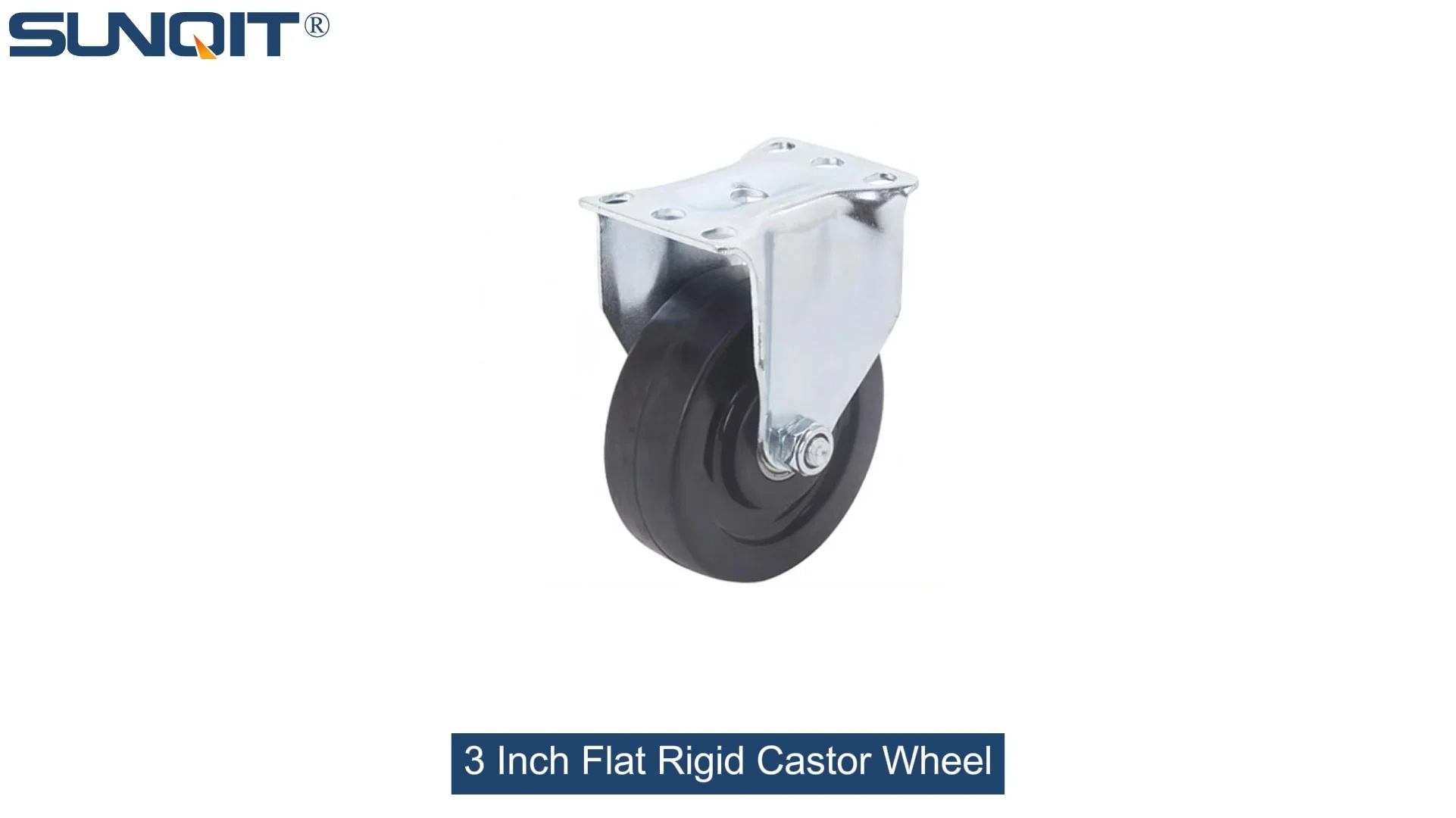
Chair Casters Ball Bearing Wheels Rubber Base. Resistant to abrasion, impact and corrosion. Heavy payload can hold 70Kgs per pcs,which can make it works at a stable and smooth status.
Walk into any hospital, clinic, or medical lab, and you'll notice a silent workhorse keeping operations running smoothly: the medical equipment storage cart. These carts hold everything from life-saving meds and sterile syringes to heavy diagnostic tools and patient records. But here's the thing— not all carts are built the same , and the difference often comes down to one small but critical component: the wheels. When it comes to fixed storage carts—those that stay put in specific areas like pharmacies, lab workbenches, or supply rooms—there's one wheel type that stands head and shoulders above the rest: the flat rigid castor wheel. Let's dive into why these unassuming wheels are the unsung heroes of medical storage, and how they keep healthcare spaces safe, efficient, and ready for anything.
First Things First: What Are Flat Rigid Castor Wheels?
Before we jump into their benefits, let's make sure we're on the same page. A flat rigid castor wheel is exactly what it sounds like: a wheel mounted on a fixed (non-swiveling) bracket, with a flat tread that sits firmly on the floor. Unlike swivel casters, which can rotate 360 degrees, or locking casters that have a brake to stop movement, rigid casters stay pointed in one direction. Their design is simple—no fancy moving parts, just a sturdy wheel attached to a stable base. But don't let that simplicity fool you; in medical settings, where reliability is non-negotiable, simplicity is often a superpower.
These wheels are typically made from durable materials like rubber, polyurethane, or even stainless steel, depending on the load they need to carry and the environment they'll be in. For medical use, you'll often find them paired with carts made from aluminum profile —lightweight, corrosion-resistant, and easy to clean, making the whole setup a perfect fit for sterile spaces.
Why Stability Matters More Than You Think
Imagine a pharmacy cart loaded with vials of insulin, antibiotics, and other temperature-sensitive meds. Now imagine that cart rolling unexpectedly because its wheels weren't secure—spills, broken glass, wasted supplies, and worst of all, potential delays in patient care. That's the nightmare scenario flat rigid castor wheels are designed to prevent. Stability is their middle name .
Fixed medical storage carts don't need to move often—they're meant to stay in one spot, acting as a stationary hub for supplies. Swivel casters, while great for mobile carts, can wobble or shift even when locked, especially under heavy loads. Rigid casters, with their fixed direction and flat tread, create a low center of gravity. This means the cart stays planted, even if someone bumps into it in a busy hallway or a lab technician leans on it while grabbing supplies. For equipment like microscopes, centrifuges, or even simple workbench setups in labs, that stability is critical. A wobbly cart could throw off a lab test result or damage delicate instruments—risks healthcare facilities can't afford.

Heavy Loads? No Problem—The Power of Load Capacity
Medical storage carts aren't just carrying band-aids and cotton swabs. Some carts hold EKG machines, portable X-ray equipment, or stacks of patient charts that add up to serious weight. A typical flat rigid castor wheel can handle anywhere from 200 to 800 pounds per wheel, depending on its size and material. When you have four of these wheels on a cart, that's a total load capacity of 800 to 3,200 pounds—more than enough for even the heaviest medical gear.
Compare that to smaller swivel casters, which often max out at 150 pounds per wheel. Overload a swivel caster, and you risk the wheel bending, the bracket breaking, or the cart tipping. Rigid casters, with their solid construction, distribute weight evenly across the floor, reducing stress on both the wheel and the cart frame. For turnover trolley and rack systems—those used to store and transport bulk supplies between departments—this load capacity is a game-changer. You can stack more supplies without worrying about the cart collapsing, which means fewer trips to restock and more time focusing on patient care.

Safety First: Preventing Unintended Movement
Hospitals are chaotic places. Nurses rushing to codes, orderlies pushing stretchers, visitors wandering—there's constant motion. The last thing anyone needs is a storage cart suddenly rolling into a walkway, causing a trip hazard or a collision. Flat rigid castor wheels eliminate that risk entirely. Since they don't swivel and can't rotate, the cart only moves if someone intentionally pushes it in the direction the wheels are facing. And in fixed storage setups, the wheels are usually locked into place (yes, even rigid casters can have locks!) or positioned so the cart can't roll unless moved with significant force.
This is especially important in areas like operating rooms or ICU, where even a small distraction can lead to mistakes. A cart with unstable wheels could shift during a procedure, knocking over tools or supplies. With rigid casters, the cart stays where it's placed, letting medical staff focus on the patient, not on chasing down runaway equipment. It's a small detail, but in high-stakes environments, small details save lives.

Hygiene: Easy to Clean, Hard to Harbor Germs
In healthcare, cleanliness isn't just a preference—it's a legal requirement. Every surface, from bed rails to cart handles, needs to be disinfected regularly to prevent the spread of infections like MRSA or C. diff. Flat rigid castor wheels shine here, too. Their simple design means fewer nooks and crannies for bacteria to hide. Unlike swivel casters, which have bearings, pins, and swivel plates that can trap dirt and grime, rigid casters have smooth, flat surfaces that wipe clean with a disinfectant wipe or spray.
Many medical-grade rigid casters are also made from non-porous materials like polyurethane or stainless steel, which resist moisture and chemicals. That means you can douse them with harsh cleaners without worrying about rust or degradation. For carts used in sterile environments like operating rooms, this is non-negotiable. Even in less critical areas like supply closets, easy-to-clean wheels mean staff can sanitize carts quickly, keeping workflows efficient and compliant with health regulations.
Supporting Lean Systems in Healthcare
You might have heard of lean system principles—focusing on reducing waste, improving efficiency, and streamlining processes. In healthcare, lean systems are all about making sure staff have what they need, when they need it, with minimal hassle. Flat rigid castor wheels play a quiet but vital role in this.
By keeping fixed storage carts stable and secure, these wheels help create organized, predictable workspaces. When a nurse knows exactly where the supply cart is (and that it hasn't moved), they can grab what they need in seconds, instead of searching for a cart that wandered off. This reduces "motion waste"—time spent walking or searching—and lets staff spend more time with patients. For example, a turnover trolley and rack with rigid casters in a nursing station can be loaded with fresh linens, gloves, and gowns, staying in one spot so nurses can restock quickly between patient rooms. No more wasted steps, no more frustration—just smooth, efficient care.
Castor Showdown: How Rigid Casters Compare
Still not convinced? Let's put flat rigid casters head-to-head with other common wheel types to see how they stack up in medical storage scenarios:
| Castor Type | Stability | Load Capacity | Unintended Movement Risk | Ideal For |
|---|---|---|---|---|
| Flat Rigid | Excellent (fixed direction, low center of gravity) | High (200–800 lbs/wheel) | Very Low (no swivel, flat tread stays put) | Fixed storage carts, workbenches, heavy equipment racks |
| Swivel (Non-Locking) | Poor (can wobble, high center of gravity) | Medium (100–300 lbs/wheel) | High (rolls easily with minimal force) | Lightweight mobile carts (meal trays, linen carts) |
| Swivel with Lock | Good (locks prevent rotation, but still has swivel plate) | Medium-High (150–500 lbs/wheel) | Medium (lock can slip under heavy loads) | Mobile carts that need occasional locking (medication carts) |
As you can see, when it comes to fixed storage, flat rigid casters are the clear winner. They offer the stability, load capacity, and safety that medical settings demand, without the extra complexity of swivel or locking mechanisms.
Choosing the Right Flat Rigid Castor Wheel for Your Needs
Not all rigid casters are created equal, so it's important to pick the right one for your specific cart. Here are a few key factors to consider:
Load Rating: Calculate the total weight of your cart plus its maximum load, then divide by the number of wheels (usually 4). Make sure each wheel's load rating exceeds that number—better to overestimate than risk a failure.
Floor Type: If your facility has hardwood or vinyl floors, go for rubber or polyurethane wheels to prevent scratches. For concrete floors, stainless steel or heavy-duty rubber works best.
Material: For sterile areas, choose non-porous materials like stainless steel or polyurethane. For general use, rubber is durable and cost-effective.
Wheel Size: Larger wheels (4–6 inches) handle rough floors better, while smaller wheels (2–3 inches) are better for tight spaces. For fixed carts, size is less critical than stability, but make sure the wheels fit the cart's design.
Maintenance Tips to Keep Your Wheels Rolling (When You Want Them To)
Flat rigid casters are low-maintenance, but a little care goes a long way. Here's how to keep them in top shape:
Clean Regularly: Wipe wheels with disinfectant daily (or as often as your facility requires) to remove dirt and germs. Pay extra attention to the area where the wheel meets the bracket—this is the only spot where debris might collect.
Check for Wear: Inspect wheels monthly for cracks, flat spots, or loose brackets. If a wheel is worn, replace it immediately—don't wait for it to fail.
Lubricate (If Needed): Some rigid casters have bearings that need occasional lubrication with medical-grade grease. Check the manufacturer's instructions—over-lubricating can attract dirt.
Keep Floors Clean: Debris like loose threads, dirt, or small tools can get stuck in wheels, causing them to wobble. Sweep and mop regularly to keep paths clear.
Final Thoughts: The Unsung Hero of Medical Storage
At the end of the day, flat rigid castor wheels might not be the most glamorous part of a medical facility. They don't have flashing lights or high-tech features, but they do something far more important: they keep things stable, safe, and efficient. For fixed medical equipment storage carts—whether it's a workbench in a lab, a turnover trolley and rack in a supply room, or a medication cart in a pharmacy—these wheels are the foundation of reliable care.
So the next time you walk into a hospital and see a cart standing steady in the corner, take a second to appreciate the flat rigid castor wheels holding it up. They're not just wheels—they're silent partners in keeping patients safe, staff efficient, and healthcare systems running like clockwork. And in the world of medicine, that's more than enough to make them indispensable.