- Company Articles
- Products and Technology
- Product knowledge
- Why Flat Rigid Castor Wheels Are Preferred for Fixed Material Rack B in Warehouses

Why Flat Rigid Castor Wheels Are Preferred for Fixed Material Rack B in Warehouses
Related Product
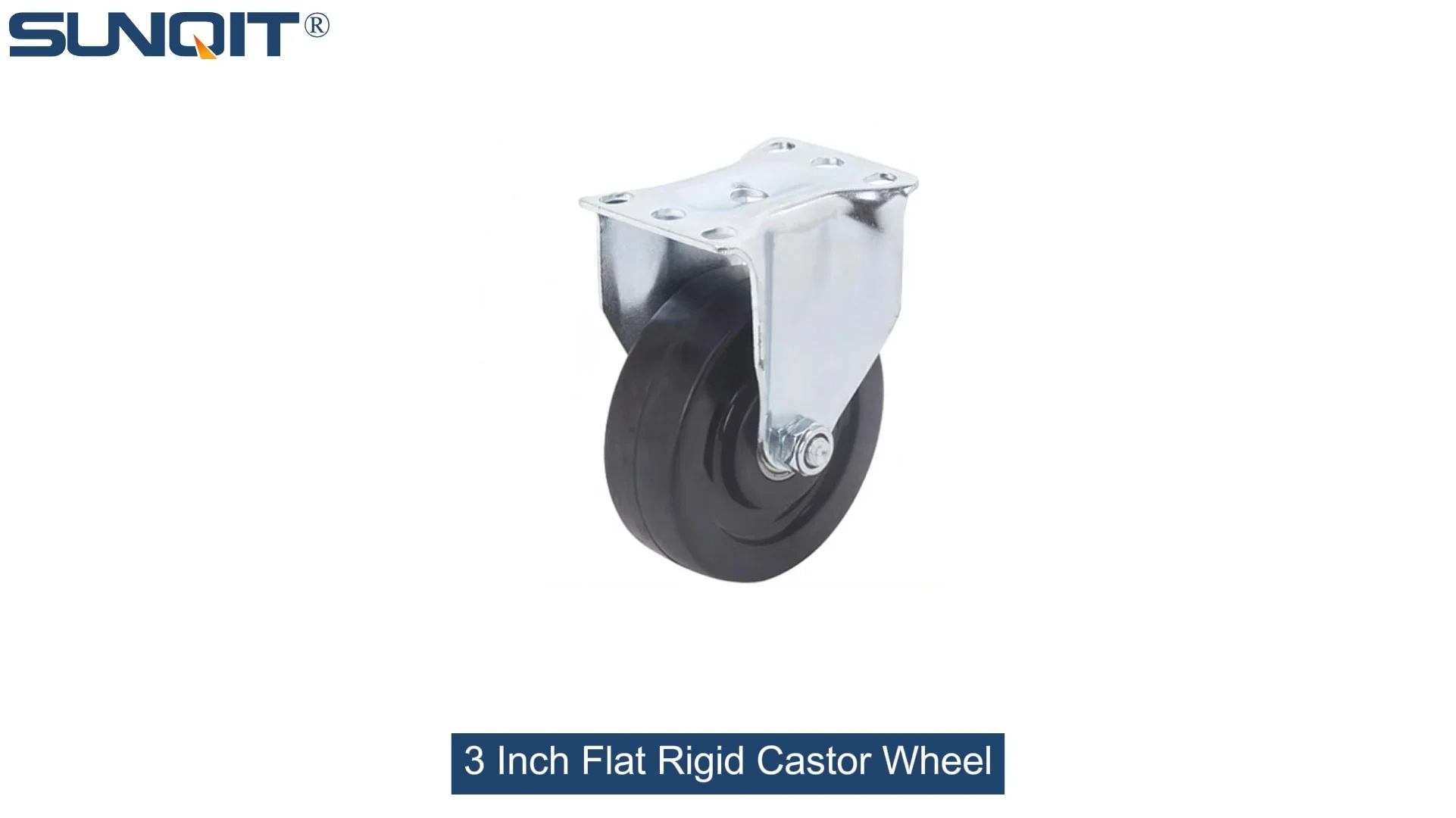
Flat Rigid Castor Wheel
Chair Casters Ball Bearing Wheels Rubber Base. Resistant to abrasion, impact and corrosion. Heavy payload can hold 70Kgs per pcs,which can make it works at a stable and smooth status.
In the fast-paced world of warehouse operations, where every square foot of space and every minute of time is precious, the equipment that holds, organizes, and protects inventory becomes the unsung hero of daily productivity. Among these critical tools, material racks stand out as foundational—they keep goods accessible, streamline picking processes, and ensure that even the busiest warehouses maintain order. But what often goes unnoticed, yet plays a pivotal role in their effectiveness, is the choice of castor wheels. Specifically, when it comes to a heavy-duty, multi-tiered solution like material rack B (3 row and 3 floor) , one type of castor has emerged as the clear favorite: the flat rigid castor wheel .
You might be wondering: Why rigid? Why flat? In a world where swivel castors and locking mechanisms dominate conversations about mobility, it's easy to overlook the quiet reliability of rigid wheels. But for fixed material racks—those designed to stay in place while supporting hundreds of pounds of inventory—stability, durability, and load-bearing capacity aren't just preferences; they're non-negotiable. Let's dive into why flat rigid castor wheels have become the backbone of efficient warehouse setups, especially when paired with systems built for lean, organized operations.
Understanding Material Rack B (3 Row and 3 Floor): A Workhorse of Warehouse Storage
Before we unpack the role of castor wheels, let's first get to know the star of the show: material rack B (3 row and 3 floor) . This isn't your average storage shelf. Built with a robust frame and designed to maximize vertical space, it features three rows of shelves across three levels, making it ideal for storing bulk items, cartons, or even heavy components in manufacturing settings. Think of it as a vertical warehouse within a warehouse—stacking inventory efficiently without sacrificing accessibility.
What sets this rack apart is its weight capacity. With three floors and three rows, it's engineered to hold everything from small parts bins to large, bulky goods. In a typical scenario, you might find it loaded with automotive parts in an assembly plant, electronics components in a tech warehouse, or retail inventory in a distribution center. The key here is that when fully loaded, this rack isn't going anywhere—and that's exactly where flat rigid castor wheels shine.
Flat Rigid Castor Wheels: What Makes Them Different?
At first glance, a flat rigid castor wheel might seem simple: a solid, non-swiveling wheel mounted to a fixed plate. But its simplicity is its strength. Unlike swivel castors, which rotate 360 degrees for easy maneuvering, rigid castors are fixed in a straight line—they only move forward or backward, and only if pushed with significant force. The "flat" designation refers to the wheel's tread, which is typically wide and flat (as opposed to rounded or concave), distributing weight evenly across the floor.
But what really makes these castors stand out is their focus on stability over mobility. For material rack B (3 row and 3 floor) , which is intended to stay in a designated spot, mobility isn't a priority. What matters is that the rack remains upright, even when loaded to capacity, and that it doesn't shift or wobble during loading/unloading. Flat rigid castor wheels deliver this by:
- Eliminating swivel play: Swivel castors rely on a pivot joint, which can develop "play" over time—tiny wobbles that, when multiplied across four castors, lead to instability. Rigid castors have no pivot, so they stay firmly aligned.
- Wider weight distribution: The flat tread design spreads the rack's weight over a larger surface area, reducing pressure on warehouse floors and minimizing the risk of indentations or damage.
- Resistance to lateral forces: When workers load or unload items from the rack, they often apply sideward pressure. Rigid castors, fixed in place, resist this movement, keeping the rack steady.
Why Rigid Beats Swivel: A Comparison of Castor Types
| Castor Type | Stability (1-10) | Load Capacity (Avg.) | Best For | Drawback for Fixed Racks |
|---|---|---|---|---|
| Flat Rigid | 9 | 500-1,000 lbs per wheel | Fixed racks, heavy static loads | No mobility (intentional for fixed use) |
| Swivel (Non-Locking) | 5 | 300-600 lbs per wheel | Mobile carts, temporary storage | Prone to shifting; unstable under heavy loads |
| Swivel with Lock | 7 | 400-800 lbs per wheel | Semi-mobile racks, occasional movement | Lock mechanisms can fail; adds complexity |
| Heavy-Duty Swivel | 6 | 800-1,200 lbs per wheel | Industrial machinery, large carts | Expensive; overkill for static racks |
As the table shows, flat rigid castor wheels outperform swivel options in stability and simplicity—two factors that are critical for fixed racks. Swivel castors, even with locks, introduce unnecessary complexity. Locks can jam, pivot joints can wear, and the mere presence of a swivel mechanism means there's always a risk of accidental movement. For material rack B (3 row and 3 floor) , which is often positioned in high-traffic areas (near assembly lines, packing stations, or shipping docks), the last thing you need is a rack that shifts under pressure or rolls into a forklift path.
The Lean System Connection: How Stability Drives Efficiency
In modern warehouses, lean system principles—focused on minimizing waste, maximizing value, and streamlining workflows—guide every decision, from inventory management to equipment selection. Flat rigid castor wheels align perfectly with these principles, and here's how:
1. Reducing Downtime: A wobbly rack isn't just a safety hazard; it's a productivity killer. When items shift or fall, workers stop to clean up, restock, or repair damage. Flat rigid castors eliminate this risk by keeping the rack stable, ensuring that every minute is spent on value-adding tasks (like picking orders) rather than fixing preventable issues.
2. Optimizing Space: Lean systems thrive on organized, predictable layouts. Fixed racks with rigid castors stay exactly where they're placed, allowing warehouses to map out workflows with precision. No more "rogue racks" in aisles or gaps where equipment should be—just a clean, efficient floor plan that reduces travel time for workers.
3. Enhancing Safety: Waste in lean terms includes injuries and near-misses. A rack that shifts can cause strains (from workers steadying it) or collisions (with passing equipment). Rigid castors keep the rack grounded, lowering the risk of accidents and creating a culture of safety that boosts morale and retention.
It's no coincidence that warehouses embracing lean methodologies often report lower error rates and higher throughput after upgrading to stable, rigid-castor-equipped racks. When your storage solution is built to stay put, everything else falls into place.
Beyond the Basics: The Role of
Caster Accessories
in Rigid Wheel Performance
A flat rigid castor wheel is only as good as its supporting components. That's where caster accessories come into play—small but critical parts that enhance performance and longevity. For material rack B, the right accessories turn a good castor into a great one:
- Heavy-Duty Mounting Plates: These attach the castor to the rack's frame, distributing weight evenly and preventing bending. For a 3-row, 3-floor rack, thick steel mounting plates are a must to handle the load.
- Anti-Slip Pads: While rigid castors don't move, adding rubber or polyurethane pads to the wheel treads enhances grip on smooth floors, reducing even the smallest vibrations during loading.
- Reinforced Axles: A sturdy axle prevents the wheel from wobbling on its axis, a common failure point in cheaper castors. Look for axles made from heat-treated steel for maximum durability.
These accessories might seem minor, but they're the difference between a castor that lasts 6 months and one that endures years of heavy use. When paired with a high-quality flat rigid wheel, they create a system that's built to grow with your warehouse.
Real-World Results: How Warehouses Benefit from the Switch
Let's take a look at a hypothetical (but realistic) example: A mid-sized electronics warehouse was struggling with frequent delays. Their material rack B (3 row and 3 floor) units, originally fitted with swivel castors, kept shifting under the weight of heavy circuit boards. Workers spent 15-20 minutes per day realigning racks and restacking fallen items, and the warehouse manager was concerned about rising injury reports.
After switching to flat rigid castor wheels with reinforced mounting plates, the results were striking: Within a month, downtime from rack-related issues dropped by 90%. Workers reported feeling "more confident" loading the racks, and the warehouse was able to reallocate those 15-20 minutes daily to processing orders—boosting monthly output by 5%. Most importantly, near-misses involving shifting racks disappeared entirely.
This isn't an isolated case. From automotive plants to e-commerce fulfillment centers, the message is clear: For fixed, heavy-duty racks, flat rigid castor wheels aren't just an upgrade—they're a game-changer.
Conclusion: The Quiet Power of Stability in Warehouse Success
In the chaos of a busy warehouse, it's easy to focus on flashy technologies—automated robots, AI-driven inventory systems, high-speed conveyors. But sometimes, the most impactful innovations are the ones that work behind the scenes, quietly ensuring that the basics are done right. Flat rigid castor wheels are exactly that: a simple, reliable solution that transforms how we think about fixed storage.
For material rack B (3 row and 3 floor) , they provide the stability needed to support heavy loads, the durability to withstand harsh warehouse conditions, and the efficiency to align with lean system goals. When paired with quality caster accessories , they become a foundation for safer, more productive operations—one that lets your team focus on what matters most: keeping the warehouse moving, one order at a time.
So the next time you walk through a warehouse, take a moment to look down at the racks. Chances are, the ones that look the most organized, the most stable, and the most efficient are sitting on flat rigid castor wheels. Sometimes, the best way to move forward is to stay firmly grounded.