- Company Articles
- Products and Technology
- Product knowledge
- Why Flat Swivel Castor Wheels Are Essential for Flexible Production Lines

Why Flat Swivel Castor Wheels Are Essential for Flexible Production Lines
Related Product
Flat Swivel Castor Wheel
Chair Casters Ball Bearing Wheels Rubber Base. Resistant to abrasion, impact and corrosion. Heavy payload can hold 70-90Kgs per pcs,which can make it works at a stable and smooth status.
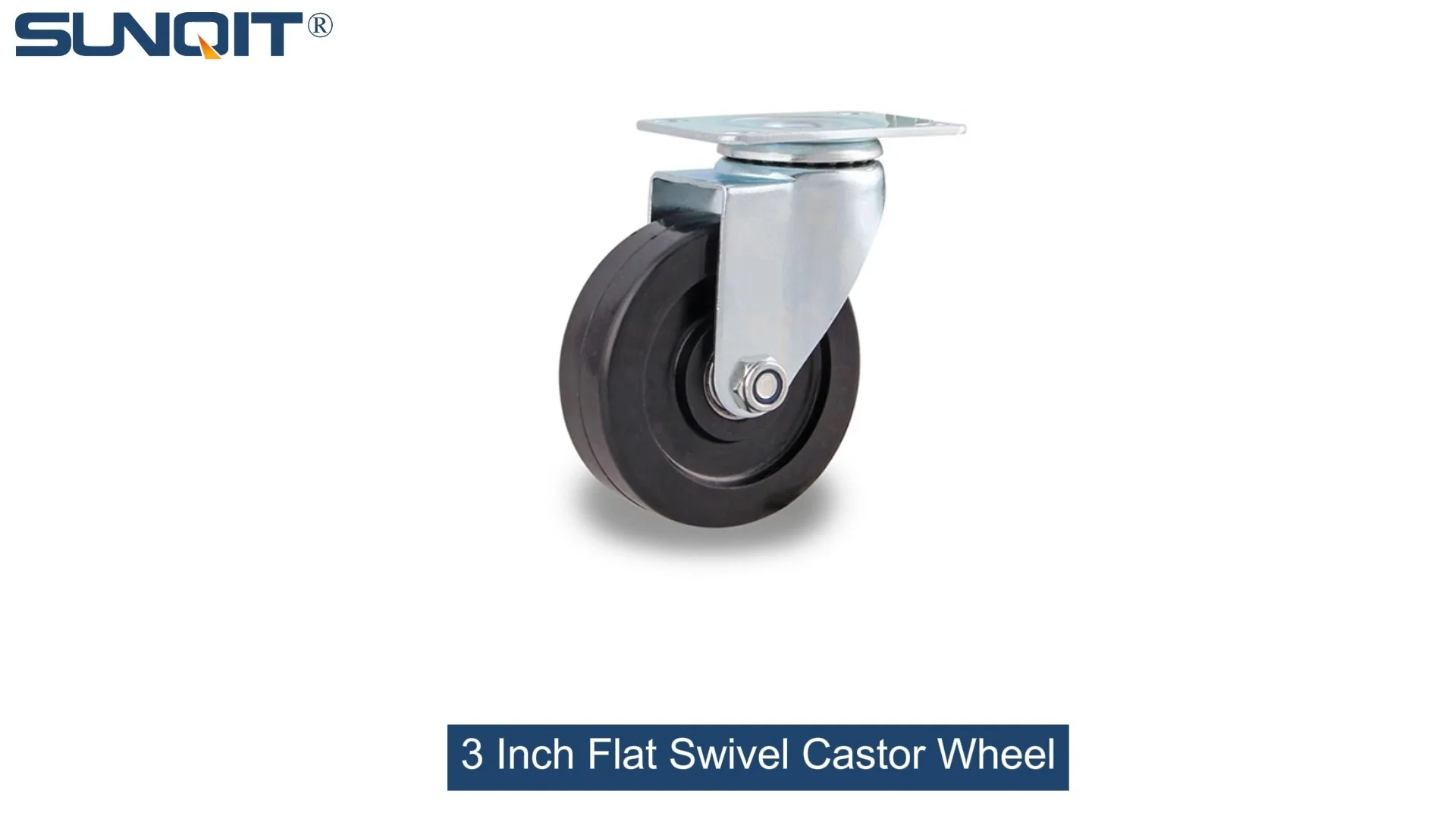
Walk into any modern manufacturing facility, and you'll notice a quiet revolution unfolding on the factory floor. Gone are the days of static workbenches bolted to the ground, of heavy material racks that require forklifts to reposition, of production lines that take weeks to reconfigure for new orders. Today's factories thrive on agility—on the ability to pivot quickly, adapt to changing demands, and keep workflows moving without a hitch. At the heart of this transformation? Often, it's a small but mighty component: the flat swivel castor wheel. These unassuming wheels, mounted beneath workbenches, turnover trolleys, and material racks, are the unsung heroes of flexible production, turning rigid spaces into dynamic, responsive ecosystems.
The Problem with Stagnation: Why Mobility Matters More Than Ever
Let's start with a scenario many production managers know all too well. Imagine a mid-sized electronics assembly plant that's just landed a rush order for a new smartphone model. The existing production line is set up for last quarter's bestseller, with workbenches arranged in a linear flow, material racks fixed along one wall, and testing stations bolted to the floor. To meet the new order, the team needs to rearrange the line: add a new soldering station, reposition the quality control bench closer to the packaging area, and move raw material storage to reduce walking time for assemblers. If everything is fixed in place, this reconfiguration could take days—delaying the order, inflating labor costs, and fraying the nerves of everyone involved.
Now, picture the same scenario, but with every workbench, material rack, and trolley mounted on flat swivel castor wheels. Suddenly, the soldering station glides into place with a gentle push, the quality control bench swivels around to face the packaging line, and the material cart rolls smoothly from the warehouse to the assembly area. What might have taken days now takes hours—or even minutes. That's the power of mobility in production, and it's why flat swivel castor wheels have become indispensable tools for manufacturers aiming to stay competitive in a world where "fast" and "flexible" are no longer buzzwords, but survival strategies.
What Are Flat Swivel Castor Wheels, Anyway?
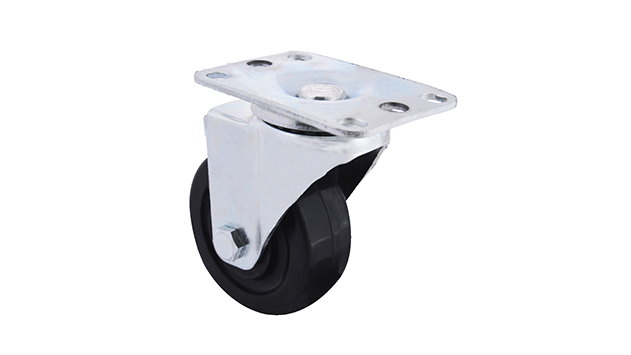
Before diving into their benefits, let's clarify what sets flat swivel castor wheels apart. At their core, castor wheels are wheel assemblies mounted on a bracket, designed to be attached to the bottom of objects to make them mobile. "Swivel" means the wheel can rotate 360 degrees, allowing the object to move in any direction without being dragged or lifted. "Flat" refers to the mounting plate—the part that attaches the caster to the object—which is typically a flat, rectangular metal plate with pre-drilled holes for easy installation. This flat design ensures a secure, stable connection to surfaces like workbench frames or trolley bases, distributing weight evenly and reducing the risk of wobbling or tipping.
But not all swivel castors are created equal. Some have small, plastic wheels better suited for light office furniture; others have heavy-duty steel wheels built for industrial use. Flat swivel castor wheels, however, are engineered specifically for the demands of production environments. They're built to handle heavy loads—often up to 500 kg or more per wheel—with durable materials like reinforced nylon, polyurethane, or rubber tires that grip floors without leaving marks. Many also come with built-in brakes or locks, allowing workers to "freeze" a mobile workbench or trolley in place when stability is needed, then release the brake to reposition it again.
The Top 5 Reasons Flat Swivel Castor Wheels Transform Production Lines
So, why have these wheels become so critical for flexible production? Let's break down their impact across five key areas: adaptability, efficiency, safety, cost savings, and support for lean manufacturing principles.
1. Adaptability: Turning Fixed Spaces into Modular Work Zones
One of the biggest challenges in manufacturing is predicting demand. A product that's flying off the shelves this month might see a sales dip next month, while a new design could suddenly require a completely different production setup. Fixed infrastructure can't keep up with this volatility—but mobile equipment can. Flat swivel castor wheels turn static tools into modular components that can be rearranged on the fly. Need to shift from a linear production flow to a U-shaped cell to reduce handoffs? Just roll the workbenches into place. Want to create a temporary assembly line for a small batch order? Grab a few mobile tables and wheel them into a corner. This adaptability isn't just about convenience; it's about future-proofing your facility. With mobile equipment, you're not locked into a single layout—you're ready for whatever the market throws at you.
Consider the example of a automotive parts supplier that produces both brake calipers and suspension components. Depending on customer orders, the ratio of calipers to suspension parts can swing dramatically from week to week. By mounting their assembly workbenches on flat swivel castor wheels, the company can quickly reconfigure their lines: adding more stations for calipers when orders spike, or shifting to suspension-focused cells when that demand rises. The result? They've cut changeover time by 75% and reduced idle time for workers, who no longer wait for tools or materials to be moved into place.
2. Efficiency: Cutting Waste, Boosting Throughput
In manufacturing, every second counts—and every step that doesn't add value is a form of waste. Lean system principles, which focus on eliminating waste (or "muda") in all its forms, have become a cornerstone of modern production. One of the most common types of waste is "motion waste"—the time workers spend walking to retrieve tools, materials, or finished products. Flat swivel castor wheels attack this waste head-on by bringing the work to the worker, rather than the other way around.
Take a typical assembly line where workers stand at fixed workbenches. If a component needed for the next step is stored on a rack 20 feet away, each worker might walk that distance dozens of times per shift—adding up to miles of unnecessary movement over a week. Now, mount that rack on flat swivel castor wheels, and it can be positioned right next to the workbench. Suddenly, the worker reaches for the component instead of walking for it, saving seconds per cycle and hours per week. Multiply that across a team of 50 workers, and the productivity gains are staggering.
But it's not just about reducing walking. Mobile equipment also cuts down on setup time for new orders. A bakery that produces custom cakes, for example, uses mobile mixing stations mounted on flat swivel castor wheels. When switching from a vanilla cake batch to a gluten-free chocolate batch, the mixing station can be wheeled to a dedicated cleaning area, sanitized, and then rolled back to the prep line—eliminating the need to disassemble and reassemble fixed equipment. Setup time that once took 45 minutes now takes 15, allowing the bakery to take on more custom orders without expanding their facility.
3. Safety: Stability and Control in Every Movement
In any production environment, safety is non-negotiable. Heavy equipment, fast-moving parts, and tight spaces create inherent risks, and anything that reduces those risks is worth investing in. Flat swivel castor wheels excel here, thanks to their design features that prioritize stability and control.
First, the "flat" mounting plate distributes weight evenly across the wheel assembly, reducing the risk of tipping. Unlike some casters with narrow or angled brackets, flat plates create a low center of gravity, which is critical when moving heavy loads. A material rack loaded with steel parts, for example, is far less likely to topple over when mounted on a flat swivel castor wheel than on a caster with a flimsy bracket. Second, many flat swivel castors come with locking mechanisms—either total-lock (which locks both the wheel and the swivel) or directional-lock (which keeps the wheel facing forward). These locks ensure that equipment stays put when in use, preventing accidental movement that could lead to collisions or injuries.
Floor protection is another safety benefit. Many flat swivel castor wheels are fitted with polyurethane or rubber tires, which grip floors without scratching or scuffing them. This is especially important in facilities with polished concrete or epoxy floors, where damage can be costly to repair. Rubber tires also absorb shock, reducing noise in busy environments—a small detail that adds up to a less stressful, more focused workforce.
4. Cost Savings: Investing in Mobility, Reducing Long-Term Expenses
At first glance, adding flat swivel castor wheels to equipment might seem like an extra expense. Why not just keep using fixed workbenches or stationary racks? But the long-term cost savings tell a different story. Mobile equipment reduces the need for redundant tools—if a single workbench can be wheeled between two production lines, you don't need to buy two workbenches. It cuts down on labor costs by reducing setup and changeover time. It extends the lifespan of your facility by minimizing floor damage from heavy equipment being dragged or lifted. And it can even delay the need for facility expansion, as a flexible layout makes better use of existing space.
Consider a furniture manufacturer that was considering building a second warehouse to store overflow inventory. Instead, they invested in mobile material racks—standard racks mounted on flat swivel castor wheels. Now, when they need to access seasonal inventory (like patio furniture in spring), they can roll the winter inventory racks to the back of the warehouse and bring the patio sets forward—no extra space needed. The cost of the castor wheels? A fraction of what building a new warehouse would have cost. And the ROI? Immediate, as they avoided a six-figure construction project.
5. Supporting Lean System Goals: Aligning with the Principles of Continuous Improvement
Lean system isn't just a buzzword—it's a mindset that focuses on continuous improvement, empowering workers, and creating value for customers. Flat swivel castor wheels align perfectly with these goals by giving teams the tools to experiment, adapt, and optimize their workflows. When equipment is mobile, workers are more likely to suggest layout changes that improve efficiency—because they can actually test those changes without waiting for maintenance to unbolt and rebolt everything. This culture of experimentation leads to a more engaged workforce and a steady stream of small improvements that add up to big results.
Take a medical device manufacturer that adopted lean principles five years ago. As part of their journey, they outfitted all their assembly workbenches with flat swivel castor wheels and encouraged workers to "own" their workspaces. One team noticed that they were constantly passing components back and forth between two adjacent benches, so they rearranged the benches into a circle, reducing handoffs by 40%. Another team moved their testing station closer to the assembly line, cutting down on defects by catching issues earlier. These changes weren't dictated by management—they came from the workers on the floor, who had the mobility to turn their ideas into action. The result? A 25% increase in productivity and a 30% reduction in defects over two years.

Comparing Castor Types: Why "Flat Swivel" Beats the Rest
Not all casters are created equal, and choosing the right type for your production line matters. Let's compare flat swivel castor wheels to other common caster types to see why they stand out:
| Feature | Flat Swivel Castor Wheels | Rigid (Fixed) Casters | Swivel Casters with Angled Brackets | Light-Duty Office Casters |
|---|---|---|---|---|
| Mobility | 360° swivel + straight rolling; highly maneuverable | Only rolls forward/backward; no swivel | 360° swivel, but angled bracket may limit tight turns | 360° swivel, but small wheels struggle with rough floors |
| Load Capacity | High (up to 500+ kg per wheel) | High, but limited by fixed direction | Medium; angled bracket may weaken under heavy loads | Low (typically < 100 kg per wheel) |
| Stability | High; flat mounting plate distributes weight evenly | High, but only in fixed direction | Medium; angled bracket raises center of gravity | Low; narrow brackets prone to tipping |
| Floor Protection | Excellent (polyurethane/rubber tires) | Good, but limited by mobility | Good, but less control on uneven floors | Good for smooth floors, but not industrial use |
| Best For | Industrial workbenches, turnover trolleys, material racks | Heavy machinery that only moves in straight lines | Light to medium loads in tight spaces | Office chairs, filing cabinets, light shelving |
As the table shows, flat swivel castor wheels strike the perfect balance between mobility, load capacity, and stability—making them ideal for the demands of flexible production lines. Rigid casters lack maneuverability, angled-bracket swivels sacrifice stability, and light-duty office casters can't handle industrial loads. Flat swivel castors, by contrast, deliver on all three fronts.

Choosing the Right Flat Swivel Castor Wheels: Key Considerations
Not all flat swivel castor wheels are the same, and selecting the right ones for your facility requires careful thought. Here are the key factors to keep in mind:
Load Capacity: Know Your Weights
First and foremost, calculate the maximum weight each caster will need to support. This includes the weight of the equipment itself plus the maximum load it will carry. If a workbench weighs 100 kg and will hold 300 kg of materials, each of its four casters should support at least 100 kg (total weight = 400 kg; 400 kg ÷ 4 casters = 100 kg per caster). It's always smart to add a 20-30% buffer to account for unexpected loads or uneven weight distribution.
Floor Type: Match the Wheel to the Surface
The type of floor in your facility will dictate the wheel material. For smooth concrete or epoxy floors, polyurethane wheels are a great choice—they're durable, quiet, and won't leave marks. For rough or uneven floors (like unfinished concrete or warehouse floors with cracks), rubber wheels offer better shock absorption and grip. If you're working in a cleanroom or food-processing environment, stainless steel wheels are resistant to corrosion and easy to sanitize.
Environment: Specialized Needs
Consider any environmental hazards or requirements. In ESD (electrostatic discharge) sensitive areas (like electronics manufacturing), look for ESD-rated casters that dissipate static electricity to protect sensitive components. In wet environments (like breweries or car washes), choose casters with sealed bearings to prevent rust. For high-temperature areas (like foundries), heat-resistant wheels (made from materials like phenolic resin) are a must.
Caster Accessories: Brakes, Locks, and More
Don't overlook caster accessories—they can make a big difference in usability. Brake systems are essential for keeping mobile equipment stable when in use; look for total-lock brakes (which lock both the wheel and swivel) for maximum security. If you need to keep equipment aligned in a straight line, directional locks can prevent swiveling. For uneven floors, adjustable-height casters let you level equipment by raising or lowering individual wheels.
Maintenance: Keeping Your Castors Rolling Smoothly
Like any equipment, flat swivel castor wheels need regular maintenance to perform at their best. Here's a quick checklist to keep them in top shape:
- Clean regularly: Wipe wheels and swivel mechanisms with a damp cloth to remove dirt, debris, or oil that can gum up movement.
- Lubricate bearings: Apply a few drops of industrial lubricant to swivel bearings every 3-6 months (more often in dusty or wet environments) to keep swiveling smooth.
- Check brakes: Test brake locks regularly to ensure they engage fully and release cleanly. Tighten any loose brake levers or replace worn brake pads.
- Inspect wheels: Look for cracks, chunks missing from the tread, or uneven wear. replace wheels that show signs of damage—worn wheels can cause equipment to wobble or damage floors.
- Tighten mounting bolts: Over time, vibrations can loosen the bolts that attach the caster to the equipment. Check these bolts monthly and tighten as needed to prevent the caster from detaching.
The Future of Flexible Production: Where Castors Meet Innovation
As manufacturing continues to evolve—with trends like Industry 4.0, automation, and small-batch customization reshaping the landscape—flat swivel castor wheels are evolving too. Today's innovations are making them even more valuable for flexible production lines:
Smart casters: Some manufacturers are experimenting with casters embedded with sensors that track movement, load weight, and maintenance needs. Imagine a material trolley that alerts you when a wheel is wearing thin, or a workbench that logs how often it's repositioned to help optimize layouts.
Ergonomic designs: New wheel materials and bearing technologies are making casters easier to move, even under heavy loads. This reduces the force required to push or pull equipment, lowering the risk of strain injuries for workers.
Sustainability: Eco-friendly materials, like recycled polyurethane for wheels and recyclable steel brackets, are becoming more common as manufacturers prioritize sustainability in their supply chains.
Conclusion: Small Wheels, Big Impact
In the grand scheme of manufacturing, flat swivel castor wheels might seem like a minor detail. But as we've explored, they're anything but. They're the difference between a factory that struggles to keep up and one that thrives on change. They're the reason a rush order gets shipped on time, a worker avoids a trip to the chiropractor, and a small business can compete with industry giants.
Flexible production lines aren't a luxury anymore—they're a necessity. And at the heart of that flexibility is mobility. Whether you're running a small workshop or a large-scale manufacturing plant, investing in quality flat swivel castor wheels is one of the smartest decisions you can make. They're not just wheels—they're the foundation of a more agile, efficient, and resilient production future.
So the next time you walk through your facility, take a moment to look down. Those wheels beneath your workbench, your turnover trolley, your material rack? They're not just moving equipment—they're moving your business forward.