- Company Articles
- Products and Technology
- Product knowledge
- Why Free Flow Chain Conveyors Are Ideal for Material Handling in Warehouses

Why Free Flow Chain Conveyors Are Ideal for Material Handling in Warehouses
Related Product
Free Flow Chain Conveyor
The free flow conveyor system uses a free flow chain that can increase the speed of the tooling board that supports the products. This can improve the efficiency and quality of the production process, as well as reduce the wear and tear of the system.
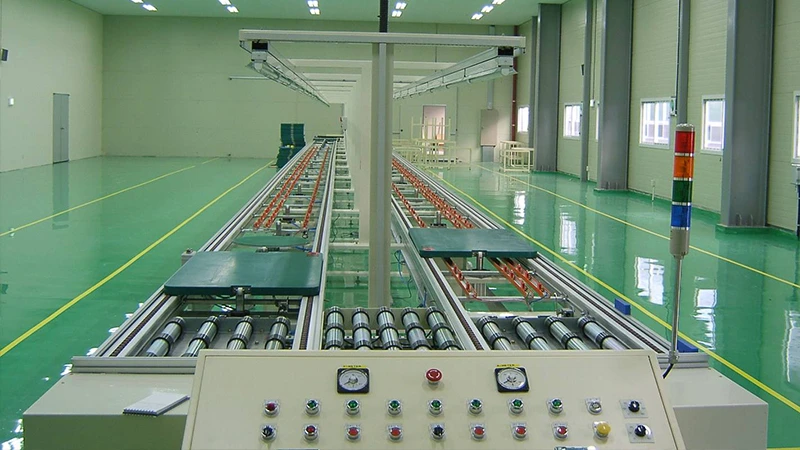
Walk into any modern warehouse, and you'll quickly realize that material handling is the invisible backbone of operations. Every pallet moved, every box sorted, and every order fulfilled relies on a seamless flow of goods—from the moment inventory arrives at the loading dock to when it's loaded onto a truck for delivery. But here's the thing: not all material handling systems are created equal. Some slow down workflows with clunky machinery, while others require constant maintenance. Others still drain energy costs or limit flexibility. That's where free flow chain conveyors come in. These unassuming systems have quietly revolutionized how warehouses move materials, offering a blend of efficiency, versatility, and cost-effectiveness that's hard to beat. In this article, we'll dive into why free flow chain conveyors have become a go-to choice for warehouse managers, how they work, and why they might just be the missing piece in your facility's workflow puzzle.
What Are Free Flow Chain Conveyors, Anyway?
Let's start with the basics. Free flow chain conveyors—sometimes called "flow chain conveyors" or "chain flow conveyors"—are material handling systems designed to move products smoothly and continuously along a fixed path. At their core, they consist of a series of interconnected chains mounted on a frame, with small rollers or slats attached to the chains. Unlike belt conveyors, which use a continuous belt, or roller conveyors, which rely on gravity or motorized rollers, free flow chain conveyors use the movement of the chain itself to propel items forward. The "free flow" part comes from their ability to maintain a steady, uninterrupted flow of materials, even when handling lightweight to medium-weight loads (typically up to 50 pounds per linear foot).
But what really sets them apart is their simplicity. Most free flow chain conveyors are gravity-powered or use minimal motorization, making them energy-efficient. They're also modular, meaning you can easily extend or reconfigure them as your warehouse needs change. Think of them as the Swiss Army knife of material handling: adaptable, reliable, and ready to tackle a variety of tasks without requiring a complete overhaul of your layout.
Key components often include roller track sections (to guide the chain and support items), lightweight aluminum or steel frames (for durability without excess weight), and connectors that let you link sections together. This modularity is a big reason they pair so well with other warehouse equipment—like workbenches, turnover trolleys, and racks—creating a cohesive material flow ecosystem.
The Top 5 Reasons Warehouses Are Switching to Free Flow Chain Conveyors
So, why are more and more warehouse managers swapping out older conveyor systems for free flow chain models? Let's break down the advantages that make them stand out.
1. Unmatched Efficiency: Keep Materials Moving, No Bottlenecks Allowed
In a warehouse, time is money—and bottlenecks are the enemy. A single stuck pallet or a slow-moving conveyor can throw off an entire shift's schedule, delaying orders and frustrating staff. Free flow chain conveyors excel at preventing these headaches by maintaining a consistent flow of materials. Because the chain moves continuously (or can be easily started/stopped with minimal lag), there's less downtime between batches of products. For example, in a picking zone, where workers retrieve items to fulfill orders, a free flow chain conveyor can carry bins from the storage area directly to a packing workbench without pausing. This means pickers spend less time waiting for materials and more time actually picking, and packers never run out of items to box up.
One warehouse in the Midwest, which handles small electronics parts, reported a 30% reduction in order processing time after installing free flow chain conveyors between their storage racks and assembly workbenches. "Before, we had workers manually carting bins back and forth, which led to delays when someone called in sick or a cart got stuck," said the facility manager. "Now, the conveyor keeps the parts flowing, and our team can focus on assembling instead of hauling. It's like night and day."
2. Versatility: Handle Almost Any Product, Anywhere in the Warehouse
Warehouses rarely deal with just one type of product. One day, you might be moving small boxes of cosmetics; the next, you're handling plastic bins of automotive parts or even flat packages of clothing. Free flow chain conveyors are built to adapt. Their adjustable speed (when motorized) and customizable track widths mean they can handle everything from small poly mailers to 24-inch-wide boxes. They also work with a variety of product types: rigid items like cans or cartons, as well as semi-rigid items like bags or pouches (when paired with a flat surface).
But their versatility goes beyond load type. They're equally at home in picking zones, packing stations, assembly lines, or even shipping areas. For example, in a warehouse, a free flow chain conveyor might start at the "receiving" dock, where new inventory is unloaded, then snake through the storage area to the picking workbenches, and finally end at the shipping zone, where packages are loaded onto turnover trolleys for transport to delivery trucks. No need for multiple conveyor types—one system can handle the entire journey.
They also play nice with other equipment. Want to connect a conveyor to a workbench where workers inspect products? Just add a short, angled section to feed items directly onto the bench. Need to route materials around a corner? Use a curved chain track. This flexibility makes them ideal for warehouses with irregular layouts or evolving needs.
3. Cost-Effective: Save on Energy, Labor, and Maintenance
Let's talk numbers. Warehouse budgets are tight, and every dollar counts. Free flow chain conveyors shine here, too, thanks to their low total cost of ownership. First, energy costs: since many models are gravity-powered (using the natural slope of the track to move items), they don't require electricity to run. Even motorized versions use minimal power compared to belt or roller conveyors, which often need heavy-duty motors to turn large rollers or move thick belts. Over time, those energy savings add up—especially for 24/7 operations.
Then there's labor. By automating material movement, free flow chain conveyors reduce the need for workers to manually transport items (think: pushing heavy carts or carrying bins). This frees up staff to focus on higher-value tasks, like quality control or order accuracy, instead of hauling goods. One study by the Material Handling Industry (MHI) found that warehouses using automated conveyors (including free flow chain models) reduced labor costs by 15-20% on average, simply by cutting down on manual material handling.
Maintenance is another area where they save. Unlike belt conveyors, which require frequent belt replacements (especially if they're exposed to dust or sharp edges), or roller conveyors, which can jam if debris gets stuck between rollers, free flow chain conveyors have fewer moving parts. The chains themselves are durable and easy to clean, and the rollers are designed to resist wear. Most facilities only need to perform basic upkeep: occasional lubrication of the chain links, checking for loose bolts, and clearing debris from the track. Even better, replacement parts (like chain links or roller track sections) are affordable and easy to install—no need to call in expensive technicians.
4. Ergonomics: Make Work Easier (and Safer) for Your Team
Warehouse work is physically demanding. Heavy lifting, repetitive bending, and constant walking can lead to fatigue, injuries, and high turnover. Free flow chain conveyors help alleviate these issues by bringing materials directly to workers, instead of making workers go to the materials. For example, instead of a picker having to walk 50 feet to retrieve a bin and carry it back to their workbench, the conveyor delivers the bin right to their station. This reduces walking distance, cuts down on bending and lifting, and lowers the risk of strains or falls.
They also promote better posture. When materials are at waist height (thanks to adjustable conveyor heights), workers don't have to stoop or reach overhead to grab items. This is a big deal for preventing back injuries, which are among the most common workplace injuries in warehouses. In fact, OSHA reports that proper ergonomics in material handling can reduce injury rates by up to 40%—and free flow chain conveyors are a key tool in achieving that.
Happy, healthy workers are also more productive. When staff aren't exhausted from manual labor, they're more focused, make fewer mistakes, and stay with the company longer. It's a win-win: your team feels valued, and your warehouse runs more smoothly.
5. Durability: Built to Last, Even in Tough Environments
Warehouses are rough places. Dust, humidity, occasional spills, and constant use can take a toll on equipment. Free flow chain conveyors are built to withstand these conditions, thanks to their rugged construction. Most frames are made from aluminum or galvanized steel, which resist rust and corrosion. The chains are often made from hardened steel or plastic (for lightweight applications), and the roller tracks are designed to handle impacts without cracking.
Take a food distribution warehouse, for example, where conveyors might be exposed to cold temperatures (in refrigerated zones) or occasional moisture. A free flow chain conveyor with a stainless steel frame and plastic rollers would hold up just fine, whereas a belt conveyor might have issues with belt cracking in the cold. Similarly, in a manufacturing warehouse with metal parts, the steel chains and roller tracks would resist scratches and dents from sharp edges.
Many manufacturers back their free flow chain conveyors with warranties of 5-10 years, which speaks to their longevity. When you invest in one, you're not just buying a conveyor—you're buying a system that will keep working for years, even with daily heavy use.
How Free Flow Chain Conveyors Stack Up Against Other Systems
To really understand why free flow chain conveyors are ideal, it helps to compare them to other common material handling systems. Let's put them head-to-head with two popular alternatives: roller conveyors and belt conveyors.
| Feature | Free Flow Chain Conveyor | Roller Conveyor | Belt Conveyor |
|---|---|---|---|
| Load Capacity | Light to medium (up to 50 lbs/linear ft) | Medium to heavy (up to 200 lbs/linear ft) | Light to heavy (up to 150 lbs/linear ft) |
| Energy Use | Low (often gravity-powered; minimal motor use) | Medium to high (motorized rollers require power) | Medium to high (motor needed to move belt) |
| Maintenance | Low (fewer parts; easy chain lubrication) | Medium (rollers can jam; need to clean between gaps) | High (belts wear out; require tension adjustments) |
| Flexibility | High (modular; easy to reconfigure) | Medium (rigid frames; hard to curve) | Low (fixed belt path; hard to extend) |
| Best For | Lightweight, regular-shaped items (boxes, bins, packages) | Heavy, flat items (pallets, large cartons) | Irregular-shaped items (bags, loose parts) |
| Cost (Initial + Ongoing) | Low to medium | Medium | Medium to high |
As you can see, free flow chain conveyors excel in scenarios where you need a balance of efficiency, flexibility, and cost. They're not the best choice for extremely heavy loads (that's where roller conveyors shine), but for most warehouse tasks—picking, packing, sorting, and moving small to medium items—they're hard to beat. They also outperform belt conveyors in terms of maintenance and energy use, making them a smarter long-term investment.
Real-World Applications: Where Free Flow Chain Conveyors Shine
Still not sure if they're right for your warehouse? Let's look at some real-world examples of how facilities are using free flow chain conveyors to solve specific problems.
1. E-Commerce Fulfillment Centers
E-commerce warehouses are all about speed. With customers expecting same-day or next-day delivery, every second counts. Free flow chain conveyors are a staple here, used to move orders from the picking area to packing stations. For example, when a picker retrieves items from a shelf, they place them into a bin, which then slides down a free flow chain conveyor to a packing workbench. Packers remove the items, box them, and send the package back onto the conveyor to the shipping zone. This continuous flow cuts down on wait times and ensures orders get out the door faster.
2. Manufacturing Assembly Lines
Manufacturers use free flow chain conveyors to move parts between assembly stations. Imagine a facility building small appliances: a free flow chain conveyor might carry product frames from the welding station to the painting station, then to the assembly station, where workers add components. The slow, steady movement lets workers focus on their tasks without rushing, improving quality control. Plus, since the conveyor is modular, it's easy to add new stations as the production line expands.
3. Retail Distribution Centers
Retailers need to keep stores stocked with inventory, which means moving large quantities of small items (like clothing, electronics, or household goods). Free flow chain conveyors are perfect for this, as they can handle multiple small packages at once. For example, a distribution center might use a conveyor to sort items by store location, with each store's packages branching off onto separate conveyor tracks. From there, the packages are loaded onto turnover trolleys and taken to delivery trucks. This reduces sorting errors and ensures stores get the right products on time.
4. Pharmaceutical and Food Warehouses
Industries with strict hygiene standards (like pharmaceuticals or food) love free flow chain conveyors because they're easy to clean. Many models are made with stainless steel frames and plastic chains, which can be wiped down or sanitized without rusting or corroding. They also minimize product contact with workers, reducing the risk of contamination—a critical factor for products that need to meet FDA or USDA guidelines.
How to Choose the Right Free Flow Chain Conveyor for Your Warehouse
Ready to invest in a free flow chain conveyor? Here's what to consider to make sure you pick the right system for your needs.
1. Know Your Loads
Start by calculating the weight and size of the items you'll be moving. Free flow chain conveyors work best with lightweight to medium-weight loads (up to 50 lbs/linear ft), so if you're moving pallets or heavy machinery, you might need a roller conveyor instead. Also, consider the item dimensions: will you be moving small bins, large boxes, or irregularly shaped items? Most conveyors can be customized with wider or narrower tracks to fit your products.
2. Map Your Workflow
Draw a rough sketch of your warehouse layout and map out where materials need to go. Do you need a straight conveyor, or will you need curves to navigate around obstacles? Will you need to connect multiple levels (e.g., from a mezzanine to the ground floor)? This will help you determine the length, shape, and number of conveyor sections you need. Don't forget to account for future growth—choosing a modular system means you can add sections later if your workflow expands.
3. Consider Your Environment
Think about the conditions in your warehouse. Is it humid? Do you have temperature extremes (like a refrigerated zone)? Will the conveyor be exposed to dust, debris, or chemicals? Choose materials accordingly: aluminum frames for lightweight, rust-resistant needs; stainless steel for wet or corrosive environments; and plastic chains for food-safe applications.
4. Factor in Speed
How fast do you need materials to move? Gravity-powered conveyors rely on the slope of the track, so speed is determined by how steep the incline is (typically 1-3 degrees). Motorized conveyors let you adjust the speed, which is useful if you need to slow down for sorting or inspection. Be careful not to go too fast, though—faster speeds can cause items to tip or slide off the conveyor.
5. Look for a Reputable Supplier
Finally, choose a supplier with experience in warehouse material handling. A good supplier will help you design the system, recommend the right components (like roller track sections or connectors), and provide installation support. They should also offer a warranty and replacement parts, so you're not left scrambling if something breaks.
Maintenance Tips to Keep Your Conveyor Running Smoothly
Even the best conveyor needs a little TLC to keep working its best. Here are some simple maintenance tips to extend the life of your free flow chain conveyor:
- Clean regularly: Sweep or vacuum the conveyor track weekly to remove dust, debris, or small items that could jam the chain. For food or pharmaceutical facilities, sanitize the track and chains daily with a mild detergent.
- Lubricate the chain: Most chains need lubrication every 3-6 months (check your manufacturer's guidelines). Use a food-grade lubricant if you're in a sensitive industry, and avoid over-lubricating (excess oil can attract dust).
- Check for wear: Inspect the chain links, rollers, and track for signs of wear (like cracks, bent links, or loose bolts). replace worn parts immediately to prevent bigger issues down the line.
- Test the flow: Run a few test items through the conveyor weekly to ensure they move smoothly. If items start to stick or slow down, adjust the track alignment or clean the chain.
- Train your team: Make sure workers know not to overload the conveyor or place items sideways (which can cause jams). A little training goes a long way in preventing damage.
Final Thoughts: Why Free Flow Chain Conveyors Are a Smart Investment
Warehouses today face more pressure than ever: faster delivery times, rising labor costs, and the need to do more with less space. Free flow chain conveyors address all these challenges, offering a simple, efficient, and cost-effective way to move materials. They're versatile enough to handle everything from e-commerce orders to manufacturing parts, durable enough to last for years, and flexible enough to grow with your business.
Whether you're running a small distribution center or a large manufacturing facility, a free flow chain conveyor can help you streamline workflows, reduce costs, and keep your team happy and productive. And in the world of warehouse management, that's not just an advantage—it's a game-changer.
So, if you're tired of bottlenecks, high energy bills, or constant maintenance headaches, it might be time to give free flow chain conveyors a closer look. Your warehouse (and your bottom line) will thank you.