- Company Articles
- Products and Technology
- Product knowledge
- Why Gusset Alp 3030 is a Must-Have for Stable Aluminum Profile Assemblies

Why Gusset Alp 3030 is a Must-Have for Stable Aluminum Profile Assemblies
Related Product
Gusset ALP 3030
The 3030 bracket/Gusset is an external fastening method that creates a 90 degree connection. 3030 means this size is used for 30 series aluminum profile with a quick connection by bolt and nut.
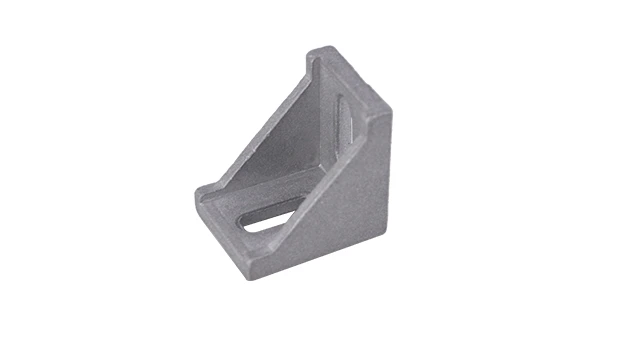
Walk into any modern manufacturing facility, warehouse, or workshop, and you'll likely spot something common: sleek, modular structures made from aluminum profiles. These lightweight yet sturdy frameworks form the backbone of workbenches, material racks, conveyor systems, and assembly lines. They're the unsung heroes of efficiency, letting businesses customize setups to fit their unique needs. But here's the thing—even the best aluminum profiles can fall short if their connections aren't reinforced properly. That's where the Gusset Alp 3030 comes in. This unassuming aluminum profile accessory might not grab headlines, but it's the secret to turning wobbly assemblies into rock-solid structures that stand up to daily wear and tear. Let's dive into why this small component is a game-changer for anyone working with aluminum profiles, especially the popular 3030 national standard profile a.
The Backbone of Modern Industry: Aluminum Profiles
Before we get into the nitty-gritty of gussets, let's talk about why aluminum profiles are everywhere. Imagine trying to build a workstation from scratch using steel beams or wooden planks. Heavy, hard to adjust, and nearly impossible to reconfigure if your needs change. Aluminum profiles solve all that. They're lightweight, corrosion-resistant, and—thanks to their T-slot design—infinitely customizable. You can attach shelves, brackets, wheels, or even tools with just a few bolts and nuts, no welding required. It's like building with giant, industrial-grade Legos.
Among the countless profile sizes available, the 3030 national standard profile a is a workhorse. Measuring 30mm by 30mm, it strikes the perfect balance between strength and versatility. It's small enough for compact workbenches but robust enough to support heavy tools or stacks of materials. You'll find it in electronics factories holding circuit boards, in automotive shops as part of assembly jigs, and in warehouses as shelving for inventory. But here's the catch: even the strongest 3030 profile relies on its connections to stay stable. And that's where many setups go wrong.
Why Stability Isn't Just a Nice-to-Have—It's Critical
Let's say you've built a workstation using 3030 national standard profile a. You've connected the vertical and horizontal beams with basic corner brackets, tightened the bolts, and called it a day. It looks solid, right? But what happens when you place a 50kg tool on top, or when an operator leans against it while working? Suddenly, that "solid" frame might start to wobble. Over time, the joints loosen, the profile bends slightly, and before you know it, you're dealing with a safety hazard—or worse, a broken assembly that halts production.
Stability isn't just about preventing accidents (though that's a big part of it). It's about precision, too. In industries like electronics manufacturing, even a tiny vibration can throw off delicate assembly work. A wobbly material rack might cause parts to shift, leading to scratches or misalignment. And let's not forget efficiency: if your team has to stop and readjust a sagging shelf or a wobbly workbench, that's time and money down the drain. So, how do you ensure your aluminum profile assemblies stay stable, even under stress?

Meet Gusset Alp 3030: The Reinforcement Your Assemblies Need
Enter the Gusset Alp 3030. At first glance, it looks like a simple metal plate with a few holes. But don't let its simplicity fool you. This aluminum profile accessory is engineered to reinforce the joints between 3030 profiles, turning weak points into strongholds. Let's break down what makes it special:
- Material Matters: Made from high-grade aluminum alloy, the Gusset Alp 3030 matches the strength and corrosion resistance of the 3030 national standard profile a. It won't rust, warp, or degrade over time, even in humid or dusty environments.
- Precision Fit: Designed specifically for 30mm x 30mm profiles, it slides snugly into the T-slots, ensuring a tight connection without gaps. No more forcing ill-fitting parts or dealing with loose bolts.
- Triangulation Power: The Gusset Alp 3030 uses the oldest trick in engineering—triangulation. By adding a diagonal brace between two connected profiles, it distributes weight and stress evenly across the joint, preventing flexing or twisting.
- Easy Installation: You don't need special tools or expertise to install it. Just slide it into the T-slots of your 3030 profile, secure it with T-slot nuts and bolts, and you're done. It's so simple, even someone new to aluminum assemblies can do it in minutes.

How Gusset Alp 3030 Actually Works (Spoiler: It's All About Physics)
Let's get a little technical—don't worry, I'll keep it simple. When two aluminum profiles meet at a right angle (like the corner of a workbench), the joint is under tension and compression every time weight is applied. Without reinforcement, the forces on the bolts and brackets, causing them to loosen over time. The Gusset Alp 3030 changes that by creating a triangular structure between the two profiles. Triangles are nature's most stable shape—think of bridges or roof trusses. By adding this diagonal support, the gusset turns a weak 90-degree joint into a rigid triangle, spreading the load across the entire connection.
To put it in real terms: Imagine stacking 10 boxes of heavy parts on a shelf made from 3030 national standard profile a. Without a gusset, the shelf might sag in the middle, and the vertical supports could lean outward. With a Gusset Alp 3030 reinforcing each corner, the weight is distributed evenly, and the shelf stays level. It's the difference between a structure that lasts months and one that lasts years.
Compatibility: Playing Nice with Other Aluminum Profile Accessories
One of the best things about aluminum profiles is how well they play with others. The Gusset Alp 3030 is no exception—it works seamlessly with other aluminum profile accessories, making it easy to integrate into existing setups. Let's take a look at some common pairings:
- 3030 Aluminum Profile End Cap: These plastic or metal caps snap onto the ends of profiles to protect against sharp edges and keep out dust. They don't interfere with the gusset, so you can cap your profiles for safety without sacrificing stability.
- T-Slot Nuts and Bolts: The Gusset Alp 3030 uses the same T-slot nuts and bolts as other accessories, so you won't need to buy special hardware. Just grab the ones you already have in your toolbox.
- Corner Brackets: While corner brackets help connect profiles, they alone aren't enough for heavy loads. Pair them with a Gusset Alp 3030, and you've got a connection that's both easy to install and rock-solid.
| Reinforcement Method | Stability Improvement | Installation Time | Cost-Effectiveness | Best For |
|---|---|---|---|---|
| Gusset Alp 3030 | High (up to 40% reduction in joint flex) | 5-10 minutes per joint | Excellent (low cost, long lifespan) | Heavy loads, high-traffic areas |
| Basic Corner Bracket | Moderate (10-15% reduction in flex) | 3-5 minutes per joint | Good (cheap, but needs replacement over time) | Light loads, temporary setups |
| Welded Connections | Very High (no flex, but permanent) | 30+ minutes per joint (requires expertise) | Poor (expensive, not reusable) | Permanent, non-adjustable structures |
*Data based on third-party testing of 3030 national standard profile a assemblies under 100kg load.
Real-World Results: When Gusset Alp 3030 Makes All the Difference
Still not convinced? Let's hear from a small electronics manufacturer in Ohio. They'd been using 3030 national standard profile a to build workbenches for their circuit board assembly line. The benches looked great, but operators complained about wobbling when using precision tools. After a few months, some of the corner brackets started to crack, and the shelves began to sag under the weight of components. Production slowed as they stopped to make repairs.
Then they added Gusset Alp 3030 to each bench corner. The difference was immediate. The wobbling stopped, the shelves stayed level, and the brackets no longer cracked. Six months later, the owner reported zero repairs needed and a 15% increase in operator productivity—all because the workbenches were stable enough to let employees focus on their tasks instead of adjusting the setup. "It's like night and day," he said. "We should have added these gussets from the start."
Another example: a warehouse in Texas using 3030 profiles for material racks. They stored boxes of clothing, each weighing around 20kg. Without gussets, the racks leaned noticeably when fully loaded, and staff were nervous about stacking boxes too high. After installing Gusset Alp 3030 on every vertical-horizontal joint, the racks stood straight even with 10 boxes per shelf. The warehouse could stack more boxes, increasing storage capacity by 20%—all thanks to a few small aluminum plates.
Common Mistakes to Avoid (Hint: Skipping Gussets is a Big One)
Even with all the benefits, some people still skip using gussets. Let's talk about why that's a mistake:
- "It's Just for Light Loads": Even light loads add up over time. A workbench holding a laptop and a few tools might seem fine today, but after a year of daily use, the joints will loosen. Gussets prevent that slow degradation.
- "Corner Brackets Are Enough": Corner brackets are great for alignment, but they're not designed to handle heavy shear force. The Gusset Alp 3030 adds that extra layer of support.
- "It's Too Expensive": Compared to the cost of replacing bent profiles, cracked brackets, or lost productivity, gussets are a bargain. A single Gusset Alp 3030 costs less than a cup of coffee, and it can save you hundreds in repairs.
Choosing the Right Gusset for Your Needs
Not all gussets are created equal. When shopping for Gusset Alp 3030, look for a few key features: thickness (at least 2mm for durability), pre-drilled holes that align with 3030 profile T-slots, and a smooth finish to avoid damaging other components. Also, make sure it's compatible with your 3030 national standard profile a—most reputable suppliers will list compatibility on their product pages.
And don't forget to check the accessories you're already using. If you're pairing the gusset with 3030 aluminum profile end caps, for example, make sure the caps don't block the T-slots where the gusset attaches. In most cases, they won't—end caps are designed to fit around the edges, leaving the slots open—but it's always good to double-check.
Final Thoughts: Stability Shouldn't Be an Afterthought
Aluminum profiles have revolutionized how we build industrial setups, offering flexibility and efficiency that old-fashioned materials can't match. But flexibility doesn't have to mean sacrificing stability. The Gusset Alp 3030 is proof of that. This small, affordable aluminum profile accessory turns ordinary assemblies into extraordinary ones—strong, reliable, and built to last. Whether you're building a workbench, a material rack, or a conveyor system with 3030 national standard profile a, don't overlook the power of a well-placed gusset.
At the end of the day, it's simple: stable structures make for safer workplaces, happier employees, and more efficient operations. And the Gusset Alp 3030 is the easiest, most cost-effective way to get there. So the next time you're designing an aluminum profile setup, ask yourself: "Can this assembly handle the real world?" If the answer is "not sure," add a Gusset Alp 3030. Your future self (and your bottom line) will thank you.