- Company Articles
- Products and Technology
- Product knowledge
- Why Internal Straight Aluminum Joints Are Ideal for Sustainable Lean Initiatives

Why Internal Straight Aluminum Joints Are Ideal for Sustainable Lean Initiatives
Related Product
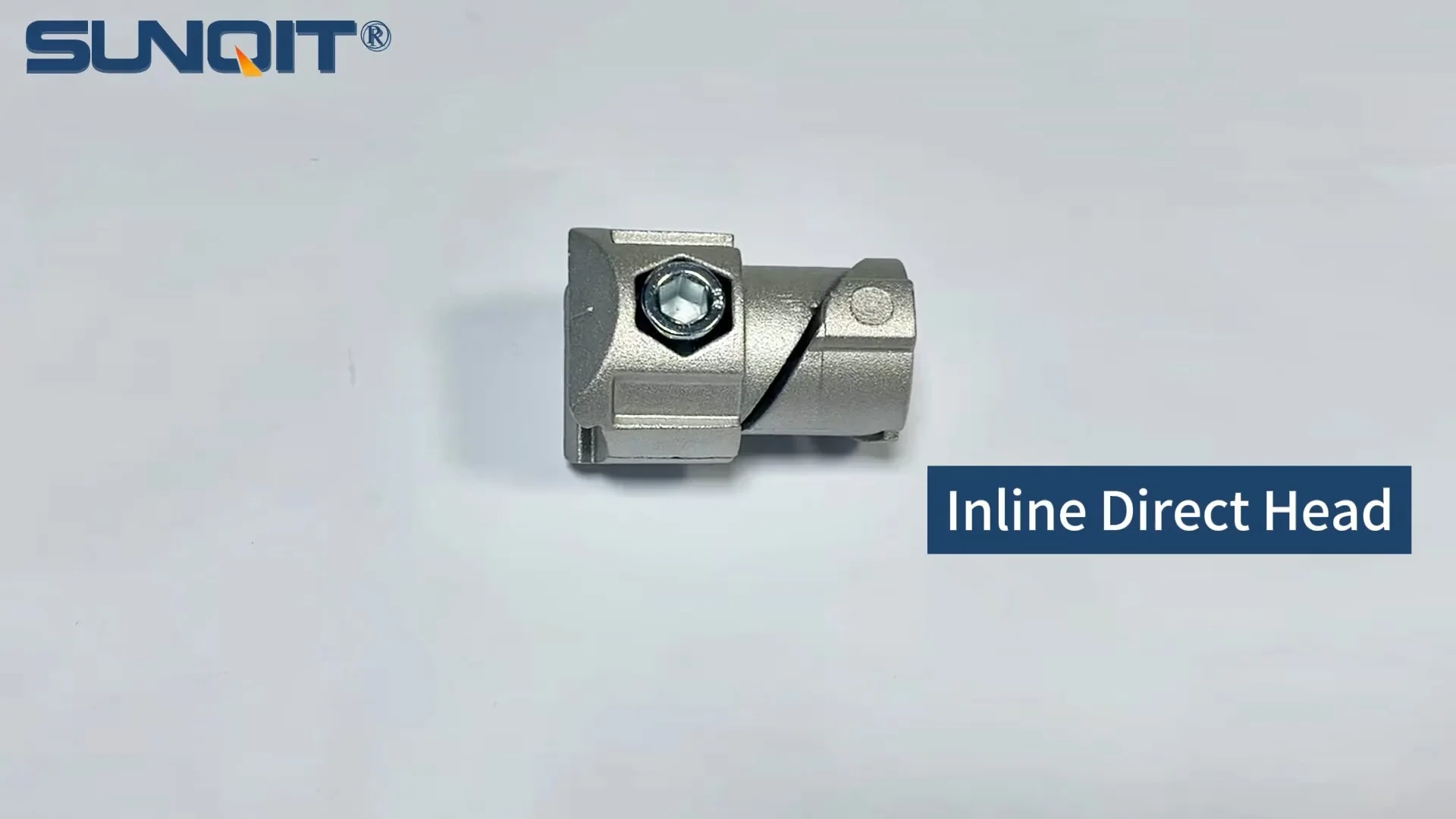
Internal straight aluminum joint
Aluminum pipe joint inside connection used for two pcs 28pcs aluminum pipe connection in straight angle,it connects two pcs pipe from inside.
In the fast-paced world of modern manufacturing, where efficiency and sustainability are no longer optional but essential, the tools and components that form the backbone of production systems have never been more critical. Lean initiatives, which focus on minimizing waste, streamlining processes, and maximizing value, have become a cornerstone of successful operations. Yet, for these initiatives to truly thrive—especially in an era where environmental responsibility is intertwined with profitability—they need a foundation built on flexibility, durability, and eco-friendliness. Enter the internal straight aluminum joint: a seemingly small component that punches far above its weight in driving sustainable lean practices. In this article, we'll explore how these unassuming joints are revolutionizing lean systems, supporting sustainability goals, and becoming indispensable to manufacturers aiming to do more with less, both for their bottom line and the planet.
The Intersection of Lean and Sustainability: A Modern Manufacturing Imperative
Before diving into the specifics of internal straight aluminum joints, it's important to ground ourselves in why lean and sustainability have become inseparable. Lean manufacturing, born from the Toyota Production System, is rooted in five core principles: value, value stream, flow, pull, and perfection. At its heart is the elimination of waste—whether that's wasted time, materials, space, or energy. Sustainability, on the other hand, extends this philosophy to the planet, emphasizing the reduction of environmental impact, the use of renewable resources, and the creation of systems that can thrive long-term without depleting natural capital.
Today, these two ideals are not just aligned; they're mutually reinforcing. A lean system that cuts down on material waste inherently reduces environmental harm. A sustainable approach that prioritizes recyclable materials often leads to more efficient, cost-effective processes. For manufacturers, this means that the tools they choose to build their production lines, workbenches, and material handling systems must excel on both fronts: driving lean efficiency while minimizing ecological footprint. This is where the choice of components—like joints, pipes, and profiles—becomes a strategic decision.
Aluminum Profile: The Sustainable Foundation of Lean Systems
When it comes to building lean systems, the material matters. Traditional options like steel or plastic have long been used, but they come with trade-offs. Steel is durable but heavy, difficult to reconfigure, and energy-intensive to produce. Plastic is lightweight but prone to wear, limited in load capacity, and often non-recyclable. Aluminum, however, has emerged as a game-changer. Aluminum profile, in particular, offers a unique blend of strength, lightness, and sustainability that makes it ideal for lean environments.
Aluminum is 100% recyclable, meaning it can be melted down and reused infinitely without losing quality—a stark contrast to plastic, which degrades with each cycle, or steel, which requires significant energy to recycle. In fact, recycling aluminum uses just 5% of the energy needed to produce new aluminum, making it one of the most eco-friendly metals available. Additionally, aluminum profile is inherently modular: its standardized dimensions and T-slot design allow for easy assembly, disassembly, and reconfiguration—key traits for lean systems that need to adapt to changing production needs without generating waste.
Real-World Impact: A leading automotive parts manufacturer in Germany replaced its steel-based assembly line frames with aluminum profile systems. Within a year, they reduced material waste by 40% (due to reusing components during line reconfigurations) and cut energy costs by 15% (thanks to the lighter weight of aluminum, which reduced the energy needed to move and adjust workstations). By prioritizing aluminum, they aligned their lean goals with sustainability targets, proving that the right material choice is foundational.

Internal Straight Aluminum Joints: The Unsung Heroes of Lean Flexibility
If aluminum profile is the backbone of a sustainable lean system, then internal straight aluminum joints are the connective tissue that brings it all together. These joints are designed to securely link aluminum pipes or profiles in straight configurations, but their true value lies in their simplicity, adaptability, and compatibility with other aluminum pipe accessories. Unlike fixed or welded joints, internal straight aluminum joints allow for tool-free assembly and disassembly, making them a cornerstone of flexible manufacturing.
So, what makes these joints "internal straight"? The term "internal" refers to their design: the joint mechanism is housed within the aluminum pipe, creating a clean, flush connection that minimizes protrusions and maximizes stability. "Straight" indicates their primary function—connecting two pipes in a linear path—though many designs also allow for slight adjustments to accommodate minor alignment needs. This design ensures that the joint doesn't add unnecessary bulk or complexity to the system, keeping workflows smooth and unobstructed—another lean principle in action (eliminating "motion waste" caused by clunky, obstructive components).
Internal straight aluminum joints are part of a broader ecosystem of aluminum pipe accessories, including brackets, connectors, and end caps, which together enable the creation of everything from simple workbenches to complex flow racks. Their modularity means that a single joint can be repurposed across multiple systems: today, it might hold together a material rack; tomorrow, it could be part of a mobile trolley. This reusability is a direct blow to waste, a core tenet of both lean and sustainability.

5 Key Benefits of Internal Straight Aluminum Joints for Sustainable Lean Initiatives
To understand why internal straight aluminum joints are ideal for sustainable lean initiatives, let's break down their benefits into five critical areas, each aligned with lean principles and sustainability goals.
1. Waste Reduction: From "One-and-Done" to "Reuse and Redesign"
Lean's first law is to eliminate waste, and internal straight aluminum joints excel here. Traditional manufacturing setups often rely on welded steel joints or glued plastic connectors, which are permanent. When a production line needs to be reconfigured (to accommodate a new product, for example), these fixed joints force manufacturers to cut, discard, or rework entire sections of the system—generating waste and downtime. Internal straight aluminum joints, by contrast, can be easily disassembled and reused. A joint that once held a workbench together can be unscrewed, cleaned, and repurposed to build a flow rack or material trolley, with zero waste generated.
This reusability extends the lifecycle of each component, reducing the need for new materials. Over time, this translates to fewer raw materials extracted, less energy used in production, and lower landfill contributions—all key sustainability wins. For lean teams, it also means faster changeovers: instead of waiting days for welding or custom fabrication, reconfigurations can happen in hours, minimizing production downtime (another form of waste lean seeks to eliminate).
2. Energy and Cost Efficiency: Lightweight, Low-Maintenance, Long-Lasting
Aluminum is significantly lighter than steel, and internal straight aluminum joints leverage this trait to reduce energy consumption across the board. Lighter workstations and material handling systems require less energy to move, adjust, or transport. For example, a workbench built with aluminum profile and internal straight joints might weigh 30% less than a steel equivalent, cutting the energy needed to relocate it by a third. Over the lifespan of the workbench, these energy savings add up—especially in facilities with frequent layout changes.
Maintenance is another area where these joints shine. Unlike steel joints, which can rust or corrode (requiring regular painting or replacement), aluminum is naturally resistant to corrosion. Internal straight aluminum joints, often anodized for extra protection, require minimal upkeep—no lubrication, no anti-rust treatments, just occasional cleaning. This reduces maintenance labor (a lean waste of "overprocessing") and extends the joint's lifespan, further lowering the total cost of ownership. For manufacturers, this means more predictable budgets and fewer unexpected expenses, aligning with lean's focus on cost optimization.
3. Compatibility with Lean Tools: Supporting Flow and Pull Systems
Lean systems thrive on "flow"—the smooth, uninterrupted movement of materials and products through the production process. Internal straight aluminum joints play a critical role in enabling this flow, particularly when paired with flow racks. A flow rack, designed to use gravity to move materials from the loading end to the picking end, relies on precise alignment of roller tracks and rails. Internal straight aluminum joints ensure that the rack's frame and roller supports are perfectly straight and stable, preventing jams or bottlenecks that disrupt flow.
Consider a warehouse using flow racks to supply components to an assembly line. If the flow rack's frame is misaligned due to faulty joints, materials might get stuck, leading to line stoppages (a lean waste of "waiting"). Internal straight aluminum joints, with their secure, adjustable connections, maintain alignment even under heavy loads, ensuring materials flow consistently. This reliability supports lean's pull system, where materials are delivered exactly when needed, reducing inventory waste (another lean target).
Case Study: Electronics Manufacturer A consumer electronics company implemented flow racks with aluminum profile frames and internal straight aluminum joints to supply circuit boards to their assembly line. Prior to this, they used wooden shelving with fixed dividers, which often caused jams and required manual material movement (wasting labor). After switching to aluminum flow racks, they reduced "waiting" waste by 25% (fewer line stoppages) and "motion" waste by 30% (workers no longer had to bend or reach awkwardly). The internal straight joints ensured the racks stayed aligned, even with daily use, proving that joint reliability directly impacts flow efficiency.
4. Sustainability Beyond the Factory: Recyclability and Circular Economy
Sustainability isn't just about reducing waste during production—it's about designing systems for end-of-life circularity. Internal straight aluminum joints are built with this in mind. When a lean system reaches the end of its current use (e.g., a workbench is no longer needed), the joints can be disassembled, sorted, and recycled. Since aluminum is infinitely recyclable, these joints can re-enter the supply chain as raw material for new aluminum products, closing the loop on the circular economy.
Compare this to plastic joints, which often end up in landfills, or steel joints, which require energy-intensive recycling. Internal straight aluminum joints have a minimal environmental footprint from cradle to grave. For manufacturers committed to ESG (Environmental, Social, Governance) goals, this recyclability is a selling point—both for customers and stakeholders. It demonstrates a commitment to sustainability that goes beyond surface-level initiatives, embedding eco-friendliness into the very components of production.
5. Scalability: Growing with Your Lean Journey
Lean is a journey, not a destination. As companies grow, their production needs evolve, and their systems must scale accordingly. Internal straight aluminum joints support this scalability by being part of a modular ecosystem. Adding a new section to a workbench? Just add more aluminum profile and joints. Expanding a flow rack to accommodate more SKUs? Simply extend the frame with additional pipes and connectors. There's no need to redesign the entire system or invest in custom components—modularity allows for incremental growth, which is both lean (avoids over-investment in unused capacity) and sustainable (reduces the need for new materials).
A small medical device startup, for example, might start with a single aluminum profile workbench using internal straight joints. As they grow, they can add shelves, extend the work surface, or even split the bench into two smaller stations—all using the same joints and profiles. This scalability ensures that the initial investment in aluminum components continues to deliver value as the company expands, avoiding the waste of replacing entire systems every few years.
Internal Straight Aluminum Joints vs. Alternatives: A Comparison
To truly appreciate the value of internal straight aluminum joints, it's helpful to compare them to common alternatives. Below is a table highlighting key differences between internal straight aluminum joints, traditional steel welded joints, and plastic snap-fit joints across lean and sustainability metrics:
| Metric | Internal Straight Aluminum Joints | Steel Welded Joints | Plastic Snap-Fit Joints |
|---|---|---|---|
| Reusability | High: Can be disassembled and reused in new configurations | Low: Welded joints are permanent; must be cut/discarded when reconfiguring | Medium: Can be snapped apart, but plastic weakens with each use |
| Recyclability | 100% recyclable; aluminum retains quality after recycling | Recyclable, but requires high energy; steel quality degrades with recycling | Low: Most plastics are not infinitely recyclable; often end up in landfills |
| Maintenance Needs | Low: Corrosion-resistant, no lubrication needed | High: Prone to rust; requires painting, lubrication, and rust treatment | Medium: Can crack or wear; may need replacement after heavy use |
| Weight | Lightweight (30-50% lighter than steel equivalents) | Heavy; increases energy use for movement/adjustment | Lightweight, but limited load capacity |
| Lean Waste Reduction | High: Reduces waste from reconfiguration, downtime, and maintenance | Low: Generates waste from cutting/welding; causes downtime during reconfigurations | Medium: Reduces downtime but generates waste from frequent replacement |
The table makes clear that internal straight aluminum joints outperform alternatives in key areas that matter for sustainable lean initiatives: reusability, recyclability, low maintenance, and waste reduction. While steel may be preferred for extremely heavy loads, and plastic for low-cost, lightweight applications, internal straight aluminum joints strike the optimal balance for most lean environments—delivering durability, flexibility, and sustainability in one package.
Future Trends: How Internal Straight Aluminum Joints Will Shape Lean Manufacturing
As manufacturing continues to evolve, driven by Industry 4.0, sustainability regulations, and shifting consumer demands, internal straight aluminum joints are poised to play an even larger role. Here are three trends that will amplify their impact:
1. Integration with Smart Manufacturing
Smart factories use IoT sensors and data analytics to optimize production. Internal straight aluminum joints, with their secure, stable connections, are ideal for mounting sensors on workbenches, flow racks, or material trolleys. For example, a sensor attached to a joint could monitor vibration (indicating misalignment or overload) or track usage (to predict when a joint might need inspection). This data-driven maintenance aligns with lean's focus on continuous improvement, ensuring systems run at peak efficiency while minimizing unplanned downtime.
2. Demand for Circular Supply Chains
Regulators and consumers are increasingly demanding transparency in supply chains, including circularity (reducing waste by reusing and recycling materials). Manufacturers that use internal straight aluminum joints can highlight their commitment to circularity by showcasing how components are reused, recycled, or refurbished. For example, a supplier of lean system components could offer a "take-back" program for old joints, recycling them into new products—a selling point for customers prioritizing sustainability.
3. Customization Without Waste
Mass customization—producing small batches of tailored products—is becoming more common. Internal straight aluminum joints enable this by allowing quick, waste-free reconfigurations of production lines. A clothing manufacturer, for instance, could use aluminum profile workbenches with internal joints to switch between sizes or styles in hours, avoiding the waste of custom tooling for each product variant. This flexibility makes lean systems more adaptable to market demands, ensuring manufacturers stay competitive while keeping waste low.
Conclusion: Building a Leaner, Greener Future with Internal Straight Aluminum Joints
In the quest to build more efficient, sustainable manufacturing systems, the smallest components often make the biggest difference. Internal straight aluminum joints are a prime example: simple in design, yet powerful in impact. By enabling waste-free reconfigurations, reducing energy use, supporting lean flow, and aligning with circular economy principles, these joints embody the intersection of lean and sustainability.
For manufacturers looking to thrive in today's competitive landscape, the message is clear: sustainable lean initiatives aren't just about processes—they're about the tools you choose to build those processes. Aluminum profile, paired with internal straight aluminum joints and other aluminum pipe accessories, offers a path forward: one where efficiency and eco-friendliness aren't competing goals, but partners in success. As we look to the future, these joints will continue to be unsung heroes, quietly driving progress toward leaner, greener, and more resilient manufacturing systems.
So, the next time you walk through a factory, warehouse, or assembly line, take a moment to look at the structures holding it all together. Chances are, you'll spot internal straight aluminum joints—small, unassuming, but hard at work, proving that sustainability and lean success go hand in hand, one joint at a time.