- Company Articles
- Products and Technology
- Product knowledge
- Why M10*56 Rubber Leveling Feet Are a Must-Have for Modern Factories

Why M10*56 Rubber Leveling Feet Are a Must-Have for Modern Factories
Related Product
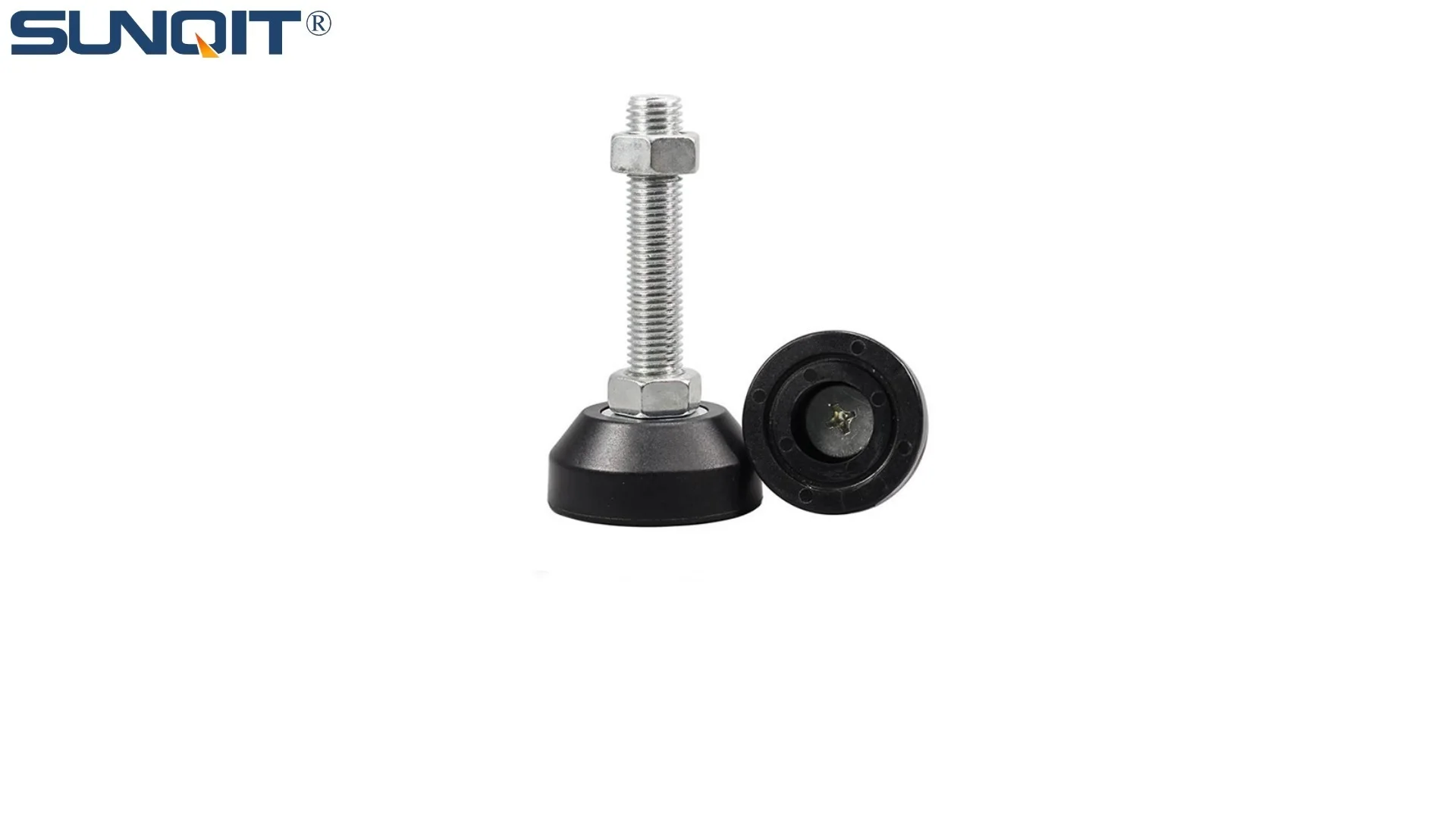
M10*56 Rubber Leveling Feet
Adjustable leveling feet are designed to keep machines level when placed on uneven or sloped ground. Otherwise known as adjustable equipment feet, they are available to order in a wide variety of size and load capacity combinations.
Walk into any modern factory, and you'll feel the pulse of productivity: assembly lines humming, workers moving with purpose, and machinery churning out components with precision. But beneath this seamless flow lies a hidden challenge that can disrupt even the most optimized operations: uneven floors. A workbench that wobbles when a technician tightens a screw, a material rack that shifts under the weight of parts, a conveyor that vibrates off-kilter—these small inconsistencies might seem trivial, but they add up. They lead to misaligned parts, wasted materials, and even workplace injuries. Enter the unsung hero of factory stability: the M10*56 rubber leveling foot. These unassuming components are far more than just "feet" for equipment; they're the foundation of a safer, more efficient, and leaner operation.
What Are M10*56 Rubber Leveling Feet, Anyway?
Let's start with the basics. M10*56 rubber leveling feet are adjustable support components designed to stabilize machinery, workbenches, and racks on uneven surfaces. The "M10" refers to the metric thread size (10mm diameter), and "56" indicates the length of the threaded stem (56mm)—plenty of room to adjust height and compensate for floor irregularities. At the base is a rubber pad, typically made from durable, high-friction material like nitrile or EPDM rubber, which grips floors to prevent slipping. The stem is usually steel, coated to resist corrosion, and screws into a mounting plate or directly into the equipment, allowing for precise height tweaks with a wrench or even by hand.
Think of them as the "levelers" of the factory world. Unlike fixed feet, which lock equipment into a single height, these feet adapt. A quick twist of the stem raises or lowers one corner of a workbench until it sits perfectly flat, even if the floor dips by half an inch. And that rubber pad? It's not just for grip—it also absorbs vibrations, reducing noise and preventing scratches on delicate floors, like polished concrete or epoxy coatings.
Why Modern Factories Can't Afford to Ignore Them
You might be thinking, "We've gotten by with basic feet for years—why upgrade now?" The answer lies in the demands of modern manufacturing. Today's factories aren't just about churning out products; they're about precision, safety, and lean efficiency. Let's break down why M10*56 rubber leveling feet are non-negotiable in this context.
1. Stability: The Backbone of Precision
In industries like electronics or aerospace, even a millimeter of misalignment can ruin a product. Imagine assembling a circuit board on a wobbly workbench: a hand slips, a solder joint bridges two pins, and suddenly that $500 component is scrap. M10*56 leveling feet eliminate this risk by locking equipment into place. Their wide rubber base distributes weight evenly, preventing "tipping" or rocking, while the adjustable stem ensures every corner of the workbench (or aluminum profile material rack) sits solidly on the floor.
Take, for example, a material rack B (3 row and 3 floor)—a common setup for storing parts in automotive plants. Without stable feet, the rack might lean slightly, causing boxes to slide or even topple. With M10*56 feet, each leg is adjusted to the floor's contour, keeping the rack upright and parts secure. It's a small fix that saves hours of cleanup and prevents costly damage.
2. Safety: Protecting Workers, One Foot at a Time
Factory safety isn't just about hard hats and guardrails—it's about the little things that prevent slips, trips, and falls. An unstable workbench can cause tools to slide off, or a worker to lose balance while reaching for a part. M10*56 rubber leveling feet address this with two key features: their non-slip rubber pads and their ability to keep equipment grounded. The rubber's high coefficient of friction means even if the floor is slightly wet (from cleaning or spills), the feet won't slide. And by eliminating wobble, they reduce the chance of workers overcompensating—like leaning too far to steady a (shaking) table—and straining muscles.
Consider ESD workstations, critical in electronics manufacturing to prevent static damage. These workstations need to stay perfectly still to protect sensitive components. A single wobble could create static buildup or misalign ESD mats, putting products at risk. M10*56 feet ensure the workstation remains stable, safeguarding both workers and the delicate electronics they handle.
3. Adaptability: Working with Imperfect Floors
Let's face it: No factory floor is perfect. Years of heavy machinery, temperature changes, and general wear leave dips, cracks, and uneven spots. M10*56 leveling feet thrive here. Their 56mm stem provides ample adjustment range—up to 2 inches in some cases—meaning they can compensate for even significant floor irregularities. This adaptability is especially valuable when reconfiguring workspaces, a common practice in lean manufacturing. Move a workbench to a new location? Simply adjust the feet to the new floor's contours, and you're back to stable operations in minutes.
They're also compatible with a wide range of equipment, from basic aluminum tube workbenches to heavy-duty stainless steel pipe series racks. Whether you're using a workbench E (single deck-without caster) or a turnover trolley, M10*56 feet can be mounted to most frames, making them a versatile solution across the factory.
4. Durability: Built to Last in Tough Environments
Factory floors are harsh: oil spills, chemical cleaners, extreme temperatures, and constant foot traffic. Cheap leveling feet might crack, rust, or lose grip within months. M10*56 rubber leveling feet, however, are built to withstand this abuse. The steel stem is often zinc-plated or powder-coated to resist corrosion, while the rubber pad is resistant to oils, solvents, and UV rays. Even in high-moisture environments (like food processing plants) or dusty workshops, these feet maintain their performance, ensuring long-term reliability.

Supporting Lean Systems: More Than Just Stability
Lean manufacturing is all about eliminating waste—whether it's time, materials, or effort. M10*56 rubber leveling feet play a quiet but critical role in this mission. Here's how:
- Reducing Rework: Stable workbenches mean fewer errors during assembly or inspection, cutting down on the waste of defective products.
- Minimizing Downtime: Quick adjustments mean less time spent fixing wobbly equipment and more time producing. No more stopping the line to prop up a leaning rack with shims.
- Optimizing Workflow: When equipment is stable and level, material flow improves. For example, roller tracks (like the 40 steel roller track with yellow wheels) work best when level—products glide smoothly without jamming. M10*56 feet ensure the roller track's frame stays flat, keeping materials moving efficiently.
- Supporting Flexible Layouts: Lean systems thrive on adaptability. M10*56 feet make it easy to rearrange workbenches, flow racks, and conveyors without worrying about floor unevenness, allowing factories to pivot quickly to new production needs.
Consider a lean pipe workbench, a staple in lean environments for its modularity. These workbenches are built with lean pipes and joints, allowing for quick customization. But even the most modular setup is useless if it wobbles. M10*56 leveling feet provide the stability that makes lean pipe workbenches truly effective—turning a flexible structure into a rock-solid workspace.

Comparing Leveling Feet: Why M10*56 Rubber Stands Out
Not all leveling feet are created equal. To understand why M10*56 rubber feet are a top choice, let's compare them to common alternatives:
| Feature | M10*56 Rubber Leveling Feet | Standard Metal Leveling Feet | Smaller Rubber Feet (e.g., M8*40) |
|---|---|---|---|
| Load Capacity | Up to 500kg per foot (ideal for heavy workbenches/racks) | Similar load capacity, but metal base risks floor damage | Typically 200-300kg per foot (insufficient for heavy equipment) |
| Adjustment Range | Up to 56mm (handles significant floor unevenness) | Similar range, but no vibration absorption | Limited to 40mm (struggles with larger dips) |
| Floor Protection | Rubber pad prevents scratches, dents, and slipping | Metal base can scratch floors; no slip resistance | Rubber pad offers protection, but smaller surface area limits grip |
| Compatibility with Aluminum Profiles | Easily mounts to aluminum profile workbenches (e.g., 4040 or 3030 profiles) | Compatible, but risk of damaging profile surfaces | Fits smaller profiles, but may not support profile weight |
The table tells the story: M10*56 rubber leveling feet balance load capacity, adjustability, and floor protection better than alternatives. They're tough enough for heavy equipment, adaptable enough for uneven floors, and gentle enough for delicate surfaces—making them the go-to choice for modern factories.

Real-World Impact: Stories from the Factory Floor
Numbers and features tell part of the story, but real-world examples show the true value. Let's look at two factories that upgraded to M10*56 rubber leveling feet and never looked back.
Case Study 1: Automotive Parts Manufacturer
A mid-sized automotive parts plant was struggling with assembly errors on their transmission component line. Workers reported that the workbench "moved" when tightening bolts, leading to misaligned gears. Initial fixes—shimming the legs with cardboard—were temporary and unsightly. After installing M10*56 rubber leveling feet on their aluminum profile workbenches, the wobble disappeared. Within a month, assembly errors dropped by 22%, and workers noted less fatigue from steadying the bench. The plant manager estimated the upgrade saved $45,000 annually in reduced rework and scrap.
Case Study 2: Electronics ESD Workstation Facility
An electronics manufacturer specializing in circuit boards was facing static damage issues. Their ESD workstations, though equipped with ESD mats, were prone to wobbling on the factory's uneven floor. This movement created static buildup, damaging sensitive components. Switching to M10*56 rubber leveling feet stabilized the workstations, reducing static-related defects by 35%. The rubber pads also improved ESD grounding, further protecting components. The facility now standardizes on M10*56 feet for all ESD workstations.
Choosing the Right Leveling Feet for Your Factory
Now that you understand the benefits, how do you select the right M10*56 rubber leveling feet for your needs? Consider these factors:
- Load Capacity: Calculate the total weight of your equipment and divide by the number of feet. For example, a 1000kg workbench with 4 feet needs feet rated for at least 250kg each (opt for higher to be safe).
- Floor Type: Smooth concrete? Opt for a rubber pad with a higher friction rating. Uneven or rough floors? Look for feet with larger pad diameters (e.g., 60mm+) to distribute weight.
- Environment: Wet or chemical-heavy areas (like food processing) need oil-resistant rubber (nitrile). Dry, general manufacturing can use EPDM rubber for cost-effectiveness.
- Mounting Style: Choose feet that fit your equipment—threaded stems for direct mounting, or plate mounts for welding/bolting to frames.
When in doubt, consult a reputable lean pipe supplier or aluminum profile accessories provider. They can help assess your needs and recommend the right feet for your specific application.
Conclusion: Small Feet, Big Impact
M10*56 rubber leveling feet might not be the most glamorous factory components, but they're undeniably essential. They turn unstable workbenches into pillars of precision, transform uneven floors into non-issues, and support the lean systems that drive modern manufacturing. In a world where every millimeter and every minute counts, these small, adjustable feet deliver big results: fewer errors, safer workers, and smoother operations.
So, the next time you walk through your factory, take a look at the feet of your equipment. Are they stable? Adjustable? Up to the task? If not, it might be time to invest in M10*56 rubber leveling feet. Your workers, your products, and your bottom line will thank you.