- Company Articles
- Products and Technology
- Product knowledge
- Why M10*56 Rubber Leveling Feet Are Critical for Workbench E Safety

Why M10*56 Rubber Leveling Feet Are Critical for Workbench E Safety
Related Product
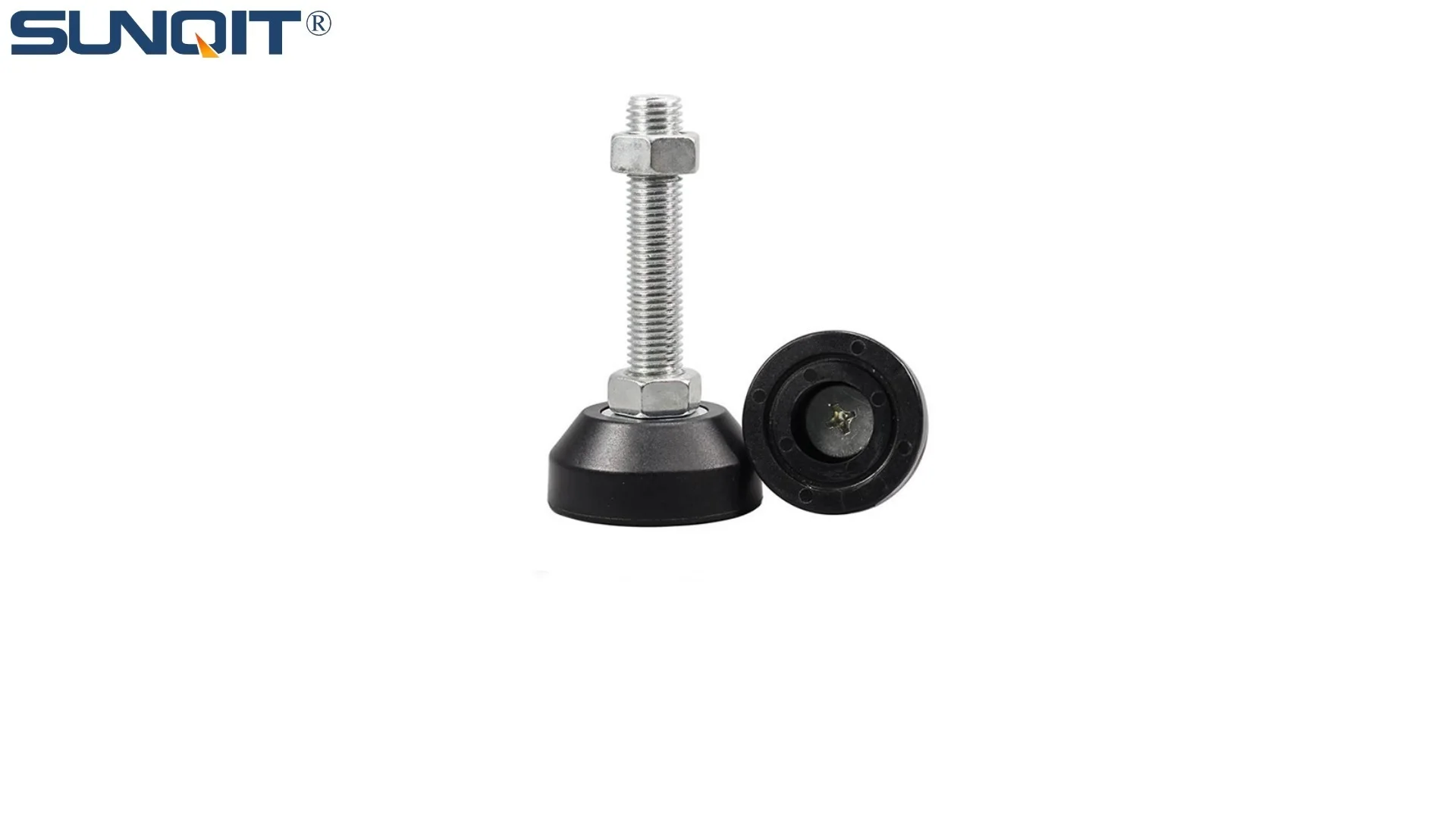
M10*56 Rubber Leveling Feet
Adjustable leveling feet are designed to keep machines level when placed on uneven or sloped ground. Otherwise known as adjustable equipment feet, they are available to order in a wide variety of size and load capacity combinations.
Walk into any busy workshop, manufacturing plant, or electronics assembly line, and you'll likely spot a familiar workhorse: the workbench. But not all workbenches are created equal. Today, let's zoom in on a specific model that's become a staple in lean production environments: workbench e (single deck-without caster) . Unlike its mobile counterparts with wheels, this stationary workbench relies entirely on its base for stability—and that's where a small but mighty component comes into play: the M10*56 rubber leveling feet. These unassuming parts might seem like afterthoughts, but they're actually the unsung heroes keeping workers safe, products intact, and operations running smoothly. Let's dive into why these feet are non-negotiable for Workbench E safety.
First, Let's Get to Know Workbench E (Single Deck-Without Caster)
Before we talk about leveling feet, let's understand the star of the show: Workbench E. As the name suggests, it's a single-deck workbench—no shelves, no extra tiers—designed for simplicity and efficiency. And crucially, it doesn't come with casters. That means once it's placed, it stays put. You'll find it in settings like electronics manufacturing, where precision is key; lab environments, where stability protects sensitive equipment; or small-parts assembly lines, where clutter-free surfaces reduce errors. Its popularity stems from its compatibility with lean system principles: it's modular, space-efficient, and easy to integrate into workflow layouts that minimize waste and maximize productivity.
But here's the catch: without casters, Workbench E's stability depends entirely on how well it sits on the floor. And in real-world workshops, floors are rarely perfect. Concrete slabs crack over time, heavy machinery causes uneven settling, and daily wear leaves small dips and bumps. An unlevel workbench isn't just an annoyance—it's a safety hazard waiting to happen. That's where M10*56 rubber leveling feet step in.
The Hidden Danger: Why Workbench Stability Isn't Just About "Feeling Steady"
Imagine this: You're standing at Workbench E, soldering tiny circuit boards. The bench feels a little wobbly, but you've gotten used to it. You lean in to adjust a component, and suddenly, the soldering iron slips. A drop of molten solder lands on your hand. Or worse, a tray of delicate capacitors slides off the edge, shattering on the floor. These aren't just hypothetical scenarios—they're daily risks in workshops where workbench stability is overlooked.
Unstable workbenches create a cascade of safety issues. Let's break them down:
- Tool and Material Slips: A tilted surface turns even lightweight tools into projectiles. Screwdrivers, tweezers, or small parts can roll off, hitting feet or damaging equipment below.
- Ergonomic Strain: Workers unconsciously lean to compensate for a wobbly bench, straining their backs, necks, and shoulders over time. Chronic pain isn't just uncomfortable—it leads to distracted workers and higher injury rates.
- Product Damage: In precision tasks like assembling medical devices or aerospace components, a single shake can misalign parts, ruining hours of work and costing thousands in wasted materials.
- Tipping Hazards: If the bench is severely unlevel and loaded unevenly (e.g., a heavy tool on one corner), it could tip. Even a small tip can cause injuries or damage to the bench itself.
In lean systems, where efficiency and waste reduction are priorities, these issues aren't just safety risks—they're operational drains. A spilled batch of parts or a worker's injury disrupts workflow, delays production, and eats into profits. So, how do we fix this? Enter the M10*56 rubber leveling feet.

What Are M10*56 Rubber Leveling Feet, Anyway?
Let's decode the name: M10*56 rubber leveling feet . The "M10" refers to the metric thread size—10mm in diameter—meaning the stem that screws into the workbench leg is 10mm thick. The "56" is the length of the stem, measured in millimeters, which determines how much you can adjust the height (more on that later). The "rubber" part is the base: a durable, grippy pad that touches the floor.
But these feet are more than just a thread and a rubber pad. Let's break down their design:
The Stem: Typically made of zinc-plated steel, it's corrosion-resistant—important in workshops where spills (oil, water, chemicals) are common. The threading is precise, allowing for smooth adjustment without stripping.
The Rubber Pad: Not all rubber is the same. The best M10*56 feet use rubber with a medium durometer (hardness) to balance grip and durability. It's often oil-resistant and temperature-stable, so it won't crack in cold workshops or melt near heat sources like soldering stations.
The Lock Nut: Many models include a lock nut that tightens against the workbench leg once the foot is adjusted. This prevents the foot from unscrewing over time due to vibrations from tools like drills or sanders.
So, why this specific size? Workbench E (single deck-without caster) is designed for medium-duty use—think loads up to 200kg. The M10 thread is strong enough to support that weight without bending, while the 56mm stem provides 15-20mm of adjustment range—plenty to compensate for most floor unevenness in industrial settings.

How M10*56 Rubber Leveling Feet Solve Workbench E's Stability Problem
Now, let's connect the dots: Workbench E is stationary, floors are uneven, and instability causes safety risks. How do M10*56 rubber leveling feet fix this? Let's count the ways.
1. They Level the Playing Field (Literally)
Even the most well-maintained workshop floors have imperfections. A concrete slab might settle slightly over time, leaving a 2mm dip in one corner. A previous repair could create a tiny bump. These differences are invisible to the eye, but they're enough to make Workbench E rock back and forth. M10*56 leveling feet let you tweak each corner's height independently. Spin the foot clockwise, and it extends, lifting that corner; spin it counterclockwise, and it retracts, lowering the corner. With a spirit level, you can dial in perfect horizontality in minutes.
Why does this matter for safety? A level workbench means tools stay where you put them. A soldering iron won't roll off the edge. A container of screws won't tip over. Workers can focus on their tasks instead of worrying about balancing objects—and that focus is critical for avoiding mistakes that lead to injuries.
2. Rubber Grip = No Slipping, No Scratching
Ever tried to use a metal workbench leg on a smooth concrete floor? It slides. Even a light bump from a passing cart can shift the entire bench. Rubber changes the game. The textured surface of the M10*56 foot's rubber pad creates friction with the floor, acting like a non-slip mat for the workbench. This is especially important in high-traffic areas: if a forklift brushes against Workbench E, the rubber feet will hold their ground, preventing the bench from sliding into a worker or another piece of equipment.
Rubber also protects the floor itself. Without these feet, metal legs would scratch or dent concrete over time, creating even more unevenness (and more work for maintenance crews). It's a win-win: safer for the bench, gentler on the floor.
3. They Absorb Vibration (Yes, Really)
Think about the tools used on Workbench E: electric screwdrivers, pneumatic drills, ultrasonic cleaners. All of these generate vibrations. Over time, those vibrations travel through the workbench, making it harder to handle small parts and increasing hand fatigue. Rubber is a natural shock absorber. The M10*56 foot's rubber pad dampens these vibrations, turning harsh, jolting movements into gentle tremors. The result? Workers have steadier hands, reducing the risk of accidental cuts or slips, and less fatigue at the end of a shift.
4. They Handle Heavy Loads Without Buckling
Workbench E might be "single deck," but that deck can carry a lot: a desktop CNC machine, a stack of PCBs, or a tool chest. The M10*56 feet are engineered to distribute that weight evenly across all four corners. The steel stem resists bending, while the rubber pad spreads the load over a larger area of the floor (preventing the bench from sinking into soft concrete or leaving indentations). This even distribution is key to preventing tipping. If one leg were shorter, the bench would rock, and a heavy load could shift, causing it to topple. With properly adjusted leveling feet, the weight stays centered, and the bench stays upright.

Not All Leveling Feet Are Created Equal: Why M10*56 Rubber Stands Out
You might be thinking, "Can't I just use any old leveling feet?" In theory, yes—but in practice, the wrong feet could make safety worse. Let's compare M10*56 rubber leveling feet to other common options to see why they're the best fit for Workbench E.
| Feature | M10*56 Rubber Leveling Feet | Fixed Plastic Feet | Metal-Only Leveling Feet | Smaller Thread (e.g., M8) Rubber Feet |
|---|---|---|---|---|
| Adjustability | 15-20mm range (ideal for most floor unevenness) | No adjustment—fixed height | Similar range, but metal-on-metal adjustment can seize | Limited range (often <10mm); weaker thread for heavy loads |
| Anti-Slip Grip | High (rubber pad grips concrete, tile, and even slightly oily floors) | Low (plastic wears quickly; slippery when wet) | Very low (metal slides on smooth floors) | High, but smaller pad area reduces stability |
| Vibration Absorption | Excellent (rubber dampens tool vibrations) | Poor (hard plastic transmits vibrations) | None (metal conducts vibrations) | Good, but less effective than larger rubber pads |
| Load Capacity | Up to 200kg per foot (matches Workbench E's max load) | Low (plastic bends under heavy weight) | High, but no grip increases tipping risk | Low (M8 thread bends under >100kg) |
| Safety for Workers | High (stable, non-slip, reduces fatigue) | Low (unstable, slippery, increases strain) | Medium (stable but slippery; risk of floor scratches) | Medium (grips well but limited adjustability) |
The table says it all: M10*56 rubber leveling feet strike the perfect balance of adjustability, grip, and strength for Workbench E. Fixed plastic feet can't adapt to uneven floors, metal feet are slippery, and smaller-thread rubber feet lack the load capacity. When safety is on the line, there's no substitute.
Real-World Scenarios: When M10*56 Feet Saved the Day
Let's ground this in real life. Here are three scenarios where M10*56 rubber leveling feet turned a potential disaster into a non-event:
Scenario 1: The Electronics Assembly Line Near-Miss
A mid-sized electronics manufacturer installed 10 Workbench E units in their new assembly area. The crew skipped leveling feet to save costs, assuming the floor was "flat enough." Within a week, workers reported parts sliding off the benches. One morning, a technician was soldering a batch of microchips when the bench wobbled, causing the soldering iron to jump. It singed the circuit board—and narrowly missed her hand. After an inspection, the floor had a 3mm slope across the room. The fix? Installing M10*56 rubber leveling feet on all benches. The techs could adjust each corner, parts stayed put, and there were no more near-misses.
Scenario 2: The Lab Bench That Protected Sensitive Samples
A research lab uses Workbench E for handling temperature-sensitive reagents. Without leveling feet, the bench sat unevenly, and the shaking from a nearby centrifuge caused reagent bottles to rattle. One bottle leaked, contaminating an experiment. The lab switched to M10*56 rubber feet, which absorbed the centrifuge's vibrations. The bottles stayed stable, and the lab avoided weeks of lost work.
Scenario 3: The Lean Workshop That Stayed Lean
A automotive parts supplier integrated Workbench E into their lean system, using it to assemble small sensors. Initially, they used cheap plastic feet. The unlevel benches led to frequent part drops, which meant rework and delays—exactly the waste lean aims to eliminate. After upgrading to M10*56 rubber leveling feet, part drops decreased by 80%. The team hit production targets consistently, and workers reported less fatigue. The small investment in leveling feet paid for itself in a month.
Installing and Maintaining M10*56 Rubber Leveling Feet: Pro Tips
Even the best leveling feet won't work if they're installed wrong. Here's how to set them up for maximum safety:
1. Start with a Clean Slate
Before installing, clean the threads on Workbench E's legs. Dust, grease, or debris can gunk up the threads, making adjustment hard later. A quick wipe with a rag and some degreaser does the trick.
2. Hand-Tighten First
Screw each M10*56 foot into the leg by hand until it's snug. Don't use tools yet—over-tightening can strip the threads.
3. Level with a Spirit Level
Place a spirit level on the workbench deck, both front-to-back and side-to-side. Adjust the feet one by one: if the bubble leans left, extend the right foot; if it leans back, shorten the front feet. Take your time—precision here prevents wobbling later.
4. Lock It In
Once level, tighten the lock nut against the leg with a wrench. This keeps the foot from unscrewing due to vibrations.
5. Inspect Regularly
Check the feet monthly: Are the lock nuts loose? Is the rubber pad cracked or worn? Clean the threads with a brush to prevent corrosion. replace any feet with damaged rubber or stripped threads—don't wait for a safety issue.
Why This Matters for Your Lean System
Workbench E is more than a table—it's part of your lean system , where every component should add value and eliminate waste. M10*56 rubber leveling feet do exactly that: they add safety value by preventing injuries and damage, and they eliminate waste from rework, delays, and equipment repairs. In lean terms, they're a "must-have" for creating a stable, efficient workplace where workers can focus on quality, not balancing acts.
Final Thoughts: Don't Overlook the Small Stuff
At the end of the day, M10*56 rubber leveling feet are a reminder that safety often lies in the details. Workbench E (single deck-without caster) is a fantastic tool for lean environments, but without the right support, it can become a liability. These feet might be small, but they're a critical investment in protecting your team, your products, and your bottom line. So, the next time you set up a Workbench E, ask yourself: Are we cutting corners on leveling feet? If the answer is yes, it's time to rethink. Safety shouldn't be an afterthought—and neither should the parts that make it possible.