- Company Articles
- Products and Technology
- Product knowledge
- Why M10*56 Rubber Leveling Feet Are Ideal for Lean Manufacturing

Why M10*56 Rubber Leveling Feet Are Ideal for Lean Manufacturing
Related Product
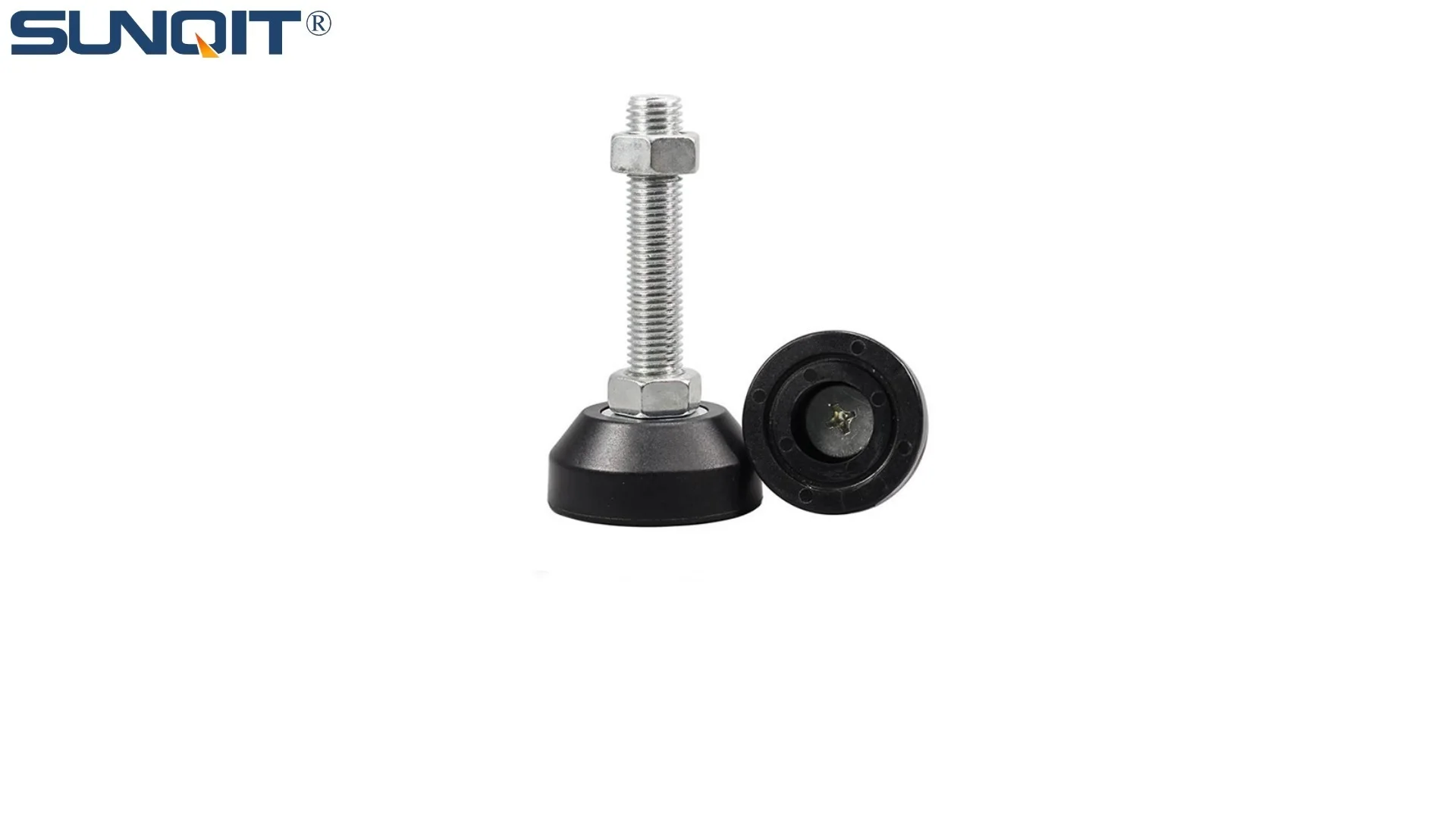
M10*56 Rubber Leveling Feet
Adjustable leveling feet are designed to keep machines level when placed on uneven or sloped ground. Otherwise known as adjustable equipment feet, they are available to order in a wide variety of size and load capacity combinations.
Walk into any manufacturing facility that's embraced lean principles, and you'll notice something immediately: everything has a purpose. The workbenches are positioned to minimize movement, the conveyors hum with a steady rhythm, and even the smallest tools have a designated spot. Lean manufacturing isn't just about cutting costs—it's about creating a workflow where waste is eliminated, efficiency is maximized, and every component, no matter how small, contributes to the bigger picture.
But here's a truth that often gets overlooked: even the most carefully planned lean system can stumble if the basics aren't right. Take, for example, the humble workbench or conveyor. If it wobbles, sways, or sits unevenly, suddenly that "efficient" workflow becomes a source of frustration. Parts slide off tables, tools vibrate out of place, and workers waste precious time readjusting instead of producing. That's where M10*56 rubber leveling feet come in. These unassuming components might not grab headlines, but they're the quiet heroes that keep lean systems stable, reliable, and ready to perform. Let's dive into why they're such a critical part of the lean manufacturing puzzle.
Understanding Lean Manufacturing: The Enemy of Waste
Before we talk about leveling feet, let's ground ourselves in what lean manufacturing really means. At its core, lean is about identifying and eliminating "muda"—the Japanese term for waste. There are eight classic types of waste in manufacturing: overproduction, waiting, transportation, defects, inventory, motion, overprocessing, and unused talent. Notice that "instability" isn't explicitly listed, but it's a silent contributor to nearly all of them.
Imagine a scenario: A worker is assembling small electronic components on a workbench that rocks slightly from side to side. They pause every few minutes to pick up a resistor that slid off the table. The conveyor next to them, slightly tilted because the floor isn't perfectly level, occasionally jams, forcing the line to stop (waiting waste). A batch of products comes out misaligned because the assembly jig wasn't stable (defects). Over time, these small issues add up to hours of lost productivity and increased costs—exactly what lean aims to stamp out.
Lean manufacturing thrives on consistency. For a lean system to work, every piece of equipment must perform predictably, day in and day out. That's where stability becomes non-negotiable. And when it comes to stability, few components are as essential as leveling feet.
The Problem: Why Factory Floors (and Equipment) Are Seldom Perfect
You might think, "A factory floor is concrete—how uneven can it be?" The answer: more than you'd expect. Over time, floors settle, forklifts leave small indentations, and spills (oils, coolants, even water) can erode tiny sections. In older facilities, these imperfections are even more pronounced. The result? A surface that looks flat at first glance but has subtle dips and bumps that throw equipment off-kilter.
Workbenches, conveyors, and material racks are typically built with fixed-height legs, assuming the floor is level. But when that assumption fails, the equipment becomes unstable. A lean pipe workbench, for example—designed to be flexible and modular—relies on a solid base to keep its shelves and tools steady. If one leg is shorter than the others (thanks to a dip in the floor), the entire bench tilts. Suddenly, the "flexible" system becomes a liability.
Conveyors are even more sensitive. A slight incline or decline can cause products to move too fast (risking damage) or too slow (causing bottlenecks). Roller tracks, which are critical for smooth material flow, depend on precise alignment. If the conveyor frame isn't level, the rollers don't distribute weight evenly, leading to jams or uneven wear. All of this adds up to waste—waste of time, waste of materials, and waste of effort.

Enter Leveling Feet: The Unsung Heroes of Stability
Leveling feet are simple in concept: they're adjustable components attached to the bottom of equipment legs, allowing you to tweak the height of each leg independently. This lets you compensate for uneven floors, ensuring the equipment sits perfectly level. But not all leveling feet are created equal. Some are made of plastic, which wears quickly under heavy loads. Others have metal bases that scratch floors or slip on smooth surfaces. And some are too short or have coarse threading, making fine adjustments impossible.
This is where M10*56 rubber leveling feet stand out. Let's break down what "M10*56" means first: the "M10" refers to the metric thread size (10mm in diameter), and "56" is the length of the threaded stem (56mm). This combination is intentional—long enough to handle significant floor unevenness but not so long that it compromises stability. The rubber base is the cherry on top: it grips floors firmly, absorbs vibrations, and won't mark or damage surfaces.
But why does this matter for lean manufacturing? Because lean isn't just about big-picture systems; it's about the details. A leveling foot that can be adjusted with precision, that stays in place once set, and that protects both the equipment and the floor is a tool that eliminates waste at the source. Let's unpack the specific benefits.

5 Key Reasons M10*56 Rubber Leveling Feet Support Lean Principles
1. Precision Adjustment for Zero Compromise on Stability
In lean manufacturing, "close enough" isn't good enough. A workbench that's off by even a few millimeters can cause parts to roll, tools to shift, or assembly jigs to misalign. M10*56 rubber leveling feet excel here because of their threading. The M10 thread is coarse enough to allow quick height adjustments but fine enough to dial in precision. Whether you need to raise a leg by 2mm to compensate for a small floor dip or lower it by 5mm to align with a conveyor, the threading lets you make micro-adjustments until the equipment is perfectly level.
Compare this to cheaper plastic leveling feet with limited thread length or fixed-height alternatives. Those might get the job done temporarily, but they lack the flexibility to adapt to changing conditions—like a floor that settles slightly over time or a workbench that's repositioned to optimize flow. With M10*56 feet, you're not stuck with a "set it and forget it" solution; you're investing in a component that grows with your lean system.
2. Rubber Base: Grip, Vibration Dampening, and Floor Protection
The rubber base of these leveling feet is a game-changer. Let's start with grip: rubber naturally adheres to concrete, tile, or even polished factory floors, preventing equipment from slipping—even in environments with oil, coolant, or water spills. That's critical in lean systems, where sudden movement can disrupt the entire workflow (hello, waiting waste).
Then there's vibration dampening. Manufacturing equipment vibrates—it's unavoidable. But those vibrations can loosen fasteners, rattle tools, and even cause small parts to shift. The rubber in M10*56 feet acts as a shock absorber, reducing the transfer of vibrations from the equipment to the floor and vice versa. This means less wear and tear on machinery, fewer tool adjustments, and a quieter workspace (which, by the way, boosts worker morale and focus—another lean win).
Finally, floor protection. Scratched or damaged floors aren't just unsightly; they create new unevenness over time, leading to more stability issues down the line. Rubber bases glide gently when equipment is moved (during reconfigurations, a common part of lean continuous improvement) and won't leave marks or gouges. This extends the life of your facility's floors, reducing maintenance costs and avoiding future waste.
3. Durability That Reduces Replacement Waste
Lean manufacturing hates waste, and one of the most frustrating types is "replacement waste"—having to replace parts that wear out too quickly. M10*56 rubber leveling feet are built to last. The threaded stem is typically made of steel or zinc-plated steel, resistant to rust and corrosion even in humid or chemical-exposed environments (like factories using coolants or cleaning agents). The rubber base is often made of high-density, oil-resistant rubber that doesn't crack or degrade over time, even under heavy loads.
Consider this: A plastic leveling foot might last 6–12 months under a heavy workbench before the base wears thin or the thread strips. Replacing it means stopping production, sourcing a new part, and reinstalling—all waste. M10*56 rubber feet, on the other hand, can last 5+ years with minimal maintenance. That's fewer replacements, less downtime, and more consistent performance—exactly what lean systems need to thrive.
4. Compatibility with Lean Pipe Workbenches and Conveyors
Lean pipe workbenches and conveyors are staples of modern lean systems. They're modular, easy to reconfigure, and designed to adapt to changing production needs. But their flexibility means they often rely on adjustable feet to stay stable. M10*56 rubber leveling feet are a perfect match here. Their standard M10 thread fits most lean pipe workbench legs and conveyor frames, making installation a breeze—no custom adapters or special tools required.
For example, imagine a facility that decides to reposition a lean pipe workbench to bring it closer to a material rack (reducing motion waste). With M10*56 feet, the team can simply unbolt the feet, move the bench, and readjust the height to account for the new floor conditions in minutes. There's no need to buy new feet or modify the bench itself. This compatibility ensures that even as your lean system evolves, your equipment remains stable and functional.
5. Cost-Effective: Small Investment, Big Returns
Lean manufacturing is often associated with cost savings, but it's not about cutting corners. It's about investing in components that deliver long-term value. M10*56 rubber leveling feet might cost a bit more upfront than generic plastic feet, but their durability and performance translate to significant savings over time.
Let's do the math: A single workbench with cheap plastic feet might need replacements every year, costing $10 per foot (four feet per bench = $40/year). Over five years, that's $200. M10*56 rubber feet, costing $15 per foot, might last five years with no replacements—total cost $60. That's a $140 saving per bench. Multiply that by dozens of workbenches, conveyors, and material racks in a facility, and the savings add up fast. Plus, factor in the reduced downtime from fewer replacements and the eliminated waste from stable equipment, and the ROI becomes even clearer.
Real-World Example:
A automotive parts manufacturer in Ohio recently switched to M10*56 rubber leveling feet on their assembly line workbenches. Previously, they'd been using generic metal feet that slipped on their polished concrete floors. Workers were spending 15–20 minutes per shift just picking up dropped parts and readjusting tools. Within a week of installing the new feet, those "adjustment breaks" disappeared. The plant manager reported a 3% increase in daily output and a 12% drop in defects—all from a simple change to leveling feet.

How M10*56 Rubber Leveling Feet Compare to Other Options
To truly appreciate why M10*56 rubber leveling feet are ideal for lean manufacturing, it helps to see how they stack up against other common options. Let's compare them to three alternatives: fixed-height metal feet, plastic leveling feet, and shorter-threaded (e.g., M8*40) rubber feet.
| Feature | M10*56 Rubber Leveling Feet | Fixed-Height Metal Feet | Plastic Leveling Feet | M8*40 Rubber Feet |
|---|---|---|---|---|
| Adjustment Range | Up to 56mm (fine-tuned via M10 thread) | None (fixed height) | Limited (typically 20–30mm, coarse thread) | Up to 40mm (smaller thread, less stability for heavy loads) |
| Floor Grip | Excellent (rubber base, anti-slip even with spills) | Poor (metal base slips on smooth floors) | Fair (soft plastic grips but wears quickly) | Good (rubber base, but smaller contact area) |
| Vibration Dampening | High (rubber absorbs shocks) | Low (metal transfers vibrations) | Medium (plastic dampens but deforms under load) | Medium (rubber, but shorter stem reduces effectiveness) |
| Durability | 5+ years (steel stem, oil-resistant rubber) | 5+ years (but scratches floors, slips easily) | 6–12 months (plastic cracks, thread strips) | 3–4 years (smaller stem may bend under heavy loads) |
| Best For | Heavy workbenches, conveyors, lean pipe systems | Light, stationary equipment on perfectly level floors | Temporary setups or very light loads | Smaller equipment with minimal height adjustment needs |
As the table shows, M10*56 rubber leveling feet strike the perfect balance between adjustability, grip, durability, and cost—all of which align with lean manufacturing's focus on long-term efficiency and waste reduction.
Beyond the Feet: Integrating M10*56 into Your Lean System
M10*56 rubber leveling feet don't work in isolation—they're part of a larger lean ecosystem. Here are a few tips for integrating them effectively:
- Pair with lean pipe workbenches: Lean pipe workbenches are modular and easy to reconfigure. Adding M10*56 feet ensures that no matter how you rearrange the bench, it stays stable. This is especially useful for "cellular manufacturing" setups, where workstations are frequently adjusted to match production needs.
- Use on conveyors and roller tracks: Conveyors and roller tracks depend on precise alignment to prevent jams. M10*56 feet let you level each section of the conveyor, ensuring materials flow smoothly without getting stuck or damaged.
- Install on turnover trolleys and racks: Even mobile equipment like turnover trolleys needs stability. The rubber base of M10*56 feet prevents trolleys from rolling unintentionally, while the adjustable height ensures they align with workbenches when loading/unloading (eliminating "bumping" waste).
Final Thoughts: The Small Component That Makes a Big Lean Impact
In the world of lean manufacturing, it's easy to get caught up in high-tech solutions: AI-powered analytics, automated robots, or sophisticated ERP systems. But sometimes, the most impactful changes are the simplest. M10*56 rubber leveling feet are a perfect example. They don't require complex installation, they don't need software updates, and they won't make headlines. What they do is eliminate waste—waste from unstable equipment, waste from downtime, waste from defects—by keeping your lean system grounded.
So the next time you walk through your facility, take a look at the feet holding up your workbenches and conveyors. Are they helping you eliminate waste, or are they quietly contributing to it? If it's the latter, it might be time to make the switch to M10*56 rubber leveling feet. Your workers will thank you (no more chasing rolling parts), your bottom line will thank you (less waste, more productivity), and your lean system will finally have the stable foundation it deserves.