- Company Articles
- Products and Technology
- Product knowledge
- Why Parallel Lean Pipe Joint One Side Rotatory is Critical for Medical Device Production

Why Parallel Lean Pipe Joint One Side Rotatory is Critical for Medical Device Production
Related Product
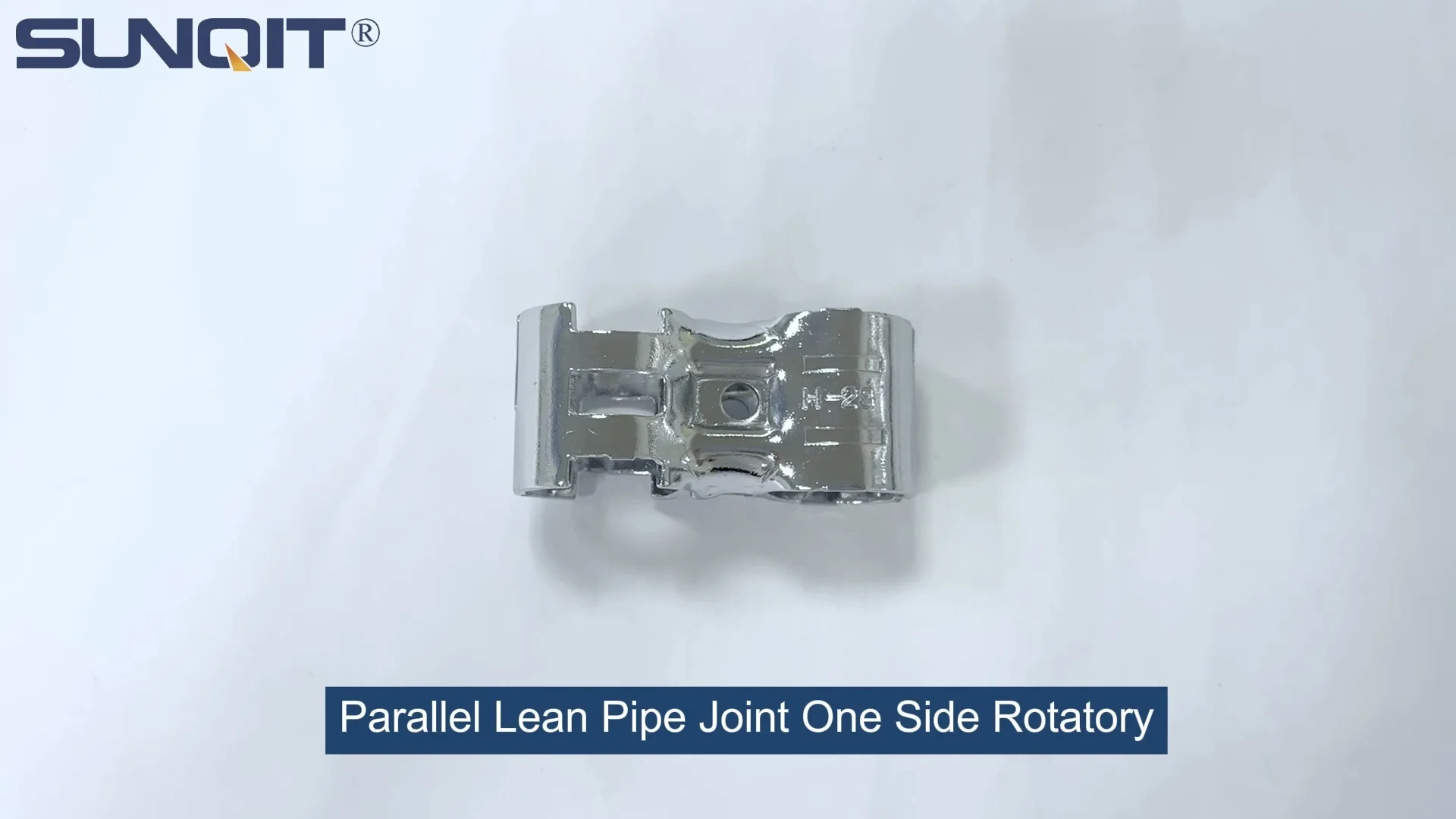
Parallel Lean Pipe Joint One Side Rotatory
Parallel rotatory lean pipe joint, for 2 pcs 28mm pipe conenction in parallel direction with one side rotatory function.
In a bustling medical device manufacturing facility in suburban Boston, Maria, a lead assembler, bends over a workbench, carefully aligning the tiny gears of a surgical robot. The room hums with precision: every tool has its place, every movement is deliberate, and every surface gleams under sanitized lights. Today, her team is switching from assembling the robot's arm to its control panel—a task that requires reconfiguring their workbench to accommodate smaller, more delicate components. In the past, this shift would have meant hours of dismantling and rebuilding fixed structures, risking delays in a production cycle already tight with regulatory deadlines. But today, Maria reaches for a small, unassuming component on her tool cart: a parallel lean pipe joint one side rotatory . With a quick twist, she adjusts the angle of her workbench's upper shelf, locks it into place, and within minutes, the station is ready. "This little joint," she says, wiping her hands, "has turned 'impossible deadlines' into 'just another day.'"
Maria's experience isn't unique. In medical device manufacturing, where precision can mean the difference between a life-saving tool and a costly recall, the tools that build the tools matter just as much as the end products themselves. Lean systems, modular workbenches, and adaptable flow racks have long been the backbone of efficient production, but it's the often-overlooked components—like specialized lean pipe joints—that truly elevate manufacturing from functional to exceptional. In this article, we'll explore why the parallel lean pipe joint one side rotatory has become a game-changer in medical device production, examining its design, benefits, and real-world impact on everything from assembly line efficiency to regulatory compliance.
The High-Stakes World of Medical Device Manufacturing
Medical device manufacturing is a sector defined by contradictions: it demands speed to meet global healthcare needs, yet cannot sacrifice an ounce of precision; it requires innovation to advance patient care, yet must adhere to rigid regulatory standards; and it thrives on scalability, yet often caters to niche, life-saving products with tiny production runs. From pacemakers the size of a quarter to complex imaging machines, every device must pass rigorous testing, traceability checks, and cleanroom protocols—all while keeping costs in check to ensure accessibility.
These challenges create unique pressures on the production floor. Unlike automotive or consumer electronics manufacturing, where standardization and high volume dominate, medical device plants frequently juggle multiple product lines. A single facility might produce surgical instruments in the morning, diagnostic test kits in the afternoon, and custom orthopedic implants by week's end. Each product has its own set of requirements: different component sizes, varying assembly sequences, and distinct ergonomic needs for workers. Fixed, one-size-fits-all workstations simply can't keep up.
Waste—whether in time, materials, or human effort—is also a critical concern. The average medical device has a profit margin of 20-30%, but that figure plummets when production lines are inefficient. A 2023 study by the Medical Device Manufacturers Association (MDMA) found that manufacturers lose up to 15% of annual revenue to avoidable workflow bottlenecks, many of which stem from inflexible production setups. "When you're assembling a device that costs $10,000 to produce, even a 5-minute delay per unit adds up fast," explains James Chen, a manufacturing consultant with McKinsey who specializes in healthcare. "And in medical, delays don't just hit the bottom line—they can delay patient access to critical tools."
Lean Systems: The Foundation of Efficient Medical Production
To navigate these challenges, the medical device industry has increasingly turned to lean systems —a philosophy centered on eliminating waste, optimizing workflow, and empowering workers to drive continuous improvement. Lean isn't just a buzzword here; it's a survival strategy. At its core, lean manufacturing is about creating value for the customer (in this case, patients and healthcare providers) by stripping away everything that doesn't contribute to that value: excess inventory, unnecessary movement, waiting time, and inefficient processes.
In practice, lean systems in medical manufacturing manifest as physical structures: modular workbenches, gravity-fed flow racks, and mobile turnover trolleys that adapt to the ebb and flow of production. These systems are built using lean pipes—lightweight, durable tubes (often aluminum or stainless steel) and a variety of joints that connect them into customizable configurations. Unlike traditional fixed machinery, lean pipe systems are meant to evolve: a workbench used for assembling syringes today can be reconfigured into a flow rack for catheter storage tomorrow, with minimal tools and downtime.
"Lean pipe systems are the Swiss Army knife of medical manufacturing," says Dr. Elena Rodriguez, an industrial engineer at Stanford's Center for Medical Innovation. "They're affordable, easy to sanitize, and—when paired with the right joints—infinitely adaptable. But here's the catch: not all joints are created equal. A joint that works for a car parts assembly line might fail miserably in a cleanroom producing neurosurgical tools. That's where specialized joints, like the parallel lean pipe joint one side rotatory, come into play."

Beyond "Good Enough": The Problem with Traditional Lean Pipe Joints
For decades, medical device plants relied on two types of lean pipe joints: fixed joints and basic swivel joints. Fixed joints, as the name suggests, lock pipes into static angles—great for stability but useless for reconfiguration. Basic swivel joints allowed rotation but often lacked precision, loosening over time or requiring tools to adjust, which defeated the purpose of "lean" efficiency. Both had critical drawbacks in medical settings:
- Wasted Time on Reconfiguration: Switching between product lines meant disassembling fixed joints with wrenches, a process that could take hours. In a facility producing 10+ product types monthly, this translated to days of lost production annually.
- Compromised Precision: Basic swivel joints often "drifted" after locking, causing workbenches or flow racks to tilt slightly. For components like stents or microelectrodes—some smaller than a grain of rice—even a 1-degree misalignment could lead to assembly errors.
- Ergonomic Strain: Fixed-height workbenches forced workers into repetitive, uncomfortable postures, increasing fatigue and the risk of mistakes. A 2022 OSHA report linked poorly designed workstations to a 30% higher error rate in medical device assembly.
- Regulatory Headaches: Disassembling and rebuilding structures frequently required revalidating cleanroom protocols, as loose debris from traditional joints (like metal shavings or rust) could contaminate sterile environments. This added layers of paperwork and inspection delays.
These issues came to a head in the early 2010s, as medical device manufacturers began shifting toward "lot size 1" production—creating custom devices tailored to individual patients, such as 3D-printed prosthetics or personalized drug delivery systems. Suddenly, production lines needed to switch between products hourly, not daily. Traditional joints couldn't keep up.

Enter the Parallel Lean Pipe Joint One Side Rotatory: Design That Solves for "Medical"
The parallel lean pipe joint one side rotatory was born from this need for precision, flexibility, and speed. At first glance, it looks similar to other lean pipe joints: a cylindrical connector with ports for inserting lean pipes. But its magic lies in its mechanics: one side of the joint rotates 360 degrees around a central axis, while the other side remains fixed. This "one-sided rotation" allows workers to adjust the angle or height of a connected pipe (say, a workbench shelf or flow rack rail) without disturbing the rest of the structure. A spring-loaded locking mechanism lets users secure the joint with a simple twist, no tools required, and it holds tight enough to withstand the vibrations of assembly work without slipping.
"The design is deceptively simple," says Mark Thompson, lead engineer at a leading lean system supplier specializing in medical manufacturing. "We started with the question: 'What if a joint could let workers adjust their setup with one hand, in under 10 seconds, without compromising stability?' The answer was a focus on 'controlled flexibility.' The rotating side uses ball bearings for smooth movement, and the locking mechanism is made from medical-grade aluminum to resist corrosion and bacterial growth. We even added tactile feedback—you can feel the 'click' when it locks, so workers don't second-guess if it's secure."
Materials matter, too. Most medical-grade parallel lean pipe joints are made from anodized aluminum or stainless steel, both of which meet FDA standards for cleanroom use. Aluminum, in particular, offers a sweet spot: it's lightweight enough for workers to adjust without strain, yet strong enough to support heavy loads (up to 200 lbs per joint, depending on the model). Unlike plastic joints, aluminum resists warping under the high temperatures of autoclave sterilization, a must for facilities producing implantable devices.

5 Key Benefits of the Parallel Lean Pipe Joint One Side Rotatory in Medical Production
To understand why this joint has become indispensable, let's break down its impact on the production floor—from assembly line workers to quality control managers.
1. Unmatched Flexibility for Small-Batch Production
Medical device production is increasingly "high mix, low volume." A single facility might produce 50 units of a rare cancer treatment device one week and 500 units of a standard IV catheter the next. The parallel lean pipe joint one side rotatory excels here by letting workers reconfigure workbenches and flow racks on the fly. For example, a workbench used for assembling 6-inch surgical scissors can have its shelves tilted 15 degrees to better hold 2-inch biopsy tools, all without tools or disassembly. This flexibility reduces the need for dedicated "one product, one station" setups, freeing up floor space and cutting capital costs.
"We used to have 12 separate workbenches for 12 product types," says Raj Patel, production manager at a California-based medical device firm. "Now, with these rotatory joints, we use 4 workbenches. The savings in space alone paid for the joints in 6 months. But the real win is time—our changeover time between products dropped from 4 hours to 20 minutes."
2. Precision Stability That Protects Delicate Components
In medical assembly, "close enough" isn't close enough. A flow rack tilted even 2 degrees too steeply could cause vials of contrast dye to collide, cracking their sterile seals. A workbench shelf that drifts mid-assembly could misalign the gears of a dialysis machine. The parallel lean pipe joint one side rotatory's locking mechanism eliminates this risk. Once set, the joint holds its position within 0.5 degrees of accuracy, even under vibration. This stability is critical for tasks like micro-welding or laser engraving, where millimeters matter.
3. Ergonomic Design That Reduces Worker Fatigue
Medical device assembly is physically demanding: workers often stand for 8+ hours, performing repetitive motions with their hands. Fixed workbenches force them into static postures, increasing the risk of musculoskeletal injuries. The parallel lean pipe joint one side rotatory lets workers adjust their stations to their body—raising a shelf to shoulder height for overhead tasks, lowering it to waist height for detailed work, or tilting it to avoid bending. A 2024 study in the Journal of Occupational Ergonomics found that facilities using adjustable workstations with rotatory joints reported a 40% reduction in worker fatigue and a 25% drop in assembly errors.
4. Simplified Compliance and Cleanroom Compatibility
Regulatory compliance is the backbone of medical manufacturing. The FDA's Current Good Manufacturing Practices (cGMP) mandate that production equipment be "designed to facilitate cleaning, maintenance, and sanitization." Traditional joints with crevices or tool-required adjustments trap dirt, bacteria, and cleaning chemicals—violating cGMP standards. The parallel lean pipe joint one side rotatory, with its smooth aluminum surfaces and tool-free operation, is easy to wipe down with disinfectants or steam-clean. Its sealed ball bearings prevent lubricant leakage, a common source of contamination in cleanrooms.
"During our last FDA audit, the inspector spent 10 minutes examining our workbench joints," recalls Patel. "He ran a swab test on the rotatory joint, looked at the results, and said, 'I wish more facilities used these.' That's the kind of peace of mind money can't buy."
5. Reduced Waste Through Modular Longevity
Lean manufacturing's core principle is "eliminate waste," and that includes waste from disposable equipment. Traditional fixed joints often break when disassembled, forcing facilities to replace them. The parallel lean pipe joint one side rotatory, with its durable aluminum construction and tool-free adjustment, lasts 3-5 times longer than basic plastic joints. When a facility upgrades its production line, the joints can be reused on new structures, reducing landfill waste and material costs.
Traditional vs. Rotatory: A Comparative Look
To quantify the impact of the parallel lean pipe joint one side rotatory, let's compare it to traditional fixed and basic swivel joints across key metrics relevant to medical device production:
| Metric | Traditional Fixed Joints | Basic Swivel Joints | Parallel Lean Pipe Joint One Side Rotatory |
|---|---|---|---|
| Reconfiguration Time | 2-4 hours (requires tools/disassembly) | s30-60 minutes (tools needed for locking) | 5-10 minutes (tool-free, one-handed adjustment) |
| Locking Precision | High (but static) | Low (drifts 1-2 degrees after locking) | High (±0.5 degrees, no drift) |
| Cleanroom Compliance | Medium (crevices trap debris) | Low (loose parts risk contamination) | High (smooth surfaces, sealed bearings, FDA-grade materials) |
| Worker Fatigue Risk | High (static workstations) | Medium (adjustable but requires effort) | Low (ergonomic, tool-free adjustment) |
| Longevity (Average Lifespan) | 1-2 years (breaks during disassembly) | 6-12 months (locks wear out) | 5-7 years (durable aluminum construction) |
Real-World Applications: From Flow Racks to Turnover Trolleys
The parallel lean pipe joint one side rotatory isn't limited to workbenches. Its versatility shines across medical manufacturing workflows:
Flow Racks for Component Delivery: Flow racks use gravity to feed components to assembly stations, but different components (e.g., glass vials vs. plastic syringes) require different angles to flow smoothly. Rotatory joints let workers adjust rack tilt in seconds, preventing jams and ensuring a steady supply of parts.
Mobile Workstations for Cleanroom Transport: In ISO 7 cleanrooms, workers often move tools between stations on mobile trolleys. Rotatory joints allow these trolleys to fold or adjust, fitting through narrow doorways or under hoods without disassembly.
Inspection Stations: Quality control inspectors need to examine devices from multiple angles. A rotatory joint-equipped inspection table can tilt, rotate, or raise/lower, letting inspectors view components under microscopes or UV lights without handling the device excessively.
Choosing the Right Supplier: What to Look for in a Lean Pipe Joint Partner
Not all parallel lean pipe joint one side rotatory products are created equal. When selecting a supplier, medical device manufacturers should prioritize:
- Material Certifications: Ensure joints are made from FDA/ISO-compliant materials (e.g., 6061-T6 aluminum or 316 stainless steel) with traceable material lot numbers for audits.
- Durability Testing: Ask for test reports on locking mechanism lifespan, corrosion resistance, and load capacity. A reputable supplier will provide data on how many adjustments the joint can withstand before wear.
- Customization Support: Medical production lines are rarely "off the shelf." Suppliers should offer custom joint sizes or finishes to fit unique workflows (e.g., extra-tall joints for ceiling-mounted flow racks).
- Technical Support: Look for suppliers with experience in medical manufacturing—they'll understand cleanroom protocols and can help design optimal joint configurations for your products.
The Future of Medical Manufacturing: Adaptive Systems as Standard
As medical device technology advances—think AI-driven surgical robots, bioresorbable implants, and personalized medical tools—manufacturing systems must evolve in lockstep. The parallel lean pipe joint one side rotatory is just the beginning: future iterations may integrate sensors to track joint position, alerting workers if a shelf drifts mid-assembly, or RFID tags for automated inventory of components. Some suppliers are already testing "smart joints" that connect to facility management software, logging reconfiguration times and predicting maintenance needs.
"The next frontier is 'self-optimizing' lean systems," says Dr. Rodriguez. "Imagine a workbench that adjusts its height automatically based on a worker's biometrics, or a flow rack that tilts to compensate for humidity changes in the cleanroom. None of that is possible without precise, adaptable joints. The parallel lean pipe joint one side rotatory isn't just solving today's problems—it's laying the groundwork for tomorrow's innovations."
Conclusion: The Small Component with a Big Mission
In the end, medical device manufacturing is about trust: trust that the tools used to build life-saving devices are as reliable as the devices themselves. The parallel lean pipe joint one side rotatory may be small, but its impact is profound. It turns rigid production lines into adaptable ecosystems, reduces errors that could cost lives, and lets workers focus on what they do best—creating tools that heal. As Maria, the assembler from Boston, puts it: "When you're building something that goes inside a human body, you don't want to worry about whether your workbench will stay put. This joint? It lets me focus on the patient."
For medical device manufacturers, investing in specialized lean components like this joint isn't just a cost-saving measure—it's a commitment to quality, compliance, and the people who make modern healthcare possible. In a world where every second and every millimeter counts, the parallel lean pipe joint one side rotatory isn't just critical—it's indispensable.