- Company Articles
- Products and Technology
- Product knowledge
- Why Parallel Lean Pipe Joints Are Ideal for Reusable Lean Structures

Why Parallel Lean Pipe Joints Are Ideal for Reusable Lean Structures
Related Product
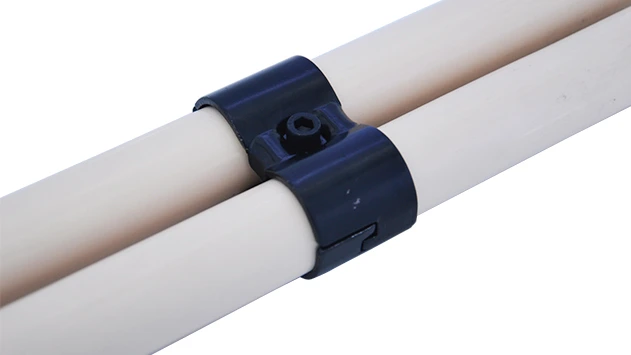
Parallel Lean Pipe Joint
Parallel lean pipe joint used for 2 pcs 28MM lean pipe connection in parallel direction to enhance frame structure, usually for heavy payload requirement for workbench. flow rack, hand trolley.
In the world of manufacturing and warehousing, the term "lean" gets thrown around a lot—but what does it really mean for the tools and structures that keep operations running? At its core, lean manufacturing is about cutting waste, boosting efficiency, and creating systems that adapt as needs change. And when it comes to the physical backbone of these systems—think workbenches, flow racks, and assembly lines—one component stands out as a quiet hero: the parallel lean pipe joint. These unassuming connectors might not grab headlines, but they're the reason lean structures can evolve, reuse, and reduce waste in ways that rigid, fixed setups never could. Let's dive into why parallel lean pipe joints are the unsung champions of reusable lean systems.
The Heart of Lean Manufacturing: Reusability Isn't Just a Buzzword
Before we get into the nuts and bolts of parallel joints, let's step back and remember why reusability matters in lean systems. Lean principles, born from Toyota's production philosophy, emphasize minimizing "muda" (waste) in all forms—including waste from overproduction, excess inventory, and even unnecessary physical infrastructure. A traditional workbench, welded or bolted into place, might serve its purpose today, but what happens when your production line shifts to a new product next month? Or when you need to rearrange your warehouse layout to speed up order fulfillment? That fixed workbench becomes waste: it either sits unused, collects dust, or requires costly modifications (or replacements) to stay useful.
Reusable structures, on the other hand, turn that waste into opportunity. They're designed to be taken apart, reconfigured, and repurposed—no welding torches, no specialized tools, no leftover scrap metal. This isn't just about saving money (though that's a big perk). It's about sustainability: reducing the need for new materials, cutting down on manufacturing emissions, and building a workspace that grows with your team. And at the center of this reusable revolution? Parallel lean pipe joints.
What Are Parallel Lean Pipe Joints, Anyway?
Let's start with the basics. A parallel lean pipe joint is a connector designed to link lean pipes—hollow tubes, often made of steel with a plastic coating (like PE-coated lean pipe) or aluminum—to create stable, adjustable structures. What makes "parallel" joints unique is their ability to secure pipes in parallel alignment while allowing for rotation, adjustment, or quick disassembly. Unlike fixed joints that lock pipes into a permanent angle, parallel joints are engineered for flexibility: they let you build horizontal shelves, vertical supports, or angled flow paths, and then take them apart just as easily to rebuild something new.
Most parallel lean pipe joints are made from durable materials like polypropylene (for lightweight, corrosion-resistant use) or zinc-plated steel (for heavier loads). Their design is deceptively simple: a central body with slots or grooves that grip the lean pipe, secured by a hand-tightened knob or lever. No welding, no drilling, no glue—just a firm twist to lock the pipe in place, and another twist to release it. This simplicity is key to their reusability.

The Reusability Revolution: Why Parallel Joints Stand Out
So, what makes parallel lean pipe joints better than other connectors when it comes to reusability? Let's break it down into four game-changing benefits:
1. Tool-Free Assembly (and Disassembly) Saves Time and Materials
Imagine trying to reconfigure a welded steel workbench. You'd need a grinder, a welder, and maybe a team of workers—hours of labor, not to mention the cost of new metal parts. Now picture this: with parallel lean pipe joints, two workers can take apart a workbench, rearrange the lean pipes, and rebuild it as a material rack in under an hour—using just their hands. No tools, no special skills, no leftover scrap. That's the power of tool-free design.
Parallel joints are built to be intuitive. The knobs or levers are sized for easy gripping, even with gloves on, and the pipe grooves are precision-engineered to hold tight under pressure but release smoothly when adjusted. This means when your production line needs a taller work surface, or your warehouse needs a narrower flow rack, you don't have to buy new equipment—you just reimagine what you already have.
2. Durability Without Permanence
Reusability doesn't matter if the joints fall apart after one use. Parallel lean pipe joints strike a perfect balance: they're tough enough to handle daily wear and tear, but not so rigid that they can't be reused. Take PE-coated lean pipe systems, for example: the plastic coating resists scratches and corrosion, while the parallel joints' metal cores (often zinc-plated) stand up to heavy loads—think 200+ pounds per shelf. Even after multiple disassembly and reassembly cycles, the joints maintain their grip, ensuring your structures stay stable.
Contrast this with cheaper plastic connectors that crack after a few adjustments, or glued joints that lose strength once pulled apart. Parallel lean pipe joints are built for the long haul, making them a sustainable choice for businesses that want to reuse components for years.
3. Compatibility Across the Lean Ecosystem
A lean system isn't just pipes and joints—it's a mix of accessories: casters for mobile trolleys, roller tracks for smooth material flow, and aluminum profile add-ons for extra stability. The best parallel lean pipe joints play well with all of these. They're designed to work seamlessly with standard lean pipe sizes (like 28mm or 30mm diameter), as well as with aluminum profile accessories, caster wheels, and roller track connectors. This compatibility means you're not locked into one brand or system—you can mix and match parts from different suppliers (hello, lean pipe supplier flexibility!) to create exactly what you need, then reuse those parts in new combinations later.
For example, say you have a workbench built with parallel joints and lean pipes. When you no longer need the workbench, you can remove the casters, attach roller track guide rails to the pipes, and suddenly you've got a flow rack for moving boxes. The parallel joints don't care if they're holding a workbench top one day or a roller track the next—they adapt, so your components do too.
4. Minimal Waste, Maximum Impact on the Bottom Line
At the end of the day, reusability translates to cost savings. Let's do the math: A welded steel workbench might cost $500 and last 5 years, but if you need to replace it after 2 years because your needs changed, you're out $500 and left with scrap metal. A lean pipe workbench with parallel joints, on the other hand, costs around $300 upfront (pipes, joints, and a wooden top). When you need a new setup, you reuse 80% of the parts, spending only $60 on new pipes or accessories. Over 5 years, that's thousands saved in replacement costs—and less waste sent to landfills.
Waste reduction also extends to inventory. Instead of stockpiling different-sized workbenches or racks "just in case," you can keep a cache of lean pipes, parallel joints, and accessories. When a need arises, you build what you need on the spot. No more overstocking, no more underusing—just lean, efficient resource management.

Beyond Reusability: Parallel Joints Boost Flexibility and Safety
Reusability is the star here, but parallel lean pipe joints bring more to the table. Let's talk about flexibility and safety—two more reasons they're ideal for lean systems.
Flexibility that Keeps Up with Change: Modern manufacturing isn't static. New products, seasonal demand spikes, and process improvements mean your workspace needs to pivot quickly. Parallel joints make that pivot possible. For example, a electronics manufacturer might use a lean pipe workbench with parallel joints for assembling smartphones in the morning, then reconfigure it as a testing station with roller tracks in the afternoon. The joints allow for quick height adjustments (no more stooping over a too-low bench!) and easy addition of accessories like tool holders or ESD (electrostatic discharge) mats—critical for protecting sensitive components.
Safety by Design: Rigid, fixed structures can be dangerous if they're not built to code—or if they're modified haphazardly. Parallel lean pipe joints, when used with quality lean pipes, create structures that are both stable and adjustable. No sharp edges from welded metal, no loose bolts that vibrate free over time. The joints' secure grip reduces the risk of shelves collapsing, and their tool-free assembly means workers are less likely to take shortcuts (like using duct tape or mismatched bolts) to "fix" a wobbly structure. Plus, since you can disassemble and rebuild quickly, you can adapt structures to meet new safety standards without starting from scratch.
Parallel Lean Pipe Joints vs. the Competition: A Head-to-Head Comparison
Still not convinced parallel lean pipe joints are the best choice for reusable lean structures? Let's compare them to other common connectors. The table below breaks down how they stack up against fixed welded joints, aluminum profile joints, and basic plastic snap-fit connectors.
| Feature | Parallel Lean Pipe Joints | Fixed Welded Joints | Aluminum Profile Joints | Basic Plastic Snap-Fit Connectors |
|---|---|---|---|---|
| Reusability | High (unlimited reassembly cycles) | None (permanently fixed) | Medium (requires tools; some wear after 5+ cycles) | Low (cracks after 2–3 cycles) |
| Assembly Time | Fast (5–10 minutes for a small workbench) | Slow (hours, requires welding skill) | Moderate (15–20 minutes, needs hex keys) | Fast (but unstable) |
| Cost (per joint) | Medium ($3–$8) | High (labor + materials) | High ($10–$15) | Low ($1–$3) |
| Load Capacity | High (200+ lbs per shelf) | Very High (but fixed) | Very High (300+ lbs per shelf) | Low (50–100 lbs max) |
| Compatibility with Accessories | Excellent (works with casters, roller tracks, aluminum profiles) | Poor (requires custom welding) | Good (but limited to aluminum profile accessories) | Very Poor (proprietary, limited options) |
As the table shows, parallel lean pipe joints strike the best balance of reusability, cost, and functionality. They're not the cheapest upfront, but their ability to be reused and adapted makes them the most cost-effective choice over time—especially for businesses committed to lean principles.
Real-World Stories: How Parallel Joints Transform Workspaces
Let's look at a few hypothetical (but realistic) examples of how parallel lean pipe joints make a difference in real businesses:
Case 1: A Small Electronics Manufacturer – This company produces both smartwatches and fitness trackers, with production runs shifting seasonally. Using lean pipe workbenches with parallel joints, they can reconfigure their assembly line in a single shift: adding taller shelves for watch boxes in Q4 (holiday season) and switching to lower, wider work surfaces for trackers in Q2. They estimate saving $15,000 annually by reusing 90% of their lean pipe components instead of buying new workbenches.
Case 2: A Warehouse Fulfillment Center – With e-commerce orders spiking during sales events, this warehouse needed a way to quickly expand their picking areas. They used parallel lean pipe joints and roller tracks to build temporary flow racks in under a day, then disassembled them and stored the parts when demand slowed. No more renting expensive storage space for unused racks—just reusable components ready for the next rush.
Case 3: A Automotive Repair Shop – Repair bays need to accommodate cars, trucks, and motorcycles, each requiring different tool setups. The shop uses lean pipe tool trolleys with parallel joints: one day, a trolley might hold wrenches and sockets for a car; the next, it's rebuilt with hooks and bins for motorcycle parts. The joints allow for easy height adjustment, so technicians of all sizes can work comfortably—reducing fatigue and improving productivity.
Choosing the Right Parallel Lean Pipe Joints: Tips for Success
Not all parallel lean pipe joints are created equal. To get the most reusability and value, keep these tips in mind when working with a lean pipe supplier:
- Check the Material: For heavy-duty use, look for zinc-plated steel joints; for lighter loads or cleanrooms, polypropylene is a good choice. Avoid cheap plastic joints that bend or crack easily.
- Verify Pipe Compatibility: Most joints work with standard 28mm or 30mm lean pipes, but double-check the diameter to avoid mismatched parts.
- Test the Grip: A good joint should hold tight when tightened and release smoothly when loosened. If it slips or sticks, keep looking.
- Ask About Accessories: Your supplier should offer compatible lean pipe accessories like caster wheels, roller tracks, and workbench tops—so you can build a complete system.
Conclusion: Building a Lean Future, One Joint at a Time
Parallel lean pipe joints might not be the flashiest part of a lean system, but they're the backbone of reusability. They turn static workbenches into adaptable tools, reduce waste by keeping components in use, and save businesses money while supporting sustainability. In a world where change is constant, and waste is costly, these unassuming connectors prove that sometimes the smallest parts make the biggest difference.
So, the next time you walk through a factory or warehouse and see a lean pipe structure—whether it's a workbench, a flow rack, or a mobile trolley—take a closer look at the joints holding it together. Chances are, they're parallel lean pipe joints, quietly enabling the kind of flexibility and reuse that makes lean manufacturing not just a philosophy, but a practical, everyday reality.