- Company Articles
- Products and Technology
- Product knowledge
- Why Rotatory Functionality Matters in Parallel Lean Pipe Joints (Chrome Coated)

Why Rotatory Functionality Matters in Parallel Lean Pipe Joints (Chrome Coated)
Related Product
Parallel Lean Pipe Joint
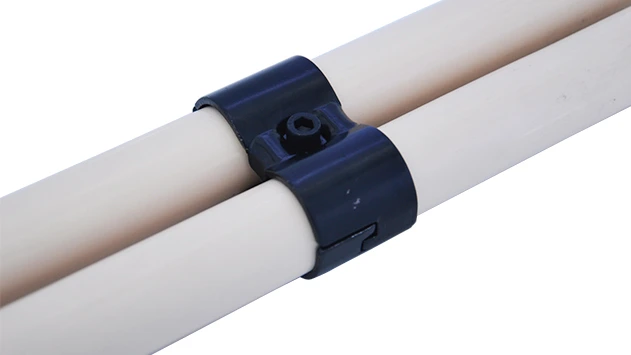
Parallel lean pipe joint used for 2 pcs 28MM lean pipe connection in parallel direction to enhance frame structure, usually for heavy payload requirement for workbench. flow rack, hand trolley.
It's 7:30 AM on a Tuesday at PrecisionWorks, a mid-sized electronics assembly plant just outside Cincinnati. Maria, the production floor supervisor, stands in front of a half-assembled workbench, hands on her hips, as two technicians struggle to align a set of rigid metal pipes. "We need this line up by 9 AM for the new circuit board run," she says, checking her watch. The problem? The fixed joints connecting the pipes won't budge—they're welded in place, and the team is stuck adjusting the entire frame instead of just tweaking a single section. Across the floor, in the automotive parts division, things look different: Juan, their lead assembler, is grinning as he twists a shiny chrome joint, rotating a parallel pipe arm 45 degrees to fit a new component tray. "These rotatory joints? Game-changer," he says, tapping the joint with his wrench. "We reconfigured three workbenches last week in under an hour."
This isn't just a story of two teams with different tools—it's a snapshot of how small, often overlooked components can make or break operational efficiency. In the world of lean manufacturing, where every second and every square foot counts, the choice between fixed and rotatory lean pipe joints isn't trivial. And when those joints are chrome coated? The impact only grows. Today, we're diving deep into why rotatory functionality in parallel lean pipe joints—specifically those with a chrome finish—isn't just a "nice-to-have" but a critical driver of productivity, adaptability, and long-term cost savings. We'll explore what makes these joints unique, how their design solves real-world manufacturing headaches, and why they've become a cornerstone of modern lean systems.
First Things First: What Are Parallel Lean Pipe Joints, Anyway?
Before we unpack rotatory functionality, let's ground ourselves in the basics. Lean pipe systems—often called "flexible pipe systems"—are the unsung heroes of factory floors, warehouses, and workshops worldwide. They're the modular frameworks that form workbenches, material racks, conveyor rails, and turnover trolleys. At their core, these systems rely on two key components: lean pipe (hollow tubes, typically steel or aluminum, sometimes coated in plastic or chrome) and lean pipe joints (the connectors that link pipes together to form structures).
Parallel lean pipe joints, as the name suggests, are designed to connect two or more pipes in parallel alignment. Think of them as the "elbows" or "T-joints" of the lean world, but optimized for stability in side-by-side configurations. In traditional setups, these joints are often fixed—welded, glued, or bolted into a single position, offering zero flexibility once installed. But in modern systems, many joints (especially those labeled "parallel") now come with rotatory features, allowing pipes to pivot, swivel, or rotate around the joint's axis. And when those joints are chrome coated? They bring an extra layer of durability and smooth operation to the table.
Chrome coating, in particular, is a detail that matters. Unlike bare steel or plastic-coated joints, chrome-plated joints resist corrosion from oils, coolants, and workshop humidity. They're also smoother to the touch, reducing friction during rotation and minimizing wear and tear on both the joint and the pipes. For facilities like PrecisionWorks' automotive division, where spills and moisture are part of daily life, that chrome finish isn't just about shine—it's about longevity. A well-maintained chrome joint can outlast a standard steel joint by 3–5 years, even in high-use environments.
The "Rotatory" Difference: Why Movement Matters
Now, let's get to the heart of the matter: rotatory functionality. What does it mean, exactly? In simple terms, a rotatory parallel lean pipe joint allows connected pipes to rotate relative to each other—anywhere from 90 degrees to a full 360 degrees, depending on the design. This isn't just about "spinning freely"; it's about controlled, lockable movement that lets operators adjust angles, heights, and positions without disassembling the entire structure. Compare that to fixed joints, which are stuck in one position forever (or until you cut them apart with a hacksaw).
At first glance, this might seem like a minor feature. After all, how often do you really need to rotate a pipe on a workbench? The answer, it turns out, is: more often than you think. Let's break down the scenarios where rotatory functionality isn't just helpful, but essential.
1. Adaptability: Keeping Up with Changing Production Needs
Manufacturing isn't static. One month, you're assembling smartphones; the next, you're shifting to tablets with larger casings. A product line might scale up from 500 units/day to 1,200, or downsize as demand fluctuates. In these cases, rigid workbenches and fixed material racks become liabilities. You either waste time rebuilding structures from scratch, or you end up with a Frankenstein's monster of jury-rigged pipes and zip ties that's unsafe and inefficient.
Rotatory joints solve this by turning static structures into dynamic ones. Take, for example, a workbench in an electronics plant. With fixed parallel joints, the shelving above the work surface is at a fixed height—too low for tall components, too high for smaller ones. With a rotatory parallel lean pipe joint (chrome coated, of course), you can pivot that shelving arm up by 30 degrees to make space for a bulkier part, or rotate it down to keep tools within arm's reach for precision work. No disassembly, no welding, no wasted materials—just a quick twist and a lock into place.
Real-World Example: Last year, a medical device manufacturer in Texas switched to rotatory chrome joints for their assembly lines. When the FDA approved a new, larger pacemaker model, they needed to adjust 12 workbenches to accommodate the bigger casing. With fixed joints, their previous process took 8 hours per workbench (tearing down, re-welding, repainting). With rotatory joints? They reconfigured all 12 in 3 hours total. "We didn't just save time," said their operations manager. "We avoided downtime—our production line never stopped."
2. Ergonomics: Putting Workers First (and Reducing Costs)
Ergonomics isn't just about comfort—it's about safety, retention, and productivity. The Bureau of Labor Statistics reports that musculoskeletal disorders (MSDs) cost U.S. manufacturers over $20 billion annually in workers' comp claims and lost productivity. A major culprit? Poorly designed workstations that force employees into awkward postures: reaching too high, bending too low, or twisting their torsos to grab tools.
Rotatory lean pipe joints directly address this by letting workers customize their space. Imagine a line worker named Raj, who's 5'4", and his colleague Priya, who's 6'1", sharing the same assembly station. With fixed joints, the material rack is set to a "one-size-fits-none" height. Raj strains his shoulders reaching up, while Priya hunches over, straining her lower back. With a rotatory parallel joint, Raj can lower the rack by rotating the pipe 15 degrees, and Priya can raise it by 20 degrees—each getting a workstation tailored to their height. No more MSDs, no more complaints, and no more lost workdays.
Chrome coating amplifies this benefit. Unlike raw steel or plastic, chrome is smooth and resistant to rust, which means the joint rotates easily even after months of use. There's no sticking, no grinding, and no need for constant lubrication. For workers, this means adjusting the joint takes minimal effort—just a gentle push or pull—reducing fatigue during shifts.
3. Space Efficiency: Making the Most of Every Square Inch
Warehouse and factory space is expensive. According to industry data, the average cost of industrial space in the U.S. is $8.50 per square foot annually—and that's in secondary markets. In cities like Los Angeles or Chicago, it can top $15. When every square foot costs money, wasting space on oversized or underutilized structures is a luxury no business can afford.
Rotatory parallel joints help maximize space by letting structures "shrink" or "expand" as needed. For example, a material rack with fixed parallel pipes might stick out 3 feet from the wall, even when it's only half-full. With rotatory joints, you can pivot the upper pipes inward when they're empty, reducing the rack's footprint by 18 inches. Or, in a tight aisle, you can rotate a conveyor arm upward to create clearance for a forklift, then lower it back into place once the truck passes. It's like having a "foldable" factory—space that adapts to your needs, not the other way around.
4. Durability: Chrome Coating + Rotatory Design = Longevity
You might be thinking: "Rotating parts wear out faster, right?" It's a fair concern—moving components often mean more friction, more wear, and more maintenance. But here's where chrome coating becomes a game-changer. Chrome plating creates a hard, smooth surface that's resistant to scratches, corrosion, and abrasion. When paired with a well-engineered rotatory joint (think sealed bearings, precision-machined threads), the result is a component that lasts years longer than its uncoated or fixed counterparts.
Consider this: A standard steel fixed joint might start to rust after 6 months in a humid factory. A chrome-coated rotatory joint? It can withstand moisture, oil, and even occasional chemical spills without corroding. And because the rotation is controlled (no jerky movements), the internal components wear evenly, reducing the risk of sudden failure. In fact, suppliers like LeanTech report that their chrome-plated rotatory joints have a 92% lower replacement rate than uncoated fixed joints over a 5-year period.

The Role of Chrome Coating: More Than Just Shiny
We've mentioned chrome coating a few times, but it's worth diving deeper into why it matters—especially for rotatory joints. Chrome plating (technically, electroplating with chromium) isn't just about aesthetics (though that shiny finish does make identification easier on a cluttered factory floor). It's a functional choice that enhances the joint's performance in three key ways:
- Corrosion Resistance: Factories are messy places. Oils, coolants, cleaning chemicals, and even humidity can eat away at uncoated steel. Chrome acts as a barrier, preventing rust and degradation. This is especially critical for rotatory joints, where corrosion could seize the moving parts.
- Low Friction: Chrome's smooth surface reduces friction during rotation, making adjustments easier and reducing wear on both the joint and the pipes. No more wrestling with a stuck joint or applying WD-40 every week.
- Easy Cleaning: Grease, dust, and debris wipe off chrome with a damp cloth. In industries like food processing or pharmaceuticals, where cleanliness is regulated, this is non-negotiable. A quick wipe down and the joint is ready for inspection.
When you combine this with rotatory functionality, you get a joint that's not just flexible, but reliably flexible. It doesn't matter how many times you rotate it or what the environment throws at it—it keeps performing.

Fixed vs. Rotatory (Chrome Coated): A Side-by-Side Comparison
Still on the fence about whether rotatory chrome joints are worth the investment? Let's put them head-to-head with traditional fixed joints in a table that breaks down the key metrics:
| Feature | Fixed Lean Pipe Joints | Rotatory Parallel Lean Pipe Joints (Chrome Coated) |
|---|---|---|
| Initial Cost | Lower (≈$5–$10 per joint) | Higher (≈$15–$25 per joint) |
| Installation Time | Longer (requires welding or drilling; 30–60 mins per joint) | Shorter (tool-free or basic wrench; 5–10 mins per joint) |
| Reconfigurability | None (permanent position) | High (360° rotation, lockable positions) |
| Maintenance Needs | High (rust removal, welding repairs) | Low (occasional wipe-down; sealed components) |
| Ergonomic Benefits | None (static height/angle) | High (adjustable for worker height, task needs) |
| Long-Term Cost (5-Year Lifespan) | Higher (replacement, downtime, labor for reconfigurations: ≈$120–$180 per joint) | Lower (minimal replacement, fast reconfigurations: ≈$45–$75 per joint) |
| Suitability for Lean Systems | Poor (stifles continuous improvement) | Excellent (enables adaptive, waste-free workflows) |
The data speaks for itself: While rotatory chrome joints have a higher upfront cost, their long-term savings—both in time and money—make them a smarter investment for any facility focused on lean principles. They're not just a tool; they're a commitment to flexibility, which is the backbone of modern manufacturing.
Choosing the Right Rotatory Joint: What to Look For
Not all rotatory parallel lean pipe joints are created equal. If you're ready to make the switch, here are a few key features to prioritize:
1. Rotation Range
Look for joints that offer at least 180° rotation (full 360° is ideal). Some cheaper models only rotate 90°, which limits their adaptability.
2. Locking Mechanism
A good joint should lock securely in position. Options include cam levers (easy to adjust by hand), set screws (for precise tension), or quick-release pins (for fast changes).
3. Chrome Plating Thickness
Thicker isn't always better, but aim for at least 0.0005 inches (5 microns) of chrome plating. This ensures durability without adding excessive weight.
4. Compatibility
Make sure the joint fits your existing lean pipes (most are designed for 28mm or 30mm pipes, but double-check). Some joints also work with aluminum or stainless steel pipes, adding versatility.
5. Load Capacity
Don't skimp on strength. A quality rotatory joint should handle at least 50–100 lbs per pipe (higher for material racks or conveyors).
The Future of Lean Manufacturing: Rotatory Joints as a Foundation
As manufacturing continues to evolve—with trends like small-batch production, customization, and "lights-out" factories—flexibility will only become more critical. Fixed systems can't keep up with the pace of change, and uncoated or poorly designed components will fail under the demands of modern workflows.
Rotatory parallel lean pipe joints (chrome coated) are more than just a trend; they're a glimpse into the future of manufacturing. They represent a shift from "build it once and forget it" to "build it to adapt." They empower workers to take control of their spaces, reduce waste in all forms (time, materials, labor), and create environments that grow with the business.
Back at PrecisionWorks, Maria's team finally gets their workbench assembled—by 9:15 AM, 15 minutes late. "Next time," she mutters, eyeing Juan's section, "we're upgrading to those rotatory joints." And she's right. In a world where efficiency is everything, the smallest components often make the biggest difference. So the next time you walk through a factory, take a closer look at those shiny chrome joints. They're not just holding pipes together—they're holding the future of manufacturing together, one rotation at a time.