- Company Articles
- Products and Technology
- Solution
- Why Single Side Aluminum Pipe Aligns with Lean "Sustainable Improvement" Principles

Why Single Side Aluminum Pipe Aligns with Lean "Sustainable Improvement" Principles
Related Product
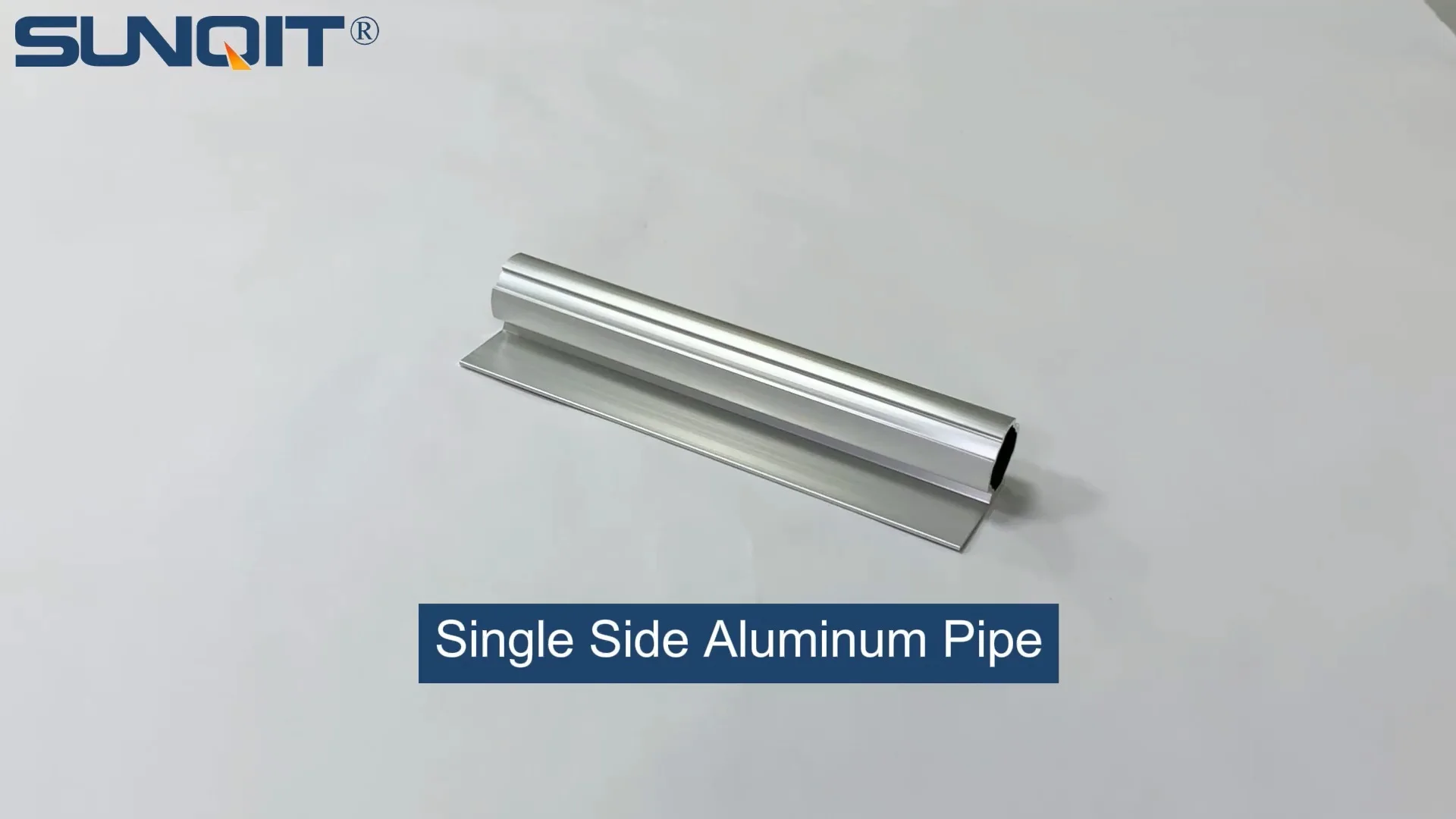
Single Side Aluminum Pipe
The single-sided plane can be installed with a back-mounted material box, and can also be used as a sidewall or partition.
Introduction: The Heartbeat of Lean—Sustainable Improvement
In the world of manufacturing and operations, "Lean" is more than a methodology—it's a mindset. At its core lies the pursuit of sustainable improvement : a commitment to eliminating waste, optimizing flow, and empowering teams to adapt and grow, not just for today, but for the long haul. Yet, even the most well-intentioned Lean initiatives can stall if the tools and systems supporting them are rigid, short-lived, or misaligned with the philosophy's core values. This is where the choice of materials and equipment becomes critical. Enter single side aluminum pipe—a humble yet powerful component that has quietly become a cornerstone for businesses striving to embed sustainability into their Lean systems.
Sustainable improvement in Lean isn't about quick fixes or one-time cost cuts. It's about building ecosystems where efficiency, resilience, and people-centric design coexist. It's about creating workspaces that can evolve with changing production needs, reduce unnecessary resource consumption, and support the continuous improvement efforts of the teams that use them daily. In this article, we'll explore how single side aluminum pipe, often overlooked in favor of heavier, traditional materials, emerges as a natural ally for Lean systems. We'll dive into its design, its alignment with Lean principles like flexibility and waste reduction, and real-world applications that demonstrate its impact—from workbenches that adapt to new tasks in minutes to flow racks that keep materials moving without bottlenecks. Along the way, we'll also touch on how aluminum profile accessories and modular design make it a sustainable choice, both operationally and environmentally.
Understanding Lean "Sustainable Improvement": More Than Just Efficiency
Before we delve into the specifics of single side aluminum pipe, let's clarify what "sustainable improvement" means in a Lean context. Lean, born from the Toyota Production System, is founded on two pillars: Respect for People and Continuous Improvement (Kaizen) . Sustainable improvement ties these pillars together by ensuring that the gains made today can be built upon tomorrow, without sacrificing resources, team morale, or adaptability.
At its simplest, sustainable improvement requires systems that are:
•
Flexible
: Able to adapt to changing customer demands, product designs, or production volumes without major overhauls.
•
Durable
: Built to last, reducing the need for frequent replacements and minimizing waste.
•
People-Centric
: Designed to reduce operator fatigue, streamline workflows, and empower teams to suggest and implement changes.
•
Waste-Eliminating
: Cutting down on unnecessary costs, inventory, and downtime—whether from rigid equipment or inefficient processes.
•
Environmentally Conscious
: Minimizing resource use and supporting circular economy principles (e.g., recyclability, reusability).
The challenge? Many traditional manufacturing tools—think fixed steel workbenches, custom-welded racks, or one-size-fits-all conveyors—fail to meet these criteria. They're rigid, heavy, and often end up as scrap when production needs change. This is where single side aluminum pipe steps in: a material that's lightweight, modular, and designed to grow with your Lean journey.

What Is Single Side Aluminum Pipe? A Closer Look at Its Design
Single side aluminum pipe, often referred to as aluminum lean pipe in industrial circles, is a versatile building block for creating custom workspaces, material handling systems, and flow solutions. Unlike traditional steel pipes or even plastic-coated lean pipes, aluminum lean pipe is crafted from high-grade aluminum alloy, making it lightweight yet surprisingly strong. Its "single side" design typically refers to a profile with a T-slot or groove along one edge, allowing for easy attachment of aluminum profile accessories—joints, brackets, casters, and roller tracks—without the need for welding, drilling, or specialized tools.
Key features of single side aluminum pipe include:
•
Lightweight Construction
: Aluminum is about 1/3 the weight of steel, making assemblies easier to move, reconfigure, and adjust—critical for teams that need to adapt quickly.
•
Corrosion Resistance
: Aluminum naturally forms a protective oxide layer, ensuring it holds up in humid or industrial environments without rusting, unlike steel.
•
Modular Compatibility
: Designed to work seamlessly with aluminum profile accessories like internal rotary joints, parallel clamps, and roller track connectors. This means you can build, disassemble, and rebuild structures in hours, not days.
•
Recyclability
: Aluminum is 100% recyclable with no loss in quality, aligning with sustainability goals and reducing environmental impact.
•
Surface Finish
: Smooth, burr-free surfaces reduce the risk of damaging products or injuring operators, supporting "Respect for People" in Lean.
But what truly sets it apart is its ability to balance strength and flexibility. A single side aluminum pipe can support heavy loads (think workbenches with tools or flow racks stacked with components) while remaining easy to reconfigure. This duality makes it a Swiss Army knife for Lean environments—equally at home in automotive assembly lines, electronics manufacturing, or logistics warehouses.

How Single Side Aluminum Pipe Supports Lean "Sustainable Improvement"
Now, let's connect the dots: how does this seemingly simple pipe align with the five pillars of sustainable improvement in Lean? Let's break it down.
1. Flexibility: Adapting to Change Without Waste
In Lean, waste (muda) includes "overprocessing"—spending time, money, or resources on tasks that don't add value. One of the biggest sources of overprocessing is rigid infrastructure. A fixed steel workbench, for example, might work perfectly for today's product, but if tomorrow's design requires a taller surface or extra storage, you're stuck: either live with inefficiency or scrap the bench and buy a new one. Both options are wasteful.
Single side aluminum pipe eliminates this waste through modularity. With aluminum profile accessories like multi-angle fixed joints or adjustable brackets, teams can reconfigure a workbench or flow rack in minutes. Need to add a shelf to a material rack? Swap out a 30° joint for a 90° one. Want to lower a conveyor to reduce operator bending? Loosen a few clamps and adjust the height. This flexibility means your infrastructure grows with your needs, reducing the waste of "dead" fixed assets.
Consider a case study: a small electronics manufacturer producing smartphones. When they introduced a new model with larger components, their existing steel flow racks were too narrow to accommodate the new parts bins. Instead of replacing the racks (costing $10,000+ and weeks of downtime), they switched to single side aluminum pipe flow racks. Using aluminum guide rails and roller track placon mounts, they widened the racks by 12 inches in a single shift. The result? Zero scrap, minimal downtime, and a system that could adapt again when the next model launches.
2. Durability: Longevity That Reduces Lifecycle Costs
Sustainable improvement isn't just about short-term adaptability—it's about long-term reliability. A system that falls apart after a year of use isn't sustainable; it's a drain on resources. Single side aluminum pipe excels here, thanks to aluminum's inherent durability and resistance to corrosion.
Unlike plastic-coated lean pipes, which can crack or peel over time, or steel pipes that rust in damp environments, aluminum lean pipe maintains its integrity for years. This means fewer replacements, lower maintenance costs, and a longer lifespan for your Lean systems. For example, a stainless steel swivel roller ball track might rust in a humid warehouse, but an aluminum roller track with plastic guide rails (yellow or grey, as in the keyword list) will stay smooth and functional, ensuring materials flow consistently without jams.
Durability also supports standardization , a key Lean principle. When your infrastructure is reliable, teams can focus on improving processes rather than fixing broken equipment. A workbench built with aluminum lean pipe and a heavy-duty split foot seat, for instance, will remain stable for years, allowing operators to work efficiently without worrying about wobbling surfaces or loose joints.
3. People-Centric Design: Empowering Teams to Improve
"Respect for People" is more than a Lean buzzword—it's about creating environments where operators feel valued and capable of contributing to improvement. Single side aluminum pipe supports this by reducing physical strain and giving teams control over their workspace.
Lightweight aluminum assemblies are easier to move and adjust, so operators don't need to wait for maintenance teams to reconfigure their workbench or flow rack. For example, a workbench E (single deck-without caster) built with aluminum lean pipe can be quickly modified with height-adjustable feet or casters if an operator needs to stand or sit. This autonomy fosters a sense of ownership, encouraging teams to suggest tweaks that make their jobs easier—exactly the kind of Kaizen mindset Lean thrives on.
Additionally, the smooth, ergonomic design of aluminum lean pipe reduces the risk of injuries. No sharp edges, no rusty protrusions, and components like swivel roller balls (1 inch or 0.5 inch) glide materials effortlessly, cutting down on manual lifting and fatigue. In one electronics plant, switching to aluminum roller track systems reduced reported back injuries by 35% in six months—a clear win for both people and productivity.
4. Waste Elimination: Cutting Costs Through Modularity
Lean's ultimate goal is to eliminate waste, and single side aluminum pipe does this in spades. Let's count the ways:
•
Reduced Inventory Waste
: Instead of stocking custom steel parts for every possible structure, you can stock a few standard aluminum pipes and accessories. Need a new turnover trolley? Grab some basic aluminum tubes and casters, and assemble it on the spot.
•
Minimized Downtime
: Reconfiguring an aluminum lean pipe system takes hours, not days. No waiting for welders or custom fabricators—teams can make changes during shifts, keeping production on track.
•
Scrap Reduction
: When a structure is no longer needed, aluminum components can be disassembled and reused elsewhere. A material rack B (3 row and 3 floor) can be broken down into pipes and joints to build a new workbench or conveyor, eliminating the waste of sending steel to the scrapyard.
•
Lower Shipping Costs
: Lightweight aluminum assemblies cost less to transport than steel, reducing logistics waste.
These savings add up. A mid-sized automotive supplier reported cutting annual infrastructure costs by 22% after switching to aluminum lean pipe—savings that were reinvested into Lean training and Kaizen events, creating a virtuous cycle of improvement.
5. Environmental Sustainability: Aligning with Green Lean
Modern Lean isn't just about operational efficiency—it's about environmental responsibility. Single side aluminum pipe supports this by being inherently sustainable. Aluminum is one of the most recyclable materials on the planet, requiring 95% less energy to recycle than to produce from raw ore. This means that even at the end of its lifecycle, your aluminum lean pipe can be melted down and reused, reducing your carbon footprint.
Additionally, the modular design reduces the need for new materials. Instead of buying a new flow rack every time your product line changes, you can repurpose existing aluminum pipes and accessories. For example, plastic roller track guide rails (yellow or grey) can be swapped between systems, and aluminum guide rails (A or B) can be cut to length without waste. This circular approach aligns with "green Lean" initiatives, helping businesses meet sustainability targets while improving operations.

Real-World Applications: Single Side Aluminum Pipe in Action
To bring this to life, let's look at two common applications where single side aluminum pipe shines: workbenches and flow racks. These are the backbone of many manufacturing environments, and their design directly impacts Lean performance.
Application 1: Adaptive Workbenches for Electronics Assembly
A contract electronics manufacturer was struggling with frequent product changes. Their fixed steel workbenches couldn't accommodate varying component sizes, leading to cluttered surfaces and wasted time searching for tools. They switched to workbench E (single deck-without caster) built with single side aluminum pipe and aluminum profile accessories.
The results? Using internal rotary aluminum joints, operators could adjust shelf heights in minutes to fit new circuit boards. Aluminum pipe clamps secured tools and ESD mats (critical for electronics), while plastic roller track guide rails (grey) along the back edge kept small components sliding smoothly to the operator. Within three months, setup time for new products dropped by 40%, and operators reported a 25% reduction in time spent searching for tools—all because the workbench could adapt to their needs, not the other way around.
Application 2: Flow Racks for Just-In-Time (JIT) Material Delivery
A automotive parts supplier needed to improve JIT delivery to their assembly line. Their old static racks caused bottlenecks, as materials often got stuck or required manual handling. They replaced them with material rack B (3 row and 3 floor) using single side aluminum pipe, 1 inch swivel roller balls, and aluminum roller track placon mounts.
The aluminum flow rack's modular design allowed them to adjust row heights to fit different part bins, while the roller balls ensured materials flowed forward smoothly, first-in-first-out (FIFO). This eliminated stockouts and reduced the need for operators to walk to retrieve parts—cutting non-value-added time by 30%. Plus, when the assembly line reorganized, the rack was disassembled and rebuilt in a new layout in a single day, with zero waste.
Comparing Materials: Why Aluminum Lean Pipe Beats Alternatives
Still not convinced? Let's compare single side aluminum pipe to common alternatives using a table focused on sustainable improvement criteria.
| Criteria | Single Side Aluminum Lean Pipe | Traditional Steel Pipe | Plastic-Coated Lean Pipe |
|---|---|---|---|
| Flexibility | High: Modular, reconfigurable with aluminum profile accessories | Low: Fixed, requires welding to modify | Medium: Some flexibility, but joints wear quickly |
| Durability | High: Corrosion-resistant, long lifespan (5+ years) | Medium: Prone to rust; heavy, leading to joint stress | Low: Coating cracks/peels; not suitable for heavy loads |
| People-Centric Design | High: Lightweight, easy to adjust; smooth surfaces reduce fatigue | Low: Heavy, hard to move; sharp edges risk injury | Medium: Lightweight, but rough surfaces can snag materials |
| Waste Reduction | High: Recyclable, reusable components, minimal scrap | Low: Often scrapped when reconfigured; high shipping weight | Medium: Recyclable, but short lifespan leads to frequent replacement |
| Environmental Impact | High: 100% recyclable, low energy to produce/recycle | Medium: Recyclable, but high carbon footprint to mine/produce | Low: Plastic coatings may not be recyclable; short lifecycle |
The table tells a clear story: single side aluminum pipe outperforms alternatives across all key sustainable improvement criteria. It's not just a better material—it's a better investment in your Lean journey.
Conclusion: Single Side Aluminum Pipe—A Partner in Lean Sustainability
Lean "sustainable improvement" isn't about perfection; it's about progress—building systems that grow, adapt, and empower people over time. Single side aluminum pipe, with its flexibility, durability, and people-centric design, is more than just a component in these systems. It's a partner that enables the very principles Lean stands for: eliminating waste, respecting people, and continuously improving.
From workbenches that adapt to new products in hours to flow racks that keep materials moving without waste, aluminum lean pipe and its accessories (aluminum profile connectors, roller tracks, swivel balls) create environments where sustainability and efficiency go hand in hand. It's lightweight enough to empower teams, strong enough to last, and recyclable enough to align with green goals.
So, if you're looking to embed sustainable improvement into your Lean system, start with the foundation. Choose materials that don't just support today's processes, but tomorrow's innovations. Choose single side aluminum pipe—and build a Lean journey that stands the test of time.