- Company Articles
- Products and Technology
- Product knowledge
- Why Turning Angle Code 2020 is Essential for Workbench E Stability

Why Turning Angle Code 2020 is Essential for Workbench E Stability
Related Product
Urning Angle Code 2020
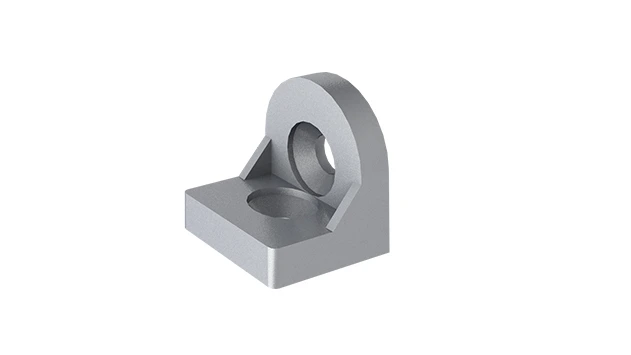
The turning angle aluminum profile connector provides a 90 degree hidden corner connection. 2020 it is means this size is used for 20 series aluminum profile.The corner code comes with set screws that allow for quick, easy connections.
Walk into any busy factory or workshop, and you'll notice one thing quickly: the workbench is the unsung backbone of the operation. It's where parts are assembled, tools are organized, and precision work happens. But what happens when that workbench isn't stable? A slight wobble might seem harmless at first, but in a setting where fractions of an inch matter—like soldering tiny circuit boards or aligning mechanical components—that wobble can turn into lost time, damaged parts, or even safety risks. This is especially true for Workbench E (single deck-without caster) , a popular choice for stationary assembly lines and quality control stations. And if there's one component that makes or breaks its stability, it's the Turning Angle Code 2020 .
You might be thinking, "An angle code? Isn't that just a small metal piece?" In short: yes. But in the world of industrial workbenches, small components often have the biggest impact. Let's dive into why Turning Angle Code 2020 isn't just another accessory—it's the quiet guardian of your Workbench E's stability, and by extension, your team's productivity and peace of mind.
First, Let's Talk About Workbench E: What Makes It Unique?
Before we get into the nitty-gritty of angle codes, let's set the stage with Workbench E itself. Designed as a single-deck, caster-free workstation, it's built for heavy, consistent use. Unlike mobile workbenches with wheels, which prioritize flexibility, Workbench E is all about staying put. It's the kind of bench you'll find in electronics manufacturing plants, automotive repair shops, and packaging facilities—places where the same tasks are repeated hundreds of times a day, and stability is non-negotiable.
Most Workbench E models are constructed using aluminum profile frames. Aluminum is a favorite here for good reason: it's lightweight enough to assemble without heavy machinery but strong enough to support loads of up to 500 kg (depending on the design). The frame typically consists of vertical and horizontal aluminum profile beams, connected at the corners and joints to form a rigid structure. On top sits a work surface—often plywood, steel, or anti-static material for ESD-sensitive environments. Simple enough, right? But here's the catch: the strength of the entire bench depends on how those aluminum profiles are connected. And that's where angle codes come in.
Turning Angle Code 2020: The "Glue" of Aluminum Profile Frames
Imagine building a house with only nails and no screws. It might stand for a while, but eventually, the vibrations of daily life would loosen those nails, and the structure would start to shift. In the same way, an aluminum profile frame without proper angle codes is a recipe for instability. Turning Angle Code 2020 is the "screw" in this analogy—a small but mighty component that locks aluminum profiles together at critical joints, preventing movement and distributing weight evenly.
So, what exactly is it? Turning Angle Code 2020 is a compact, L-shaped bracket made from high-grade aluminum alloy. Its name comes from its dimensions: it's designed to fit 20x20mm aluminum profiles (hence "2020"), the most common size used in Workbench E frames. The bracket features pre-drilled holes that align with the T-slots on aluminum profiles, allowing it to be secured with bolts or screws. When installed at the corner where two profiles meet (say, a vertical leg and a horizontal beam), it acts as a reinforcement, stopping the joint from bending or twisting under load.
But here's what makes it special: unlike generic angle brackets, Turning Angle Code 2020 is engineered for precision. Its edges are chamfered to fit snugly into the T-slots of aluminum profiles, eliminating gaps that could cause wobbling. The material—typically 6063 aluminum alloy—is chosen for its balance of strength and ductility, meaning it can absorb stress without cracking. And because it's anodized, it resists corrosion, ensuring it holds up in humid factories or environments with chemical exposure.

Why Stability Matters: The Hidden Costs of a Wobbly Workbench
Let's get practical. Why does stability even matter for Workbench E? Let's break it down into three key areas: precision, safety, and long-term durability.
Precision Work: If you're assembling smartphones, medical devices, or aerospace components, a millimeter of wobble can ruin hours of work. A technician soldering a tiny wire to a circuit board needs a steady surface—otherwise, the solder might bridge two contacts, rendering the part useless. Similarly, measuring parts with calipers or aligning components with jigs requires the workbench to stay perfectly still. An unstable bench turns a 5-minute task into a 15-minute frustration as employees double-check their work.
Safety First: A wobbly workbench isn't just annoying—it's a hazard. Tools can slide off, heavy parts might topple, and repetitive strain injuries (RSIs) can develop when employees unconsciously tense their muscles to compensate for instability. OSHA reports that "unstable work surfaces" contribute to thousands of minor injuries each year, from cuts to sprains. Over time, these incidents add up to lost workdays and increased insurance costs.
Durability and Maintenance: Every time your Workbench E wobbles, stresss on its joints. Over weeks and months, this stress weakens the connections, leading to loose bolts, bent profiles, or even cracked work surfaces. The result? Frequent repairs, replacement parts, and unplanned downtime. A factory running two shifts a day can't afford to halt production because a workbench needs fixing—and that's exactly what happens when corners are cut on components like angle codes.

Turning Angle Code 2020 vs. the Alternatives: Why It's the Best Choice
You might be wondering, "Can't I just use any angle code? What's wrong with the cheaper iron brackets from the hardware store?" The short answer: compatibility and performance. Let's compare Turning Angle Code 2020 to three common alternatives to see why it stands out.
| Feature | Turning Angle Code 2020 | Generic Iron Angle Bracket | 3030 Angle Code (Larger Profile) | Plastic Corner Connector |
|---|---|---|---|---|
| Material | 6063 Aluminum Alloy (Anodized) | Mild Steel (Uncoated) | Aluminum Alloy (Non-Precision Fit) | ABS Plastic |
| Compatibility with Workbench E | Designed for 20x20mm Aluminum Profiles | Loose fit; gaps cause wobble | Too large for 20x20 profiles | Weak under heavy loads |
| Load Capacity | Up to 300kg per joint | 150kg (prone to bending) | 400kg (but overkill for Workbench E) | 50kg (deforms over time) |
| Corrosion Resistance | High (Anodized finish) | Low (Rusts in humid environments) | Medium (No anodization) | High (But prone to UV damage) |
| Long-Term Durability | 10+ years (minimal wear) | 2-3 years (rusts, bends) | 8+ years (but adds unnecessary weight) | 1-2 years (cracks under stress) |
The table tells the story: Turning Angle Code 2020 is the Goldilocks solution for Workbench E. Generic iron brackets are cheap but corrode quickly and don't fit snugly. 3030 angle codes are strong but too large for 20x20 profiles, adding unnecessary weight and cost. Plastic connectors? They're fine for light-duty shelves but crumble under the heavy loads of industrial workbenches.
But the real difference is in the details. When you install Turning Angle Code 2020, its precision fit eliminates "play" between the aluminum profiles. That means no more creaking sounds when you lean on the bench, no more bolts loosening after a week of use, and no more re-tightening joints during maintenance checks. It's the kind of reliability that lets your team focus on their work—not on stabilizing their workspace.
How Turning Angle Code 2020 Supports Lean Systems
If your facility follows lean system principles—eliminating waste, optimizing workflows, and continuous improvement—Turning Angle Code 2020 is more than a stability tool; it's a lean asset. Here's how:
Reduced Downtime: In lean manufacturing, downtime is the enemy. A workbench with loose joints requires frequent repairs, pulling technicians away from value-adding tasks. Turning Angle Code 2020's durability means fewer maintenance stops, keeping your production line running smoothly.
Consistent Quality: Lean systems thrive on consistency. An unstable workbench introduces variability into assembly processes—some parts are perfect, others are flawed—leading to rework. With a stable base, your team produces uniform results, reducing waste from defective products.
Employee Engagement: Lean isn't just about processes; it's about people. A wobbly workbench sends a message: "We don't care about your tools." On the flip side, a stable, well-built workstation shows your team you value their effort. Happy employees are more productive, and they're more likely to contribute ideas for improvement.
One factory in Guangdong, China, switched to Turning Angle Code 2020 on their Workbench E stations last year. Within three months, they reported a 12% reduction in assembly errors and a 20% drop in maintenance requests for workbenches. As their production manager put it: "We used to have a guy spending 2 hours a day tightening bolts. Now he's fixing machines that actually move the needle." That's the lean impact of a small, well-chosen component.
Installation and Compatibility: Making It Work for Your Workbench
You might be thinking, "This sounds great, but will it fit my existing Workbench E?" The good news: Turning Angle Code 2020 is designed to work with standard 20x20mm aluminum profiles, the most common material for Workbench E frames. If your bench uses 2020 aluminum profile accessories (like T-slot nuts, bolts, or end caps), it will pair seamlessly with Turning Angle Code 2020.
Installation is straightforward, too. Here's a quick overview (always follow the manufacturer's instructions for your specific bench):
- Align the angle code with the T-slots of the aluminum profiles at the joint (typically a 90-degree corner).
- insert T-slot nuts into the profiles, lining them up with the holes in the angle code.
- Secure with M5 or M6 bolts, tightening until snug (over-tightening can strip the threads).
- Check for gaps—if the angle code sits flush against the profiles, you're good to go.
Pro tip: For extra stability, use thread-locking fluid on the bolts. This prevents them from loosening due to vibrations, especially in high-traffic work areas.
And if you're building a new Workbench E from scratch? Specify Turning Angle Code 2020 from the start. It costs a few dollars more than generic brackets, but the long-term savings in maintenance and productivity make it a no-brainer.
The Bottom Line: Invest in Stability, Reap the Rewards
At the end of the day, Turning Angle Code 2020 is a small investment with outsized returns. It's not glamorous, but neither is reworking a batch of defective parts or replacing a workbench that collapsed under stress. For Workbench E users, it's the difference between a workstation that frustrates your team and one that empowers them.
So, the next time you're evaluating workbench components, don't overlook the angle code. Ask your supplier: "Does this Workbench E come with Turning Angle Code 2020?" If they hesitate, show them this article. Stability isn't optional in manufacturing—it's essential. And when it comes to stability, Turning Angle Code 2020 is the gold standard.
After all, in a world of complex machines and high-tech systems, sometimes the most important innovations are the ones that keep things steady. And that's exactly what Turning Angle Code 2020 does: it keeps your workbench, your workflow, and your team on solid ground.