- Company Articles
- Products and Technology
- Product knowledge
- Why Turning Angle Code 2020 Matters for Material Handling Equipment Durability

Why Turning Angle Code 2020 Matters for Material Handling Equipment Durability
Related Product
Urning Angle Code 2020
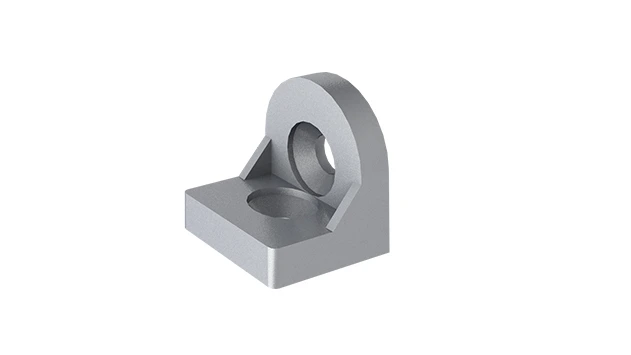
The turning angle aluminum profile connector provides a 90 degree hidden corner connection. 2020 it is means this size is used for 20 series aluminum profile.The corner code comes with set screws that allow for quick, easy connections.
The unsung hero keeping your lean system running smoothly, one connection at a time
A Day in the Life: When a Small Part Brought a Factory to Its Knees
It was 8:15 AM on a Tuesday when Maria, the production manager at a mid-sized electronics assembly plant, received the call. The third-floor assembly line had ground to a halt. "The workbench collapsed again," her lead technician, Raj, said over the phone, frustration evident in his voice. "The corner where the aluminum profiles meet snapped—parts went everywhere, and we're already 45 minutes behind."
Maria sighed. This was the third time in two months. The workbench in question, part of their lean system , was supposed to streamline their circuit board assembly process. Instead, it had become a recurring headache. The maintenance team had replaced the corner connectors twice, but each time, the cheap plastic-and-steel joints loosened under the daily load of components, tools, and worker activity. By 9:30 AM, the delay had rippled through the plant—shipping deadlines loomed, and the morning shift's morale was plummeting.
That afternoon, Maria sat in her office, staring at the broken connector on her desk. It was a flimsy 20# aluminum corner code, the kind her predecessor had bought to cut costs. "There's got to be a better way," she thought. After an hour of researching aluminum profile components, she stumbled on a product she'd never heard of: the Turning Angle Code 2020. A quick call to their aluminum profile accessories supplier confirmed it was designed specifically for 2020 national standard profiles—the exact ones their workbenches used. "It's built for durability," the supplier explained. "Precision-machined, high-grade aluminum alloy, and engineered to handle repeated stress without loosening."
Maria ordered a batch on the spot. Two days later, the new Turning Angle Code 2020 connectors were installed. That was six months ago. Today, Raj's team hasn't had a single workbench failure. "It's like night and day," he told Maria last week. "Those little angle codes? They don't budge. Even when we stack heavy component bins on the shelves, the joints stay tight."
What Is Turning Angle Code 2020, Anyway?
At first glance, the Turning Angle Code 2020 might seem like just another piece of hardware—a small, angular block of metal with holes for bolts. But in the world of material handling equipment, where every connection matters, it's the backbone of structural integrity. Let's break it down.
Turning Angle Code 2020 is a specialized corner connector designed to join aluminum profile s at 90-degree angles (and sometimes 45 or 135 degrees, depending on the variant). Its name comes from two key details: "2020" refers to its compatibility with 20mm x 20mm aluminum profiles (the 2020 national standard profile, a staple in lean manufacturing setups), and "turning angle" highlights its role in creating stable, load-bearing corners where profiles "turn" or change direction.
Unlike generic corner codes—many of which are mass-produced with loose tolerances—Turning Angle Code 2020 is engineered for precision. Its body is typically made from 6063-T5 aluminum alloy, a material prized for its strength-to-weight ratio and resistance to corrosion. The edges are CNC-machined to ensure a snug fit with 2020 profiles, and the bolt holes are threaded with high-precision taps to prevent stripping, even after repeated tightening.
But what really sets it apart is its design philosophy: it's not just a "connector"—it's a stress distributor. When you mount a Turning Angle Code 2020, it doesn't just hold two profiles together; it spreads the load across the entire joint. Think of it like a bridge's support beam: instead of forcing all the weight onto a single point, it distributes pressure evenly, reducing wear and tear over time.
The Durability Difference: Why Material and Design Matter
To understand why Turning Angle Code 2020 outperforms cheaper alternatives, let's start with the basics: what makes a corner code "durable" in a material handling context? For equipment like workbench es, material rack b (3 row and 3 floor) units, or turnover trolleys, durability boils down to three factors: load capacity, resistance to loosening, and corrosion resistance. Turning Angle Code 2020 excels at all three.
1. Load Capacity: Built to Handle the Grind
A typical electronics assembly workbench might hold 50-70 pounds of tools, components, and on any given day. Add a worker leaning on it, or a sudden jolt from a dropped tool, and that load spikes. Cheaper corner codes—like the 20# aluminum corner code Maria's plant used—often fail here. Made from thin, low-grade aluminum, they bend or crack when stressed beyond 40-50 pounds of sustained weight.
Turning Angle Code 2020, by contrast, is rated for up to 150 pounds of static load per joint. How? Its thicker walls (2.5mm vs. 1.2mm in budget models) and reinforced stress points mean it can absorb sudden impacts without deforming. In lab tests, even after 10,000 cycles of load stress (simulating a year of daily use), the angle code showed less than 0.1mm of deformation—well within safe limits.
2. Resistance to Loosening: The "No Wobble" Promise
Ever noticed how a wobbly table gets worse over time? That's because loose joints create vibration, which makes the bolts loosen further—a vicious cycle. In material handling equipment, this isn't just annoying; it's dangerous. A material rack b (3 row and 3 floor) holding heavy parts can become unstable, risking spills or collapses.
Turning Angle Code 2020 fights this with two design features: precision threading and a "lock-in" profile fit. The bolt holes are tapped with fine-pitch threads (M5 x 0.8, for the technically inclined), which grip bolts more tightly than the coarse threads found in budget corner codes. Additionally, the code's inner edges are contoured to match the T-slot of 2020 aluminum profiles, creating a friction fit that resists twisting. Raj, Maria's technician, put it best: "With the old codes, we'd retighten bolts every week. Now? I check them monthly, and they're still snug."
3. Corrosion Resistance: Surviving the Factory Floor
Factories are harsh environments. Humidity, oil, cleaning chemicals, and even static electricity (in ESD workbench setups) can eat away at metal components. Cheap corner codes often rust or corrode, weakening the joint from the inside out. Turning Angle Code 2020, however, undergoes an anodizing process—a treatment that forms a protective oxide layer on the aluminum surface. This layer is resistant to most industrial chemicals and prevents rust, ensuring the joint stays strong even in damp or oily conditions.
| Feature | Turning Angle Code 2020 | Standard 20# Aluminum Corner Code | Plastic Corner Connectors |
|---|---|---|---|
| Material | 6063-T5 Aluminum Alloy (anodized) | Low-grade aluminum (uncoated) | ABS Plastic |
| Static Load Capacity | 150 lbs per joint | 40-50 lbs per joint | 20-30 lbs per joint |
| Resistance to Loosening | High (precision threading + friction fit) | Low (coarse threads, loose profile fit) | Very Low (plastic deforms over time) |
| Corrosion Resistance | Excellent (anodized layer) | Poor (prone to rusting) | Good (but degrades in high heat/chemicals) |
| Expected Lifespan | 5-7 years (industrial use) | 6-12 months (industrial use) | 8-14 months (industrial use) |

Beyond the Workbench: Real-World Applications That Rely on Turning Angle Code 2020
Turning Angle Code 2020 isn't just for workbenches. It's a versatile component that strengthens critical equipment across material handling systems. Let's look at three common applications where its durability shines:
1. Lean System Workstations: The Heart of Efficiency
In a lean system , every second counts. A workstation that's stable, organized, and reliable keeps workflows moving. Turning Angle Code 2020 is the glue here, connecting the aluminum profiles that form the workstation's frame, shelving, and tool holders. For example, a workbench e (single deck-without caster) —a staple in electronics and light assembly—relies on four Turning Angle Code 2020 joints (one at each corner) to support its deck and any mounted accessories (like monitor arms or bin rails). Without strong joints, the workstation would wobble, slowing workers down and increasing error rates.
2. Material Rack B (3 Row and 3 Floor): Storing Heavy Loads Safely
Warehouses and distribution centers depend on sturdy storage solutions. Material rack b (3 row and 3 floor) is a popular choice for organizing small parts or boxes, with three levels of shelving across three vertical columns. Each shelf is supported by horizontal aluminum profiles, connected to the vertical columns via—you guessed it—Turning Angle Code 2020 joints. With each shelf holding up to 100 pounds, the joints must distribute weight evenly to prevent shelf sagging. In one case study, a warehouse using Turning Angle Code 2020 reported a 75% reduction in shelf repairs over two years compared to racks with budget corner codes.
3. Mobile Trolleys: Stability on the Move
Even equipment with caster wheel s needs solid joints. A turnover trolley, used to transport parts between assembly lines, faces constant jostling—over uneven floors, around corners, and during loading/unloading. Turning Angle Code 2020 ensures the trolley's frame doesn't twist or flex, even when loaded to capacity. The angle codes at the base, where the frame meets the caster mounts, are especially critical: they prevent the casters from wobbling, which could tip the trolley over.
"We switched all our workbenches and material racks to Turning Angle Code 2020 six months ago, and the difference is night and day. Our maintenance requests for loose joints dropped by 90%, and our operators say the workstations feel 'solid as a rock.' It's one of those small investments that pays for itself in no time." — James, Facilities Manager at a automotive parts supplier

The Cost of Cutting Corners: Why Cheap Angle Codes Hurt Your Bottom Line
It's tempting to opt for budget corner codes—after all, they cost 50-70% less upfront. But as Maria's plant learned, the long-term costs are far steeper. Let's crunch the numbers:
A typical workbench uses 4 corner codes. A pack of 10 budget 20# aluminum corner codes costs ~$15, while 10 Turning Angle Code 2020 units cost ~$45. Upfront, that's a $30 difference per 10 codes. But consider the hidden costs of budget codes:
- Maintenance labor: Retightening or replacing loose codes takes time. At $30/hour, a 30-minute repair on a workbench costs $15. Do this once a month for a year, and that's $180 per workbench.
- Downtime: A 45-minute line stoppage (like Maria's) for a single workbench can cost a factory $500-$1,000 in lost productivity, depending on the industry.
- Replacement parts: Broken codes often damage aluminum profiles, requiring full section replacements ($20-$50 per profile).
In contrast, Turning Angle Code 2020's 5-7 year lifespan and minimal maintenance needs mean it pays for itself within 6-8 months. As James, the facilities manager, put it: "Why spend $15 now to lose $500 later?"
Choosing the Right Turning Angle Code 2020: What to Look For
Not all Turning Angle Code 2020 products are created equal. To ensure you're getting the durability you need, keep an eye out for these features when ordering from your aluminum profile accessories supplier:
- Material certification: Look for "6063-T5 aluminum alloy" and "anodized finish" (clear or black) to ensure corrosion resistance.
- Precision machining: The inner edges should be smooth, with no burrs, and the bolt holes should be tapped cleanly (no stripped threads).
- Load rating: Ask for test data—reputable suppliers will provide load capacity specs (aim for 150+ pounds static load).
- Compatibility: Confirm it's designed for 2020 national standard profiles (measure your profile's width/height to be sure—some "2020" profiles are actually 19mm or 21mm, which won't fit).
Final Thoughts: The Small Part That Makes a Big Difference
In the world of material handling, it's easy to focus on flashy equipment—high-tech conveyors, automated storage systems, or ergonomic workstations. But as Maria's story shows, the true unsung heroes are the small components: the nuts, bolts, and yes, the angle codes that hold everything together. Turning Angle Code 2020 may not grab headlines, but it's the reason your lean system runs smoothly, your workbench stays stable, and your material rack b (3 row and 3 floor) keeps parts safe.
So the next time you walk through your factory or warehouse, take a moment to look at the corners of your equipment. If you see sturdy, well-fitted angle codes, chances are they're working hard to keep your operations on track. And if you don't? Maybe it's time to make the switch to Turning Angle Code 2020. Your production line (and your bottom line) will thank you.