- Company Articles
- Products and Technology
- Product knowledge
- Why Turning Angle Code 4040 Is a Must-Have for Flexible Conveyor Systems

Why Turning Angle Code 4040 Is a Must-Have for Flexible Conveyor Systems
Related Product
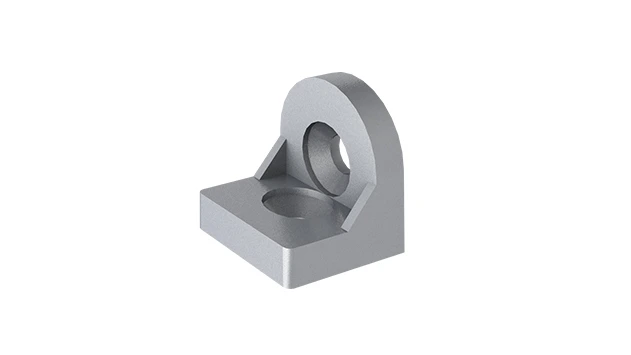
Turning Angle Code 4040
The turning angle aluminum profile connector provides a 90 degree hidden corner connection. 4040 it is means this size is used for 40 series aluminum profile.The corner code comes with set screws that allow for quick, easy connections.
In the fast-paced world of manufacturing and logistics, where production lines twist, turn, and adapt to new demands overnight, the difference between a smooth operation and a bottleneck often comes down to the smallest components. You've probably heard about the big players—high-tech robots, smart sensors, automated sorting systems—but today, let's zoom in on an unsung hero: the Turning Angle Code 4040. It might not have the flash of a robotic arm, but this unassuming connector is the backbone of flexible conveyor systems, quietly ensuring that your production line can pivot, grow, and evolve without skipping a beat. If you've ever struggled with rigid, "set-it-and-forget-it" conveyor setups that take weeks to reconfigure, or watched as a minor design change turned into a costly overhaul, this one's for you. Let's dive into why the Turning Angle Code 4040 isn't just a part of your conveyor system—it's the key to keeping your operation agile, efficient, and ready for whatever the future throws at it.
Flexible Conveyor Systems: The Need for Adaptability
First, let's talk about why flexibility matters in conveyor systems. Gone are the days of one-size-fits-all production lines. Today's manufacturers and warehouses deal with shorter product lifecycles, custom orders, and seasonal peaks that demand quick changes. A electronics plant might shift from assembling smartphones to tablets in a month; a logistics hub could need to reroute packages to a new shipping zone overnight. In these scenarios, a rigid conveyor system—welded steel frames, fixed angles, permanent connections—becomes a liability. It's like trying to dance in concrete boots: slow, clunky, and destined to fall behind.
Enter flexible conveyor systems. Built on modularity, these setups use interchangeable components—think aluminum profiles, roller tracks, and workbenches—that can be assembled, disassembled, and rearranged with minimal effort. They're the Swiss Army knives of material handling: lightweight, durable, and infinitely adaptable. But here's the catch: even the best modular components are only as strong as the parts that hold them together. And that's where the Turning Angle Code 4040 steps in.
What Exactly Is Turning Angle Code 4040?
Let's start with the basics. The "4040" in Turning Angle Code 4040 refers to the size of the aluminum profile it's designed to work with: a 40x40mm aluminum extrusion profile, one of the most common structural elements in modern modular systems. Picture a long, hollow aluminum beam with T-shaped slots running along its length—these slots are where connectors, brackets, and accessories slide in, creating a secure, tool-friendly connection. Now, the Turning Angle Code 4040 is a specialized connector built to join two 4040 aluminum profiles at (you guessed it) angles—typically 90 degrees, but often adjustable for custom configurations.
But it's not just a simple bracket. Most Turning Angle Code 4040 components are made from high-grade aluminum (lightweight yet strong) or reinforced plastic, with precision-machined slots that align perfectly with the T-slots of the 4040 profile. They often feature quick-lock mechanisms or thumb screws, meaning you can tighten them by hand or with a basic hex key—no welding torches, no heavy drills, no team of engineers required. At first glance, it might look like a small, unassuming piece of hardware, but its design is a masterclass in practicality: strong enough to support heavy loads, smart enough to allow (fine-tuning), and simple enough for anyone on your team to use.

The Critical Role of Turning Angle Code 4040 in Conveyor Systems
Conveyor systems are the arteries of any production or logistics facility, moving parts, products, and packages from point A to point B (and sometimes C, D, and E). But in reality, "point A to point B" is rarely a straight line. Maybe you need a conveyor to curve around a workbench where operators inspect goods. Or to drop down a few inches to feed into a packaging station. Or to split into two lanes to handle a sudden surge in orders. Each of these changes—each turn, drop, or split—requires a sturdy, reliable connection between the conveyor's structural elements. That's where Turning Angle Code 4040 shines.
1. Modularity That Actually Works
Flexible conveyors live and die by their ability to be reconfigured. Let's say your team needs to add a 90-degree turn to your roller track to bypass a new machine. With traditional steel frames, this would mean cutting metal, welding brackets, and hoping the alignment is perfect (spoiler: it rarely is). With Turning Angle Code 4040? You loosen a few screws, slide the code into the T-slots of your 4040 aluminum profiles, adjust the angle, retighten, and you're done. The whole process takes 20 minutes instead of 2 days. No sparks, no heavy lifting, no downtime stretching into weeks.
This isn't just about speed—it's about empowerment . Floor supervisors, maintenance techs, even line workers can make these changes without waiting for a specialized crew. When a new product comes in and the conveyor needs to be tweaked, your team doesn't just adapt—they own the process.
2. Precision Alignment for Smooth Roller Track Operation
Ever watched a conveyor where packages get stuck, jostled, or even fall off? Chances are, the culprit is misalignment. Roller tracks—those lines of small wheels that glide products along—need to be perfectly level and straight (or smoothly curved) to work. Even a 1-degree misalignment can cause friction, slowdowns, or damaged goods. Turning Angle Code 4040 solves this with its precision-engineered design. The code's slots and locking mechanisms ensure that connected aluminum profiles sit exactly where they need to, keeping roller tracks aligned and products moving like they're on rails.
Take an electronics assembly line, for example. Those tiny circuit boards or delicate phone components can't handle rough handling. A conveyor built with Turning Angle Code 4040 ensures that the roller track stays true, so parts glide from soldering station to testing bench without a hitch. No more bent pins, scratched screens, or frustrated operators fishing stuck components out of gaps.
3. Durability That Keeps Up With Your Workload
Let's talk about strength. A conveyor system isn't just for show—it's moving heavy boxes, metal parts, or pallets day in and day out. You need connectors that can handle the stress. Turning Angle Code 4040 is built tough: aluminum versions can support hundreds of pounds per joint, while reinforced plastic options are lightweight but still rugged enough for medium-duty tasks. Unlike flimsy plastic brackets that crack or bolted connections that loosen over time, these codes lock in place and stay there, even under the constant vibration of a busy production floor.
One logistics manager I spoke with put it this way: "We used to replace connectors every quarter. They'd wear out, bend, or just stop gripping the profiles. Since switching to Turning Angle Code 4040, we haven't replaced a single one in two years. It's not just a part—it's a long-term investment ."

Why Turning Angle Code 4040 Beats Traditional Connectors
Still not convinced? Let's stack it up against the old-school alternatives. Here's how Turning Angle Code 4040 compares to welding, bolted steel brackets, and generic plastic connectors:
| Feature | Welding/Bolted Brackets | Generic Plastic Connectors | Turning Angle Code 4040 |
|---|---|---|---|
| Installation Time | Hours to days (requires skilled labor) | 30-60 minutes (tools needed, imprecise) | 15-20 minutes (hand-tighten or basic tools) |
| Reconfigurability | Almost impossible (permanent connections) | Possible but risky (prone to breaking during disassembly) | Easy (reusable, no damage to profiles) |
| Load Capacity | High (but rigid) | Low to medium (weak under stress) | Medium to high (aluminum versions handle heavy loads) |
| Alignment Precision | Hit-or-miss (depends on welder skill) | Poor (sloppy fit, shifts over time) | Excellent (machined to fit 4040 profiles exactly) |
| Cost Over Time | High (labor, replacement, downtime) | Medium (cheap upfront, frequent replacements) | Low (one-time purchase, reusable, minimal downtime) |
The numbers speak for themselves, but let's zoom in on the "cost over time" row. Traditional methods might seem cheaper upfront, but when you factor in downtime for reconfigurations, labor costs for specialized work, and the price of replacing broken parts, they quickly become a money pit. Turning Angle Code 4040? It's a one-time buy that keeps giving back—whether you're reusing it on a new conveyor line or adjusting the old one for the 10th time.
Real-World Wins: How Turning Angle Code 4040 Transforms Operations
Let's step out of the abstract and into the factory floor. Here are a few stories from businesses that swapped rigid systems for flexible ones—powered by Turning Angle Code 4040.
Case 1: Automotive Parts Manufacturer
A mid-sized automotive parts plant in Michigan was struggling with seasonal demand. In the summer, they produced car radiators; in the winter, truck alternators. Each product required a different conveyor layout—radiators needed a wide, flat track; alternators, a narrow, curved path to fit under testing machines. With their old steel conveyor, switching lines took 3 weeks of welding and retooling, leaving them scrambling to meet deadlines.
They switched to a modular system built on 4040 aluminum profiles and Turning Angle Code 4040. Now, changing the line takes 8 hours: the team disassembles the old layout, uses the same Turning Angle Code 4040 connectors to build the new one, and tests it by lunch. Last winter, they even added a third, temporary line for a rush order—no extra cost, just reusing components they already had. "We used to dread seasonal changes," the plant manager told me. "Now? We look forward to them. It's like rearranging furniture, not rebuilding a house."
Case 2: E-Commerce Fulfillment Center
An e-commerce warehouse in Texas handles 50,000+ packages daily. During the holidays, that number spikes to 150,000. Their problem? The conveyor sorting system was fixed—so during peak season, packages backed up at the main sorting hub, causing delays and angry customers.
They installed a secondary conveyor line using 4040 aluminum profiles and Turning Angle Code 4040. The new line branches off the main one, curving around existing shelving (thanks to the code's adjustable angles) and feeding into a backup sorting station. When the holidays hit, they simply connected the new line with the code, added a few roller tracks, and doubled their sorting capacity. After the rush? They disassembled it, stored the components, and reused them next year. Cost? A fraction of a permanent conveyor. ROI? Priceless—no more missed delivery deadlines.
Why It's a Cornerstone of Lean System Thinking
Lean system principles—eliminating waste, optimizing flow, continuous improvement—aren't just buzzwords. They're about making every part of your operation work smarter, not harder. And Turning Angle Code 4040? It's lean thinking in hardware form.
Waste comes in many forms: wasted time (waiting for reconfigurations), wasted materials (throwing away old welded brackets), wasted labor (paying specialists for simple tasks). Turning Angle Code 4040 slashes all three. It turns "we can't change that" into "we can change that now ." It turns excess inventory (storing extra steel brackets) into efficiency (reusing the same code 10 times). And it turns dependency (waiting for the welding crew) into self-sufficiency (your team owns the process).
Even better, it aligns with the "continuous improvement" spirit of lean systems. When your conveyor is flexible, you're not stuck with "good enough"—you can tweak, test, and refine. Maybe the roller track needs a slight angle adjustment to speed up product flow. Maybe the workbench next to the conveyor would be better 6 inches to the left. With Turning Angle Code 4040, these aren't big projects—they're Tuesday morning adjustments. Your operation doesn't just get better once a year; it gets better every day .
How to Choose the Right Turning Angle Code 4040 for Your Needs
Not all Turning Angle Code 4040 components are created equal. Here's what to look for when picking one for your conveyor system:
Material Matters
Aluminum codes are best for heavy-duty tasks (think automotive parts, metal components). They're strong, corrosion-resistant, and can handle high loads. Reinforced plastic codes work well for lighter loads (electronics, small packages) and are cheaper upfront. If your environment is humid (like a food processing plant) or corrosive (chemicals), go for aluminum—plastic might degrade over time.
Locking Mechanism
Look for codes with thumb screws or quick-lock levers for tool-free adjustments. Hex-key locks are sturdier for heavy loads but take a bit more time. Avoid codes with cheap plastic screws—they strip easily, turning a 20-minute job into a frustrating hunt for replacements.
Compatibility
Not all 4040 aluminum profiles are identical—some have thicker walls, others different T-slot sizes. Make sure the Turning Angle Code 4040 is designed for your specific profile (check the manufacturer's specs!). A code that's too loose will slip; too tight, and you'll damage the profile's T-slots.
Supplier Reliability
Go with a trusted lean pipe supplier or aluminum profile supplier—preferably one that specializes in modular systems. They'll have tested their Turning Angle Code 4040 with real-world loads and can help you troubleshoot if something goes wrong. Avoid generic "one-size-fits-all" codes from discount sites—they might save a few bucks now, but cost you in downtime later.
Final Thoughts: Small Component, Big Impact
At the end of the day, flexible conveyor systems aren't just about moving products—they're about moving forward. They're about staying competitive in a world where change is the only constant. And Turning Angle Code 4040? It's the glue that holds that flexibility together. It's not flashy, it's not high-tech, but it's essential .
So the next time you walk through a factory or warehouse and see a conveyor line that bends, adapts, and keeps up with the chaos, take a closer look. Chances are, there's a Turning Angle Code 4040 quietly doing its job—connecting, aligning, and empowering the people who make it all work. And that, more than any robot or sensor, is what makes a truly great operation: not just machines, but the right tools to help humans thrive.
Ready to stop fighting rigid systems and start embracing flexibility? Start small—swap one section of your conveyor for a modular setup with Turning Angle Code 4040. Watch how quickly your team adapts. Watch the downtime shrink. Watch the frustration turn into pride. Then ask yourself: Why didn't we do this sooner?