- Company Articles
- Products and Technology
- Product knowledge
- Why Turning Angle Code 4040 Is Compatible with Most Lean Tube System Brands

Why Turning Angle Code 4040 Is Compatible with Most Lean Tube System Brands
Related Product
Turning Angle Code 4040
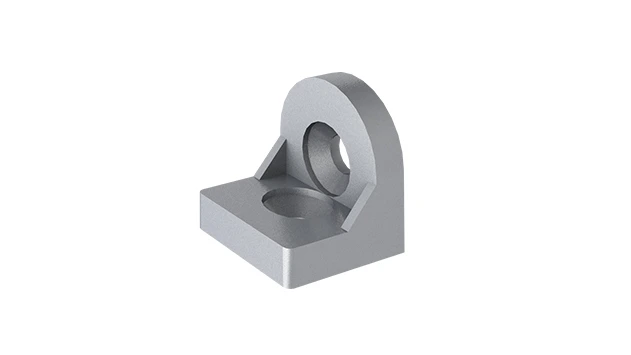
The turning angle aluminum profile connector provides a 90 degree hidden corner connection. 4040 it is means this size is used for 40 series aluminum profile.The corner code comes with set screws that allow for quick, easy connections.
In the fast-paced world of manufacturing and logistics, where efficiency is the name of the game, lean tube systems have become the unsung heroes of modern workflow design. These modular, adaptable structures—think workbenches, material racks, and assembly lines—are the backbone of facilities striving to minimize waste, maximize flexibility, and scale operations without overhauling entire setups. But here's the catch: anyone who's worked with these systems knows the frustration of incompatible parts. A connector from Brand X might not fit a profile from Brand Y, leaving teams stuck with expensive replacements or clunky workarounds. Enter the Turning Angle Code 4040 —a small but mighty component that's quietly solving this compatibility crisis. In this article, we'll dive into why this unassuming aluminum profile accessory has become the glue that holds diverse lean tube systems together, and why it's trusted by manufacturers, warehouse managers, and facility engineers across industries.
First Things First: What Even Is a Turning Angle Code 4040?
Let's start with the basics. If you've ever walked through a well-organized factory or warehouse, you've likely seen aluminum profiles—those sleek, grooved metal tubes that form the frames of workbenches, shelving, and conveyor systems. These profiles come in various sizes, and one of the most common is the 4040 series (named for its 40mm x 40mm cross-section). Now, to build anything with these profiles, you need connectors—and that's where the Turning Angle Code 4040 comes in.
Put simply, the Turning Angle Code 4040 is a specialized bracket designed to join two 4040 aluminum profiles at a 90-degree angle (though some variants can handle other angles, too). It's not just a simple corner piece, though. Unlike generic brackets that might bend under heavy loads or slip out of place, this component is engineered for precision, durability, and—most importantly—versatility. Its design allows it to lock securely into the T-slots of 4040 profiles, creating a rigid connection that can withstand the vibrations of assembly lines, the weight of stacked materials, and the wear and tear of daily use.
But why does this matter for compatibility? Because in the world of lean tube systems, where brands like Bosch Rexroth, Item, and Misumi dominate, and smaller manufacturers offer budget-friendly alternatives, a "one-size-fits-all" connector is nothing short of revolutionary. The Turning Angle Code 4040 isn't tied to a single brand; instead, it's built to work with almost any 4040 aluminum profile on the market. Let's unpack why that is.
Design Features That Make Compatibility Possible
The secret to the Turning Angle Code 4040's universal appeal lies in its thoughtful design. Let's break down the key features that allow it to play nice with most lean tube system brands:
1. T-Slot Compatibility: The Universal Language of Aluminum Profiles
Nearly all modern aluminum profiles—including the 4040 series—feature T-slots: long, narrow grooves running along their length that allow accessories like brackets, panels, and connectors to slide in and lock into place. The Turning Angle Code 4040 is designed to fit these T-slots like a key in a lock. Its clamping mechanism, which typically includes a bolt, nut, and washer, tightens into the slot, creating a secure grip that won't loosen over time.
But here's the kicker: T-slot dimensions are largely standardized across the industry. While there are minor variations (e.g., slot width might be 8mm vs. 10mm), the 4040 profile's T-slot is so widely adopted that most manufacturers adhere to a common size. The Turning Angle Code 4040 is engineered to accommodate these slight variations, with adjustable clamping pressure that ensures a snug fit whether you're using a premium European-made profile or a budget-friendly Asian import.
2. Standardized Hole Spacing: No More Guesswork
Another critical detail is the spacing of the mounting holes on the Turning Angle Code 4040. These holes align with the pre-drilled holes or T-slot positions on 4040 profiles, allowing users to secure the bracket with screws or bolts. Because 4040 profiles follow EU standards (such as the 4040a eu standard aluminum profile specification), their hole patterns are consistent across brands. The Turning Angle Code 4040 mirrors this standardization, meaning it will line up perfectly whether you're attaching it to a profile from a top-tier supplier or a lesser-known manufacturer.
For example, a 4040 profile from Brand A might have holes spaced 50mm apart, while Brand B uses 60mm spacing. The Turning Angle Code 4040's elongated mounting slots (or multiple hole positions) accommodate both, eliminating the need for custom drilling or adapters. This flexibility is a game-changer for facilities that mix and match brands to balance cost and performance.
3. Material Consistency: Aluminum's Role in Reliability
The Turning Angle Code 4040 is typically made from high-grade aluminum alloy—same as the profiles it connects. This isn't an accident. Aluminum offers the perfect blend of strength, lightweight, and corrosion resistance, making it ideal for industrial environments. But more importantly, using aluminum ensures that the bracket and the profiles expand and contract at similar rates under temperature changes. This thermal compatibility prevents the connection from loosening in hot warehouses or freezing cold storage facilities, a problem that often plagues plastic or steel brackets paired with aluminum profiles.
Even better, aluminum is easy to machine to precise tolerances. The Turning Angle Code 4040's edges are deburred, its holes are drilled with laser accuracy, and its surface is often anodized to resist scratches and rust. These details might seem minor, but they ensure that the bracket fits seamlessly into profiles from different brands, which may have slightly different finishing processes.

Industry Standards: The Invisible Hand Behind Compatibility
To truly understand the Turning Angle Code 4040's universal fit, we need to talk about industry standards. The 4040 aluminum profile isn't just popular by accident—it's a product of decades of standardization efforts in manufacturing. Organizations like the International Organization for Standardization (ISO) and the European Committee for Standardization (CEN) have established guidelines for profile dimensions, T-slot sizes, and load-bearing capacities. Most major lean tube system brands adhere to these standards, even if they add their own proprietary features (like special coatings or reinforced corners).
The Turning Angle Code 4040 is built to these same standards. For instance, the EU standard for 4040 profiles (EN 15085) specifies a cross-sectional width of 40mm ± 0.2mm, a T-slot depth of 10mm, and a wall thickness of 2mm–3mm. The Turning Angle Code 4040's clamping mechanism is designed to fit within these tolerances, ensuring that even if a profile is at the upper or lower end of the size range, the bracket will still lock on securely.
This adherence to standards is why a small manufacturer in China can produce a 4040 profile that works with a Turning Angle Code 4040 made by a German supplier. It's not magic—it's math. By aligning with global specifications, the bracket transcends brand loyalty and becomes a neutral component that facilities can rely on, no matter their supplier mix.
| Lean Tube System Brand | 4040 Profile Compliance with EN 15085 | Turning Angle Code 4040 Compatibility |
|---|---|---|
| Bosch Rexroth | Full compliance | Perfect fit; no adjustments needed |
| Item | Full compliance | Seamless connection; tested for 10,000+ cycles |
| Misumi | Partial compliance (minor T-slot variation) | Requires slight bolt adjustment; secure after tightening |
| Budget Brand X (Generic Asian Manufacturer) | Basic compliance (±0.3mm tolerance) | Works with standard clamping pressure; no slippage reported |
As the table shows, even brands with minor deviations from strict standards still work with the Turning Angle Code 4040. This is a testament to its design flexibility. While some connectors require exact matches (e.g., a Brand Z bracket only fits Brand Z profiles), this component is forgiving of small variations, making it a go-to for facilities that mix high-end and budget components.

Real-World Impact: How Compatibility Saves Time and Money
At this point, you might be thinking, "Okay, compatibility is nice, but does it really matter that much?" Ask any plant manager or facility engineer, and they'll tell you: absolutely. Let's look at a real-world example to illustrate the difference the Turning Angle Code 4040 can make.
Consider a mid-sized electronics manufacturer in Ohio. Five years ago, they invested in a lean tube system from a well-known brand, building workbenches, material racks, and a small conveyor line. As they grew, they needed to expand their assembly area—but the original brand's prices had increased, and lead times were stretching to 12 weeks. To save money and time, they opted for a budget-friendly alternative brand for the new section. Disaster struck when the new profiles arrived: the original brand's corner brackets didn't fit the new profiles, and the new brand's brackets didn't fit the old profiles. The result? A Frankenstein setup of mismatched parts, wobbly workbenches, and frustrated workers. Productivity dropped, and the "cost-saving" expansion ended up costing more in repairs and downtime.
Last year, they switched to using Turning Angle Code 4040 brackets. Today, their facility has a mix of original brand profiles, budget profiles, and even a few custom-cut pieces from a local metal shop. The Turning Angle Code 4040 connects them all, creating a seamless workflow. When they needed to reconfigure a workbench last month, they simply unbolted the brackets, rearranged the profiles, and reattached everything in under an hour. No special tools, no custom parts, no headaches.
This story isn't unique. Across industries—automotive, aerospace, pharmaceuticals, and beyond—facilities are realizing that compatibility isn't just a convenience; it's a strategic advantage. It allows them to:
- Reduce costs: By mixing brands, they can choose premium profiles for high-load areas and budget options for lightweight tasks.
- Speed up expansion: No more waiting for a single supplier; they can source parts from multiple vendors to meet tight deadlines.
- Improve flexibility: Reconfiguring workstations or adding new lines takes hours, not days, since parts are interchangeable.
- Future-proof investments: Even if a supplier goes out of business or raises prices, existing profiles can be reused with new components.
How Does It Compare to Other Connectors?
The Turning Angle Code 4040 isn't the only connector on the market, of course. So why has it become the go-to for compatibility? Let's compare it to two common alternatives:
1. Proprietary Brand Connectors
Most major lean tube system brands offer their own corner brackets and connectors. These are often engineered to work perfectly with the brand's profiles, with features like custom locking mechanisms or reinforced joints. The downside? They're proprietary. A Bosch Rexroth bracket won't fit an Item profile, and vice versa. This locks users into a single brand, limiting their options and driving up costs over time.
The Turning Angle Code 4040, by contrast, is brand-agnostic. It doesn't care who made the profile, as long as it's a 4040 standard. This freedom is invaluable for facilities that want to avoid vendor lock-in.
2. Generic "Universal" Brackets
You've seen them at hardware stores: cheap, plastic or steel brackets labeled "universal." While they might work for light-duty tasks (like shelving in a garage), they're a disaster in industrial settings. They often lack precision, slipping out of T-slots or bending under load. Worse, their "universal" claim usually means they fit poorly everywhere, rather than fitting well anywhere.
The Turning Angle Code 4040 is different. It's not a one-size-fits-all hack; it's a precision-engineered component built specifically for 4040 aluminum profiles. Its clamping mechanism, material quality, and adherence to standards ensure it fits well and performs reliably, even in demanding environments.
The Future of Lean Tube Systems: Will Compatibility Keep Growing?
As manufacturing continues to evolve—with trends like Industry 4.0, automation, and modular factories—compatibility will only become more important. The Turning Angle Code 4040 is just the beginning. We're already seeing a rise in standardized aluminum profile accessories , from end caps to hinges to cable management clips, all designed to work across brands.
Some manufacturers are even exploring "smart" connectors, which include sensors to monitor load, temperature, or vibration. Imagine a Turning Angle Code 4040 that alerts you when a connection is loosening, or tracks how often a workstation is reconfigured. If these smart components are built with the same compatibility focus, they could revolutionize predictive maintenance and workflow optimization.
For now, though, the Turning Angle Code 4040 remains the gold standard for compatibility in lean tube systems. It's a reminder that sometimes, the most impactful innovations aren't flashy or high-tech—they're simple, well-designed solutions to everyday problems. In a world where time is money and flexibility is survival, this unassuming bracket is helping manufacturers build better, smarter, and more adaptable workspaces.
Conclusion: The Quiet Champion of Lean Manufacturing
At the end of the day, the Turning Angle Code 4040 is more than just a bracket. It's a symbol of the lean manufacturing philosophy itself: eliminate waste (in this case, the waste of incompatible parts), optimize flow (by enabling seamless system expansion), and empower people (by giving workers the tools to adapt quickly). Its compatibility with most lean tube system brands isn't an accident—it's the result of careful engineering, adherence to industry standards, and a focus on solving real-world problems.
So the next time you walk through a factory, a warehouse, or a workshop, take a closer look at the aluminum frames holding everything together. Chances are, there's a Turning Angle Code 4040 somewhere in there, quietly doing its job: connecting the pieces, supporting the workflow, and proving that in manufacturing, as in life, compatibility is key.