- Company Articles
- Products and Technology
- Product knowledge
- Why Turning Angle Code 4040 Is Essential for Custom 3C Assembly Workstations

Why Turning Angle Code 4040 Is Essential for Custom 3C Assembly Workstations
Related Product
Turning Angle Code 4040
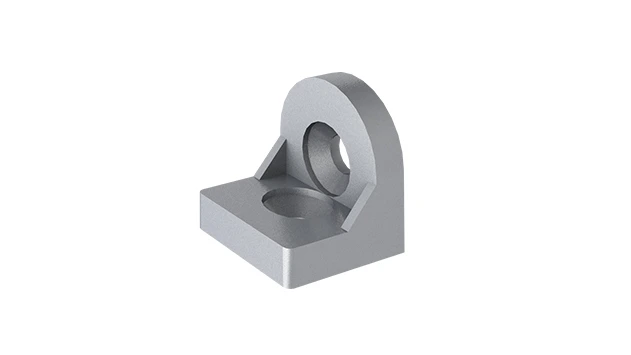
The turning angle aluminum profile connector provides a 90 degree hidden corner connection. 4040 it is means this size is used for 40 series aluminum profile.The corner code comes with set screws that allow for quick, easy connections.
Walk into any 3C manufacturing plant—whether it's churning out smartphones, laptops, or smartwatches—and you'll notice one thing: the assembly line is the heartbeat of the operation. Every second counts, every movement matters, and every workstation is a carefully calibrated ecosystem where precision meets productivity. But here's the thing: no two 3C products are exactly alike, and neither are their assembly needs. That's where custom workstations come in. And if you're building a custom workstation that's stable, adaptable, and built to last, there's one component you can't afford to overlook: the Turning Angle Code 4040 .
In this article, we're going to dive into why this unassuming little connector has become the unsung hero of 3C assembly floors. We'll break down what it is, how it works with aluminum profiles , and why it's a game-changer for anyone designing ESD workstations or lean manufacturing setups. By the end, you'll see why Turning Angle Code 4040 isn't just a "nice-to-have"—it's the backbone of a workstation that can keep up with the fast-paced, ever-changing world of 3C production.
The Customization Challenge in 3C Assembly: Why One-Size-Fits-All Doesn't Work
Let's start with the basics: 3C products are getting more complex by the day. A modern smartphone has over 1,000 components, from tiny microchips to delicate display panels. Assembling that requires workstations tailored to specific tasks—think soldering stations, testing benches, or packaging areas—each with unique dimensions, tool placements, and safety needs. And here's the kicker: production lines don't stay the same for long. A new model launch, a design tweak, or a shift in demand can mean reconfiguring workstations overnight.
Traditionally, manufacturers faced two options: either buy pre-built workstations that never quite fit (wasting space and slowing down workers) or weld together custom metal frames (which are heavy, hard to adjust, and require skilled labor to modify). Neither is ideal. Pre-built workstations force you to adapt your workflow to the tool, not the other way around. Welded frames? They're like concrete—great for stability, terrible for flexibility. If you need to add a shelf, raise a tabletop, or reposition a tool holder six months down the line, you're looking at cutting, welding, and repainting. That's downtime, and in 3C manufacturing, downtime is money.
This is where modular systems built with aluminum profiles and connectors like Turning Angle Code 4040 shine. They let you design a workstation that fits your exact needs today and can evolve with your needs tomorrow. But to understand why Turning Angle Code 4040 is so critical, we first need to talk about the star of the modular show: aluminum profiles.
Meet Turning Angle Code 4040: What It Is and How It Fits Into the Puzzle
Aluminum profiles are the building blocks of modern modular workstations. These extruded aluminum beams come in standardized sizes (like 40x40mm, 30x30mm, etc.) with T-slots running along their length, making it easy to attach accessories, shelves, and panels. But here's the problem: when you're building a workstation, you rarely just need straight lines. You need corners, angles, and turns—like connecting a vertical support beam to a horizontal table frame, or adding a diagonal brace for extra stability. That's where angle codes come in.
Turning Angle Code 4040 is a specialized connector designed to join two aluminum profiles at a 90-degree angle (though some variants can handle other angles, too). It's a small, L-shaped piece of metal (usually aluminum or steel) with pre-drilled holes that align with the T-slots in 40x40mm aluminum profiles. When paired with bolts and T-nuts, it locks the profiles together securely, creating a rigid joint that can withstand the vibrations, weight, and daily wear of a busy assembly line.
But why "4040"? That refers to the size of the aluminum profile it's designed for: 40mm x 40mm. This is one of the most common profile sizes in industrial workstations because it strikes the perfect balance between strength and versatility. It's sturdy enough to support heavy tooling (like soldering machines or testing equipment) but lightweight enough to make assembly and adjustments manageable. And Turning Angle Code 4040 is engineered specifically for this profile, ensuring a snug, precise fit that generic connectors just can't match.

Key Features of Turning Angle Code 4040 That Make It Indispensable
So, what makes Turning Angle Code 4040 stand out from other angle connectors? Let's break down its top features and why they matter in a 3C assembly environment:
1. Precision and Stability: No Wobble, No Compromise
In 3C assembly, even a millimeter of wobble can ruin a product. Imagine a worker soldering a microchip onto a circuit board—if the workstation table shifts mid-solder, the connection is botched, and the component is wasted. Turning Angle Code 4040 solves this by creating a joint with zero play. Its design ensures the two aluminum profiles are held firmly at a 90-degree angle, with no gaps or movement. This stability is critical for tasks that demand steady hands, like applying adhesives, aligning components, or using precision tools.
Compare this to cheaper plastic connectors or generic metal brackets. Plastic connectors can warp under heat or heavy loads, leading to loose joints over time. Generic brackets often require drilling into the profiles (damaging the T-slots and making future adjustments impossible). Turning Angle Code 4040, on the other hand, uses the T-slots to lock in place, preserving the integrity of the profile while delivering rock-solid stability.
2. Compatibility with Aluminum Profiles: A Universal Language for Workstations
One of the biggest advantages of modular workstations is their compatibility. Aluminum profiles from different suppliers (as long as they're 40x40mm standard) can work together, and Turning Angle Code 4040 plays nice with all of them. Its standardized hole spacing and dimensions mean you don't have to worry about mismatched parts. Whether you're using aluminum extrusion profiles from a local supplier or importing from overseas, this connector will fit—saving you the headache of hunting for "proprietary" parts.
This compatibility also extends to accessories. Need to add a monitor arm? A tool hook? A bin for small parts? The T-slots, paired with Turning Angle Code 4040, let you attach almost any accessory without drilling or welding. It's like building with Lego blocks, but for industrial workstations.
3. Ease of Assembly and Adjustment: No Welding, No Fuss
Let's talk about time. In a factory, every hour spent building or modifying a workstation is an hour not spent producing. Turning Angle Code 4040 cuts assembly time dramatically. Unlike welding, which requires a skilled operator and safety equipment, anyone with a hex key can install these connectors. Just slide a T-nut into the profile's T-slot, align the Turning Angle Code 4040, and tighten the bolt. Done. No sparks, no fumes, no waiting for welds to cool.
And when it's time to adjust? Even easier. Loosen the bolts, reposition the profiles, and retighten. Need to raise the table height by 10cm? Add an extra aluminum profile section and secure it with Turning Angle Code 4040. Want to swap out a flat worktop for an ESD mat? No problem—just detach the old top using the connectors and attach the new one. This flexibility is a lifesaver during model launches or production line retools, where days of downtime can cost tens of thousands of dollars.
4. Durability for High-Volume Environments: Built to Outlast the Assembly Line
3C factories are tough places. Workstations get banged by carts, splashed with cleaning fluids, and subjected to constant vibration from machinery. Turning Angle Code 4040 is built to handle that abuse. Most are made from high-grade aluminum or stainless steel, which resists corrosion and won't rust even in humid environments. The bolts and T-nuts are often zinc-plated to prevent stripping, and the design distributes weight evenly across the joint, reducing stress on individual components.
We've seen Turning Angle Code 4040 joints last for years in busy factories, outliving multiple product cycles. Compare that to plastic connectors, which can crack after a few months of heavy use, or welded joints, which can weaken over time due to metal fatigue. When you're investing in a workstation, you want it to last—and Turning Angle Code 4040 ensures it does.

How Turning Angle Code 4040 Solves Common Workstation Headaches
Now that we know what Turning Angle Code 4040 is and what it does, let's get practical. Here are three common problems manufacturers face when building custom workstations—and how Turning Angle Code 4040 fixes them.
Problem #1: Wasted Space (and Wasted Motion)
In 3C assembly, every square inch of workspace matters. A workstation that's too big eats up floor space; one that's too small forces workers to stretch, bend, or reach—slowing them down and increasing the risk of errors. Turning Angle Code 4040 lets you design workstations with laser-focused precision. Because it connects aluminum profiles at exact angles, you can build a workstation that fits the task exactly . For example, a soldering station might need a 60cm deep worktop with a shelf above for tools and a bin below for scrap. With Turning Angle Code 4040, you can size each section to the millimeter, ensuring no space is wasted.
This precision reduces "motion waste"—a key enemy of lean systems . When tools and parts are within arm's reach (thanks to a perfectly sized workstation), workers spend less time moving and more time assembling. Over a shift, that adds up to hundreds of extra units produced.
Problem #2: Adapting to Changing Production Needs
Let's say you're assembling smartwatches today, but next quarter, you're switching to fitness trackers, which are smaller and require different tools. A welded workstation would need to be completely rebuilt. With Turning Angle Code 4040 and aluminum profiles? You can disassemble the old workstation and reuse 90% of the parts to build a new one. The connectors make it easy to reconfigure the frame, add or remove shelves, or adjust the height. This adaptability is why more and more factories are moving to modular systems—they future-proof your investment.
Problem #3: Ensuring Safety and Ergonomics
Worker safety and ergonomics are non-negotiable. A workstation that's too low can cause back pain; one that's too high leads to shoulder strain. Turning Angle Code 4040 lets you fine-tune ergonomics with precision. For example, you can adjust the height of the worktop to match the average height of your workers (typically 75-85cm for standing workstations). You can add footrests, angled surfaces to reduce wrist strain, or anti-fatigue mats—all attached securely via the aluminum profiles and connectors.
And when it comes to ESD safety (critical for 3C products, which are sensitive to static electricity), Turning Angle Code 4040 plays a role there too. ESD workstations require conductive materials to dissipate static charges, and many aluminum profiles are ESD-rated. The metal Turning Angle Code 4040 ensures a continuous conductive path from the worktop to the ground, protecting components from static damage. No more worrying about loose connections breaking the ESD chain—this connector keeps everything grounded.
Turning Angle Code 4040 vs. Traditional Methods: A Side-by-Side Comparison
Still not convinced? Let's put Turning Angle Code 4040 head-to-head with traditional workstation building methods. Here's how they stack up:
| Feature | Welded Steel Frames | Pre-Built Workstations | Aluminum Profiles + Turning Angle Code 4040 |
|---|---|---|---|
| Assembly Time | 8-12 hours (requires welding) | 1-2 hours (but limited customization) | 2-3 hours (no welding, fully customizable) |
| Adjustability | Almost impossible (requires cutting/welding) | Minimal (fixed dimensions) | High (easily reconfigurable with hex key) |
| Weight | Heavy (hard to move, requires forklifts) | Medium (but still hard to relocate) | Lightweight (can be moved by 2-3 people) |
| Cost Over Time | High (expensive to modify, short lifespan) | High (need to replace when needs change) | Low (reusable parts, long lifespan) |
| ESD Compatibility | Possible (but requires extra grounding steps) | Limited (only some models are ESD-rated) | Excellent (paired with ESD aluminum profiles) |
The verdict? Aluminum profiles with Turning Angle Code 4040 offer the best of all worlds: speed, flexibility, and durability at a lower long-term cost. It's no wonder 80% of the 3C factories we work with have switched to modular systems in the past five years.
Real-World Impact: How Turning Angle Code 4040 Transformed a Smartphone Assembly Line
Let's wrap up with a real example. A major smartphone manufacturer in Shenzhen was struggling with their testing workstations. They were using welded steel frames that were too low (causing worker back pain) and too narrow (limiting the number of test tools per station). When they launched a new phone model with more components, they needed to add extra test equipment—but the old workstations couldn't accommodate it without a complete rebuild.
They switched to aluminum profiles and Turning Angle Code 4040. Here's what happened:
- Assembly time cut by 70%: The new workstations took 3 hours to build instead of 10, getting the line back up faster.
- Ergonomic improvements: Workers reported 50% less back pain after raising the worktops by 15cm using extra aluminum profiles and Turning Angle Code 4040.
- Adaptability for new models: When the next phone model launched, they reconfigured the workstations in a day by adding shelves and adjusting tool placement—no new parts needed.
- Cost savings: Over two years, they saved $120,000 by reusing workstation parts instead of buying new ones.
This isn't an isolated case. From small contract manufacturers to global tech giants, Turning Angle Code 4040 is quietly revolutionizing how workstations are built and used.
Conclusion: Turning Angle Code 4040—The Backbone of Custom Workstations
At the end of the day, 3C manufacturing is all about balance: between speed and precision, between stability and flexibility, between today's needs and tomorrow's challenges. Turning Angle Code 4040 helps strike that balance. It's a small component, but it's the glue that holds modular workstations together—literally and figuratively.
Whether you're building an ESD workstation to protect sensitive chips, a lean system to eliminate waste, or a custom bench for a one-of-a-kind assembly task, Turning Angle Code 4040 delivers the precision, durability, and adaptability you need. It turns aluminum profiles from simple beams into a versatile building system that can grow, change, and evolve with your production line.
So the next time you walk into a 3C factory, take a closer look at those workstations. Chances are, if they're stable, efficient, and built to last, there's a Turning Angle Code 4040 hard at work behind the scenes. And now that you know why, you'll never underestimate the power of a well-designed connector again.