- Company Articles
- Products and Technology
- Product knowledge
- Why Turning Angle Code 4040 Is Ideal for Rapidly Reconfigurable Production Lines

Why Turning Angle Code 4040 Is Ideal for Rapidly Reconfigurable Production Lines
Related Product
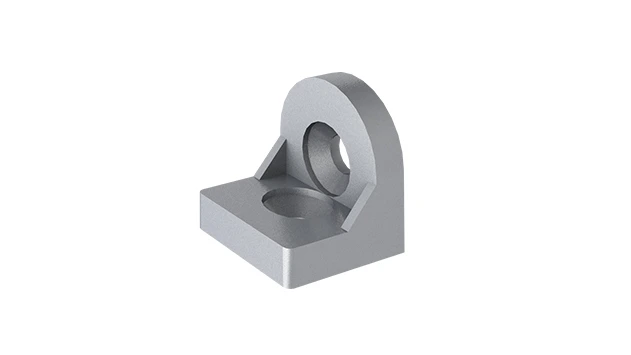
Turning Angle Code 4040
The turning angle aluminum profile connector provides a 90 degree hidden corner connection. 4040 it is means this size is used for 40 series aluminum profile.The corner code comes with set screws that allow for quick, easy connections.
The unsung hero of flexible manufacturing: How a small component transforms adaptability
In today's manufacturing landscape, the only constant is change. Consumer demands shift overnight, product lifecycles shrink from years to months, and global supply chains throw curveballs that require (production lines) to pivot at a moment's notice. In this high-stakes environment, rigidity is the enemy. Factories stuck with fixed, welded workstations, immovable material racks, and one-size-fits-all conveyor systems find themselves struggling to keep up—wasting time, money, and opportunities. But what if there was a way to build production lines that adapt as quickly as your business needs? Enter the turning angle code 4040 : a small, unassuming component that's quietly revolutionizing how manufacturers design, build, and reconfigure their operations.
This article isn't just about a piece of metal. It's about the power of modularity, the importance of flexibility, and how the right aluminum profile accessories can turn a static factory floor into a dynamic, responsive ecosystem. We'll dive into what makes the turning angle code 4040 so special, how it pairs with 4040 aluminum extrusion profiles to create sturdy yet adaptable structures, and why it's become a cornerstone of modern lean system implementations. Whether you're running a small workshop or a large-scale production facility, understanding this component could be the key to unlocking the agility your business needs to thrive.
The Problem with "Set It and Forget It" Production Lines
For decades, manufacturing relied on the "set it and forget it" approach. Factories invested in heavy, permanent infrastructure: steel workbenches bolted to the floor, conveyor belts welded into place, and material racks built to last decades. This made sense when products stayed the same for years, and production volumes were predictable. But today? That model is obsolete.
Consider a mid-sized electronics manufacturer we worked with last year. They produced smartphone chargers, and their production line was a maze of fixed workstations, each welded to the floor. When a new charger design required a taller workbench to accommodate larger components, they faced a dilemma: spend $20,000 on new welded workstations (and waste the old ones) or halt production for a week to cut and reweld the existing ones. Both options meant lost revenue. Sound familiar? This is the reality for countless manufacturers stuck with inflexible setups.
The costs of rigidity go beyond upfront expenses. There's the opportunity cost of missed deadlines when retooling takes weeks instead of days. The labor cost of hiring welders or contractors to modify fixed structures. The storage cost of keeping old, unused equipment because it can't be repurposed. And perhaps most damaging: the inability to experiment with new layouts or processes to optimize workflow—a critical part of lean system principles, where continuous improvement is the goal.
What manufacturers need is a way to build structures that are strong enough to rely on but flexible enough to reimagine . That's where modular aluminum profiles and accessories like the turning angle code 4040 come in.
What Is a Turning Angle Code 4040, Anyway?
Let's start with the basics. The turning angle code 4040 is a specialized connector designed to join 4040 aluminum extrusion profiles at (you guessed it) angles—most commonly 90 degrees, but often adjustable for other configurations. Think of it as a high-tech "corner bracket," but engineered for precision, durability, and speed.
Aluminum extrusion profiles, especially the 4040 series, are the backbone of modular manufacturing. Their defining feature? T-shaped slots running along their length, which allow accessories like angle codes, brackets, and shelves to slide in and lock into place with simple bolts or screws—no welding, drilling, or specialized tools required. The 4040 designation refers to their cross-section: 40mm by 40mm, a sweet spot that balances strength (they can support heavy loads) with versatility (they're small enough to build compact workstations but robust enough for material racks and conveyor systems).
Now, the turning angle code 4040 is the linchpin that holds these profiles together in dynamic, changeable ways. Unlike traditional corner brackets, which are often fixed in angle and require precise alignment, this little component is designed for adaptability. It typically features pre-drilled holes that align with the T-slots in 4040 profiles, allowing it to be secured with drop-in bolts or T-nuts. Loosen the bolts, adjust the angle or position of the profiles, retighten, and you're done—no fuss, no mess, no wasted time.
But it's not just about adjustability. The turning angle code 4040 is made from high-grade aluminum alloy (usually 6063-T5, the same as the profiles themselves), which means it's lightweight but incredibly strong. It resists corrosion, stands up to the wear and tear of factory environments (think oils, coolants, and constant handling), and won't rust or degrade over time. For manufacturers who need reliable structures that can be reconfigured repeatedly, this durability is non-negotiable.

How Turning Angle Code 4040 Enables Rapid Reconfiguration
So, what makes the turning angle code 4040 a game-changer for reconfigurable production lines? Let's break it down into three key benefits:
1. Assembly and Disassembly in Minutes, Not Days
Traditional welded joints take hours to set up and require skilled labor. Even bolted steel structures often need pre-drilled holes, which means if you want to move a bracket an inch to the left, you're drilling new holes and leaving unsightly (and useless) old ones. The turning angle code 4040 eliminates this hassle.
Here's how it works in practice: Suppose you need to build a workbench for a new assembly task. With 4040 profiles and turning angle codes, you can have the frame up in 15 minutes. Slide the angle codes into the T-slots of the vertical and horizontal profiles, align them at 90 degrees, insert T-nuts into the slots, and tighten the bolts with a hex key. No measuring twice, no drilling, no waiting for welds to cool. When the task changes and you need the workbench to be 6 inches taller? Loosen the bolts, slide the angle codes up, retighten, and you're ready to go. Total time: 5 minutes. Compare that to rebuilding a welded workbench, which would take a welder half a day and cost hundreds of dollars in labor.
2. Reusability: One Component, Endless Applications
Welded structures are one-and-done. Once you cut or weld a steel frame, it's permanently shaped—good luck repurposing it for a different project. The turning angle code 4040, though? It's infinitely reusable. That angle code you used to build a material rack last month? Take it apart, and use it to build a conveyor guardrail next week. The 4040 profiles? They're just as reusable. This isn't just eco-friendly (less waste!)—it's budget-friendly, too. Manufacturers report saving 30-50% on equipment costs over time by reusing modular components instead of buying new ones.
Consider a automotive parts supplier we consulted. They used to buy new steel racks every time they introduced a new part size. Now, with 4040 profiles and turning angle codes, they reconfigure existing racks by adjusting shelf heights, adding dividers, or even changing the rack's overall dimensions. In one case, they repurposed 12 old racks into 15 new ones for a fraction of the cost of buying new steel.
3. Precision and Stability, Even After Multiple Reconfigurations
You might be thinking: "If it's that easy to take apart and rebuild, does it stay stable? Won't the joints loosen over time?" It's a fair question—and one that kept many manufacturers skeptical of modular systems in the early days. But modern aluminum extrusion systems, paired with high-quality accessories like the turning angle code 4040, have solved this problem.
The secret is in the design. Turning angle codes are engineered to fit snugly into the T-slots of 4040 profiles, creating a tight, rattle-free connection. When secured with high-tension bolts (often M6 or M8), the joint can withstand significant weight and vibration—critical for production environments where workbenches hold heavy tools or conveyor systems move parts around the clock. And because the T-slots are standardized, every reconfiguration maintains the same precision. Unlike bolted steel, where holes can strip or aligning new brackets is guesswork, aluminum profiles and angle codes ensure that your workstation is level, square, and stable—no matter how many times you reconfigure it.

From Workbenches to Whole Lines: Real-World Applications
To truly appreciate the turning angle code 4040, let's look at how it's used in everyday manufacturing scenarios. These aren't theoretical—these are applications we've seen (and helped implement) in factories across industries, from electronics to automotive to pharmaceuticals.
Adaptive Workstations: More Than Just a Table
A workbench isn't just a surface to put tools on—it's the command center of an assembly line. With turning angle codes and 4040 profiles, workbenches become customizable ecosystems. Need to add a shelf for components? Slide angle codes into the vertical profiles, attach a horizontal profile, and bolt on a shelf. Want to mount a monitor arm for digital work instructions? Use angle codes to create a bracket that positions the monitor exactly where the operator needs it. Even ESD (electrostatic discharge) workstations—critical for electronics manufacturing—benefit: reconfigure the layout without compromising the static-dissipative properties of the bench, since the aluminum components (and ESD-safe accessories) maintain conductivity.
One medical device manufacturer we worked with uses turning angle codes to adjust workbench heights for operators of different statures. Instead of buying multiple fixed-height benches, they have a single set of 4040 profiles and angle codes. A quick adjustment with a hex key, and the bench fits the operator—not the other way around. Ergonomics improve, fatigue decreases, and productivity goes up. Simple, but powerful.
Material Racks That Grow with Your Inventory
Material storage is a constant headache for manufacturers. Seasonal demand spikes, new product launches, or shifts in supplier lead times can turn a perfectly organized rack system into a cluttered mess. With 4040 profiles and turning angle codes, racks adapt. Need an extra shelf? Add two vertical profiles and a horizontal one, secured with angle codes. Want to split a wide shelf into two narrow ones? insert angle codes to create dividers. Even heavy-duty racks, like those holding metal castings or large components, stay stable thanks to the turning angle code's secure grip on the profiles.
A food packaging plant we advised used this to great effect. During holiday seasons, their inventory of packaging materials triples. Instead of renting expensive temporary storage, they reconfigure their existing racks using turning angle codes—adding shelves, increasing height, or even combining smaller racks into larger ones. When the season ends, they break them down and store the profiles and angle codes compactly until next year. No waste, no extra cost, just flexibility.
Conveyor Systems That Bend (Literally) to Your Needs
Conveyors are the arteries of a production line, moving parts from station to station. But traditional belt or roller conveyors are fixed in place, making it hard to adjust workflows. Modular conveyor systems, built with 4040 profiles and turning angle codes, change that. Want to add a 45-degree turn to route parts to a new inspection station? Use angle codes to connect the straight and curved sections of roller track. Need to lower a conveyor by 12 inches to align with a new workstation? Adjust the height of the support legs using angle codes. Even small changes, like adding side guides to prevent parts from falling off, are easy with modular components.
A furniture manufacturer we worked with recently reconfigured their entire conveyor line in a weekend using turning angle codes. They needed to accommodate a new chair design with larger armrests, which required wider conveyor tracks. Instead of replacing the entire system, they swapped out the horizontal profiles for wider ones, reconnected them with angle codes, and added new roller tracks. Total cost: $1,200 in new profiles and accessories. Total time: 8 hours. The alternative? A new conveyor system costing $25,000 and a week of downtime.
Traditional Joints vs. Turning Angle Code 4040: A Head-to-Head Comparison
Still not convinced that a small angle code can make that much difference? Let's put it to the test. Below is a comparison of traditional joining methods vs. using turning angle code 4040 with 4040 aluminum profiles. The results might surprise you.
| Factor | Traditional Methods (Welded/Bolted Steel) | Turning Angle Code 4040 + 4040 Aluminum Profiles |
|---|---|---|
| Assembly Time | 4-8 hours for a simple workstation (requires welding/drilling) | 15-30 minutes for the same workstation (no special tools) |
| Disassembly Ease | Difficult; often requires cutting or grinding (damages components) | Easy; loosen bolts with a hex key, disassemble, and reuse |
| Reusability | Low; components are permanently modified | High; profiles and angle codes can be repurposed infinitely |
| Cost Over Time | High; frequent replacement of fixed structures | Low; initial investment pays off via reuse and reconfiguration |
| Precision | Depends on operator skill; welds can warp, bolts can strip | Consistent; T-slots and standardized angle codes ensure alignment |
| Flexibility | None; once built, structure is fixed | High; adjust height, width, angles, and layout in minutes |
| Weight | Heavy; steel is dense, increasing transport/installation costs | Lightweight; aluminum is 1/3 the weight of steel, easier to handle |
The data speaks for itself. While traditional methods might seem cheaper upfront, the long-term costs of rigidity—downtime, labor, replacement—quickly erase those savings. The turning angle code 4040, paired with 4040 profiles, isn't just a better way to build; it's a smarter way to invest in your factory's future.
Why It Matters for Lean Systems: Eliminating Waste, Boosting Efficiency
Lean manufacturing isn't just a buzzword—it's a philosophy centered on eliminating waste (muda) in all forms: waste of time, waste of materials, waste of motion, and yes, waste of inflexibility. The turning angle code 4040 aligns perfectly with lean principles, making it a favorite among manufacturers striving for continuous improvement.
Consider "motion waste"—the unnecessary movement of operators or materials. A fixed workstation might force an assembler to reach across a wide bench to grab tools, wasting seconds per cycle that add up to hours per week. With a modular workstation built using turning angle codes, you can reposition shelves, tool holders, and bins to keep everything within arm's reach, cutting motion waste by 30% or more. We saw this firsthand at a cosmetics manufacturer, where reconfiguring workbenches with angle codes reduced operator fatigue and increased output by 15%.
Then there's "waiting waste"—downtime caused by inflexible processes. When a production line can't adapt to a change in part size or assembly steps, operators wait while the line is retooled. With modular components, that wait time disappears. A electronics plant we worked with reduced changeover time between product models from 4 hours to 20 minutes by using turning angle codes to quickly reconfigure workstations and conveyor paths. That's 3.5 hours of extra production time per changeover—time that directly translates to more units shipped and more revenue.
Even "inventory waste" is reduced. Instead of stockpiling spare parts for fixed equipment, manufacturers can stock a few extra 4040 profiles and turning angle codes, which can be used to repair or reconfigure almost any modular structure. One automotive supplier cut its maintenance inventory costs by 40% after switching to modular systems—no more storing custom brackets or welded components that only fit one machine.
Choosing the Right Turning Angle Code: What to Look For
Not all turning angle codes are created equal. With so many suppliers and knockoffs on the market, it's easy to end up with a cheap, flimsy component that fails when you need it most. Here's what to look for when selecting turning angle codes for your production line:
Material Quality: Aluminum Alloy Matters
Opt for angle codes made from high-grade aluminum alloy, ideally 6063-T5 or 6061-T6. These alloys offer the perfect balance of strength, lightweight, and corrosion resistance—critical for factory environments where moisture, oils, or chemicals might be present. Avoid cheap zinc or plastic angle codes; they'll warp under load or crack after a few reconfigurations.
Precision Machining: Tight Tolerances = Stable Joints
The best turning angle codes are CNC-machined to tight tolerances (±0.1mm). This ensures they fit snugly into the T-slots of 4040 profiles, eliminating play or rattling. Run your finger along the edges—they should be smooth, with no burrs or rough spots that could damage the profile slots.
Load Capacity: Know Your Needs
Check the manufacturer's specs for load capacity. A typical turning angle code 4040 should support 50-100kg per joint when properly secured, but this varies by design. If you're building heavy-duty structures (like material racks for metal parts), opt for reinforced angle codes with thicker walls or additional bolt holes for extra stability.
Compatibility: Not All 4040 Profiles Are the Same
4040 profiles come in different slot sizes (e.g., 6mm, 8mm) and wall thicknesses. Ensure the turning angle code matches your profile's slot dimensions—an 8mm slot code won't work with a 6mm slot profile. Most reputable suppliers list compatible profile series, so double-check before buying.
The Future of Manufacturing: Small Components, Big Impact
As manufacturing hurtles toward Industry 4.0—with smart factories, IoT-connected machines, and AI-driven workflows—the need for flexible infrastructure will only grow. Smart sensors, collaborative robots (cobots), and digital twins (virtual replicas of production lines) all require physical environments that can adapt to new technologies. A welded workstation can't easily integrate a cobot arm or reposition a sensor; a modular workstation built with turning angle codes? It can do both in minutes.
We're already seeing this play out. A major aerospace manufacturer recently used 4040 profiles and turning angle codes to build a "digital twin-ready" production line. As they add new IoT sensors or adjust workflows based on data from their virtual twin, they reconfigure the physical line using angle codes—no need to rebuild from scratch. The result? They're testing new processes 3x faster than their competitors stuck with fixed lines.
Even sustainability, a growing priority for manufacturers, benefits from modular systems. By reusing components like turning angle codes and 4040 profiles, factories reduce waste and lower their carbon footprint. Aluminum is infinitely recyclable, and modular systems mean fewer raw materials are needed over time. It's a win for the planet and the bottom line.
Final Thoughts: The Power of Small Components
The turning angle code 4040 might not be the flashiest piece of equipment in your factory. It won't make headlines or impress visitors like a high-tech robot. But in the quiet, day-to-day work of keeping production lines agile, efficient, and adaptable, it's nothing short of revolutionary. It's a reminder that in manufacturing, as in life, the smallest components often have the biggest impact.
So, if your production line feels stuck in the past—if reconfiguring a workstation takes days instead of minutes, if you're wasting money on one-off equipment, if you're struggling to keep up with changing demands—maybe it's time to look beyond the big machines and focus on the building blocks. A few 4040 profiles, a handful of turning angle codes, and a hex key might be all it takes to transform your factory from rigid to responsive.
After all, in a world that moves at the speed of change, flexibility isn't just an advantage—it's survival. And the turning angle code 4040? It's the key to unlocking that flexibility.