- Company Articles
- Products and Technology
- Product knowledge
- Why Turning Angle Code 4040 Is Key for Agile Manufacturing in 3C Industry

Why Turning Angle Code 4040 Is Key for Agile Manufacturing in 3C Industry
Related Product
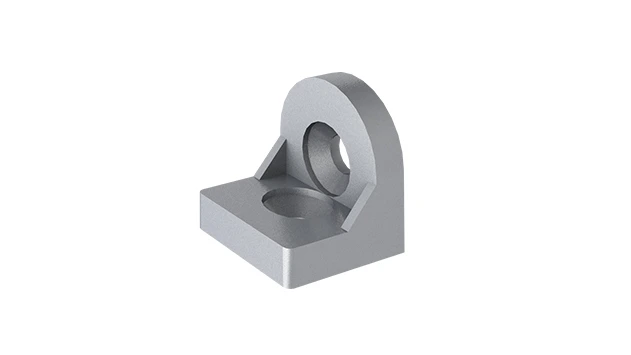
Turning Angle Code 4040
The turning angle aluminum profile connector provides a 90 degree hidden corner connection. 4040 it is means this size is used for 40 series aluminum profile.The corner code comes with set screws that allow for quick, easy connections.
In the fast-paced world of 3C manufacturing—where consumer electronics, communications devices, and computers evolve faster than ever—agility isn't just a buzzword; it's the difference between leading the market and playing catch-up. Imagine a scenario: a smartphone brand launches a new model with a slimmer design, requiring assembly lines to adjust for smaller components. A week later, a competitor releases a foldable tablet, and suddenly, your material racks need to accommodate larger, more fragile screens. In this environment, manufacturing setups that can't pivot quickly become bottlenecks, eating into profits and delaying product launches. This is where the yet powerful Turning Angle Code 4040 steps in, quietly revolutionizing how 3C factories build, adapt, and thrive.
The Backbone of Agile Manufacturing: Lean Systems
Before diving into the specifics of Turning Angle Code 4040, it's critical to understand the foundation it supports: lean systems. Lean manufacturing, rooted in eliminating waste and maximizing value, has long been the gold standard for 3C production. But lean isn't just about processes—it's about the physical infrastructure that brings those processes to life. Workbenches that need to reconfigure for new product sizes, material racks that adapt to shifting inventory needs, and roller tracks that keep components flowing smoothly across the factory floor—these are the building blocks of a lean system. And in today's 3C landscape, where product lifecycles shrink from years to months, even weeks, these building blocks can't be static.
Traditional manufacturing setups often rely on welded steel frames or bolted-together structures. They're sturdy, yes, but they're also rigid. Want to adjust a workbench height for a new assembly task? You'll need a welder or heavy tools, and the process could take days. Need to repurpose a material rack for a different component? Good luck—those bolts are rusted tight, and the frame might crack if you try to modify it. This rigidity is the antithesis of agility, and in 3C manufacturing, it's a liability.
Enter the Turning Angle Code 4040: What Is It?
At first glance, the Turning Angle Code 4040 might seem like just another metal bracket. But look closer, and you'll see why it's become a linchpin for agile 3C factories. Designed specifically for use with aluminum profiles—the lightweight, durable backbone of modern lean systems—this small but mighty component simplifies how factory infrastructure is assembled, disassembled, and reconfigured. Made from high-grade aluminum, it's engineered to connect aluminum profiles at precise angles (as the name suggests, often 90 degrees, though its versatility allows for adjustments) without the need for welding, drilling, or specialized tools. Think of it as a "universal adapter" for your factory's physical layout: snap it into the T-slots of aluminum profiles, tighten a few screws with a standard hex key, and you've got a rock-solid connection that can be taken apart and reused in minutes.
But what makes the Turning Angle Code 4040 so special? It's all in the details. Unlike traditional brackets that require pre-drilled holes or permanent fixes, this component leverages the T-slot design of aluminum profiles, which act like built-in tracks for fasteners. This means you can slide the angle code into position, align it exactly where you need it, and secure it—no measuring, no mistakes, no wasted time. For 3C manufacturers, where every minute of downtime translates to lost revenue, this speed is game-changing.

Why Turning Angle Code 4040 Stands Out in 3C Manufacturing
Speed of Assembly: From Days to Hours
In 3C manufacturing, time is currency. When a new product is greenlit, the race to market begins immediately. Traditional assembly line setups can take weeks: ordering custom steel frames, waiting for welders, testing stability. With Turning Angle Code 4040 and aluminum profiles, that timeline collapses. A team of two workers can assemble a basic workbench in under an hour, and a full material rack with multiple shelves? Maybe half a day. How? Because there's no welding, no cutting, no specialized labor. Just aluminum profiles, a handful of angle codes, and a hex key. For example, consider Workbench E (a single-deck, caster-free model common in 3C assembly lines). Using Turning Angle Code 4040, workers can adjust the height of the work surface by simply loosening the angle code, sliding the legs up or down the aluminum profile, and retightening—all in 10 minutes. Compare that to a traditional wooden or steel workbench, which would require sawing legs or hiring a carpenter. The difference isn't just convenience; it's the ability to start production days earlier.
Flexibility to Reconfigure: Adapt or Die
3C products are notoriously fickle. One quarter, you're assembling 5-inch smartphones; the next, 10-inch tablets. One month, your factory is churning out wireless earbuds with tiny batteries; the next, smartwatches with larger, more sensitive touchscreens. Each shift demands changes in workbench layout, material flow, and even ergonomics (workers assembling watches need lower surfaces than those building laptops). Turning Angle Code 4040 thrives here because it turns "permanent" setups into temporary, reconfigurable ones.
Take a real-world example: a 3C manufacturer in Shenzhen was tasked with producing a limited-edition gaming headset. The project required a small-batch assembly line—just 500 units—to test market demand. Instead of building a custom line from scratch, the team repurposed existing aluminum profiles and used Turning Angle Code 4040 to assemble a compact workbench with integrated roller tracks (to feed headset components smoothly). The line was up and running in 8 hours. When the headsets sold out faster than expected, they needed to scale to 5,000 units. With a few adjustments to the angle codes, they extended the workbench, added more roller track sections, and doubled capacity—all without buying new materials. Later, when the project ended, the same aluminum profiles and angle codes were disassembled and used to build a material rack for a new line of smart home sensors. This kind of flexibility isn't just cost-effective; it's essential for staying competitive in an industry where product trends shift overnight.
Durability with Lightweight Design: Strength Without the Bulk
3C components are often small but delicate—think microchips, camera lenses, or flexible OLED screens. Manufacturing setups need to be both strong enough to support heavy equipment (like precision screwdrivers or testing machines) and gentle enough to avoid damaging fragile parts. Aluminum profiles, paired with Turning Angle Code 4040, strike this balance perfectly. Aluminum is lightweight (about 1/3 the weight of steel), making it easy to move and reconfigure, but it's also surprisingly strong. The Turning Angle Code 4040, made from the same high-grade aluminum, reinforces connections without adding unnecessary bulk. This is critical for 3C factories, where floor space is limited and frequent reconfigurations mean moving racks and workbenches regularly. A steel rack might require a forklift to relocate; an aluminum profile rack with Turning Angle Code 4040? Two workers can carry it. And because aluminum resists rust and corrosion, it holds up to the wear and tear of daily use—no more replacing brackets every few months due to rusted hinges or bent steel.
Compatibility with Key Components: A Universal Connector
Agile manufacturing isn't about one "magic" part—it's about a system of parts working together seamlessly. Turning Angle Code 4040 excels here because it plays well with the other stars of 3C factory setups: roller tracks, casters, and aluminum profiles. Let's break it down:
- Aluminum Profiles: The backbone of the system. Turning Angle Code 4040 is designed specifically for 4040 aluminum profiles (a common size in 3C manufacturing), but it's also compatible with other profile sizes, like 3030 or 2020, with minor adjustments. This universality means factories don't need to stock multiple types of brackets—just one angle code works across most setups.
- Roller Tracks: Essential for moving materials from one station to the next. Whether you're using plastic roller track guide rails (yellow or grey, depending on your factory's color-coding system) or aluminum guide rails, Turning Angle Code 4040 can secure them to workbenches or racks. For example, Material Rack B (a 3-row, 3-floor model) often uses roller tracks to slide bins of components between shelves. With the angle code, workers can adjust the height of the roller track to match the height of adjacent workbenches, ensuring a smooth flow with no gaps.
- Casters: For mobile setups, like turnover trolleys or workbenches on wheels. Adding casters to a rack is as simple as attaching a caster mounting plate to the bottom of aluminum profile legs using—you guessed it—Turning Angle Code 4040. Need to move the trolley to a different part of the factory? Just lock the casters, and the angle code ensures the connection stays stable, even over uneven floors.

Real-World Impact: A Case Study in 3C Agility
Let's put this into context with a hypothetical but realistic scenario. A mid-sized 3C manufacturer specializes in contract assembly for brands like smartwatch and fitness tracker companies. In Q1, they're assembling 10,000 units of a basic fitness band with a plastic casing. Their assembly line uses Workbench E (single-deck, no casters) with aluminum profiles and Turning Angle Code 4040, paired with roller tracks to feed batteries and sensors to each station.
In Q2, a client approaches them with a premium smartwatch: it has a metal frame, a curved OLED screen, and requires more precise alignment. The assembly process is different—workers need magnifying lamps, and the workbench surface must be electrostatic discharge (ESD) safe to protect the sensitive screen. Instead of building a new line, the manufacturer reconfigures the existing Workbench E: using Turning Angle Code 4040, they add an ESD mat to the surface, adjust the height by 15cm to accommodate the magnifying lamps, and swap out the plastic roller tracks for stainless steel swivel roller balls (1 inch) to handle the heavier metal frames. The entire reconfiguration takes 4 hours, and production starts the same day.
By Q3, the client launches a limited-edition version of the smartwatch with a leather strap, requiring a separate packaging station. The manufacturer takes the aluminum profiles from the original fitness band line (now on pause), uses Turning Angle Code 4040 to assemble a small packaging workbench, and adds casters to make it mobile. When the limited run ends, the packaging station is disassembled, and the components are repurposed into a Material Rack B for storing spare parts. In total, the manufacturer saves over $50,000 in setup costs compared to building new lines from scratch—and they meet every client deadline with room to spare.
| Aspect | Traditional Steel/Wooden Setups | Turning Angle Code 4040 + Aluminum Profiles |
|---|---|---|
| Assembly Time (Basic Workbench) | 2–3 days (requires welding/cutting) | 1 hour (no special tools) |
| Reconfiguration Ease | Difficult (permanent welds/bolts) | Simple (loosen, adjust, retighten) |
| Weight (10ft Material Rack) | ~200 lbs (requires forklift) | ~60 lbs (movable by 2 workers) |
| Durability (5-Year Lifespan) | Prone to rust; bolts loosen over time | Corrosion-resistant; T-slot connections stay tight |
| Cost (Setup + Reconfiguration) | High (custom parts, labor, waste) | Low (reusable components, minimal labor) |
The Future of 3C Manufacturing: Beyond Static Setups
As 3C manufacturers push toward Industry 4.0—with smart factories, IoT-connected equipment, and AI-driven production planning—the need for agile physical infrastructure will only grow. Imagine a factory where assembly lines self-optimize based on real-time demand data: a sudden spike in wireless headphone orders triggers the system to reconfigure material racks automatically. While we're not quite there yet, Turning Angle Code 4040 is laying the groundwork. Its compatibility with modular components (like aluminum profile accessories, roller track connectors, and caster wheels) makes it easy to integrate with smart systems down the line. For example, adding sensors to a workbench built with Turning Angle Code 4040 is simple—just slide the sensor bracket into the T-slot of the aluminum profile and secure it with the angle code. No drilling, no rewiring, no downtime.
In a world where 3C products are defined by innovation, the tools that build them must innovate too. Turning Angle Code 4040 might not have the flash of a new smartphone or the hype of a foldable screen, but it's the unsung hero enabling that innovation. It's the difference between a factory that adapts and one that falls behind, between meeting deadlines and missing them, between profit and loss. For 3C manufacturers ready to embrace agility, the message is clear: invest in the infrastructure that can keep up—and that infrastructure starts with the Turning Angle Code 4040.
So the next time you unbox a sleek new gadget, take a moment to appreciate the invisible work happening behind the scenes. Chances are, somewhere in that factory, a Turning Angle Code 4040 is hard at work, making sure your device went from design to your hands faster than ever before. In the 3C industry, agility isn't just about speed—it's about survival. And with Turning Angle Code 4040, survival has never looked so manageable.