- Company Articles
- Products and Technology
- Product knowledge
- Why Turning Angle Code 4040 Is Preferred for Low-Volume, High-Mix Production

Why Turning Angle Code 4040 Is Preferred for Low-Volume, High-Mix Production
Related Product
Turning Angle Code 4040
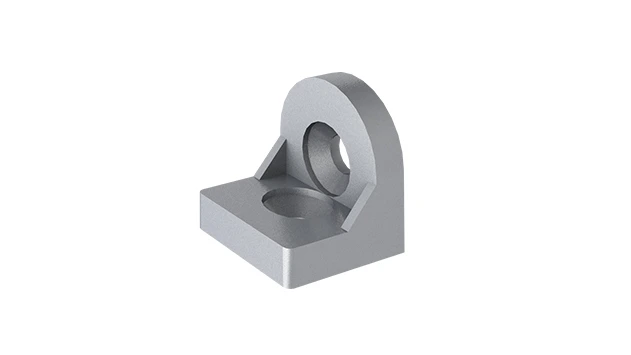
The turning angle aluminum profile connector provides a 90 degree hidden corner connection. 4040 it is means this size is used for 40 series aluminum profile.The corner code comes with set screws that allow for quick, easy connections.
Walk into any modern manufacturing facility these days, and you'll notice something different: it's not just about churning out thousands of identical widgets anymore. Today's factories—whether they're building custom medical devices, prototype aerospace parts, or limited-edition consumer electronics—are all about flexibility. They need to switch from making Product A to Product B (and then Product C, D, and E before lunch) without breaking a sweat. This is the world of low-volume, high-mix (LVHM) production, and it's reshaping how we think about manufacturing tools. And if there's one unsung hero in this shift, it's a small but mighty component called the Turning Angle Code 4040 .
You might be thinking, "A 'turning angle code'? That sounds like something out of a engineering textbook, not a game-changer." But stick with me. In this article, we're going to break down why this humble piece of hardware has become a go-to for manufacturers navigating the chaos of LVHM production. We'll start by understanding the unique challenges of making small batches of diverse products, then dive into what makes the Turning Angle Code 4040 so special, and finally, look at real-world examples of how it's transforming workshops from rigid assembly lines into adaptable, problem-solving machines.
The LVHM Production Landscape: Why "One Size Fits All" No Longer Cuts It
Let's start with the basics: What even is low-volume, high-mix production? Think of it this way: Mass production (the kind Henry Ford pioneered) is like baking 1,000 identical cookies—you set up your mixer, dough, and oven once, and crank them out. LVHM production is like baking 10 different types of cookies, each with unique ingredients and shapes, for 10 different customers. One day you're making gluten-free chocolate chip, the next vegan sugar cookies, then a batch of fancy macarons. Each requires different tools, pans, and workflows—and if you fumble the transition, you miss deadlines, waste ingredients, or worse, serve up a burnt mess.
In manufacturing terms, this translates to frequent retooling, changing assembly line layouts, and adjusting workstations to fit new product specs. Take a small electronics shop, for example. They might produce 50 units of a basic smartwatch one week, then switch to 20 units of a specialized fitness tracker the next—each with different circuit boards, battery sizes, and testing requirements. Their assembly benches need to hold different tools, parts bins, and testing jigs. If those benches are bolted down with fixed steel frames, reconfiguring them could take hours (or even days) of drilling, welding, and frustration. By the time they're ready, the customer has already moved on.
The stats back this up. According to a 2024 survey by the Manufacturing Technology Insights, 78% of small to mid-sized manufacturers cite "rapid reconfiguration of production setups" as their top challenge. Another 65% report losing 10+ hours per week to downtime caused by inflexible equipment. In LVHM, time is money—and rigid tools are the biggest time-wasters of all.
The Core Pain Points of LVHM Production:
•
Frequent retooling:
Switching between products requires changing workbench layouts, material racks, and assembly fixtures.
•
Wasted space and resources:
Dedicated equipment for each product clogs floors and drains budgets.
•
Slow time-to-market:
Rigid setups delay production starts, making it hard to meet tight customer deadlines.
•
Employee frustration:
Teams waste energy fighting tools that weren't designed for quick changes.
So, what's the solution? Manufacturers need tools that are as adaptable as their production schedules. Enter the world of modular manufacturing—systems built from interchangeable components that can be rearranged on the fly. And at the heart of many of these systems? Aluminum profiles and the connectors that hold them together. Which brings us to our star player: the Turning Angle Code 4040.
What Even Is a Turning Angle Code 4040? Let's Demystify the Jargon
Let's start with the basics: aluminum profile . If you've ever walked through a workshop or a warehouse, you've seen these—long, rectangular tubes (or "profiles") with T-shaped slots running along their length. They're lightweight, strong, and infinitely customizable, which is why they're the backbone of modular systems. Think of them as the "Lego bricks" of manufacturing: you can connect them to build workbenches, material racks, shelving, or even entire assembly lines.
Now, to build anything with aluminum profiles, you need connectors. And that's where the Turning Angle Code 4040 comes in. Put simply, it's a small, L-shaped bracket designed to join two aluminum profiles at (you guessed it) a 90-degree angle. But not just any profiles—specifically, 40x40mm profiles (hence the "4040" in its name). These are a common size in manufacturing, balancing strength (they can hold heavy tools or parts) with manageability (they're light enough to move without a forklift).
But here's what makes the Turning Angle Code 4040 special: it's not a permanent, "weld-and-forget" connector. Instead, it uses a simple but genius design: T-slot nuts and bolts. You slide a T-slot nut into the groove of an aluminum profile, position the Turning Angle Code 4040 over the nut, and tighten a bolt to lock it in place. Want to move the bracket? Loosen the bolt, slide the nut to a new position, and retighten. No drilling, no welding, no calling in a maintenance crew. It's like adjusting a office chair—simple, tool-free (or at least tool-minimal), and reversible.
To visualize: Imagine building a workbench. You start with four vertical aluminum profiles for legs. Then you attach horizontal profiles for the frame using Turning Angle Code 4040 brackets at each corner. If you later realize you need the bench to be 6 inches taller, you loosen the bolts, slide the brackets up the vertical profiles, and retighten. Done. If you need to add a shelf halfway up, you grab two more brackets, slide them onto the vertical profiles at the desired height, and attach a horizontal profile between them. In 10 minutes, you've transformed your bench—no saws, no sparks, no stress.

5 Features of Turning Angle Code 4040 That Solve LVHM Headaches
Okay, so it's a bracket that connects aluminum profiles. Big deal, right? What makes it so indispensable for low-volume, high-mix production? Let's break down its key features and how they directly address the pain points we talked about earlier.
1. Lightning-Fast Reconfiguration (Goodbye, Downtime)
In LVHM production, every minute of downtime costs money. If your team spends 2 hours reconfiguring a workbench between product runs, that's 2 hours they're not building products. The Turning Angle Code 4040 slashes that time to minutes. Since it's bolted (not welded) to the aluminum profile, you can adjust, add, or remove brackets with just a hex key or a screwdriver. A recent case study from a medical device manufacturer found that switching from welded steel frames to aluminum profiles with Turning Angle Code 4040 cut reconfiguration time by 85%—from 4 hours per workstation to just 30 minutes.
2. Reusability (Your Wallet Will Thank You)
In traditional manufacturing, if you need a new workstation, you build a new one from scratch—steel, wood, whatever. When the product line ends, that workstation becomes scrap metal or clutter. With the Turning Angle Code 4040 and aluminum profiles, nothing goes to waste. You can disassemble the workstation, take the brackets and profiles, and rebuild them into something else. A workbench today becomes a material rack tomorrow, which becomes a testing station next week. One manufacturer of custom automotive parts reported saving $12,000 in a year by reusing components instead of buying new ones.
3. Precision and Consistency (No More "Close Enough")
LVHM production often requires tight tolerances—especially in industries like aerospace or medical devices. A workbench that's off by half an inch can throw off an entire assembly process. The Turning Angle Code 4040 solves this with its standardized design. Since it's engineered to fit 40x40mm profiles exactly, every connection is precise. No more guessing where to drill holes or hoping a weld holds straight. This consistency reduces errors, rework, and the frustrating "why isn't this lining up?" moments that slow down production.
4. Strength Without the Bulk (Move It or Lose It)
You might think: "If it's so easy to move, it must be flimsy." Wrong. The Turning Angle Code 4040 is typically made from die-cast aluminum or steel, both of which are surprisingly strong. A single bracket can hold up to 200kg of static weight—more than enough for most LVHM needs (think: a shelf full of circuit boards, a tool chest, or a semi-assembled product). And since aluminum profiles themselves are rigid, the entire structure stays stable even when bumped or vibrated (common in busy workshops). One electronics manufacturer we spoke to uses Turning Angle Code 4040 to build mobile testing carts that hold 50kg of equipment—they roll smoothly across the shop floor and never wobble, even with sensitive circuit boards on board.
5. Compatibility (Mix, Match, and Conquer)
LVHM production isn't just about changing workbenches—it's about integrating new tools, conveyors, or storage solutions on the fly. The Turning Angle Code 4040 plays well with others. Since it's part of a modular system, it works seamlessly with other aluminum profile accessories: shelves, drawers, casters (so you can roll workstations around), or even specialized components like roller tracks for moving parts. Need to add a small conveyor to your assembly line? Attach it to your existing aluminum frame using a few Turning Angle Code 4040 brackets. Want to mount a monitor arm for digital work instructions? Same deal. It's like building with a universal set of blocks—everything clicks together.

Real-World Wins: How Manufacturers Are Using Turning Angle Code 4040
Enough theory—let's look at how real manufacturers are using the Turning Angle Code 4040 to thrive in LVHM production. These aren't just "success stories" from big corporations with unlimited budgets; they're small and mid-sized shops that needed a practical solution to a common problem.
Case Study 1: The Custom Guitar Amp Builder
A small shop in Nashville builds custom guitar amplifiers—everything from tiny 5-watt practice amps to beastly 100-watt tube amps for touring musicians. Each amp has unique dimensions, controls, and wiring, so their assembly process changes constantly. Before switching to aluminum profiles and Turning Angle Code 4040, they used wooden workbenches with fixed shelves and tool hooks. "If we got an order for a amp with a different chassis size, we'd have to drill new holes in the bench to mount the jigs," says the shop foreman. "That took hours, and the benches started looking like Swiss cheese after a few months. We even had to replace a bench once because the wood split from too many holes."
Today, they've replaced all their wooden benches with aluminum profile frames built using Turning Angle Code 4040 brackets. "Now, when a new amp design comes in, we loosen a few bolts, slide the brackets to adjust the shelf heights, and add or remove crossbars to fit the chassis," the foreman explains. "Last week, we went from building a 12-inch-wide combo amp to a 24-inch-wide head cabinet in 20 minutes. The guys on the floor love it—no more waiting around for me to grab the drill press." They've also repurposed old bench components into mobile parts carts, saving $800 on new equipment.
Case Study 2: The Medical Device Prototyper
A medical device company in Minnesota specializes in prototyping surgical tools—think scalpels, forceps, and specialized implants. They often produce just 5-10 units of a prototype before iterating based on feedback from surgeons. Each prototype requires unique testing setups: pressure tests, durability trials, and ergonomic evaluations. "We used to build custom test fixtures out of steel for each prototype," says their lead engineer. "It was ridiculous—we'd spend 2 days welding a fixture, test the prototype for 2 hours, then throw the fixture away when the design changed. It was a massive waste of time and materials."
Now, they use aluminum profiles and Turning Angle Code 4040 brackets to build modular test rigs. "We have a set of standard profiles and brackets that we can rearrange like Tinkertoys," the engineer says. "Need to test a new forceps design? We build a quick frame with the Turning Angle Code 4040, mount a force gauge, and we're testing in an hour. When the design changes, we take it apart and reuse the parts for the next prototype. We've cut our prototyping timeline by 40% and reduced material waste by 60%. Plus, the surgeons who visit our lab love how clean and adaptable the setups are—it makes us look more professional."
Turning Angle Code 4040 vs. the Alternatives: Why It's Not Just "Another Bracket"
You might be wondering: Are there other ways to connect aluminum profiles? Absolutely. So why is the Turning Angle Code 4040 the go-to for LVHM production? Let's compare it to three common alternatives to see why it stands out.
| Feature | Turning Angle Code 4040 | Welded Steel Brackets | Plastic Snap-On Connectors | Traditional Bolt-and-Nut Plates |
|---|---|---|---|---|
| Installation Time | 5-10 minutes per joint | 1-2 hours per joint (welding + cooling) | 2-3 minutes per joint | 15-20 minutes per joint (drilling holes + bolting) |
| Reusability | Unlimited (can be moved/reused indefinitely) | None (permanent welds) | Limited (plastic weakens with repeated use) | Low (holes are drilled into profiles, limiting future adjustments) |
| Load Capacity | Up to 200kg per joint | High (but fixed; can't adjust for heavier loads later) | Low (up to 50kg; risky for heavy tools) | Medium (100-150kg, but depends on hole placement) |
| Cost Over Time | Low (one-time purchase, reusable) | High (welding labor + new materials for each setup) | Medium (cheap upfront, but need replacement often) | High (drilling labor + wasted profiles with unused holes) |
| Flexibility | High (adjustable angles, positions, and configurations) | None (fixed angles and positions) | Medium (limited to specific angles/sizes) | Low (fixed positions based on drilled holes) |
The table tells the story: While plastic connectors are faster to install, they're too weak for heavy LVHM tasks. Welded brackets are strong but permanent, making them useless for frequent changes. Bolt-and-nut plates require drilling, which ruins profiles for future use. The Turning Angle Code 4040 strikes the perfect balance: strong enough for industrial use, flexible enough for quick changes, and reusable enough to save money over time.
The Bottom Line: Why Turning Angle Code 4040 Is a Lean Manufacturing MVP
At the end of the day, low-volume, high-mix production is all about lean manufacturing —eliminating waste, optimizing time, and adapting quickly to change. And the Turning Angle Code 4040 is a lean tool through and through. It reduces waste by reusing materials, cuts down on downtime (a form of "time waste"), and empowers teams to adapt without waiting for external help.
But beyond the lean principles, it's about mindset. LVHM production isn't just a manufacturing strategy—it's a promise to customers: "We can build what you need, when you need it, without cutting corners." To keep that promise, manufacturers need tools that are as agile as their ambitions. The Turning Angle Code 4040 might be small, but it's a big step toward keeping that promise.
So the next time you walk through a workshop and see a sleek, adjustable workbench or a modular assembly line, take a closer look. Chances are, there's a Turning Angle Code 4040 holding it all together—quietly, reliably, and ready for whatever the next production run throws at it. And in the world of low-volume, high-mix manufacturing, that's not just a bracket. That's a game-changer.