- Company Articles
- Products and Technology
- Product knowledge
- Why Two Way Lean Pipe Joint is Essential for Modular Production Systems

Why Two Way Lean Pipe Joint is Essential for Modular Production Systems
Related Product
Two Way Lean Pipe Joint
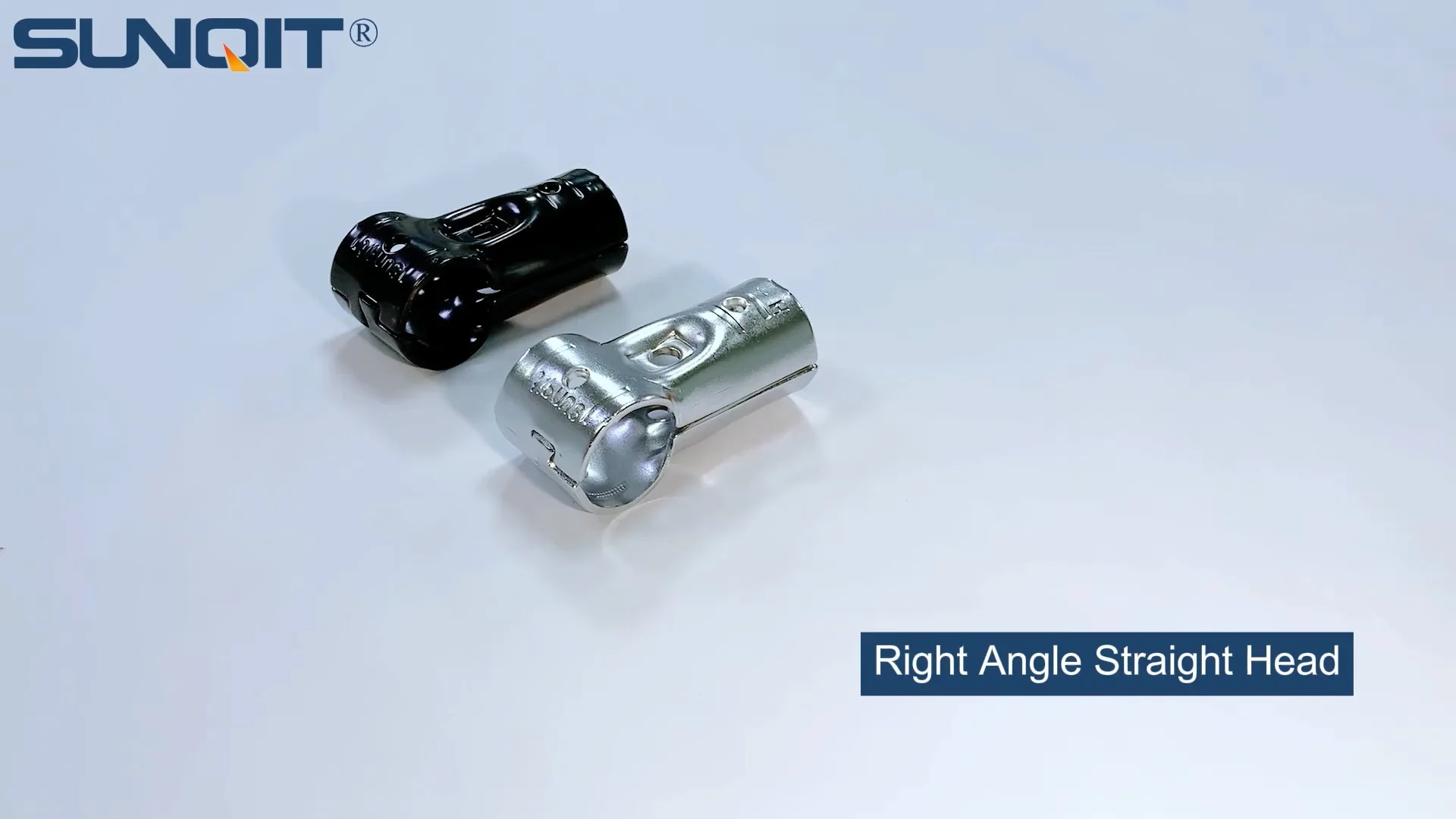
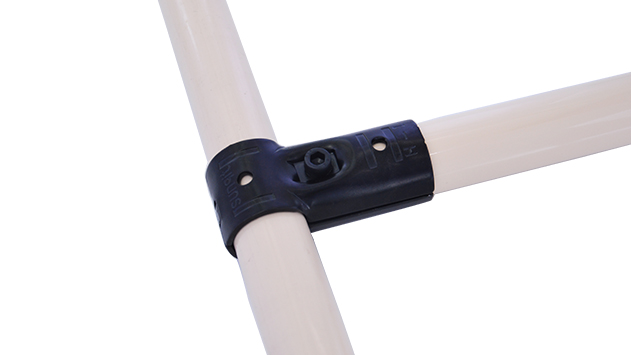
Two way lean pipe joint for 2 pcs 28MM lean pipe connection in straight angle, which used widely in workbench, flow rack, hand trolley frame connection.
In today's fast-paced manufacturing world, the ability to adapt is everything. Factories no longer thrive on rigid, one-size-fits-all production lines—instead, they need setups that can pivot, grow, and evolve as quickly as customer demands change. This is where modular production systems step in, and at the heart of these systems lies a small but mighty component: the two way lean pipe joint. Often overlooked, this unassuming connector is the unsung hero that turns a collection of pipes and accessories into a flexible, efficient, and future-ready workspace. Let's dive into why the two way lean pipe joint isn't just a part of modular production—it's the foundation that makes it all possible.
What Makes Modular Production Systems Non-Negotiable Today?
Before we zoom in on the two way lean pipe joint, let's first understand why modular production has become the gold standard across industries. Traditional manufacturing setups were built for mass production—think long assembly lines bolted to the floor, custom machinery that couldn't be repurposed, and changeovers that took days (or even weeks). But in 2025, customers want personalized products, shorter lead times, and smaller batch sizes. A smartphone manufacturer might need to switch from assembling 5-inch screens to 6-inch screens overnight; a medical device company might ramp up production of a new tool to meet a sudden surge in demand. Rigid systems can't keep up.
Modular production systems solve this by using interchangeable components that can be rearranged, added to, or repurposed with minimal effort. They're like the ultimate LEGO set for factories: same basic pieces, endless configurations. And at the core of these systems? Lean pipe systems—flexible frameworks built from pipes, joints, and accessories that can be assembled into workbenches, flow racks, conveyors, and more. But here's the thing: none of this flexibility would matter if the joints holding the pipes together were stiff or limited in function. That's where the two way lean pipe joint comes into play.
Lean Pipe Systems 101: The Building Blocks of Flexibility
Lean pipe systems (sometimes called "kitchen tube" systems, thanks to their early use in Japanese factories to organize kitchens) are designed around the principles of lean manufacturing: eliminate waste, optimize flow, and empower teams to improve processes continuously. At their simplest, they consist of three key components: pipes, joints, and accessories.
- Pipes: Typically made of steel with a plastic coating (PE coated lean pipe) or aluminum (aluminum lean pipe), these provide the structural backbone. They're lightweight, durable, and easy to cut to custom lengths.
- Joints: The connectors that hold pipes together. This is where the magic happens—joints determine how pipes can be arranged (straight lines, angles, branches) and how easy it is to reconfigure them.
- Accessories: Roller tracks, casters, workbench tops, and shelf brackets that turn the basic pipe-and-joint framework into functional tools like flow racks or mobile trolleys.
While pipes and accessories get a lot of attention, joints are the critical link. A poorly designed joint can make a system wobbly, hard to adjust, or even unsafe. On the flip side, a well-designed joint—like the two way lean pipe joint—turns a static structure into a dynamic, adaptable one.
The Two Way Lean Pipe Joint: Small Connector, Big Impact
So, what exactly is a two way lean pipe joint? At first glance, it might look like a simple metal piece with two openings, but its design is deceptively clever. Most two way joints are made of die-cast aluminum or chrome-plated steel, giving them strength without adding unnecessary weight. They're engineered to connect two lean pipes at various angles—usually 0° (straight line) or 90° (perpendicular)—and some models even allow for minor adjustments in between, depending on the design.
What really sets the two way joint apart is its simplicity. Unlike welded connections or bolted brackets, most two way joints use a friction-based or twist-lock mechanism. You slide the pipe into the joint, tighten a setscrew or twist a collar, and it's locked in place. No welding, no drilling, no specialized tools. Need to reconfigure? Loosen the screw, adjust the angle, and retighten. It's that easy.
The Hidden Benefits of Two Way Joints
Beyond their obvious role as connectors, two way lean pipe joints offer a host of benefits that make modular production systems viable:
- Flexibility Without Compromise: Whether you're building a straight line of pipe for a flow rack or a right-angle corner for a workbench, the two way joint adapts. This means one joint can replace multiple specialized brackets, reducing the number of parts you need to stock.
- Speed of Assembly: In a traditional setup, changing a workbench layout might involve hiring a welder or waiting for custom parts. With two way joints, a team of two can disassemble and rebuild a workbench in under an hour. This cuts downtime dramatically—critical for meeting tight production deadlines.
- Cost-Effectiveness: Two way joints are affordable, reusable, and durable. Unlike custom metal brackets that get tossed when a setup changes, these joints can be repurposed indefinitely. Over time, this reduces both upfront and long-term costs.
- Compatibility: Most two way joints are designed to work with standard lean pipe sizes (typically 28mm or 30mm diameter) and a wide range of accessories. This means you can mix and match components from different suppliers (hello, lean pipe supplier flexibility!) without worrying about compatibility issues.

From Workbenches to Flow Racks: How Two Way Joints Power Daily Operations
To truly grasp the importance of two way lean pipe joints, let's look at how they're used in everyday manufacturing scenarios. These examples show why they're not just "nice to have"—they're essential.
Case 1: The Adjustable Workbench
Imagine a small electronics manufacturer that assembles circuit boards. Their team of technicians needs workbenches that are sturdy enough to hold tools and components but adjustable to accommodate different tasks (e.g., soldering, testing, packaging). With two way lean pipe joints, they can build a basic workbench frame using vertical pipes for legs and horizontal pipes for the frame. Need to add a shelf halfway up? Attach two way joints to the vertical pipes, add horizontal pipes, and lay a plywood top. Want to adjust the height? Swap out the vertical pipes for longer ones and reposition the joints. No need to buy a new workbench—just reconfigure the existing one.
Even better, if the company expands into larger products, they can extend the workbench by adding more pipes and two way joints. The joints ensure the extended frame remains stable, even with added weight. This adaptability is why workbenches built with two way joints are a staple in lean environments.
Case 2: The Dynamic Flow Rack
Flow racks are critical for just-in-time production—they allow materials to "flow" from the back to the front, ensuring workers always have what they need at their fingertips. A typical flow rack has multiple levels of roller tracks, where bins or boxes glide forward as items are used. The frame of this rack is built with lean pipes, and two way joints are key here.
Each level of the flow rack requires horizontal pipes to support the roller tracks. Two way joints connect these horizontal pipes to the vertical uprights, ensuring the tracks are level and secure. If the production line switches to larger bins, the team can adjust the height of the roller tracks by moving the two way joints up or down the vertical pipes. No need to buy a new rack—just reposition the joints. This flexibility keeps material flow smooth, even as product sizes or demand change.
Case 3: The Mobile Turnover Trolley
Turnover trolleys are used to transport materials between workstations, and they need to be lightweight, maneuverable, and strong. Two way joints shine here because they allow for a lightweight frame that still supports heavy loads. For example, a trolley might use vertical pipes for the corners (connected with two way joints at the top and bottom), horizontal pipes for the shelves, and casters (another key accessory!) for mobility. If the trolley needs to carry taller items, the team can add an extra shelf by inserting two way joints at the desired height. It's simple, fast, and avoids the cost of buying a new trolley.

How Two Way Joints Stack Up: A Quick Comparison
To understand why two way lean pipe joints are so versatile, let's compare them to other common joint types. The table below highlights their unique advantages:
| Joint Type | Design | Primary Use | Flexibility Level | Best For |
|---|---|---|---|---|
| Two Way Lean Pipe Joint | Connects 2 pipes; adjustable angles (0°–90°) | Straight lines, right angles, basic structures | High (one joint, multiple configurations) | Workbenches, flow racks, trolleys—most modular setups |
| Three Way Lean Pipe Joint | Connects 3 pipes; fixed angles (e.g., T-shape, Y-shape) | Branching structures, adding shelves mid-frame | Medium (specialized for branches) | Multi-level racks, complex workstations |
| 90° Straight Lean Pipe Joint | Fixed 90° angle; no adjustment | Right-angle corners only | Low (single use case) | Static frames where angles never change |
| 45° Fixed Lean Pipe Joint | Fixed 45° angle; no adjustment | Diagonal supports, sloped surfaces | Low (single angle only) | Incline/decline flow racks, specialized structures |
As you can see, while other joints have their uses, the two way lean pipe joint offers the broadest flexibility. It's the Swiss Army knife of lean pipe components—always useful, no matter the task.
Why Two Way Joints Are Non-Negotiable for Lean Manufacturing
Lean manufacturing isn't just about cutting costs—it's about creating a culture of continuous improvement. Teams need to be able to experiment, iterate, and refine processes without being held back by rigid tools. The two way lean pipe joint enables this by making experimentation low-risk and low-cost.
Consider this: A team notices that materials are piling up at a workstation because the flow rack is too short. With two way joints, they can extend the rack by adding a few pipes and joints during a lunch break. If the new setup doesn't work, they can revert it just as quickly. This kind of "test and learn" approach is impossible with fixed systems, where changes require approval, budget, and downtime.
Two way joints also support key lean principles like muda (waste) reduction. By eliminating the need for custom parts, reducing setup time, and enabling reuse, they cut down on material waste, labor waste, and inventory waste. For example, a factory that switches to two way joints might reduce its inventory of specialized brackets by 70%—freeing up storage space and capital.
Perhaps most importantly, two way joints empower frontline workers. In many factories, the people closest to the work know best how to improve it—but they often lack the tools to make changes. With two way joints, a technician can adjust their workbench height to reduce strain, or a team leader can rearrange a flow rack to speed up material delivery—no manager approval required. This sense of ownership drives engagement and innovation, which are critical for long-term success.
Looking Ahead: Two Way Joints in the Age of Smart Factories
As manufacturing moves toward Industry 4.0 and smart factories, the role of modular systems will only grow. Factories are increasingly using IoT sensors, automated guided vehicles (AGVs), and data analytics to optimize production. In this environment, flexibility isn't just about physical adaptability—it's about integrating with digital tools.
Two way lean pipe joints are well-positioned to play a role here. For example, some lean pipe suppliers are already developing joints with built-in mounting points for sensors that track material flow or monitor equipment vibration. Others are experimenting with lightweight, high-strength materials (like carbon fiber-reinforced composites) to make joints even more durable while reducing weight—ideal for AGV-compatible trolleys.
There's also a trend toward "plug-and-play" modularity, where entire production cells can be reconfigured with minimal effort. Two way joints will be central to this, as they allow for quick changes that align with digital production schedules. Imagine a factory where a production manager uses a tablet to adjust a workflow, and the team uses two way joints to reconfigure the physical setup in minutes—all while the system updates in real time.
The Bottom Line: Small Joint, Big Impact
Modular production systems are no longer a luxury—they're a necessity for manufacturers looking to stay competitive. And at the heart of these systems is the two way lean pipe joint. It's a small component, but its ability to adapt, speed up assembly, reduce costs, and empower teams makes it essential.
Whether you're building a simple workbench or a complex flow rack system, choosing the right joint matters. The two way lean pipe joint isn't just a connector—it's a tool for innovation, a driver of efficiency, and a cornerstone of lean manufacturing. So the next time you walk through a factory and see a sleek, adaptable workspace, take a closer look. Chances are, two way joints are holding it all together—quietly, reliably, and essential.