- Company Articles
- Products and Technology
- Product knowledge
- Workbench E Customization with Five Way Straight Lean Pipe Joints

Workbench E Customization with Five Way Straight Lean Pipe Joints
Related Product
Five Way Straight Lean Pipe Joint
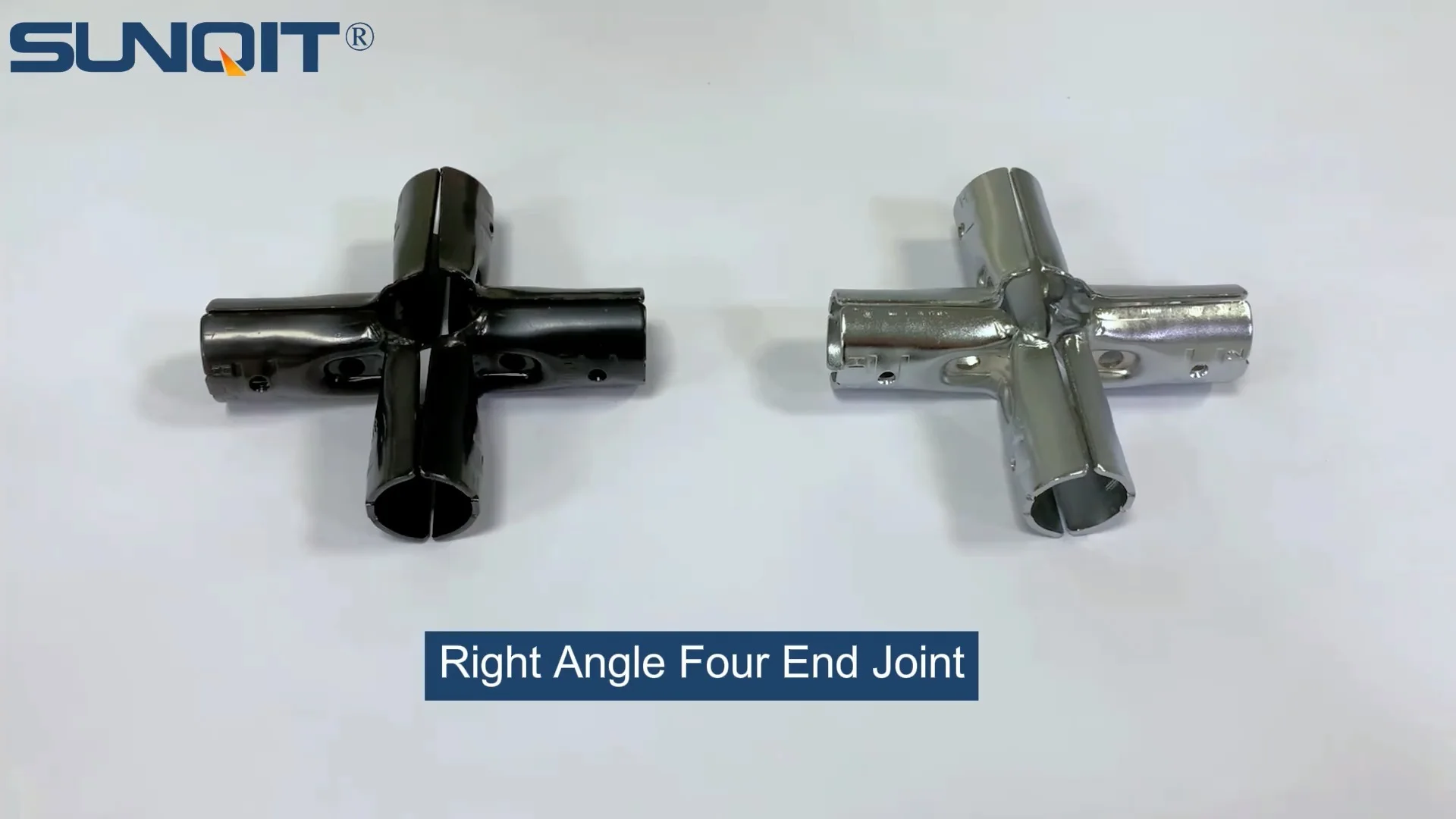
Five way straight lean pipe joint, for 5 pcs 28mm lean pipe connect in straight angle,which used widely in workbench, flow rack, hand trolley frame connection.
Every morning, Rajiv walks into his family-run automotive parts workshop in Bangalore and pauses by the assembly area. The workbench there—Workbench E, a single-deck model without casters—has been a reliable workhorse for years. But lately, it's been feeling more like a roadblock than a helper. Some days, the team assembles small gears; other days, they're packaging larger components. The fixed shelves are either crammed with tools or frustratingly empty, and the lack of flexibility means someone's always rearranging items mid-shift. "We need something that bends, not breaks, when our needs change," Rajiv mutters, staring at the rigid steel frame. If you've ever felt that same frustration—stuck with a workspace that can't keep up—you're not alone. Today, we're diving into how Workbench E can transform from a static surface into a dynamic, adaptable hub using one game-changing component: Five Way Straight Lean Pipe Joints. Paired with aluminum profile, flow rack integration, and even caster wheels, this customization isn't just about tools and parts—it's about building a workspace that works for your team, not against them.
First Things First: What Makes Workbench E a Starting Point (Not a Finish Line)?
Let's start with the basics: Workbench E (single deck-without caster) is designed to be a blank canvas. At its core, it's a sturdy, single-level platform—no wheels, no frills—built to handle the daily grind of assembly lines, repair shops, or small-scale manufacturing. Its simplicity is its strength: it's affordable, easy to install, and fits into tight spaces. But that simplicity can also be its weakness. Standard workbenches are like off-the-rack clothes: they fit "okay" for most people, but rarely perfectly. Rajiv's team, for example, needed a shelf above the work surface for frequently used wrenches, a side rack for incoming parts, and a way to roll the bench closer to the testing station on busy days. The standard Workbench E couldn't do any of that. That's where customization comes in—and Five Way Straight Lean Pipe Joints are the key to unlocking that flexibility.
Five Way Straight Lean Pipe Joints: The "Swiss Army Knife" of Workbench Customization
If Workbench E is the canvas, Five Way Straight Lean Pipe Joints are the paintbrushes—versatile, precise, and ready to turn your vision into reality. Let's break down what these joints are: imagine a small, robust connector (often made of durable metal like chrome-plated steel) with five ports, each designed to fit lean pipes or aluminum profiles. Unlike basic two-way or three-way joints, these five-way wonders let you branch out in multiple directions—up, down, left, right, and straight ahead—all from a single connection point. Think of it as a traffic intersection for your workbench's structure: instead of forcing pipes into a rigid grid, you can create angles, add shelves, or attach accessories exactly where you need them.
Rajiv's team first encountered these joints while researching "lean manufacturing" solutions—methods focused on reducing waste and boosting efficiency. "I saw a photo online of a workshop with a workbench that had a shelf, a tool holder, and a small flow rack all connected," he recalls. "The guy in the video said the secret was these five-way joints. I ordered a handful to test, and within an hour, we'd built a side shelf that clipped right onto our Workbench E. No welding, no drilling—just hand-tightened bolts. It felt like magic."
But why five-way, specifically? Let's say you want to add a vertical shelf above the workbench for bins of screws, a horizontal bar on the left for hanging cables, and a diagonal brace on the right to support a flow rack. A standard three-way joint would force you to use multiple connectors, creating a clunky, unstable structure. Five-way joints simplify that: one joint, multiple directions, and a cleaner, sturdier build. Plus, they're reusable—if you later decide the shelf should be higher, just loosen the bolts, reposition the pipes, and tighten. No need to buy new parts; just reimagine the layout.

Aluminum Profile: Lightweight Strength for Your Custom Build
Joints are only as good as the pipes they connect, and here's where aluminum profile shines. Unlike heavy steel pipes, aluminum profile is lightweight (so your team can rearrange components without straining) but surprisingly strong—able to support tools, parts, and even small machinery without bending. It's also resistant to rust, which is a big win in workshops where oil, coolant, or humidity are part of the daily routine. Rajiv's team opted for 4040 aluminum profile—a common, versatile size that balances rigidity and flexibility—for their Workbench E upgrade. "We could carry the 6-foot lengths ourselves, no forklift needed," Rajiv says. "And when we cut them to size with a simple hacksaw, the clean edges meant no sharp burrs to snag gloves or wires."
Another perk of aluminum profile? Its T-slot design. Those grooves running along the length of the profile aren't just for show—they let you slide in accessories like brackets, shelves, or tool hooks without drilling holes. Pair that with Five Way Straight Lean Pipe Joints, and you've got a system where every part clicks together like a high-quality puzzle. For example, Rajiv's team added a small shelf above the workbench by connecting two vertical aluminum profiles to the workbench legs using five-way joints, then spanning a horizontal profile between them. They slid plastic bin holders into the T-slots, and suddenly, screws and washers were within arm's reach. "Before, we were wasting 10 minutes an hour just walking to the parts cabinet," Rajiv notes. "Now, everything's right there."

From Static to Dynamic: Adding Flow Racks for Smoother Material Movement
A workbench isn't just about the surface you work on—it's about the flow of materials around it. Rajiv's "aha" moment came when he realized: why carry parts from the storage rack to the workbench when the parts could roll there themselves? Enter flow rack integration. Flow racks use gravity to move materials from the back (where you load them) to the front (where you use them), reducing bending, reaching, and wasted time. By connecting a small flow rack to Workbench E, the team turned their static workspace into a mini assembly line.
Here's how they did it: using aluminum profile and five-way joints, they built a three-tier flow rack (similar to Material Rack B, but scaled down) attached to the right side of Workbench E. The bottom tier holds incoming raw parts, the middle tier holds partially assembled components, and the top tier is for finished items ready for inspection. They used plastic roller track guide rails (yellow, to match their workshop's color-coding system) to line the shelves, so bins glide smoothly without sticking. "Now, when Priya finishes assembling a gear, she pushes the bin to the end of the flow rack, and it rolls right to the testing station—no carrying," Rajiv explains. "It's like adding a little conveyor belt without the conveyor belt price tag."
The key here was the five-way joints: they connected the flow rack's vertical supports to both the workbench legs and the floor, ensuring stability even when the racks are fully loaded. "We tested it with 20kg bins—no wobbling, no creaking," Rajiv says. "The joints distribute the weight evenly, so the whole structure feels solid, not like a rickety DIY project."

When "Stuck" Isn't an Option: Adding Caster Wheels for Mobility
Remember Rajiv's wish to roll the workbench closer to the testing station? Workbench E (without casters) is designed to stay put, but with the right modifications, it can become mobile. Caster wheels—specifically, flat swivel castor wheels with brakes—turned the static bench into a workspace that moves when needed. "Some days, we need the bench by the window for natural light; other days, we push it against the wall to make space for large orders," Rajiv says. "Casters made that possible without dismantling anything."
Installing casters required a bit of planning. First, they added a sturdy base frame using aluminum profile and five-way joints to reinforce the workbench legs (you don't want the bench to tip when moving!). Then, they attached the caster wheels to the base frame using castor installation bases—small metal plates that bolt onto the aluminum profile. They chose swivel wheels with brakes so the bench can rotate 360 degrees (great for tight spaces) and lock in place when in use. "The first time we pushed it, everyone cheered," Rajiv laughs. "It's the little things, right? Being able to move your workspace instead of moving around it."
The Customization Process: Step-by-Step (No Engineering Degree Required)
You might be thinking, "This sounds great, but I'm not a DIY expert—can I really pull this off?" Rajiv's team had zero prior experience with lean pipe systems, and they did it in a weekend. Here's a simplified version of their process to show you how accessible it is:
- Map Your Needs: Rajiv and his team listed their pain points: lack of storage, inefficient material flow, and no mobility. They sketched a rough layout (on a piece of scrap paper!) showing where they wanted shelves, flow racks, and casters.
- Gather Components: They ordered Workbench E, Five Way Straight Lean Pipe Joints (chrome-plated for durability), 4040 aluminum profile, plastic roller track guide rails (yellow), flat swivel castor wheels with brakes, and basic tools (a wrench, hacksaw, and measuring tape).
- Build the Base: They reinforced Workbench E's legs with aluminum profile and five-way joints to create a stable frame for the casters.
- Add Storage: Using vertical and horizontal aluminum profiles connected by five-way joints, they built a two-shelf unit above the workbench surface, adding T-slot bin holders for tools.
- Install Flow Racks: They attached a small flow rack to the side of the bench using aluminum profile and roller track guide rails, ensuring it sloped slightly downward for gravity flow.
- Attach Casters: They bolted the caster wheels to the base frame, tested the brakes, and gave the bench a test roll.
- Tweak and Adjust: The first shelf was too high, so they loosened the five-way joints, lowered the profile, and retightened—done in 10 minutes.
"The hardest part was cutting the aluminum profile to the right length, but even that was easy with a hacksaw and a measuring tape," Rajiv says. "And if we mess up? The joints are reusable—we can just take it apart and try again. No waste, no stress."
The Results: More Than Just a Workbench—A Happier, More Productive Team
Three months after customization, Rajiv's workshop looks—and feels—different. The once-cluttered workbench is now organized: tools in T-slot bins above, parts rolling in on the flow rack, and the bench itself parked exactly where it's needed each day. But the real change is in the team's morale and productivity. "We used to have two people dedicated to fetching parts; now, one person can handle it," Rajiv says. "Assembly time per unit is down by 15%, and we've had zero errors from misplaced tools. Best of all, when we got a rush order for a new gear type last month, we reconfigured the shelves and flow rack in an hour—no panic, no delays."
Priya, the lead assembler, sums it up: "It sounds silly, but having a workspace that fits how I work makes me feel valued. I'm not fighting the bench anymore—I'm working with it. That makes a big difference at 3 PM on a Friday."
Is Customization Right for You? Ask Yourself These Questions
Workbench E customization with Five Way Straight Lean Pipe Joints isn't a one-size-fits-all solution—but it's a great fit if you answer "yes" to any of these:
- Do your team's tasks change regularly (e.g., assembling different products, switching between repair and assembly)?
- Are you wasting time walking to fetch tools or parts from storage?
- Is your current workbench taking up space when it's not in use?
- Do you avoid upgrading your workspace because you think it's too expensive or complicated?
If you nodded along, you're likely a candidate. The beauty of this system is its scalability: start small (add a shelf with five-way joints), then expand (add flow racks or casters) as your needs grow. You don't have to overhaul everything at once.
The Bottom Line: Your Workspace Should Adapt to You
Rajiv's workshop story isn't unique. Across industries, small and medium businesses are realizing that rigid, one-size-fits-all workspaces are holding them back. Workbench E, when paired with Five Way Straight Lean Pipe Joints, aluminum profile, flow racks, and caster wheels, becomes more than a table—it's a tool for growth. It's about investing in flexibility, not just furniture. It's about saying, "Our team deserves a workspace that works as hard as they do."
So, the next time you look at your own static workbench, remember: it doesn't have to stay that way. With a few key components and a little creativity, you can build a workspace that bends, adapts, and grows—just like your business. After all, the best workbenches aren't the ones that never change; they're the ones that change with you.
Standard vs. Customized: A Quick Comparison
| Feature | Standard Workbench E | Customized Workbench E | Key Benefit |
|---|---|---|---|
| Storage | No built-in shelves | Adjustable shelves via aluminum profile and five-way joints | Tools/parts within arm's reach |
| Material Flow | Manual carrying required | Integrated flow rack with roller rails | Reduced bending/reaching; faster assembly |
| Mobility | Fixed in place | Caster wheels with brakes | Workspace moves to where it's needed |
| Adaptability | Rigid, one-size-fits-all | Reconfigurable with modular components | Easily adjusts to new tasks/products |