- Company Articles
- Products and Technology
- Product knowledge
- Workbench E Design: Integrating Parallel Lean Pipe Joints for Flexibility

Workbench E Design: Integrating Parallel Lean Pipe Joints for Flexibility
Related Product
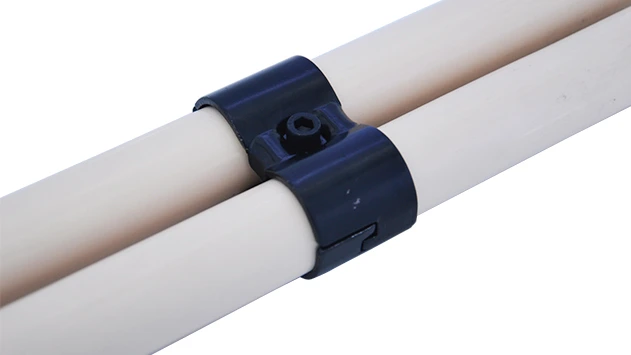
Parallel Lean Pipe Joint
Parallel lean pipe joint used for 2 pcs 28MM lean pipe connection in parallel direction to enhance frame structure, usually for heavy payload requirement for workbench. flow rack, hand trolley.
Walk into any manufacturing facility, and you'll quickly notice the unsung heroes of the production floor: workbenches. They're where components become products, where operators spend hours assembling, testing, and refining. But for too long, these workhorses have been stuck in a rigid, one-size-fits-all mold. A workbench built for a specific task five years ago might struggle to keep up with today's faster, more varied production demands. Reconfiguring it often means calling in welders, buying new parts, or worse—letting inefficiencies pile up. That's where Workbench E (single deck-without caster) steps in, and its secret weapon? Parallel lean pipe joints. Let's dive into how this design is redefining flexibility on the factory floor.
Meet Workbench E: More Than Just a Table
At first glance, Workbench E might look like any other workbench. It has a flat surface, sturdy legs, and a simple, no-nonsense design. But that's where the similarities end. Unlike traditional workbenches welded from steel or bolted together with fixed brackets, Workbench E is built on a foundation of modularity. Its defining feature? A single deck (no casters, though you can add them later) supported by a frame constructed with lean pipe and accessories—specifically, parallel lean pipe joints. This isn't just about saving space or cutting costs; it's about creating a workspace that adapts as quickly as your production needs do.
Let's start with the basics: Workbench E's core structure uses aluminum profile, a material chosen for its winning combination of strength and lightness. Aluminum profiles are corrosion-resistant, easy to clean, and—crucially—compatible with a wide range of lean pipe accessories. This means the frame isn't just a static skeleton; it's a canvas for customization. And at the heart of that customization are the parallel lean pipe joints.
Parallel Lean Pipe Joints: The Flexibility Engine
If Workbench E is the body, parallel lean pipe joints are its joints—literally. These small but mighty connectors are designed to link lean pipes (or aluminum profiles) in parallel configurations, allowing for smooth adjustments without the need for welding, drilling, or heavy tools. Traditional workbench joints are fixed: once you bolt two pipes at a 90-degree angle, that angle is permanent. Want to raise the work surface by 6 inches? You'd need to disassemble the entire frame and rebuild it. With parallel lean pipe joints, it's a different story.
Imagine this: You're running a small electronics assembly line, and your team needs to switch from assembling smartphones (requiring a lower work surface for work) to tablets (needing a higher surface to accommodate larger screens). With a traditional workbench, this might take a full day of downtime. With Workbench E, an operator can loosen the parallel lean pipe joints, adjust the height of the legs, retighten the joints, and be back to work in under an hour. No special tools, no waiting for maintenance—just quick, intuitive reconfiguration.
But parallel lean pipe joints aren't just about height. They enable adjustments in width, depth, and even the addition of accessories. Need to add a side shelf for tools? Slide a few parallel joints along the frame, attach a new aluminum profile, and you're done. Want to angle the work surface slightly to reduce operator fatigue? The joints pivot smoothly, locking into place with a simple twist of a lever. This level of flexibility turns Workbench E from a "one-task" tool into a multi-functional hub that can handle everything from light assembly to heavy-duty testing.

Aluminum Profile: The Backbone of Durability
You can't talk about Workbench E's flexibility without mentioning its material: aluminum profile. While some workbenches use steel pipes (heavy, prone to rust) or plastic (light but flimsy), aluminum profile strikes the perfect balance. It's strong enough to support heavy tools, components, and even operator weight (up to 500kg on a standard Workbench E), yet light enough that reconfiguring the frame doesn't require a team of people.
Aluminum's natural resistance to corrosion is another win, especially in environments where spills (like coolants or cleaning agents) are common. Unlike steel, which needs frequent painting or coating to prevent rust, aluminum profiles maintain their integrity with minimal maintenance. And because they're extruded (shaped by forcing molten aluminum through a die), they come in consistent, precise shapes—think T-slots and grooves—that make attaching lean pipe accessories a breeze. A parallel lean pipe joint slides into a T-slot, locks with a bolt, and stays put, even under vibration or heavy use.
But perhaps the biggest advantage of aluminum profile is its compatibility with the broader ecosystem of lean pipe and accessories. From roller track to tool holders, from cable management clips to ESD (electrostatic discharge) mats, almost any accessory designed for lean manufacturing can be attached to Workbench E's aluminum frame. This means you're not just buying a workbench—you're investing in a system that grows with your needs.

Roller Track: Adding Flow to the Workflow
Flexibility isn't just about adjusting the workbench itself; it's about how the workbench interacts with the rest of the production line. That's where roller track comes in. Roller track—those simple, wheeled rails that let materials glide smoothly from one station to the next—is a staple of lean manufacturing, and Workbench E integrates with it seamlessly, thanks to its modular design.
Here's how it works: Using parallel lean pipe joints, you can mount roller track directly to the side or end of Workbench E. Suddenly, what was once a standalone work surface becomes part of a continuous material flow system. For example, in an automotive parts plant, Workbench E might be used to assemble brake components. A roller track attached to the back of the bench could deliver raw parts from a nearby storage rack, while another roller track on the front could send finished components to the next station. Operators no longer waste time walking to fetch parts; instead, materials come to them.
Roller track also reduces physical strain. Pushing a heavy bin of components across a rough surface can lead to fatigue or injury, but roller track's smooth-rolling wheels cut down on effort. And because Workbench E's aluminum profile frame is customizable, you can angle the roller track slightly downward to let gravity do the work—no motors, no electricity, just simple, efficient flow. It's a small addition, but it adds up to big gains in productivity over a shift.
Real-World Impact: How Workbench E Transforms Production Lines
Let's put this all together with a real-world example. Consider a mid-sized electronics manufacturer producing smart home devices. A few years ago, their assembly line relied on traditional wooden workbenches. When they launched a new product line (smaller sensors), they realized the old benches were too high, too wide, and lacked storage for the tiny components needed. Reconfiguring them meant hiring a carpenter to cut new legs and add shelves—costing time and money, and leaving the benches still rigid for future changes.
Then they switched to Workbench E. Here's what happened next: Using parallel lean pipe joints, they adjusted the bench height from 90cm to 75cm in under an hour. They added aluminum profile shelves above the deck (using more parallel joints) to hold component bins. On the side, they mounted a roller track to connect the workbench to a turnover trolley, so operators could slide sensor casings directly into place. Six months later, when they scaled up production, they added a second deck to Workbench E (again, using parallel joints) to separate incoming and outgoing parts. No new workbench, no downtime—just a few hours of reconfiguration.
The result? A 30% reduction in assembly time per unit, fewer operator complaints about fatigue, and the ability to pivot quickly when a new product variant launched. As the plant manager put it: "Workbench E doesn't just hold our tools—it holds our ability to adapt."
Traditional vs. Workbench E: A Side-by-Side Comparison
| Feature | Traditional Workbench | Workbench E (with Parallel Lean Pipe Joints) |
|---|---|---|
| Flexibility | Fixed design; reconfiguration requires disassembly/welding | Modular; adjust height, width, and accessories in hours with parallel joints |
| Assembly Time | 8–12 hours (welding, painting, final setup) | 2–3 hours (no welding; click-and-lock with lean pipe accessories) |
| Durability | Steel/wood prone to rust/warping; lifespan ~5 years | Aluminum profile resists corrosion; lifespan ~10+ years (with part replacements) |
| Cost Over Time | High (frequent replacements, downtime for reconfigurations) | Low (reusable components, minimal downtime, adaptable to new tasks) |
| Customization | Limited (must be built for specific tasks upfront) | Unlimited (add roller track, tool holders, ESD mats, or casters later) |
Future-Proofing Your Workspace
In manufacturing, the only constant is change. New products, new regulations, new technologies—your workspace needs to keep up. Workbench E, with its parallel lean pipe joints, aluminum profile frame, and compatibility with roller track, isn't just a solution for today; it's an investment in tomorrow.
Take casters, for example. Workbench E comes without casters initially, but because its frame uses standard lean pipe accessories, you can add them later. If your team decides they need a mobile workbench for line-side repairs, simply swap out the fixed feet for caster wheels (attached via parallel joints) and you're mobile. Or say you start producing sensitive electronics that require ESD protection: ESD mats and grounding clips can be attached to the aluminum profile frame without modifying the bench itself.
Sustainability is another angle. Aluminum is 100% recyclable, and lean pipe accessories are reusable. When you no longer need Workbench E, you can disassemble it, return the aluminum profile for recycling, and reuse the parallel joints in a new setup. Compare that to a traditional wooden workbench, which ends up in a landfill when it's obsolete. In an era where sustainability matters as much as efficiency, this is a big win.
Conclusion: Workbench E as a Catalyst for Lean Manufacturing
Workbench E (single deck-without caster) isn't just a workbench. It's a statement about how manufacturing should operate: flexibly, efficiently, and with the future in mind. By integrating parallel lean pipe joints, aluminum profile, and roller track, it transforms static workspaces into dynamic hubs that adapt to change, reduce waste, and empower operators to do their best work.
In a world where production lines can't afford downtime, where customization is the norm, and where every inch of space counts, Workbench E stands out. It's proof that the smallest design choices—like using a parallel lean pipe joint instead of a fixed bracket—can have a ripple effect across an entire facility, boosting productivity, reducing costs, and making work feel less like a chore and more like a collaboration between people and their tools.
So the next time you walk onto your production floor, take a look at your workbenches. Are they holding you back, or are they helping you move forward? With Workbench E, the answer is clear: forward—one parallel lean pipe joint at a time.