- Company Articles
- Products and Technology
- Product knowledge
- Workbench E Ergonomics: Five Way Straight Lean Pipe Joint Adjustment Features

Workbench E Ergonomics: Five Way Straight Lean Pipe Joint Adjustment Features
Related Product
Five Way Straight Lean Pipe Joint
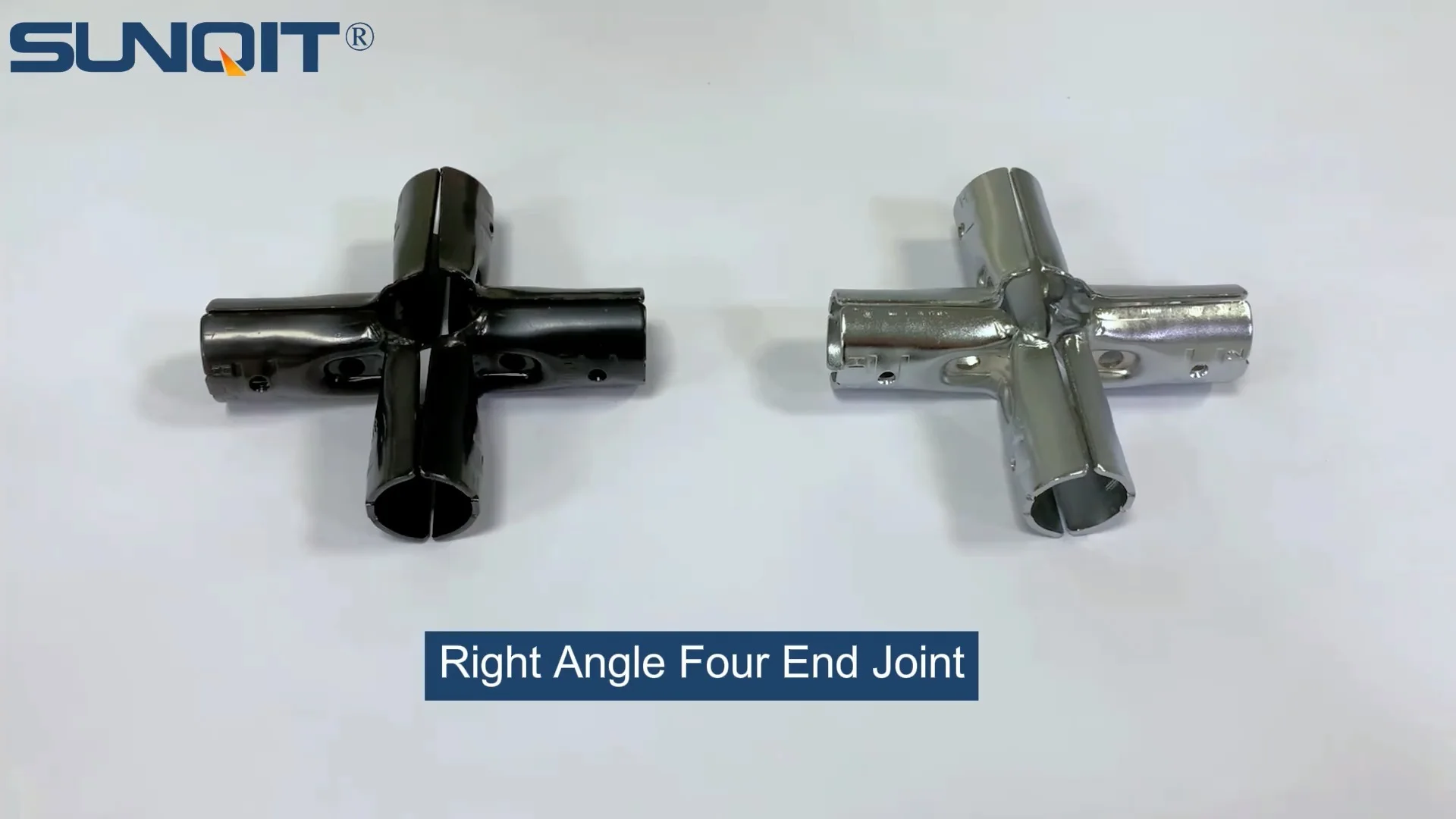
Five way straight lean pipe joint, for 5 pcs 28mm lean pipe connect in straight angle,which used widely in workbench, flow rack, hand trolley frame connection.
In the fast-paced world of manufacturing and assembly, where every second counts and precision is non-negotiable, the workbench isn't just a piece of furniture—it's the heartbeat of productivity. A well-designed workbench doesn't just hold tools and components; it adapts to the people using it, reduces strain, and keeps operations flowing smoothly. That's where Workbench E comes in. Built as a single-deck, caster-free solution, this workbench is more than meets the eye. What truly sets it apart, though, is its integration with the five way straight lean pipe joint—a small but mighty component that transforms rigidity into flexibility, and static setups into ergonomic powerhouses. Let's dive into how this unassuming joint elevates Workbench E from a basic surface to a tool that works with your team, not against them.
Understanding Workbench E: More Than Just a Tabletop
Before we zoom in on the star of the show—the five way straight lean pipe joint—let's get to know Workbench E itself. Designed as a "single deck-without caster" solution, it's built for stability and adaptability. Unlike bulky, fixed workbenches that lock teams into one way of working, Workbench E embraces the principles of lean manufacturing: modularity, simplicity, and user-centricity. Its frame, often crafted from durable aluminum profile, strikes the perfect balance between strength and lightweight maneuverability (even without casters, it's easy to reposition when needed with a little help). The single deck, typically made from a smooth, scratch-resistant material, provides ample space for assembly tasks, while the absence of casters ensures it stays firmly planted during precision work—no unwanted shifting mid-assembly.
But what really makes Workbench E shine isn't just its sturdy build or spacious deck. It's the way every component, from the aluminum profile frame to the smallest lean pipe accessories, is engineered to adapt. In manufacturing, no two days are the same: one morning, a team might be assembling small electronic components; by afternoon, they're handling larger, bulkier parts. A static workbench would force workers to contort their bodies, reach awkwardly, or waste time reconfiguring setups. Workbench E? It bends to the task at hand. And that flexibility starts with the joints that hold its frame together—specifically, the five way straight lean pipe joint.
Lean Pipe Joints 101: The Backbone of Modular Workbenches
To appreciate the five way straight lean pipe joint, let's first understand the role of lean pipe joints in modular workbench design. Lean pipe systems (often called "flexible pipe systems") revolutionized manufacturing by replacing rigid, custom-built structures with modular setups made from lightweight pipes and connectors. These systems are built on the idea that workspaces should evolve with the needs of the team—not the other way around. At the core of this adaptability are the joints: small, often metal connectors that link pipes together at various angles, allowing users to build, modify, and expand structures with minimal tools and downtime.
Most lean pipe joints are designed for specific configurations: three-way joints for T-shaped connections, four-way joints for cross-sections, or simple two-way joints for straight lines. These work well for basic setups, but they have limits. If you need to add a shelf, a tool holder, and a side rail all at the same junction, a standard joint might require complicated workarounds—extra pipes, multiple connectors, or awkward angles that disrupt workflow. That's where the five way straight lean pipe joint steps in. As the name suggests, it's a single connector that allows five pipes to meet at a straight junction, opening up a world of configuration possibilities without the hassle of stacking multiple joints.

Five Way Straight Lean Pipe Joint: Design and Functionality
Let's take a closer look at the five way straight lean pipe joint. At first glance, it might seem like a simple metal piece with holes, but its design is surprisingly clever. Picture a central hub with five evenly spaced ports—four radiating outward at 90-degree angles (like the points of a compass: north, south, east, west) and one straight through the center (front to back). This "straight" design means the central port aligns perfectly with the length of the pipe, allowing for a continuous, unbroken line, while the four side ports branch off perpendicularly. Each port is threaded or lined with a grip mechanism that securely holds a lean pipe in place, often with a setscrew or locking nut to prevent slippage during use.
Materials matter here, too. Many five way straight lean pipe joints are chrome-plated, which isn't just for looks. Chrome adds a layer of corrosion resistance, ensuring the joint holds up in busy workshops where oil, grease, or moisture might be present. Underneath the chrome, the core is often made from high-strength steel, giving it the durability to support heavy loads—think shelves stacked with tools, or side rails holding bulky components. Even with five pipes attached, this joint doesn't wobble or flex, a critical feature for maintaining stability during precision work.

Adjustment Features: The Key to Ergonomics
Now, let's get to the heart of the matter: the adjustment features that make the five way straight lean pipe joint a game-changer for Workbench E ergonomics. Ergonomics, at its core, is about designing tools and workspaces that fit the human body, reducing strain and fatigue. For a workbench, that means adjustable height, customizable accessory placement, and the ability to adapt to different tasks and worker heights. The five way joint delivers on all three, thanks to four key features:
1. Tool-Free Height Adjustment
One of the biggest ergonomic pain points in workbenches is fixed height. A workbench that's too low forces workers to hunch over, straining their backs and shoulders; too high, and they're reaching upward, risking neck strain. The five way joint solves this with tool-free height adjustment. Unlike traditional joints that require wrenches or screwdrivers to loosen and reposition, many five way joints use quick-release levers or knurled locking nuts. A worker can simply twist the nut by hand, slide the pipe up or down to the desired height, and retighten—no tools, no downtime. This is a game-changer for teams with workers of varying heights, or for tasks that demand different heights (e.g., standing vs. seated work).
For example, imagine a team assembling smartphones in the morning (seated work, lower bench height) and then switching to larger appliance parts in the afternoon (standing work, higher bench height). With the five way joint, adjusting Workbench E's height takes less than a minute per side—no need to disassemble the entire frame or call in maintenance. Workers stay focused, and the workbench adapts to the task, not the other way around.
2. Multi-Axis Accessory Placement
Ergonomics isn't just about the bench itself—it's about where tools and materials are placed. A worker shouldn't have to stretch across the deck to grab a screwdriver or bend down to reach a bin of components. The five way joint's five ports allow for multi-axis accessory placement, meaning tools, bins, and guides can be attached exactly where the worker needs them.
Let's break it down: The central port runs straight through the joint, so it can be used for the main frame pipe (the vertical support that determines the bench height). The four side ports? They're perfect for adding accessories. Need a tool holder on the left side? Attach a short pipe to the west port and add a hook. A parts bin on the right? East port. A overhead light to illuminate the deck? North port, extending upward. A footrest bar for seated work? South port, angled slightly outward. The possibilities are endless, and because each accessory is attached via a pipe, they can be adjusted independently—no need to move the entire bench to reposition one tool.
3. Micro-Adjustment for Precision
In assembly work, even small misalignments can cause big problems. A shelf that's tilted by just a few degrees might make components slide off; a tool rail that's slightly too far might force a worker to overreach. The five way joint addresses this with micro-adjustment capabilities. Many joints feature threaded ports with fine-pitch threads, allowing for tiny, incremental adjustments. For example, if a side shelf is slightly uneven, a worker can loosen the setscrew, twist the pipe a fraction of an inch, and retighten—no guesswork, no "close enough." This level of precision ensures that every accessory is aligned exactly where it needs to be, reducing frustration and improving workflow.
4. Compatibility with Lean Pipe Accessories
A joint is only as useful as the accessories it can support, and the five way straight lean pipe joint plays well with a wide range of lean pipe accessories. From roller tracks that let parts glide smoothly across the deck to tool hooks, bin holders, and even monitor mounts, the joint's standard pipe size (often 28mm or 30mm) means it can connect to almost any accessory in the lean pipe ecosystem. This compatibility amplifies its ergonomic benefits: add a monitor arm at eye level to reduce neck strain, attach a cup holder to keep water within reach, or mount a small fan to keep workers cool during hot summer days. The joint doesn't just adjust the bench—it turns it into a personalized workstation.
Real-World Example: Electronics Assembly Line
Let's walk through a typical day for Maria, an electronics assembler using Workbench E with a five way straight lean pipe joint. In the morning, she's assembling circuit boards, which requires seated work. She adjusts the bench height using the joint's quick-release lever, lowering it to 30 inches—perfect for her seated posture. She attaches a small parts bin to the right-side port of the joint, positioning it at waist height so she can grab resistors and capacitors without leaning. A tool hook on the left port holds her soldering iron at arm level, reducing shoulder strain.
By afternoon, Maria switches to testing larger components, which requires standing. She adjusts the bench height again, raising it to 38 inches. She detaches the parts bin and replaces it with a roller track (via the same right-side port), allowing components to slide toward her as she works. She adds a small shelf to the top port of the joint, placing a magnifying lamp there to illuminate the testing area. By the end of the day, Maria's back isn't aching, her shoulders aren't tense, and she's met her production quota—all because her workbench adapted to her, not the other way around.

Comparing Joints: Why Five Way Beats Traditional Connectors
To truly appreciate the five way straight lean pipe joint, it helps to compare it with other common joints. Let's look at how it stacks up against three-way and four-way joints in terms of adjustability, ergonomics, and workflow efficiency.
| Feature | Three-Way Joint | Four-Way Joint | Five Way Straight Lean Pipe Joint |
|---|---|---|---|
| Number of Ports | 3 (T-shaped or Y-shaped) | 4 (cross-shaped) | 5 (4 side ports + 1 central straight port) |
| Height Adjustment | Limited (requires multiple joints for height changes) | Basic (can adjust two axes, but limited accessory space) | Full (tool-free, independent adjustment of all ports) |
| Accessory Placement | Minimal (only 3 accessories per joint) | Moderate (4 accessories, but may require overlapping pipes) | Maximal (5 accessories, no overlapping; dedicated ports for each) |
| Ergonomic Flexibility | Low (static setups; hard to adapt to different tasks) | Medium (some adaptability, but limited by port count) | High (adapts to seated/standing work, varying worker heights, task changes) |
| Stability with Load | Good (but limited by port count) | Better (more ports, but may wobble with heavy loads) | Best (central straight port adds rigidity; chrome-steel build supports heavy loads) |
As the table shows, the five way joint outperforms traditional options in almost every category that matters for ergonomics and workflow. Its five ports eliminate the need for overlapping pipes or multiple joints, reducing clutter and simplifying adjustments. The central straight port adds structural rigidity, ensuring stability even with heavy accessories. And its tool-free adjustment means workers can reconfigure their workspaces in minutes, not hours.
Integration with Aluminum Profile: A Match Made in Manufacturing Heaven
Workbench E's frame is often built from aluminum profile, a material known for its strength, lightweight, and versatility. Aluminum profile features T-slots along its length, which allow for easy attachment of accessories using bolts or brackets. When paired with the five way straight lean pipe joint, this combination creates a workspace that's both rigid and adaptable. The aluminum profile provides a sturdy base, while the lean pipe joint adds modular flexibility. For example, the joint can connect the aluminum profile frame to a lean pipe shelf, or to a side rail made from aluminum guide rail. This hybrid approach lets manufacturers leverage the best of both worlds: the durability of aluminum profile for the main structure, and the quick adjustability of lean pipe for accessories.
Aluminum profile also helps with weight management. Even with multiple five way joints and accessories attached, the overall weight of Workbench E remains manageable, making it easier to reposition (when needed) and reducing strain on floors in high-traffic areas. Plus, aluminum's natural resistance to corrosion complements the chrome-plated joint, ensuring the entire setup lasts for years—even in harsh workshop environments.
Durability and Maintenance: Built to Last
Ergonomics isn't just about adjustability—it's about reliability. A joint that breaks or jams after a few weeks of use isn't just frustrating; it can derail production and lead to injuries if a shelf suddenly collapses. The five way straight lean pipe joint is built to withstand the rigors of daily manufacturing use. Its chrome-plated steel construction resists rust and wear, while the precision-machined ports ensure a tight, wobble-free fit with pipes. Even with daily adjustments, the locking mechanisms (setscrews, quick-release levers) maintain their grip, so workers don't have to waste time retightening loose joints.
Maintenance is minimal, too. A quick wipe with a damp cloth removes dust and grease, and if a setscrew starts to stick, a drop of lubricating oil usually does the trick. Unlike welded joints, which require professional repair if they fail, the five way joint is a modular component—if it ever does wear out (a rare occurrence), it can be swapped out in minutes with a new one, minimizing downtime.
Conclusion: Workbench E and the Five Way Joint—Ergonomics Redefined
In the world of manufacturing, where every detail impacts productivity and worker well-being, the five way straight lean pipe joint transforms Workbench E from a simple work surface into a dynamic, ergonomic tool. Its adjustable height, multi-axis accessory placement, and tool-free micro-adjustments empower workers to create a workspace that fits their bodies and their tasks, reducing strain, boosting morale, and increasing efficiency. When paired with durable aluminum profile and a wide range of lean pipe accessories, it's a solution that grows with your team, adapts to changing needs, and stands the test of time.
So, if you're looking to upgrade your assembly line or workshop, don't overlook the power of a well-designed joint. The five way straight lean pipe joint might be small, but its impact on ergonomics and workflow is huge. After all, in manufacturing, the best workbenches aren't just built—they're built to adapt. And with Workbench E and its five way joint, adaptation has never been easier.