- Company Articles
- Products and Technology
- Product knowledge
- Workbench E Essentials: Why Adjustable Leveling Feet Are Critical

Workbench E Essentials: Why Adjustable Leveling Feet Are Critical
Related Product
Adjustable Leveling Feet
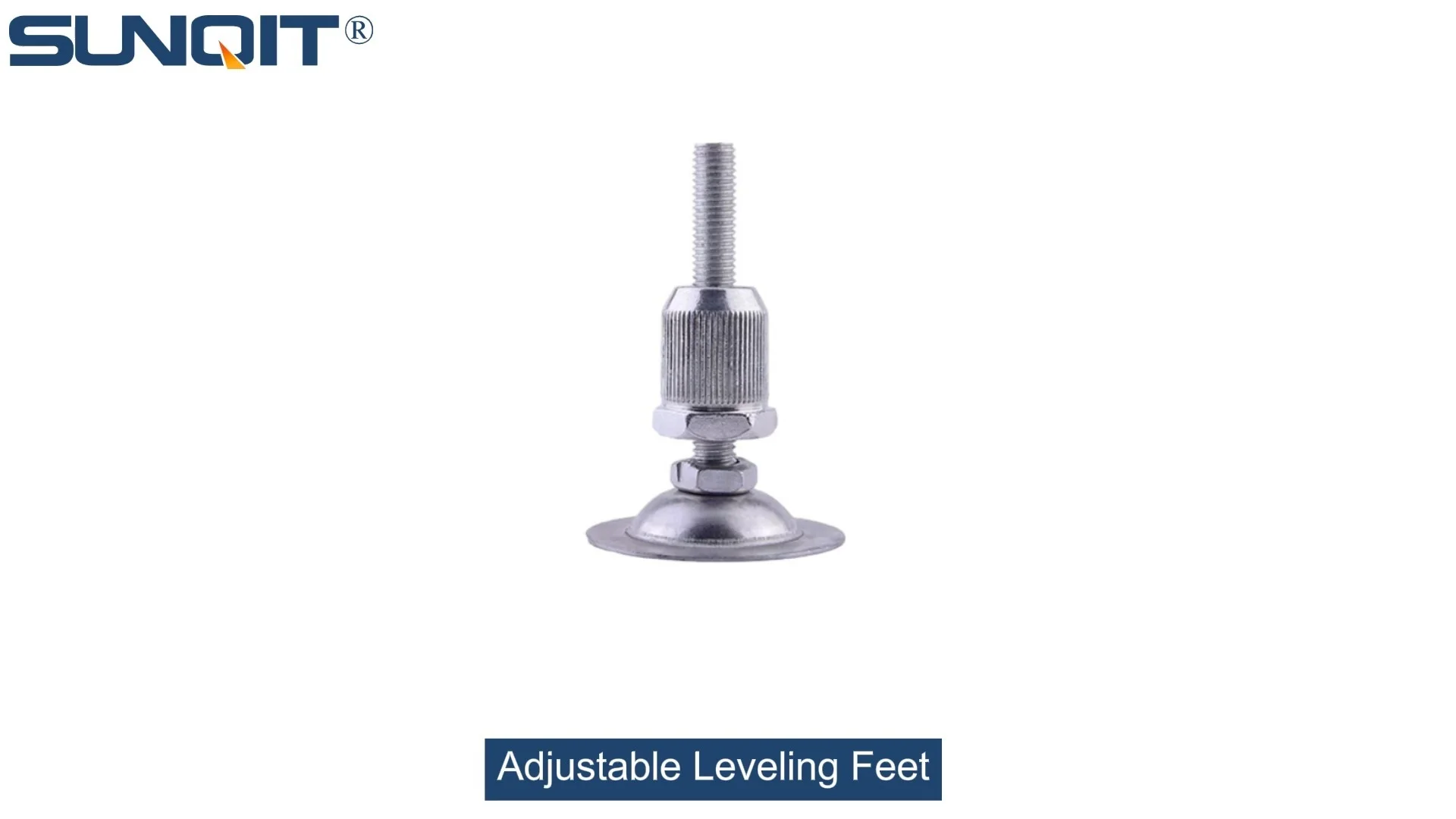
Adjustable leveling feet are designed to keep machines level when placed on uneven or sloped ground. Otherwise known as adjustable equipment feet, they are available to order in a wide variety of size and load capacity combinations.
Introduction: The Unsung Hero of the Workshop
Walk into any manufacturing facility, electronics assembly plant, or warehouse, and you'll likely spot a familiar workhorse: the workbench. It's where ideas take shape, components are assembled, and products come to life. But not all workbenches are created equal. Among the many variants, Workbench E (single deck-without caster) stands out for its simplicity, durability, and focus on stationary, precision-driven tasks. Designed as a single-deck unit without wheels, it's built to stay put—making stability its most critical feature. Yet, even the sturdiest workbench can falter without the right support. That's where adjustable leveling feet come in. These small but mighty components are far more than afterthoughts; they're the backbone of a reliable, efficient workspace. In this article, we'll dive into why adjustable leveling feet are non-negotiable for Workbench E, exploring their role in enhancing stability, precision, and safety—all while aligning with the principles of a lean system .
First, let's set the scene. Imagine a busy electronics workshop where technicians assemble circuit boards. Each component is tiny, each connection critical. A single misalignment could render a product defective, costing time and money. Now, picture the workbench they're using: Workbench E, a sleek, no-nonsense unit with a solid single deck. It's sturdy, but the factory floor? Less so. Years of foot traffic, heavy machinery, and general wear have left it uneven—cracks here, a slight slope there. Without proper support, the workbench rocks slightly as the technician leans in, their hand trembling just enough to misplace a solder joint. Frustration mounts, errors pile up, and productivity suffers. This isn't just a hypothetical scenario; it's a daily reality in countless workshops. The solution? Adjustable leveling feet. These unassuming devices transform an unstable work surface into a rock-solid foundation, turning Workbench E from a basic table into a precision tool.
Understanding Workbench E: Designed for Purpose
Before we delve into the why, let's clarify the what. Workbench E (single deck-without caster) is engineered for tasks that demand stability over mobility. Unlike its caster-equipped counterparts, it's meant to stay in one place, providing a fixed workstation for repetitive, detail-oriented work. Its single-deck design keeps the focus on the task at hand—no extra shelves or drawers to clutter the space—while its construction often leverages durable materials like aluminum profile for the frame, ensuring lightweight strength and resistance to corrosion. This simplicity aligns perfectly with lean system principles: eliminate waste, optimize flow, and prioritize functionality. But even the most thoughtfully designed workbench can't overcome a fundamental challenge: uneven floors.
Factories and workshops are hard environments. Floors take a beating from heavy equipment, chemical spills, and constant foot traffic. Over time, concrete can crack, settle, or develop slight inclines. For a stationary workbench like Workbench E, this unevenness isn't just an annoyance—it's a threat to performance. A wobbly workbench throws off measurements, makes precise tasks nearly impossible, and increases the risk of tools or materials sliding off. In a lean system, where efficiency and quality are paramount, these issues translate directly to waste: wasted time adjusting for instability, wasted materials from errors, and wasted effort reworking defective products. Workbench E's design assumes a level surface, but in the real world, that assumption rarely holds. Adjustable leveling feet bridge this gap, adapting the workbench to its environment rather than forcing the environment to adapt to the workbench.

The Problem: Uneven Floors and the Cost of Instability
To appreciate the importance of adjustable leveling feet, let's first examine the problem they solve: uneven floors. It's easy to overlook just how common floor irregularities are. A study by the Concrete Floor Association found that over 80% of industrial floors have at least minor unevenness, with deviations ranging from 1/8 inch to 1/2 inch over a 10-foot span. That might sound insignificant, but for a workbench, even a 1/4-inch slope can cause major issues. Let's break down the consequences:
- Precision Errors: In tasks like electronics assembly or mechanical part fitting, millimeters matter. A workbench that tilts slightly can throw off alignment, leading to parts that don't fit, connections that fail, or measurements that are off by just enough to cause defects.
- Safety Risks: A wobbly workbench is an accident waiting to happen. Tools slide off edges, workers strain to compensate for instability, and in extreme cases, the bench itself could tip if overloaded. This isn't just about bruised egos; it's about preventing injuries and damage to expensive equipment.
- Wasted Time: Technicians and workers spend valuable minutes adjusting their posture, readjusting materials, or even shimming the bench with scraps of wood to stabilize it. In a lean system, time is money—every minute wasted is a minute not spent adding value.
- Premature Wear: An unstable workbench doesn't just affect the work; it affects the bench itself. Uneven weight distribution can warp the deck, loosen joints, or stress the frame, shortening its lifespan and leading to costly replacements.
Consider Maria, a senior technician at a small electronics firm. She's been assembling sensor modules on Workbench E for years, but lately, she's noticed an uptick in errors. "The bench rocks just a little when I lean on it," she explains. "I'll be placing a resistor, and my hand moves—next thing I know, it's soldered to the wrong pad." Her team's rework rate has climbed from 5% to 15% in three months, and morale is dipping. The root cause? A small crack in the floor under one leg of her workbench, causing it to sit 1/4 inch lower than the others. Without adjustable leveling feet, Maria and her team are fighting a losing battle against physics.

Adjustable Leveling Feet: How They Work
So, what exactly are adjustable leveling feet, and how do they solve these problems? At their core, they're simple devices: a threaded stem attached to a base, designed to screw into the bottom of a workbench leg. By turning the stem, you raise or lower that leg, adjusting the height to compensate for uneven floors. But their simplicity belies their effectiveness. Let's break down the components:
The Stem: Typically made of steel or stainless steel for strength, the stem is threaded to allow precise height adjustment. Common sizes include M10 (10mm diameter), which provides a good balance of strength and adjustability. Some models, like the M10*56 rubber leveling feet (a popular choice for Workbench E), offer a 56mm adjustment range—more than enough to handle most floor irregularities.
The Base: The part that touches the floor, often made of rubber, plastic, or metal. Rubber bases are ideal for Workbench E because they grip the floor, preventing slipping, and absorb vibrations—critical for precision tasks. They also protect the floor from scratches, a nice bonus in facilities where floor maintenance is a priority.
The Lock Nut: Once the desired height is set, a lock nut tightens against the leg, securing the adjustment and preventing the stem from loosening over time due to vibration or use.
The beauty of adjustable leveling feet lies in their versatility. They're not one-size-fits-all; they can be tailored to the workbench's weight, the environment (e.g., ESD-safe options for electronics), and the specific floor conditions. For Workbench E, which often uses aluminum profile legs for their lightweight durability, adjustable feet are designed to integrate seamlessly—no need for custom modifications. They screw directly into pre-drilled holes in the legs, making installation a breeze even for those without specialized tools.

The Benefits: Why Adjustable Leveling Feet Are Non-Negotiable
Now that we understand how they work, let's explore the tangible benefits adjustable leveling feet bring to Workbench E. These aren't just "nice-to-haves"; they're essential for maximizing the workbench's performance, aligning with lean principles, and ensuring a safe, efficient workspace.
1. Unmatched Stability: Even on the Roughest Floors
The most obvious benefit is stability. By adjusting each foot individually, you can level Workbench E perfectly, regardless of how uneven the floor is. A stable workbench means no rocking, no sliding, and no guesswork. For tasks that require steady hands—like soldering, wiring, or assembling small parts—this is game-changing. Imagine Maria, the technician from earlier, after her Workbench E is fitted with adjustable leveling feet. The bench sits solidly, even with the floor crack. Her hand stays steady, solder joints are precise, and rework drops back to 5%. Stability isn't just about comfort; it's about consistency—and consistency is the cornerstone of quality.
2. Precision: The Foundation of Quality Work
In manufacturing, precision is everything. A workbench that's even slightly off-level can throw off measurements, leading to parts that don't fit together or products that fail quality checks. Adjustable leveling feet eliminate this variable. By ensuring the work surface is perfectly horizontal, they provide a reliable reference point for tools, jigs, and fixtures. For example, a technician using a micrometer on an unlevel bench might get inconsistent readings, leading to parts that are either too tight or too loose. With a level workbench, measurements are accurate, and quality is consistent. This isn't just about avoiding defects; it's about building trust in your products—and your process.
3. Load Distribution: Protecting Your Workbench (and Your Wallet)
Workbench E is built to handle heavy loads—tools, materials, even heavy machinery. But uneven weight distribution can stress the frame, warp the deck, or loosen joints over time. Adjustable leveling feet ensure that the weight is spread evenly across all four legs, preventing undue strain on any single component. This not only extends the life of the workbench but also reduces maintenance costs. A study by the Manufacturing Technology Insights found that workbenches with proper load distribution last up to 30% longer than those without, saving companies thousands in replacement costs over time.
4. Safety First: Preventing Accidents and Injuries
A wobbly workbench is a safety hazard. Tools slide off, workers overcompensate with awkward postures, and in extreme cases, the bench could tip over. Adjustable leveling feet mitigate these risks by keeping the workbench firmly planted. The rubber base (like that on M10*56 rubber leveling feet) adds extra grip, preventing slipping even on smooth or slightly oily floors. This is especially critical in environments where liquids or debris are common, like automotive workshops or food processing plants. By prioritizing safety, you're not just protecting your workers—you're protecting your bottom line. Workplace injuries cost companies billions annually in medical bills, lost productivity, and legal fees. Adjustable leveling feet are a small investment in preventing these costs.
5. Compatibility with Lean Systems: Eliminating Waste
Lean manufacturing is all about eliminating waste—whether it's time, materials, or effort. An unstable workbench creates waste in multiple ways: time spent adjusting, materials wasted on defects, and effort expended compensating for instability. Adjustable leveling feet align perfectly with lean principles by reducing these inefficiencies. They turn Workbench E into a more reliable, predictable tool, allowing workers to focus on value-adding tasks instead of fighting with their workspace. In a lean system, every component should serve a purpose; adjustable leveling feet don't just serve a purpose—they amplify the purpose of the workbench itself.
6. Adaptability: Growing with Your Needs
Workshops evolve. Today's electronics assembly station might become tomorrow's packaging area, or vice versa. Adjustable leveling feet make Workbench E adaptable to changing needs. If you move the workbench to a new location with a different floor condition, simply readjust the feet—no need for new equipment. This flexibility is key in dynamic environments, where reconfiguring workspaces is common. It also future-proofs your investment: even if your floor is perfectly level now, wear and tear will change that over time. Adjustable leveling feet ensure Workbench E remains effective for years to come.
Fixed Feet vs. Adjustable Leveling Feet: A Clear Winner
You might be thinking, "Can't I just use fixed feet? They're cheaper and simpler." It's true—fixed feet have their place, but for Workbench E, they're a compromise. Let's compare the two side by side to see why adjustable leveling feet come out on top:
| Feature | Fixed Feet | Adjustable Leveling Feet |
|---|---|---|
| Stability on Uneven Floors | Poor—no adjustment means rocking or tilting. | Excellent—individual height adjustment compensates for unevenness. |
| Adjustment Range | None—height is fixed at installation. | Typically 10–50mm (e.g., M10*56 offers 56mm), allowing precise leveling. |
| Load Distribution | Uneven—weight on legs that touch the floor, straining the frame. | Even—all legs bear weight equally, reducing stress on the workbench. |
| Material Options | Limited—often plastic or basic metal. | Wide range—rubber, stainless steel, ESD-safe materials, etc. |
| Installation Complexity | Simple—screw on and done. | Slightly more steps (adjusting height, locking nuts), but still easy for most users. |
| Long-Term Durability | Prone to wear—fixed height can't compensate for floor settling over time. | High—adjustable design adapts to floor changes, reducing strain on the workbench. |
| Cost | Lower upfront cost (typically $2–$5 per foot). | Higher upfront cost (typically $5–$15 per foot), but lower long-term costs due to reduced waste and rework. |
| Safety | Risk of tipping or sliding on uneven surfaces. | Minimal risk—stable base and non-slip materials reduce accidents. |
The table tells the story: fixed feet save a few dollars upfront but cost far more in the long run through instability, errors, and safety risks. Adjustable leveling feet, by contrast, are an investment in quality, efficiency, and peace of mind. For Workbench E—designed for precision, stability, and lean productivity—there's no contest.
Real-World Impact: A Case Study
To put this in perspective, let's look at a real-world example. PrecisionTech, a mid-sized manufacturer of medical devices, recently upgraded 20 Workbench E stations with adjustable leveling feet. Prior to the upgrade, their assembly line was struggling with a 12% defect rate on sensor assemblies, largely due to unstable workbenches. Technicians reported spending 10–15 minutes per shift adjusting materials or shimming legs with cardboard. The company's lean coordinator, Raj, proposed the switch to adjustable leveling feet (specifically M10*56 rubber leveling feet) to address the issue.
The results were striking. Within two weeks of installation, the defect rate dropped to 4%—a 67% improvement. Technicians reported spending less than 2 minutes per shift on adjustments, freeing up time for value-adding tasks. "It's like night and day," said one assembly technician. "I can focus on the sensor now, not the bench." Raj noted another unexpected benefit: "Workers are more engaged. When your tools and workspace work with you, not against you, morale goes up—and that translates to better quality." PrecisionTech estimates the upgrade paid for itself in three months through reduced rework and increased productivity. This isn't an isolated success story; it's a testament to how small changes—like adding adjustable leveling feet—can drive significant improvements.
Choosing the Right Adjustable Leveling Feet for Workbench E
Not all adjustable leveling feet are created equal. To get the most out of Workbench E, you'll need to choose the right type for your needs. Here are key factors to consider:
1. Load Capacity
Workbench E can support varying weights, depending on its design. Ensure the leveling feet you choose can handle the maximum load of your workbench plus tools and materials. Most feet list their load capacity (e.g., 500kg per foot), so check the specs carefully.
2. Adjustment Range
Measure your floor's unevenness to determine how much adjustment you need. For most workshops, a range of 30–50mm is sufficient, but if your floor is particularly rough, opt for feet with a larger range (like the M10*56, which offers 56mm).
3. Material
The base material matters. Rubber bases are ideal for grip and vibration absorption, making them great for electronics or precision work. Stainless steel bases are better for corrosive environments (e.g., food processing). For ESD-sensitive areas (like ESD workbench setups), look for conductive or static-dissipative materials to prevent electrostatic discharge.
4. Compatibility with Aluminum Profile
Since Workbench E often uses aluminum profile legs, ensure the leveling feet are designed to fit. Most manufacturers offer feet with standard thread sizes (like M10) that match pre-drilled holes in aluminum profiles, making installation seamless.
5. Locking Mechanism
A secure lock nut is essential to prevent the feet from loosening over time. Look for feet with nylon-insert lock nuts, which provide a tight, vibration-resistant seal.
Maintenance Tips: Keeping Your Leveling Feet in Top Shape
Adjustable leveling feet are low-maintenance, but a little care goes a long way. Here's how to keep them working effectively:
- Regular Checks: Inspect the feet monthly for looseness. Tighten lock nuts if they've shifted.
- Clean the Threads: Dust, dirt, and debris can gunk up the threads, making adjustment difficult. Wipe them down with a dry cloth periodically, and apply a small amount of lubricant (like WD-40) if they start to stick.
- replace Worn Bases: Rubber bases can wear down over time, reducing grip. If you notice cracks or smooth spots, replace the base (many feet allow base replacement without changing the entire unit).
- Relevel After Moving: If you relocate Workbench E, always readjust the feet to the new floor conditions.
Conclusion: More Than an Accessory—A Critical Component
Workbench E (single deck-without caster) is a workhorse designed for precision, stability, and lean efficiency. But without adjustable leveling feet, it's missing a critical piece of the puzzle. These small devices transform an ordinary workbench into a precision tool, eliminating waste, reducing errors, and enhancing safety. They're not just accessories; they're essential for anyone serious about quality, productivity, and creating a workspace that works for its users.
Whether you're assembling electronics, manufacturing parts, or running a lean workshop, the message is clear: don't overlook the basics. Adjustable leveling feet might not be the flashiest part of your setup, but they're one of the most impactful. They turn "good enough" into "excellent," and in today's competitive manufacturing landscape, that's the difference between falling behind and leading the pack.
So, the next time you walk into a workshop and see a Workbench E, take a moment to look down. Chances are, the secret to its success lies in those small, unassuming feet—quietly keeping everything steady, precise, and ready for whatever comes next. Because in the world of lean manufacturing, the best innovations are often the ones that make the complex simple, and the simple essential.