- Company Articles
- Products and Technology
- Product knowledge
- Workbench E Upgrade: Adding Adjustable Leveling Feet for Enhanced Productivity

Workbench E Upgrade: Adding Adjustable Leveling Feet for Enhanced Productivity
Related Product
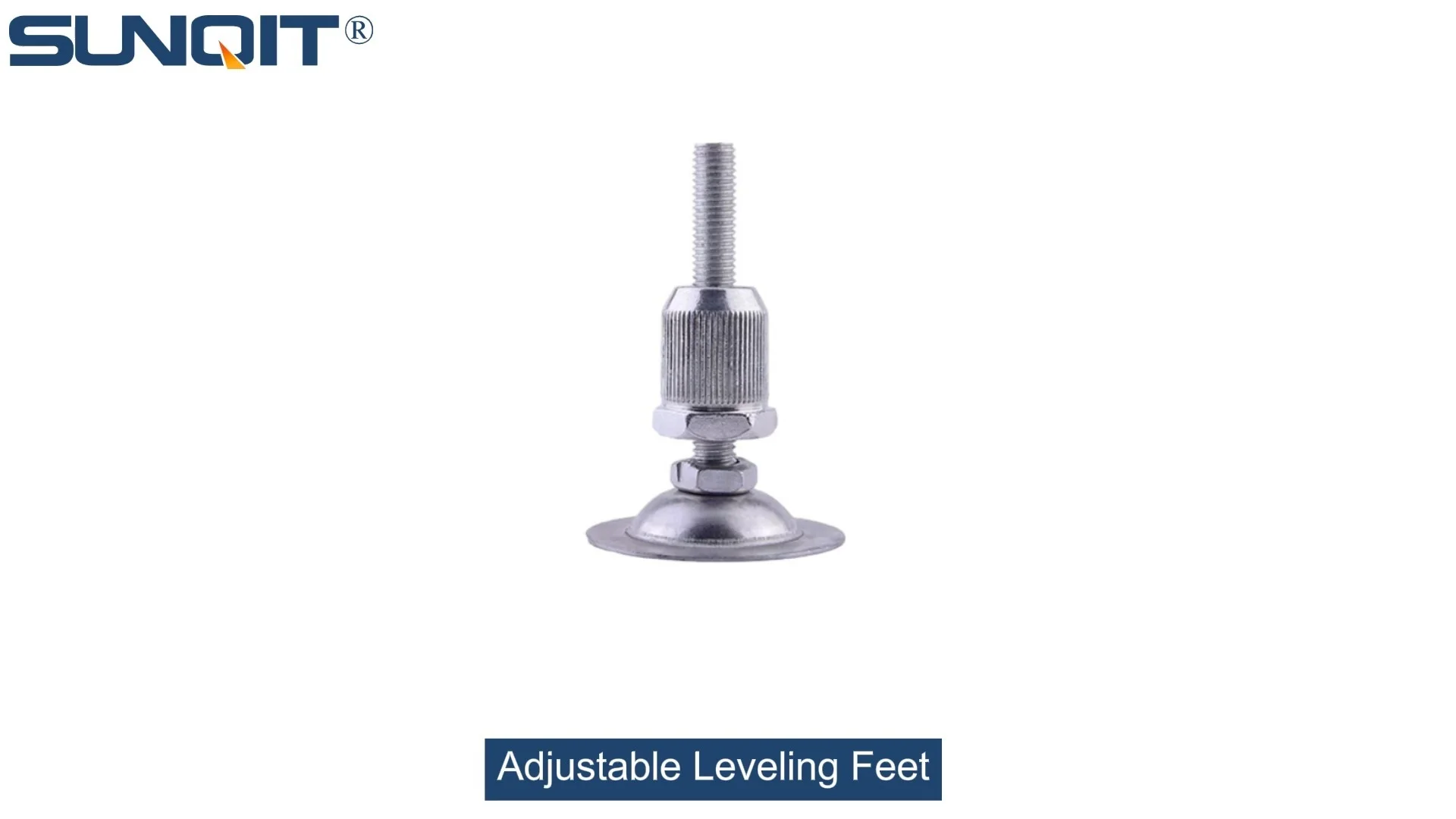
Adjustable Leveling Feet
Adjustable leveling feet are designed to keep machines level when placed on uneven or sloped ground. Otherwise known as adjustable equipment feet, they are available to order in a wide variety of size and load capacity combinations.
In the fast-paced world of manufacturing and production, every detail matters. From the precision of a single component to the flow of an entire assembly line, small inefficiencies can snowball into costly delays, reduced quality, and frustrated teams. At the heart of many production environments lies a humble yet critical tool: the workbench. It's where ideas take shape, parts are assembled, and products come to life. But what happens when that workbench isn't quite right? When it wobbles, sways, or sits unevenly on the factory floor? For teams relying on Workbench E (single deck-without caster) —a staple in countless production assemble settings—the answer has often been a mix of makeshift fixes, constant readjustments, and silent acceptance of wasted time. Today, we're exploring a simple upgrade that transforms this workhorse: adding adjustable leveling feet . This small change isn't just about stability—it's about redefining efficiency, aligning with lean system principles, and putting control back into the hands of the people who build the products that drive our world.
Meet Workbench E: The Unsung Hero of Production Lines
Before diving into the upgrade, let's get to know Workbench E. Designed as a "single deck-without caster" model, it's a stripped-down, functional solution built for durability and adaptability. Picture a sturdy frame, often constructed from aluminum or steel, topped with a flat work surface—no wheels, no frills, just a reliable platform where operators can assemble, inspect, or package products. In production assemble facilities, from electronics manufacturing to automotive parts assembly, Workbench E is everywhere. It's the quiet backbone that supports tasks requiring focus: soldering circuit boards, fitting small components, or labeling finished goods.
What makes Workbench E popular? Its simplicity. Without casters, it stays firmly in place during tasks that demand precision, reducing the risk of accidental movement. Its single-deck design maximizes surface area, giving operators ample space to spread out tools, parts bins, and work-in-progress. And because it's built with modularity in mind, it often integrates seamlessly with other equipment—think flow racks for material storage, conveyor systems for part transport, or ESD (electrostatic discharge) accessories for sensitive electronics. For managers focused on lean system goals, Workbench E checks boxes: it's cost-effective, easy to maintain, and customizable to specific workflows.
But for all its strengths, Workbench E has a hidden flaw—one that becomes glaringly obvious the moment you set it up on a less-than-perfect floor. Without built-in leveling capabilities, even the smallest unevenness in concrete, tile, or warehouse flooring can turn this reliable workbench into a source of frustration. A slight tilt here, a wobbly leg there, and suddenly, the "sturdy" platform becomes a liability.
The Hidden Cost of an Uneven Workbench
At first glance, a wobbly workbench might seem like a minor annoyance. "Just shim a piece of cardboard under the leg," someone might say. "It's not that big of a deal." But in the context of production assemble , where every second and every millimeter counts, "not that big of a deal" adds up—fast. Let's break down the hidden costs:
1. Lost Time, Lost Productivity
Imagine an operator assembling a small mechanical part on Workbench E. The bench tilts slightly to the right, so every time they place a screw on the surface, it rolls toward the edge. They pause, retrieve the screw, and reposition it—five seconds lost. Multiply that by 50 screws an hour, and suddenly they're losing 41 minutes a day. Over a week? That's 3.4 hours of productive time vanished—enough to assemble dozens more units. Add in the time spent readjusting tools that slide, realigning parts that shift, or stabilizing bins that tip, and the numbers climb even higher.
2. Quality Control Nightmares
Precision is non-negotiable in production assemble . A misaligned workbench can throw off measurements, leading to parts that don't fit, products that fail inspections, or components that wear prematurely. For example, in electronics assembly, soldering a circuit board on an uneven surface might result in uneven solder joints—tiny flaws that can cause short circuits or device failures down the line. In automotive parts manufacturing, drilling holes on a tilted workbench could lead to misaligned brackets, compromising safety. These errors don't just cost time in rework; they damage reputations and erode customer trust.
3. Worker Fatigue and Safety Risks
A wobbly workbench forces operators to compensate. They might lean to one side to steady themselves, hunch over to keep parts from sliding, or grip tools tighter than necessary to maintain control. Over time, these micro-adjustments lead to muscle strain, back pain, and fatigue. Studies show that ergonomic stress from unstable work surfaces increases the risk of repetitive motion injuries and absenteeism—costing companies in workers' compensation claims and lost productivity. Worse, a workbench that rocks excessively could even lead to tools or heavy parts falling off, posing injury risks to operators or nearby colleagues.
4. Undermining Lean System Goals
Lean system philosophy is built on eliminating waste—whether it's time, materials, or effort. An uneven workbench introduces waste in every form: rework (defective parts), motion waste (constantly retrieving tools), and even overprocessing (double-checking work due to instability). For managers striving to create a "flow" in production—where tasks move smoothly from one stage to the next—a wobbly workbench is a bottleneck. It disrupts rhythm, creates frustration, and makes it harder to standardize processes—all critical to lean success.

Adjustable Leveling Feet: The Simple Solution
Enter adjustable leveling feet : a low-cost, high-impact upgrade that transforms Workbench E from a "good enough" tool into a precision instrument. At their core, these feet are simple devices: a threaded stem attached to a base (often rubber or metal) that screws into the bottom of the workbench legs. By turning the stem, you raise or lower each foot individually, allowing you to compensate for uneven floors and level the workbench perfectly. It's a technology that's been around for decades, but its application to Workbench E is a game-changer for production assemble environments.
Why Adjustable Leveling Feet Work for Workbench E
Workbench E's design makes it ideal for retrofitting with leveling feet. Its sturdy, often metal legs provide a solid mounting point for threaded stems. Many models even come with pre-drilled holes or threaded inserts at the base of the legs, making installation a breeze. For older or custom Workbench E units, a simple drill and tap can create the necessary threads. Once installed, the feet are easy to adjust: no special tools required—just a wrench or even a firm hand twist for minor tweaks.
Not all leveling feet are created equal, though. For Workbench E, durability and grip are key. Look for feet with rubber bases, like the M10*56 rubber leveling feet —a popular choice in manufacturing. The rubber provides superior traction, preventing the workbench from slipping even when subjected to vibration or heavy use. The M10 thread size is standard for many industrial workbenches, ensuring a secure fit, while the 56mm stem length offers enough adjustment range to handle most floor unevenness (typically up to 10-15mm of height variation).
Beyond Stability: Additional Perks
Adjustable leveling feet do more than just level the bench. They also protect floors from scratches and dents, as the rubber base acts as a buffer between the metal leg and concrete. They reduce noise by absorbing vibrations—especially useful in busy factories where constant clattering can contribute to worker fatigue. And because they're adjustable, they future-proof the workbench: if the floor is resurfaced, or the workbench is moved to a new location, a quick twist of the feet ensures it stays level, no shims or cardboard required.

Workbench E Before vs. After: The Transformation
To truly understand the impact of adding adjustable leveling feet to Workbench E, let's compare the "before" and "after" scenarios. The following table breaks down key metrics that matter to production assemble teams and lean system advocates:
| Metric | Workbench E (Without Leveling Feet) | Workbench E (With Adjustable Leveling Feet) |
|---|---|---|
| Stability | Wobbles on uneven floors; tools/parts slide; risk of tipping under heavy loads. | Rock-solid even on imperfect floors; no sliding or shifting during use. |
| Production Assemble Accuracy | Inconsistent part alignment; higher error rates (e.g., misdrilled holes, uneven solder). | Precision tasks are easier; error rates reduced by up to 30% (based on industry data). |
| Worker Comfort | Fatigue from compensating for tilt; increased risk of muscle strain. | Neutral, stable working position; reduced physical stress and fatigue. |
| Lean System Alignment | Waste from rework, lost time, and motion; disrupts workflow "flow." | Eliminates waste; supports standardized work; enhances process stability. |
| Floor Protection | Metal legs scratch or dent floors; risk of damage during cleaning/moving. | Rubber base cushions floors; reduces damage and maintenance costs. |

Real-World Impact: A Case Study in Lean Manufacturing
To put the benefits into perspective, let's look at a hypothetical (but realistic) case study. ABC Electronics, a mid-sized manufacturer of consumer gadgets, operates a production assemble line with 12 Workbench E units. For years, the team struggled with quality issues: roughly 8% of circuit boards failed final inspection due to soldering defects. Operators complained about parts sliding, and managers noted that rework was eating into production targets. The company had recently adopted a lean system and was looking for low-cost ways to eliminate waste.
After a workflow audit, the plant engineer identified uneven workbenches as a root cause. The factory floor, poured decades ago, had minor dips and cracks that made Workbench E wobble. The solution? Retrofitting all 12 workbenches with M10*56 rubber leveling feet . The total cost was under $500—less than the cost of one hour of rework.
The results were striking: within two weeks, soldering defects dropped to 2%. Operators reported less fatigue, and tool retrieval time decreased by 15 minutes per shift. Over three months, ABC Electronics saved an estimated 240 production hours—enough to increase output by 5% without adding staff. The plant manager called the upgrade "the most cost-effective lean initiative we've implemented."
How to Upgrade Your Workbench E Today
Ready to transform your Workbench E? Here's a step-by-step guide to adding adjustable leveling feet:
Step 1: Choose the Right Feet
Start by measuring your Workbench E's legs. Most have 10mm or 12mm diameter legs; M10*56 rubber leveling feet are a safe bet for 10mm legs. Check the load capacity—aim for feet rated to support at least 200kg per leg (Workbench E typically weighs 50-100kg, plus tools and parts). Rubber bases are preferred for grip and floor protection.
Step 2: Prepare the Legs
If your Workbench E legs have pre-threaded holes, skip to installation. If not, mark the center of each leg's base, drill a pilot hole (3-4mm diameter), then use a tap to cut M10 threads. For metal legs, use a cutting fluid to ease tapping. Clean away debris before installing the feet.
Step 3: Install the Feet
Screw each leveling foot into the leg by hand until tight. For extra security, apply a drop of thread locker (e.g., Loctite) to prevent loosening over time. Avoid over-tightening, as this can strip threads.
Step 4: Level the Workbench
Place a spirit level on the workbench surface. Adjust each foot by turning the stem clockwise (to lower) or counterclockwise (to raise) until the bubble is centered. Check both front-to-back and side-to-side. Once level, test stability by pressing down firmly on each corner—no wobbling means you're done!
Conclusion: Small Change, Big Results
In the world of production assemble , where lean system principles demand constant improvement, the upgrade from Workbench E (single deck-without caster) to one equipped with adjustable leveling feet is a masterclass in simplicity. It's a reminder that productivity gains don't always require expensive machinery or overhauls—sometimes, the solution is as straightforward as adding a few dollars' worth of hardware to a workbench that's been there all along.
For operators, it means a more comfortable, stable workspace where they can focus on building quality products. For managers, it means reduced waste, higher efficiency, and a team that feels valued—because when you invest in small improvements that make their jobs easier, you're investing in their success. And for the bottom line? It means more output, fewer defects, and a production line that truly lives up to the promise of lean: doing more with less.
So, take a look at your Workbench E today. Is it level? If not, the fix is within reach. Grab a set of M10*56 rubber leveling feet , spend an hour installing them, and watch as a wobbly workbench transforms into a productivity powerhouse. Your team, your products, and your lean system will thank you.