- Company Articles
- Products and Technology
- Product knowledge
- Workbench E Upgrades: Adding Vertical Lean Pipe Joint Chrome for Stability

Workbench E Upgrades: Adding Vertical Lean Pipe Joint Chrome for Stability
Related Product
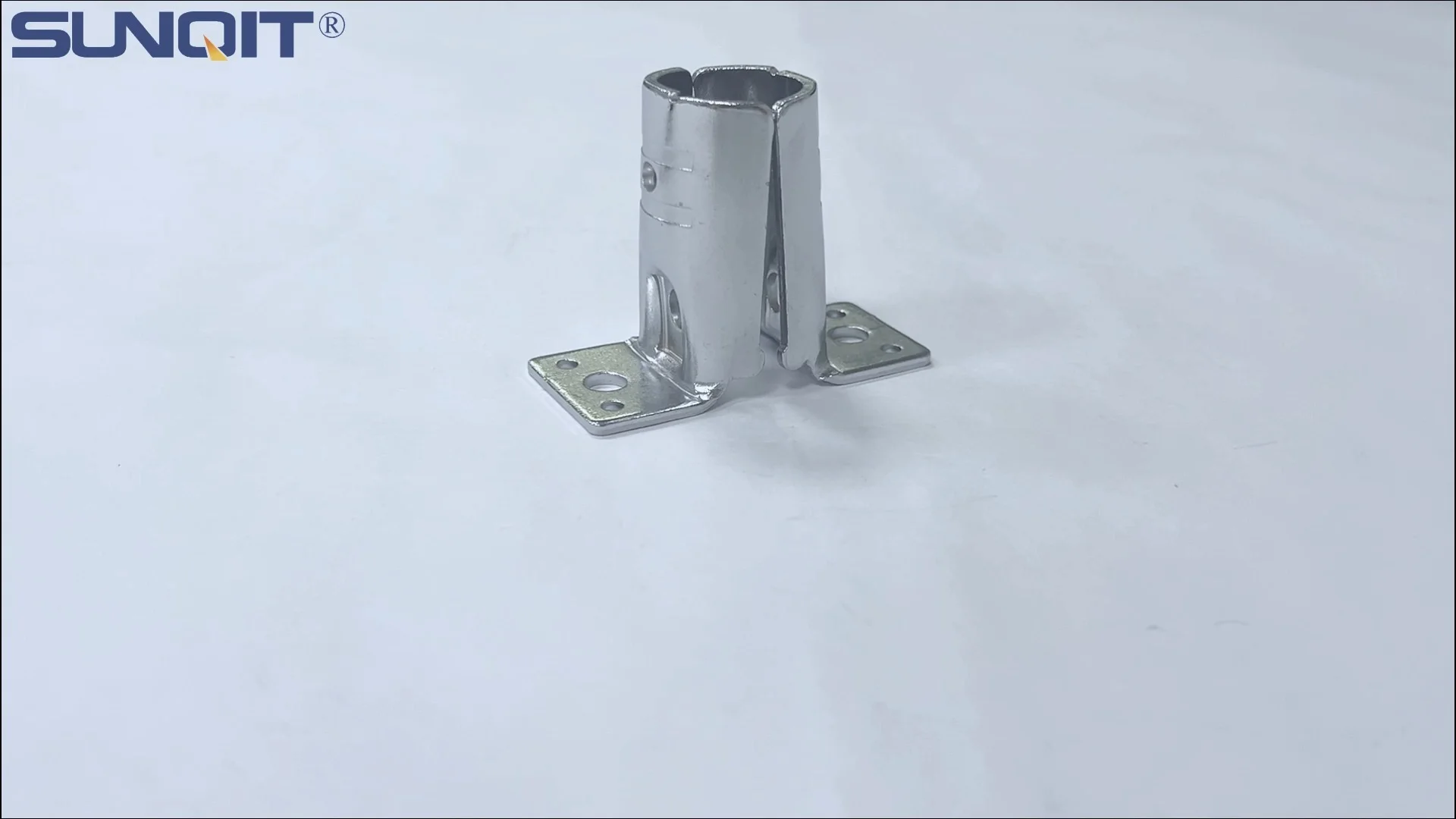
Vertical Lean Pipe Joint Chrome
Vertical lean pipe joint is used for 28mm lean pipe fixed on ground and keep it stable.
The Unsung Hero of Production: Why Workbench Stability Matters More Than You Think
Walk into any manufacturing plant, assembly line, or workshop, and you'll likely spot a familiar workhorse: the workbench. It's where components are assembled, tools are organized, and products take shape. But here's the thing—we rarely stop to think about how much a wobbly or unstable workbench can derail productivity. A slight shake while tightening a screw, a table that shifts when loading heavy parts, or a surface that just can't bear the weight of daily use—these might seem like minor nuisances, but over time, they add up. They slow down workers, increase the risk of errors, and even create safety hazards.
This is where Workbench E (single deck-without caster) enters the picture. Designed as a reliable, no-frills solution for production environments, it's a staple in facilities that prioritize functionality. But like any tool, it has room to grow—especially when it comes to stability. Today, we're diving into a simple yet transformative upgrade: adding Vertical Lean Pipe Joint Chrome. This small change isn't just about "fixing" a problem; it's about turning a good workbench into a great one—one that stands firm, supports heavier loads, and adapts to the chaos of daily production.
Meet Workbench E: A Solid Foundation, But Not Without Its Flaws
What Makes Workbench E (Single Deck-Without Caster) a Go-To Choice?
First, let's get to know Workbench E. As the name suggests, it's a single-deck workbench without casters, built for stability right out of the box. Its design is intentionally straightforward: a sturdy frame, a flat work surface, and minimal moving parts. This simplicity is a strength—it's easy to assemble, low-maintenance, and fits seamlessly into tight spaces where mobility isn't a priority. Many lean system suppliers recommend it for tasks that require precision, like electronics assembly or small-part sorting, where a fixed position reduces the risk of accidental movement.
But here's the catch: in high-demand environments, even the sturdiest "basic" workbench can start to show its limits. Let's say you're using Workbench E in an automotive parts assembly line. Each day, workers place heavy toolboxes, stacks of components, and on its surface. Over time, the joints that hold the frame together might loosen. Or maybe you're using it in a warehouse where materials are constantly loaded and unloaded—sudden weight shifts can cause the legs to wobble. These issues aren't failures of Workbench E itself; they're signs that the demands of modern production often exceed "basic" stability.
The Hidden Cost of Instability: A Day in the Life
To understand why stability matters, let's walk through a hypothetical (but all-too-real) scenario. Maria, a technician at a small electronics plant, has been using Workbench E for six months. Her job involves soldering delicate circuit boards—work that requires a steady hand and a steady surface. Lately, she's noticed the workbench shakes slightly when she leans on it to reach for tools. At first, she brushes it off, but last week, a shake caused her to misplace a solder joint, ruining a $50 component. "It's not a big deal most days," she says, "but when you're working with tiny parts, even a millimeter of movement matters."
Across the shop, Juan uses another Workbench E to assemble metal brackets. He often places 50-pound boxes of raw materials on the surface. Last month, the bench shifted while he was lifting a box, and he strained his back trying to steady it. "I didn't report it because I thought it was just me being clumsy," he admits. "But now I notice the legs wiggle when I push on them." These stories highlight a key point: instability doesn't just hurt productivity—it hurts people, too.

Enter the Vertical Lean Pipe Joint Chrome: Your Workbench's New Best Friend
What Even Is a Vertical Lean Pipe Joint Chrome?
If you're not familiar with lean pipe systems, the term "Vertical Lean Pipe Joint Chrome" might sound technical. Let's break it down. Lean pipe—also known as "lean tube"—is a modular, reusable pipe used to build everything from workbenches to material racks. Joints are the connectors that hold these pipes together, and "vertical" here means the joint is designed to reinforce vertical supports (like the legs of a workbench). The "chrome" part? That's a protective coating that adds durability and corrosion resistance.
Think of it as a heavy-duty bracket with superpowers. Unlike standard plastic or uncoated steel joints, the chrome-plated version is built to withstand wear and tear. It's designed to lock pipes into place with a tight, secure fit, distributing weight evenly across the frame. And because it's part of the lean pipe ecosystem, it's compatible with most standard lean pipe accessories—so you can customize your Workbench E without starting from scratch.
Why Chrome? The Secret Sauce Behind the Upgrade
You might be wondering: why chrome? Why not stick with plastic or regular steel? The answer lies in two words: durability and longevity. Chrome plating creates a hard, smooth surface that resists scratches, rust, and corrosion—critical in environments where spills, humidity, or chemicals are common. For example, if your workshop uses cleaning agents or lubricants that might drip onto the workbench legs, a chrome joint won't rust or degrade over time. Plastic joints, on the other hand, can crack under heavy loads, and uncoated steel will start to corrode after repeated exposure to moisture.
But chrome isn't just about protection—it's also about grip. The smooth yet slightly textured surface of chrome-plated joints ensures a tighter connection between pipes. When you tighten the joint around a lean pipe, the chrome coating reduces slippage, keeping the frame rigid even when jostled. This might sound small, but in practice, it's the difference between a workbench that "holds" and one that "locks in place."

Upgrading Workbench E: How to Install Vertical Lean Pipe Joint Chrome (It's Easier Than You Think)
Tools You'll Need (Spoiler: Not Many)
One of the best things about this upgrade is how accessible it is. You don't need to be a master mechanic or have a workshop full of tools. Here's what you'll need:
- A set of Vertical Lean Pipe Joint Chrome (most lean pipe suppliers sell them in packs of 4, which is perfect for a 4-legged workbench).
- An Allen wrench (usually included with the joints).
- A rubber mallet (to gently tap pipes into place, if needed).
- A level (to double-check stability after installation).
Step-by-Step: From Wobbly to Rock-Solid
Step 1: Prep Your Workbench Start by clearing off Workbench E. Remove any tools, materials, or equipment from the surface—you'll need full access to the frame. If the workbench is already assembled, check if the existing joints are loose. Tighten them first—this will help you see where the real stability issues lie.
Step 2: Identify Weak Points Most Workbench E models have vertical legs connected to horizontal support bars. The joints where these meet are often the first to loosen. These are your target spots. For a standard 4-legged workbench, you'll likely need to replace or reinforce the joints at the base of each leg (where they connect to the floor frame) and possibly the joints midway up the legs (if there's a horizontal crossbar).
Step 3: Install the Vertical Lean Pipe Joint Chrome Take one joint and slide it onto the vertical leg, aligning it with the horizontal support bar. Use the Allen wrench to tighten the set screws—start with a quarter-turn, then check the fit. The joint should feel snug, with no play. Repeat this for all target joints. Pro tip: Don't overtighten! The goal is to secure the pipes, not strip the screws.
Step 4: Test for Stability Once all joints are installed, give the workbench a gentle shake. Push on the corners, lean on the surface, and simulate loading it with a heavy box. If it still wobbles, check if the joints are aligned correctly—sometimes a slight adjustment is all it takes. Use the level to ensure the surface is flat; if not, tweak the joints until it sits evenly.
Step 5: Add Extra Reinforcement (Optional) For extra stability, consider adding diagonal bracing using lean pipe and additional joints. This is especially useful if you regularly load the workbench with over 200 pounds. Most lean pipe suppliers offer pre-cut pipes and corner joints that make this a breeze.
Beyond Stability: 3 Unexpected Benefits of the Upgrade
Okay, so the main goal is stability—but the perks don't stop there. Let's talk about the ripple effects of adding Vertical Lean Pipe Joint Chrome to Workbench E.
1. Increased Load Capacity: Now You Can Actually Use That "Heavy-Duty" Label
Workbench E is rated for a certain weight limit, but in reality, that number can feel optimistic when joints are loose. With chrome-plated vertical joints, the load capacity gets a noticeable boost. Why? Because the joints distribute weight more evenly, reducing stress on individual pipes. A standard Workbench E might handle 200 pounds comfortably; with the upgrade, many users report safely loading 300+ pounds. That means you can store heavier toolboxes, stack more materials, or even mount small equipment (like a bench grinder) without worrying about the frame buckling.
2. Compatibility with Lean Pipe Accessories: Turn Your Workbench into a Custom Station
One of the best things about lean pipe systems is their modularity. Once you've upgraded to Vertical Lean Pipe Joint Chrome, you're not just stuck with a basic workbench—you can add accessories! Need a tool rack? Attach it using lean pipe and joints. Want a shelf for parts bins? Screw on a lean pipe bracket. Even better, since the joints are chrome-plated, they'll match other metal accessories, giving your workspace a polished, professional look.
3. Long-Term Cost Savings: Spend a Little Now, Save a Lot Later
It's easy to think of upgrades as "extra expenses," but this one pays for itself. A wobbly workbench leads to broken parts, slower work, and even injuries—all of which cost money. By investing in chrome joints, you extend the life of Workbench E. Chrome resists rust and wear, so you won't need to replace joints every few months. Plus, since lean pipe systems are reusable, you can disassemble and reconfigure the workbench later if your needs change. It's a one-time upgrade that keeps giving.
From the Shop Floor: Real Stories of Stability (and Sanity) Restored
To put this in perspective, let's hear from real users who've made the switch. Take Raj, a production manager at a furniture assembly plant. "We had 10 Workbench E units on the line, and half of them were wobbly after a year," he says. "Workers were complaining about parts rolling off the table, and we had a few near-misses with tools falling. We upgraded all of them with Vertical Lean Pipe Joint Chrome, and it was night and day. Now, even when we load 300-pound slabs of wood on them, they don't budge. Productivity went up because people weren't stopping to adjust the table every 10 minutes."
Then there's Priya, who runs a small electronics repair shop. "I use Workbench E for soldering and component testing," she explains. "Precision is everything. After adding the chrome joints, I noticed my error rate dropped by almost 20%. No more shaky hands from a wobbly table. It sounds silly, but it made the job less stressful. I can focus on the work, not the workbench."
Why Vertical Lean Pipe Joint Chrome? Comparing Your Joint Options
Still not convinced? Let's compare Vertical Lean Pipe Joint Chrome to other common joint types. This table breaks down the key factors that matter in a production environment:
| Feature | Vertical Lean Pipe Joint Chrome | Standard Plastic Joint | Uncoated Steel Joint |
|---|---|---|---|
| Material | Chrome-plated steel | Nylon/plastic | Mild steel |
| Corrosion Resistance | Excellent (chrome prevents rust) | Good (resists moisture, but can crack) | Poor (rusts easily in humid environments) |
| Load Capacity | High (supports 200+ lbs per joint) | Medium (best for light loads, ~100 lbs) | High, but decreases as rust weakens the joint |
| Ease of Installation | Easy (tool-free or Allen wrench) | Very easy (snap-on), but less secure | Easy, but requires regular tightening |
| Lifespan | 5–7 years (with minimal maintenance) | 1–2 years (prone to cracking under stress) | 3–4 years (if kept dry; shorter in wet conditions) |
| Best For | Heavy loads, high-traffic areas, humid environments | Light assembly, temporary setups, dry workshops | Indoor, low-moisture areas with moderate loads |
As you can see, Vertical Lean Pipe Joint Chrome outperforms the competition in almost every category—especially when it comes to durability and load capacity. For Workbench E users who need a workbench that keeps up with their pace, it's the clear choice.
Final Thoughts: Stability Isn't a Luxury—It's a Necessity
At the end of the day, upgrading Workbench E with Vertical Lean Pipe Joint Chrome isn't just about "fixing" a wobbly table. It's about investing in your team, your productivity, and your peace of mind. A stable workbench is a silent partner—it lets workers focus on what they do best without distractions, reduces errors, and creates a safer environment.
If you're using Workbench E (single deck-without caster) and have noticed even the smallest wobble, don't wait for it to become a bigger problem. Reach out to your lean pipe supplier today and ask about Vertical Lean Pipe Joint Chrome. It's a small upgrade with a huge payoff—one that turns a good workbench into a great one, and a great one into a cornerstone of your production line.
After all, in manufacturing, the little things matter. And when it comes to stability, this is one little thing that makes all the difference.