Workbench E Upgrades: Integrating One Way Rotatory Straight Lean Pipe Joints

Related Product
One Way Rotatory Straight Lean Pipe Joint
Two way lean pipe joint for 2 pcs 28MM lean pipe connection in straight angle with rotatory fucntion, which used widely in workbench, flow rack, hand trolley frame connection.
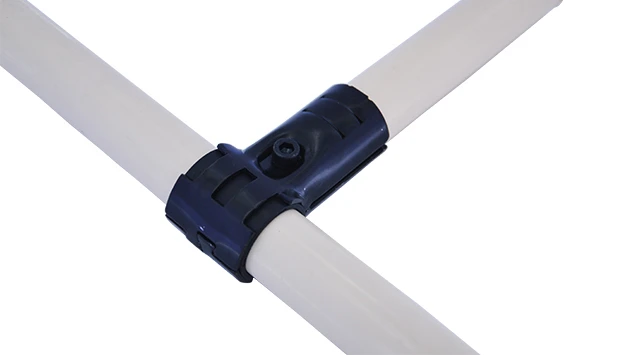
One Way Rotatory Straight Lean Pipe Joint
Walk into any busy production facility, and you'll notice the unsung heroes keeping operations running smoothly: workbenches. These sturdy surfaces are where assembly lines come to life, where technicians tinker with intricate components, and where the final touches are put on products before they head out the door. But not all workbenches are created equal. In today's fast-paced manufacturing world, rigidity is the enemy. When production needs shift, when new products roll off the design board, or when workflow bottlenecks emerge, your workbench shouldn't be the reason your team hits a wall. That's where Workbench E—specifically the single deck, caster-free model—has long been a reliable workhorse. But even the most dependable tools can benefit from a upgrade. Today, we're diving into how integrating One Way Rotatory Straight Lean Pipe Joint Chrome joints is transforming Workbench E from a static work surface into a flexible, future-ready asset for modern production floors.

Understanding Workbench E: The Backbone of Assembly Lines

First, let's get to know Workbench E. If you've spent time in manufacturing, you've probably seen it: a single-deck, no-frills workbench designed for stability and simplicity. Unlike its caster-equipped counterparts, this model stays firmly rooted in place, making it ideal for precision tasks where movement could throw off measurements or disrupt delicate assembly work. Its basic structure—typically built with aluminum or steel frames, a flat work surface, and minimal frills—has made it a staple in electronics assembly, small-part manufacturing, and quality control stations. But here's the catch: that simplicity comes with a trade-off. Traditional Workbench E setups rely on fixed lean pipe joints to hold their frames together. These joints, while strong, are rigid by design. They lock pipes into specific angles—90 degrees, 45 degrees, straight lines—and once they're bolted into place, changing that configuration feels like trying to rearrange a brick wall. Need to add a shelf to hold new tools? You'll likely need to disassemble part of the frame. Want to adjust the height to accommodate a taller technician? Prepare for a half-day project involving wrenches, replacement parts, and a few choice words. For years, production managers accepted this as the cost of doing business. "If it ain't broke, don't fix it," they'd say. But in an era where agility is everything—where companies need to pivot from producing 500 units of Product A to 1,000 units of Product B overnight—"ain't broke" isn't enough. Workbench E needed a way to keep its stability while gaining the flexibility to adapt to changing needs. Enter the one way rotatory straight lean pipe joint.

The Problem with Traditional Lean Pipe Joints

To appreciate why the one way rotatory joint is a game-changer, let's take a closer look at the traditional lean pipe joints that have long dominated workbench design. These joints—think 90-degree fixed joints, straight connectors, or 45-degree elbows—are the glue that holds lean pipe systems together. They're made from metal (often zinc-plated or painted), designed to withstand the wear and tear of daily use, and they do their job well… until you need to change something. Imagine this scenario: A manufacturer of medical devices uses Workbench E for assembling pacemaker components. Their current setup has a small shelf above the work surface to hold tweezers, magnifying glasses, and adhesive dispensers. Suddenly, they land a contract for a new, larger pacemaker model that requires bulkier tools—a precision torque wrench, a specialized crimper, and a larger magnifying lamp. The existing shelf is too small, and the lamp's base won't fit on the work surface without crowding the assembly area. With traditional joints, the solution would involve:
  1. Shutting down the workbench for a few hours (or longer).
  2. Unbolting the existing shelf brackets (which are locked into fixed joints).
  3. Hunting down new brackets and longer pipes to build a wider shelf.
  4. Reassembling the frame, hoping the new joints align correctly (spoiler: they rarely do on the first try).
  5. Testing the stability to ensure the new shelf can hold the added weight.
By the time the dust settles, the team has lost valuable production hours, and the risk of human error (a loose joint, misaligned pipes) introduces safety concerns. And this is a minor change. For larger reconfigurations—say, adjusting the entire workbench height to comply with new ergonomic standards—the process is even more disruptive. The root issue? Traditional joints prioritize strength over adaptability. They're built to stay put, not to pivot. And in a world where production demands shift faster than ever, that rigidity is costing companies time, money, and opportunities.

Meet the Upgrade: One Way Rotatory Straight Lean Pipe Joint Chrome

Now, let's talk about the star of the show: the One Way Rotatory Straight Lean Pipe Joint Chrome . At first glance, it might look like just another lean pipe joint. But pick one up, and you'll notice the difference immediately. Unlike fixed joints, this little powerhouse features a rotating mechanism that allows pipes to swivel in one direction—typically 180 degrees—while staying locked in place when not in use. The chrome finish isn't just for show, either; it adds a layer of corrosion resistance, making it ideal for humid or industrial environments where rust is a constant threat. So, how does it work? Let's break down the design:
  • Rotating Core: The joint's center features a cylindrical pivot that connects two pipe ends. This pivot allows one pipe to rotate relative to the other, but only in one direction (hence "one way"). A small lever or set screw locks the rotation in place once the desired angle is achieved.
  • Chrome Plating: The chrome finish isn't just aesthetic. It creates a smooth, low-friction surface for the rotating parts, reducing wear and tear over time. It also repels moisture and chemicals, making the joint more durable than standard zinc-plated alternatives.
  • Universal Fit: Like most lean pipe joints, it's designed to work with standard 28mm or 30mm lean pipes, so you won't need to replace your existing pipes—just the joints.
The beauty of this design is its simplicity. It doesn't require special tools or training to use. A technician can loosen the set screw, rotate the pipe to the desired angle, and tighten the screw back down—all in less than a minute. No disassembly, no hunting for replacement parts, no lost production time. It's flexibility without sacrificing stability.

The Upgrade Process: Breathing New Life into Workbench E

Upgrading Workbench E with one way rotatory joints isn't a complete overhaul—it's more like giving your workbench a new set of joints that can bend and adapt. Let's walk through how a typical upgrade might look in a real-world facility. **Step 1: Assess the Current Setup** Before diving in, the team starts by mapping out the existing Workbench E frame. They note which joints are fixed, which pipes are load-bearing, and where flexibility is most needed. For example, the front legs might need to stay fixed for stability, but the crossbars supporting the shelf above the work surface are prime candidates for rotatory joints. **Step 2: Swap Out Fixed Joints for Rotatory Ones** Using basic hand tools—a hex key, adjustable wrench, and a rubber mallet—they remove the old fixed joints and replace them with One Way Rotatory Straight Lean Pipe Joint Chrome units. Since the new joints fit the same pipes, this is a straightforward swap. The chrome finish stands out against the existing aluminum frame, giving the workbench a subtle "new" look without a complete rebuild. **Step 3: Test Rotation and Locking Mechanisms** After installing the new joints, the team tests each one. They loosen the set screws, rotate the pipes to various angles (0 degrees, 45 degrees, 90 degrees), and tighten the screws to ensure the joints lock securely. They also check for wobble or instability—critical for a workbench that holds expensive tools or delicate components. **Step 4: Reconfigure as Needed** With the new joints in place, the real fun begins. The team adjusts the shelf height to accommodate the larger medical device tools, angles a side rail to hold a new magnifying lamp, and even tilts a small section of the work surface slightly downward to prevent small parts from rolling off. Total time from start to finish? About two hours—less than half the time it would take to rebuild the bench with traditional joints. What's most impressive? The workbench retains its original stability. The rotatory joints lock tightly when not in use, so there's no risk of the frame shifting during assembly work. It's the best of both worlds: the rigidity needed for precision tasks and the flexibility to adapt when needs change.

Traditional vs. Rotatory: A Side-by-Side Comparison

Still not convinced? Let's put traditional fixed joints and One Way Rotatory Straight Lean Pipe Joint Chrome joints head-to-head in a comparison table:
Feature Traditional Fixed Lean Pipe Joints One Way Rotatory Straight Lean Pipe Joint Chrome
Rotation Capability None—locked into fixed angles (90°, 45°, straight) 180° one-way rotation; locks in place at any angle
Reconfiguration Time 1–3 hours (requires disassembly and reassembly) 5–10 minutes (no disassembly needed)
Durability Moderate (zinc-plated; prone to corrosion in humid environments) High (chrome-plated; corrosion-resistant and low-friction rotation)
Load Capacity High (up to 200kg per joint) High (same load capacity as fixed joints, 200kg+)
Ergonomic Flexibility Low (fixed height/angle; no adjustment for worker comfort) High (easily adjust height, angle, or shelf position for worker needs)
Cost Over Time Higher (frequent replacement of bent/damaged joints during reconfigurations) Lower (durable chrome finish and minimal wear from rotation)

Beyond the Joint: Integrating with Aluminum Profile and Roller Track

The magic of upgrading Workbench E with one way rotatory joints doesn't stop at the frame. These joints play well with other common production floor components, turning a simple workbench into a fully integrated workflow hub. Two standout pairings? Aluminum Profile and Roller Track . **Aluminum Profile: Adding Strength and Customization** Aluminum profiles—those extruded metal rails with T-slots—are a favorite in manufacturing for their versatility. They're lightweight, strong, and compatible with a wide range of accessories (shelves, tool hooks, cable management clips). By combining aluminum profile with rotatory joint-equipped Workbench E, you can build custom add-ons that adapt as quickly as the bench itself. For example, imagine adding a vertical aluminum profile post to one end of Workbench E, connected using a one way rotatory joint. This post can rotate to swing out over the work surface (to hold a monitor or barcode scanner) or swing back against the wall (to save space during deep cleaning). The T-slots in the aluminum profile let you attach tool holders or bins, which can be slid into position as needed. It's like having a modular tool chest built right into the workbench—no drilling or welding required. **Roller Track: Streamlining Material Flow** Roller track (those grooved rails with small wheels) is essential for moving parts from one workstation to the next. Traditionally, integrating roller track with Workbench E meant bolting it to the frame at a fixed angle, limiting how materials could be routed. With rotatory joints, you can angle the roller track to feed parts directly onto the work surface, or pivot it out of the way when not in use. Picture this: A Workbench E in an electronics assembly line. During the morning shift, workers assemble circuit boards, and completed boards need to roll to the next station. The roller track is angled downward from the workbench to a conveyor belt. In the afternoon, the same bench is used for testing, and the roller track isn't needed. Instead of disassembling it, the team simply rotates the track upward, where it stays locked until the next day. No more tripping hazards, no more wasted space.

Real-World Impact: How One Manufacturer Cut Downtime by 40%

Numbers and specs are great, but nothing tells the story like real results. Let's look at a case study from a mid-sized automotive parts manufacturer that upgraded 15 Workbench E stations with one way rotatory joints last year. **Before the Upgrade:** The company's assembly line produced small engine components, with each Workbench E dedicated to a specific task (e.g., attaching gaskets, torquing bolts, inspecting for defects). When a new component design was introduced, the team had to reconfigure 8 of the 15 workbenches to accommodate new tools and part sizes. Each reconfiguration took 2–3 hours, requiring two technicians and resulting in 16–24 hours of total downtime. **After the Upgrade:** With one way rotatory joints, reconfiguring a workbench took just 20 minutes per station. The team could adjust shelf heights, angle roller tracks, and reposition tool holders without stopping production entirely—they simply rotated components out of the way during breaks or between shifts. Total downtime for the same 8 workbenches dropped to 2.5 hours, a 40% reduction. But the benefits didn't stop there. The company also reported:
  • Higher Worker Satisfaction: Technicians no longer had to strain to reach tools or work on surfaces that were too low/high. They could adjust their workbenches to fit their bodies, reducing fatigue and repetitive strain injuries.
  • Fewer Errors: With tools and parts more accessible (thanks to reconfigurable shelves), the error rate on assembly tasks dropped by 12%.
  • Easier Onboarding: New hires could quickly adjust their workbenches to match their preferences, speeding up training time.
For this manufacturer, the investment in rotatory joints paid for itself in less than three months. And as production demands continue to shift, the upgraded Workbench E stations keep up—no more scrambling to rebuild workbenches or turn down rush orders due to inflexible setups.

Maintenance Tips: Keeping Your Upgraded Workbench E in Top Shape

Like any tool, your upgraded Workbench E needs a little TLC to stay performing at its best. Here are some maintenance tips to ensure your one way rotatory joints, aluminum profile add-ons, and roller track keep working smoothly for years: **For Rotatory Joints:** - Lubricate Regularly: The rotating pivot in the joint needs a light coat of machine oil every 3–6 months (more often in dusty or humid environments). This prevents friction-related wear and keeps rotation smooth. - Clean the Chrome Finish: Wipe down joints with a damp cloth to remove dirt and grime. Avoid abrasive cleaners, which can scratch the chrome and expose the metal to corrosion. - Tighten Set Screws: Check the set screws monthly—vibration from daily use can loosen them over time. A quick tighten with a hex key ensures the joint stays locked when needed. **For Aluminum Profile:** - Clear T-Slots: Use a small brush or compressed air to remove debris from T-slots. Clogged slots can make it hard to attach accessories. - Inspect for Dents: Aluminum is durable, but heavy impacts can dent the profile, making it hard to slide accessories. replace dented sections promptly to avoid workflow disruptions. **For Roller Track:** - Clean Rollers: Wipe roller wheels with a dry cloth to remove dust or debris that can slow movement. For sticky wheels, a drop of oil on the axle (not the wheel surface) can help. - Check Alignment: Ensure the track is level and straight. Misaligned tracks can cause parts to jam or roll off course.

Conclusion: Workbench E, Reinvented for the Future of Manufacturing

Workbench E has long been a reliable presence on production floors, but reliability alone isn't enough in today's fast-changing manufacturing landscape. By integrating One Way Rotatory Straight Lean Pipe Joint Chrome joints, this humble workbench transforms from a static surface into a flexible, adaptable tool that grows with your business. It's a small upgrade with big returns: less downtime, happier workers, smoother workflows, and the ability to pivot quickly when opportunities or challenges arise. Whether you're assembling medical devices, electronics, or automotive parts, the message is clear: your workbench shouldn't hold you back. With rotatory joints, aluminum profile, and a little creativity, Workbench E becomes more than a place to work—it becomes a competitive advantage. So, the next time you look at your production floor, ask yourself: Is your workbench keeping up with your team? Or is it time for an upgrade?


Get In Touch with us

Hey there! Your message matters! It'll go straight into our CRM system. Expect a one-on-one reply from our CS within 7×24 hours. We value your feedback. Fill in the box and share your thoughts!