- Company Articles
- Products and Technology
- Product knowledge
- Workbench Stability: Role of Five Way Straight Lean Pipe Joints in Structure

Workbench Stability: Role of Five Way Straight Lean Pipe Joints in Structure
Related Product
Five Way Straight Lean Pipe Joint
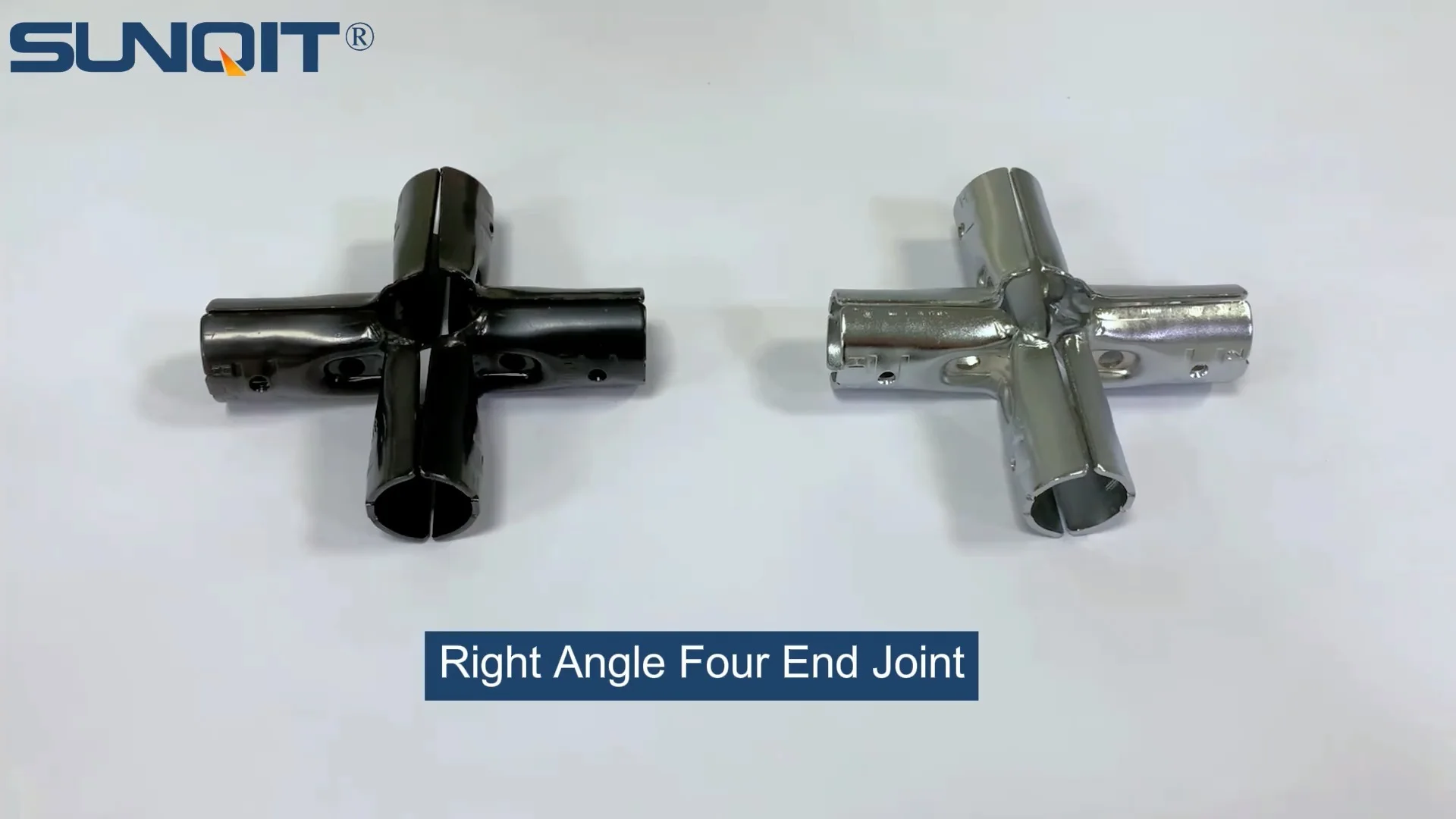
Five way straight lean pipe joint, for 5 pcs 28mm lean pipe connect in straight angle,which used widely in workbench, flow rack, hand trolley frame connection.
Walk into any busy production facility, and you'll notice the unsung heroes of the workspace: workbenches. They're where assembly lines hum, tools find their home, and products take shape. But here's the thing—no one talks about them until they fail. A wobbly workbench isn't just an annoyance; it's a silent productivity killer. Imagine a technician carefully aligning a circuit board, only for the bench to shift, sending a screwdriver clattering to the floor. Or a warehouse worker stacking boxes on a shelf that sags under the weight, risking damage to inventory (and fingers). In these moments, stability isn't just a "nice-to-have"—it's the backbone of safe, efficient operations. And when it comes to building rock-solid workbenches, one component stands out for its quiet brilliance: the five way straight lean pipe joint.
In this article, we'll dive into why workbench stability matters more than you might think, explore the role of lean pipe systems in modern manufacturing, and unpack how five way straight lean pipe joints act as the "glue" that holds it all together. We'll look at real-world scenarios, compare joint designs, and even touch on the materials and accessories that make these joints so effective. By the end, you'll understand why choosing the right joint isn't just about building a workbench—it's about building a workflow that works.
The Backbone of Lean Systems: Lean Pipe and the Art of Connection
Before we get to the joints themselves, let's talk about the foundation they're built on: lean pipe. If you've ever wandered through a factory or warehouse, you've probably seen it without realizing it—those sleek, often silver or black pipes forming everything from workbenches to material racks to mobile trolleys. Lean pipe, also called "lean tube," is the modular workhorse of lean manufacturing. Born from the need to create flexible, cost-effective structures that can adapt to changing production needs, it's revolutionized how facilities design their workspaces.
Traditionally made from steel pipes coated in a durable plastic (like PE coated lean pipe), modern lean pipe systems now also include aluminum lean pipe—a lighter, corrosion-resistant alternative perfect for environments where weight or moisture is a concern. But what makes lean pipe truly powerful isn't the pipe itself; it's the joints that connect them. Think of lean pipe as the bones of the structure, and joints as the joints in your body—they hold everything together while allowing just enough movement to adapt, but not so much that stability is compromised.
Joints come in all shapes and sizes: three-way for corners, four-way for grid-like structures, swivel joints for adjustable angles. Each serves a purpose, but when it comes to building complex, stable structures like workbenches, the five way straight lean pipe joint is in a league of its own. Why? Because stability in lean systems isn't just about strength—it's about distribution. A single pipe can only hold so much weight, but when you connect multiple pipes at a single point, you spread that weight across more supports, reducing stress and preventing failure. That's where five way joints shine: they turn a simple "stick" of pipe into a network of support.
Five Way Straight Lean Pipe Joints: Design That Delivers
Let's get up close and personal with the star of the show: the five way straight lean pipe joint. At first glance, it might look like just another metal connector, but its design is a masterclass in functional engineering. Picture a small, cylindrical hub—about the size of a golf ball—with five evenly spaced openings. These openings (or "ports") are where the lean pipes insert, creating a connection point that can branch out in multiple directions. The "straight" in its name refers to the alignment of these ports: unlike angled joints that bend pipes into corners, the five way straight joint keeps pipes running parallel or perpendicular to a central axis, making it ideal for building flat surfaces (like workbench tops) or multi-tiered structures (like shelving units).
But why five ports? Let's break it down. A three-way joint might connect a vertical support to two horizontal pipes (good for a simple frame). A four-way joint adds another horizontal pipe, creating a square frame. But a five way joint? It adds a fifth connection—maybe a diagonal brace for extra rigidity, or a vertical pipe to support an upper shelf. Suddenly, that single joint becomes a hub where multiple structural elements meet, distributing weight and stress across the entire system. It's like upgrading from a table with four legs to one with five—each leg takes less strain, and the whole structure feels more solid.
Materials matter too. Most five way straight lean pipe joints are made from chrome-plated steel, which offers a balance of strength and corrosion resistance—critical in dusty or slightly humid workshops. For more demanding environments (like food processing or cleanrooms), you'll find stainless steel versions (part of the stainless steel pipe series), which stand up to frequent washing and chemical exposure. And for lightweight applications, aluminum joints pair perfectly with aluminum lean pipe, cutting down on overall weight without sacrificing stability.
How Five Way Joints Stack Up: A Quick Comparison
| Joint Type | Connection Points | Best For | Stability Rating (1-10) |
|---|---|---|---|
| Three-Way Joint | 3 (e.g., 2 horizontal, 1 vertical) | Simple frames, corner connections | 6/10 (Good for basics, limited distribution) |
| Four-Way Joint | 4 (e.g., 2 horizontal, 2 vertical) | Grid structures, square workbenches | 7/10 (Better distribution, still limited points) |
| Five Way Straight Joint | 5 (multiple axes) | Multi-shelf workbenches, heavy-duty racks | 9/10 (Superior load spread, rigid yet flexible) |

The Stability Equation: How Five Way Joints Keep Workbenches Rock-Solid
So, how exactly do five way straight lean pipe joints make workbenches more stable? Let's start with the basics: load distribution. When you place a heavy object on a workbench—say, a 50kg tool chest—the weight doesn't just sit on the surface. It travels through the bench top, down the vertical supports, and into the floor. If those supports are connected with weak or limited joints, the stresss on a few points, causing bending, warping, or even collapse. Five way joints solve this by creating multiple "paths" for the weight to travel. Instead of two vertical pipes holding up a shelf, you might have three—all connected at a single five way joint that also anchors a diagonal brace. The result? Less stress on each individual pipe, and a structure that feels "rooted" to the ground.
Take a real-world example: a production assemble line workbench used for assembling car parts. The bench top needs to hold a variety of tools (drills, wrenches, torque guns) and partially assembled components (door panels, engine parts). A standard four-way joint setup might use vertical pipes at the corners, with horizontal pipes along the edges. But during a busy shift, when workers are leaning on the bench or slamming tools down, that setup can start to wobble. Swap in five way joints at the corners, and suddenly you can add a center vertical support (connected to the five way joint) and cross-braces along the sides. Now, the bench top is supported at six points instead of four, and the cross-braces prevent side-to-side movement. Workers notice the difference immediately—no more "shimmy" when they reach across the bench, and fewer tools sliding off the edges.
Another key factor is rigidity vs. flexibility. Lean systems are all about adaptability—being able to reconfigure a workbench or rack when production needs change. But adaptability shouldn't mean sacrificing stability. Five way joints strike this balance perfectly. Their multiple connection points allow you to add or remove pipes without weakening the overall structure. For example, if you need to add a side shelf to a workbench, you can simply attach a new pipe to one of the five way joint's unused ports, no need to disassemble the entire frame. This "modular stability" is why lean pipe systems (and their joints) have become so popular in industries like electronics manufacturing, where production lines change frequently but stability can never be compromised.

Team Players: Accessories That Make Five Way Joints Even Better
A five way straight lean pipe joint is powerful on its own, but it's even better when paired with the right accessories. Think of it like a superhero: strong alone, but unstoppable with a sidekick. Let's look at three key components that enhance joint performance and take workbench stability to the next level.
Aluminum Lean Pipe: Lightweight Strength
While traditional steel lean pipe is strong, it's also heavy—making workbenches hard to move and assemble. Aluminum lean pipe solves this problem. Lightweight yet surprisingly rigid, it pairs perfectly with five way joints to create structures that are easy to build and reconfigure, without sacrificing load capacity. For example, a mobile workbench (fitted with caster wheels) built with aluminum lean pipe and five way joints can be pushed around the shop by one person, but still hold 100kg of tools. The aluminum's smooth surface also resists scratches and corrosion, making it ideal for clean environments like labs or electronics assembly lines.
Adjustable Leveling Feet: Taming Uneven Floors
Even the best joints can't fix a wobbly workbench if the floor itself is uneven. That's where adjustable leveling feet come in. These small, threaded feet attach to the bottom of vertical lean pipes (often via a joint or direct thread), allowing you to tweak each leg's height by turning a dial. When paired with five way joints, they ensure the entire workbench sits flat, even on cracked concrete or sloped warehouse floors. No more propping up the bench with scraps of wood—just turn the feet until the surface is stable, and the five way joints take care of the rest by keeping the frame square and rigid.
Roller Tracks: Smooth Material Flow, Stable Support
Many workbenches double as material handling stations, with roller tracks to slide parts from one end to the other. But roller tracks need a stable base to work properly—if the track sags, materials get stuck, slowing down production. Five way joints provide that stability by anchoring the roller track's support frame. For example, a flow rack with three rows and three floors (like material rack b) uses five way joints at each shelf corner to connect vertical supports, horizontal rails, and the roller track brackets. This ensures the track stays level across its entire length, so boxes or components glide smoothly without jamming. It's a small detail, but one that keeps the workflow moving (literally).

Where Five Way Joints Shine: Applications Across Industries
Five way straight lean pipe joints aren't just for workbenches—they're versatile enough to tackle a range of industrial challenges. Let's explore a few key applications where their stability and flexibility make all the difference.
ESD Workstations: Stability for Sensitive Electronics
In electronics manufacturing, ESD (electrostatic discharge) workstations are critical for protecting sensitive components like microchips or circuit boards. These workbenches need to be not just stable, but also grounded to prevent static buildup. Five way joints excel here because they create a rigid frame that holds the ESD mat securely in place—no wrinkles or gaps where static could escape. They also allow for easy integration of grounding wires, which can be clamped to the joints without weakening the structure. A wobbly ESD workstation isn't just inefficient; it's dangerous. Five way joints ensure the bench stays still, keeping components safe and workers confident.
Material Racks and Turnover Trolleys
Warehouses and distribution centers rely on material racks and turnover trolleys to keep inventory organized and moving. A rack that sags under boxes or a trolley that tips when loaded is a disaster waiting to happen. Five way joints make these structures safer by adding extra support points. For example, a three-row, three-floor material rack (material rack b) uses five way joints at each shelf intersection to connect vertical supports, horizontal rails, and diagonal braces. This design prevents the shelves from bowing under heavy loads (like stacks of metal parts or bulky packaging). Similarly, turnover trolleys use five way joints to anchor the handle, shelves, and caster mounts, ensuring the trolley stays stable even when pushed over uneven floors.
Heavy-Duty Assembly Benches
In industries like aerospace or heavy machinery, assembly benches need to withstand extreme loads—think 200kg or more. Five way joints are up to the task. By using thick-walled steel lean pipe and stainless steel five way joints (for corrosion resistance), manufacturers can build benches that support engines, gearboxes, or large tooling fixtures. The joints' multiple connection points allow for reinforced cross-bracing and double vertical supports, creating a structure that feels more like a permanent fixture than a modular bench. And when the project ends, the bench can be disassembled and reconfigured for the next job—no waste, no hassle.
Choosing the Right Five Way Joint: What to Look For
Not all five way straight lean pipe joints are created equal. To get the most stability and value, you'll need to consider a few key factors before making a purchase.
Load Capacity: Know Your Limits
Every joint has a maximum load rating—how much weight each connection point can handle. A standard chrome-plated five way joint might support 30-50kg per port, while a heavy-duty stainless steel version could handle 80-100kg. Be honest about your needs: if you're building a workbench for small tools, a basic joint will do. But for heavy machinery or material racks, invest in a higher-rated joint. Check the manufacturer's specs, and when in doubt, overestimate—better safe than sorry.
Material: Match the Environment
As we mentioned earlier, joint materials matter. Chrome-plated steel is great for dry, general-purpose workshops. Stainless steel (from the stainless steel pipe series) is better for humid or corrosive environments (like food processing or marine facilities). Aluminum joints are lightweight and ideal for cleanrooms or applications where weight is a concern. Avoid using the wrong material—chrome-plated joints in a wet workshop will rust, weakening the connection over time.
Compatibility: Size Matters
Lean pipes come in different diameters (common sizes are 28mm and 30mm). Make sure the joint's port size matches your pipe size. A loose fit will lead to wobbly connections, while a tight fit might damage the pipe or joint during assembly. Most manufacturers label joints by pipe diameter (e.g., "28mm five way straight joint"), so double-check before buying.
Pro Tips: Installing Five Way Joints for Maximum Stability
Even the best joint won't perform well if it's installed poorly. Follow these tips to ensure your workbench is stable, safe, and built to last.
Don't Over-Tighten (or Under-Tighten)
Most lean pipe joints use friction or set screws to hold pipes in place. Over-tightening can strip the threads, crack plastic components, or bend the pipe. Under-tightening leaves gaps, causing the joint to loosen over time. Use a torque wrench if the manufacturer specifies a torque rating, or tighten by hand until the joint feels "snug" but not forced. A good rule of thumb: if the pipe twists when you try to move it, it's tight enough.
Align Pipes Carefully
Misaligned pipes put extra stress on joints. Use a level to ensure vertical pipes are straight and horizontal pipes are level before tightening joints. For complex structures (like multi-shelf racks), build the frame on the floor first, then stand it up—this makes alignment easier. If a pipe is slightly bent, replace it; a warped pipe will never connect properly to a joint, no matter how hard you try.
Inspect and Maintain
Stability isn't a one-time achievement—it requires upkeep. Inspect joints monthly for looseness, rust, or cracks. Retighten set screws if needed, and replace any damaged joints immediately. In high-traffic areas (like assembly lines), check joints weekly—constant vibration can loosen connections over time. A little maintenance goes a long way in preventing accidents and extending the life of your lean system.
Stability: The Foundation of Productivity
At the end of the day, workbench stability is about more than nuts and bolts. It's about the technician who can focus on assembling a part instead of worrying about the bench wobbling. It's about the warehouse worker who can stack boxes with confidence, knowing the rack won't collapse. It's about the entire team moving faster, safer, and with less frustration—all because the tools they rely on are built to last.
Five way straight lean pipe joints might not be the most glamorous part of a workshop, but they're undoubtedly one of the most important. By distributing weight, balancing rigidity and flexibility, and working seamlessly with materials like aluminum lean pipe and accessories like leveling feet, they turn simple pipes into structures that can handle the chaos of daily operations.
So the next time you walk into a workshop, take a closer look at the workbenches and racks. Chances are, you'll spot the telltale signs of a well-built lean system: clean lines, sturdy connections, and a quiet confidence that comes from knowing the structure won't let you down. And at the heart of it all? A little joint with five ports and a big job to do.