- Company Articles
- Products and Technology
- Product knowledge
- Worker Productivity: Ergonomic Benefits of Aluminum Workbench C in Assembly Lines

Worker Productivity: Ergonomic Benefits of Aluminum Workbench C in Assembly Lines
Related Product
Aluminum Workbench C
aluminum-tube-workbench-is-more-flexible-and-durable,-compared-with-traditional-pe/abs-coated-steel-tube.-it-is-easy-to-assemble,-anti-corrosion,-rust-protection,-and-recycle-use-after-disassemble.
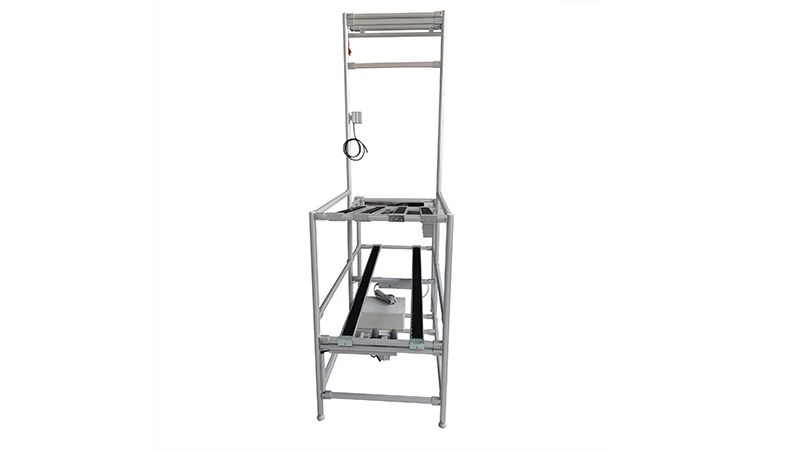
The Heartbeat of Assembly Lines – Why Workbenches Matter More Than You Think
Walk into any manufacturing plant, and you'll hear it—the steady hum of machinery, the rhythmic clink of tools, and the focused chatter of workers piecing together products that will eventually end up in homes, offices, and industries worldwide. At the center of this organized chaos? The assembly line workbench. It's not just a table; it's the command center where skilled hands transform components into finished goods, where ideas meet execution, and where hours upon hours of a worker's day unfold. For someone spending 8, 10, or even 12 hours at a workbench, its design isn't just about "having a place to work"—it's about comfort, efficiency, and dignity. A poorly designed workbench doesn't just slow down tasks; it wears down the people behind them. That's why, in the race to boost production assemble efficiency, forward-thinking manufacturers are starting to ask:
What if the workbench itself is the key to unlocking better productivity?
The Hidden Cost of "Good Enough" Workbenches: When Ergonomics Takes a Backseat
Let's talk about the "traditional" workbench—the one that's been in factories for decades. It's usually made of heavy steel, bolted to the floor, with a fixed height that seems to fit no one perfectly. The surface is hard, unforgiving, and often cluttered with tools that never quite have a dedicated spot. Maria, a veteran assembler with 15 years in the industry, sums it up: "By noon, my lower back aches from hunching over. The bench is too low, but there's no way to adjust it. By 3 p.m., my shoulders feel like they're carrying bricks, and I'm making silly mistakes because I'm just so tired." She's not alone. A 2023 study by the Manufacturing Ergonomics Institute found that workers at fixed-height workbenches report 37% more musculoskeletal discomfort than those at adjustable workstations—and discomfort translates directly to lost productivity: more breaks, slower task completion, and higher error rates. Add in the cost of workplace injuries (the Bureau of Labor Statistics estimates over $60 billion annually in the U.S. alone from ergonomic-related claims), and it's clear: "good enough" workbenches are costing manufacturers far more than they save.

Introducing Aluminum Workbench C: A Lean System Approach to Worker-Centric Design
Enter
Aluminum Workbench C
—not just a piece of equipment, but a reimagining of what a workbench can be. Designed with the dual goals of boosting efficiency and prioritizing worker well-being, this bench is part of a broader
lean system
philosophy: eliminate waste (in this case, wasted motion, fatigue, and downtime) and create value where it matters most—at the human level. What makes it different? Start with the material: aluminum. Unlike heavy steel, aluminum is lightweight, making the bench easy to reposition when workflows change, but it's surprisingly sturdy, supporting up to 500 lbs of tools and materials without wobbling. Its sleek, modular design means it can be customized with accessories—from tool rails to storage bins—to fit the unique needs of any assembly line. But the real magic? Its ergonomic features, engineered to turn a tiring workspace into one that energizes. Let's dive into what makes Aluminum Workbench C a game-changer for production floors.

Ergonomic Features That Put Workers First: The Details That Make a Difference
Adjustable Leveling Feet: Stability That Adapts to Your Floor (Because No Factory is Perfect)
Ever worked at a bench that rocks slightly, no matter how you shift your weight? It's distracting, to say the least. Uneven factory floors are a reality, and traditional workbenches—fixed to the ground or with basic feet—often amplify this problem, leading to wobbly surfaces that make precise tasks like wiring or small-part assembly frustrating. Aluminum Workbench C solves this with adjustable leveling feet : small, threaded knobs at each corner that can be twisted up or down to compensate for dips or bumps in the floor. "We installed these benches in our electronics assembly area last year, and the difference was immediate," says Raj, a plant manager in Ohio. "Our workers used to spend extra time steadying components—now, the bench stays rock-solid, even on our older concrete floors. Less frustration, more focus."
Ever worked at a bench that rocks slightly, no matter how you shift your weight? It's distracting, to say the least. Uneven factory floors are a reality, and traditional workbenches—fixed to the ground or with basic feet—often amplify this problem, leading to wobbly surfaces that make precise tasks like wiring or small-part assembly frustrating. Aluminum Workbench C solves this with adjustable leveling feet : small, threaded knobs at each corner that can be twisted up or down to compensate for dips or bumps in the floor. "We installed these benches in our electronics assembly area last year, and the difference was immediate," says Raj, a plant manager in Ohio. "Our workers used to spend extra time steadying components—now, the bench stays rock-solid, even on our older concrete floors. Less frustration, more focus."
Caster Wheels: Mobility Without Sacrificing Stability
In a dynamic production environment, flexibility is key. Maybe today's task requires the workbench near the soldering station, but tomorrow, it needs to shift to the packaging area. Traditional workbenches are stuck in place, forcing workers to carry heavy materials back and forth—a recipe for fatigue and wasted time. Aluminum Workbench C offers an optional caster wheel kit: four smooth-rolling wheels that lock securely when in use. "I love that I can move my bench in seconds," says Lina, an assembler at a automotive parts plant. "Last week, we had a rush order, and I needed to collaborate with the team across the line. Instead of carrying parts 30 feet, I just unlocked the casters, rolled my bench over, and got to work. It saved me at least 20 minutes that day—and my back!" The wheels are designed to glide over common factory debris (think small screws or dust) without getting stuck, and the locking mechanism ensures the bench stays put during even the most vigorous tasks.
In a dynamic production environment, flexibility is key. Maybe today's task requires the workbench near the soldering station, but tomorrow, it needs to shift to the packaging area. Traditional workbenches are stuck in place, forcing workers to carry heavy materials back and forth—a recipe for fatigue and wasted time. Aluminum Workbench C offers an optional caster wheel kit: four smooth-rolling wheels that lock securely when in use. "I love that I can move my bench in seconds," says Lina, an assembler at a automotive parts plant. "Last week, we had a rush order, and I needed to collaborate with the team across the line. Instead of carrying parts 30 feet, I just unlocked the casters, rolled my bench over, and got to work. It saved me at least 20 minutes that day—and my back!" The wheels are designed to glide over common factory debris (think small screws or dust) without getting stuck, and the locking mechanism ensures the bench stays put during even the most vigorous tasks.
Height Customization: Because One Size Never Fits All
The average assembly line has workers of all heights, from 5'2" to 6'4"—yet traditional workbenches come in one fixed height, usually around 36 inches. For shorter workers, this means reaching up or standing on tiptoes; for taller ones, it means hunching over. Both positions strain muscles, leading to fatigue and long-term injuries like carpal tunnel or lower back pain. Aluminum Workbench C addresses this with optional height-adjustable legs, allowing each worker to set their bench to a height that keeps their elbows at a 90-degree angle (the ergonomic sweet spot for reducing shoulder and wrist strain). "I'm 5'3", and for years, I thought back pain was just part of the job," says Mei, who assembles medical devices. "Then we got these benches, and I adjusted mine to 32 inches. Now, at the end of the day, my back doesn't ache—I actually feel like I can go home and play with my kids instead of collapsing on the couch."
The average assembly line has workers of all heights, from 5'2" to 6'4"—yet traditional workbenches come in one fixed height, usually around 36 inches. For shorter workers, this means reaching up or standing on tiptoes; for taller ones, it means hunching over. Both positions strain muscles, leading to fatigue and long-term injuries like carpal tunnel or lower back pain. Aluminum Workbench C addresses this with optional height-adjustable legs, allowing each worker to set their bench to a height that keeps their elbows at a 90-degree angle (the ergonomic sweet spot for reducing shoulder and wrist strain). "I'm 5'3", and for years, I thought back pain was just part of the job," says Mei, who assembles medical devices. "Then we got these benches, and I adjusted mine to 32 inches. Now, at the end of the day, my back doesn't ache—I actually feel like I can go home and play with my kids instead of collapsing on the couch."
Aluminum Profile: Lightweight, Durable, and Easy on the Hands
Let's talk about the material itself: aluminum. Unlike cold steel or rough wood, aluminum has a smooth, cool-to-the-touch surface that's gentle on hands during long shifts. It's also resistant to scratches, dents, and corrosion—important in environments where spills (oil, cleaning solutions) are common. "We used to have wooden workbenches that would warp or stain, and steel ones that would rust if we didn't repaint them every year," Raj recalls. "Aluminum Workbench C? We've had them for two years, and they still look brand-new. Wipe them down with a cloth, and they're good as new. No more sanding, painting, or replacing warped surfaces." Plus, aluminum's lightweight nature means even with a full load of tools, the bench is easy for two workers to reconfigure—no need for heavy machinery or extra.
Let's talk about the material itself: aluminum. Unlike cold steel or rough wood, aluminum has a smooth, cool-to-the-touch surface that's gentle on hands during long shifts. It's also resistant to scratches, dents, and corrosion—important in environments where spills (oil, cleaning solutions) are common. "We used to have wooden workbenches that would warp or stain, and steel ones that would rust if we didn't repaint them every year," Raj recalls. "Aluminum Workbench C? We've had them for two years, and they still look brand-new. Wipe them down with a cloth, and they're good as new. No more sanding, painting, or replacing warped surfaces." Plus, aluminum's lightweight nature means even with a full load of tools, the bench is easy for two workers to reconfigure—no need for heavy machinery or extra.

From Ergonomics to Efficiency: How Aluminum Workbench C Boosts the Lean System
Ergonomics is about more than comfort—it's about creating a workspace that works
with
workers, not against them. And in the context of a
lean system
, every small improvement adds up to big gains in efficiency. Let's break down how Aluminum Workbench C aligns with lean principles:
- Eliminating Waste (Muda): Wasted motion (e.g., bending, reaching, carrying materials) is one of the seven deadly wastes in lean manufacturing. With its mobility (caster wheels), adjustability (height, leveling feet), and modular storage, Aluminum Workbench C cuts down on these unnecessary movements. Workers spend less time walking, stretching, or searching for tools—and more time assembling.
- Building Quality In (Jidoka): Fatigue leads to mistakes. By reducing physical strain, the bench helps workers stay focused, leading to fewer errors and less rework. A study by the Lean Enterprise Institute found that ergonomic workstations reduced assembly errors by 22% in a mid-sized electronics plant—directly attributable to workers being more alert and comfortable.
- Flexibility (Heijunka): Production schedules change, and workbenches need to keep up. Aluminum Workbench C's modular design and lightweight aluminum profile make it easy to reconfigure for new products, seasonal demand spikes, or process improvements. No more "this bench only works for X task"—it adapts as your needs do.
Traditional vs. Aluminum Workbench C: A Side-by-Side Look at the Impact
| Feature | Traditional Steel Workbench | Aluminum Workbench C |
|---|---|---|
| Height Adjustment | Fixed (usually 36 inches); no customization | Adjustable (30–42 inches) to fit workers of all heights |
| Mobility | Bolted to floor or heavy; requires tools/machinery to move | Optional lockable caster wheels for easy repositioning |
| Stability | Wobbles on uneven floors; fixed feet can't adapt | Adjustable leveling feet compensate for floor irregularities |
| Material Durability | Heavy steel; prone to rust, dents, and warping over time | Lightweight aluminum; scratch/corrosion-resistant, low maintenance |
| Ergonomic Impact | High risk of strain, fatigue, and errors; contributes to 37% more discomfort (per MEI study) | Reduces muscle strain, lowers error rates by ~22%, and boosts daily productivity by 15–20% |
Real Stories: Workers and Managers on the Difference Aluminum Workbench C Makes
Numbers tell a story, but people tell the truth. Let's hear from those who use Aluminum Workbench C every day:
Carlos, Assembly Line Lead (Appliance Manufacturing): "Before, we had these old steel benches that weighed a ton. If we needed to rearrange the line for a new fridge model, we'd spend half a day unbolting them, getting a forklift, and moving them. Now, with the caster wheels on Aluminum Workbench C, two of us can reconfigure the entire line in an hour. And the adjustable height? My team has workers from 5'4" to 6'3", and everyone's finally comfortable. Absenteeism is down, and we're hitting our production targets 10% faster. It's not just a bench—it's changed how we work."
Priya, Quality Control Inspector (Electronics Plant): "I sit at a workbench 8 hours a day, inspecting circuit boards. The old bench was too low, so I'd hunch over, and by 2 p.m., my neck would be killing me. I'd rush through inspections just to finish early and stretch. Now, with Aluminum Workbench C, I adjusted the height so my elbows rest comfortably, and the surface is smooth—no more neck strain. I catch more defects because I'm not distracted by pain, and my manager says my accuracy scores are the highest on the team. Who knew a bench could make that much difference?"
Mike, Plant Manager (Automotive Parts): "We invested in Aluminum Workbench C as part of our lean system overhaul, and the ROI has been clear. Workers are happier, so turnover is down 18% in the last year—that alone saved us $45,000 in training costs. Plus, production assemble speed is up 12%, and error rates are down. When you stop seeing workers rubbing their backs or taking extra breaks, you realize: this isn't just about 'ergonomics'—it's about respecting the people who make your product."
Carlos, Assembly Line Lead (Appliance Manufacturing): "Before, we had these old steel benches that weighed a ton. If we needed to rearrange the line for a new fridge model, we'd spend half a day unbolting them, getting a forklift, and moving them. Now, with the caster wheels on Aluminum Workbench C, two of us can reconfigure the entire line in an hour. And the adjustable height? My team has workers from 5'4" to 6'3", and everyone's finally comfortable. Absenteeism is down, and we're hitting our production targets 10% faster. It's not just a bench—it's changed how we work."
Priya, Quality Control Inspector (Electronics Plant): "I sit at a workbench 8 hours a day, inspecting circuit boards. The old bench was too low, so I'd hunch over, and by 2 p.m., my neck would be killing me. I'd rush through inspections just to finish early and stretch. Now, with Aluminum Workbench C, I adjusted the height so my elbows rest comfortably, and the surface is smooth—no more neck strain. I catch more defects because I'm not distracted by pain, and my manager says my accuracy scores are the highest on the team. Who knew a bench could make that much difference?"
Mike, Plant Manager (Automotive Parts): "We invested in Aluminum Workbench C as part of our lean system overhaul, and the ROI has been clear. Workers are happier, so turnover is down 18% in the last year—that alone saved us $45,000 in training costs. Plus, production assemble speed is up 12%, and error rates are down. When you stop seeing workers rubbing their backs or taking extra breaks, you realize: this isn't just about 'ergonomics'—it's about respecting the people who make your product."
Conclusion: The Workbench as a Catalyst for Change
In the end, manufacturing isn't just about machines and materials—it's about people. And people thrive when their workspace is designed with care. Aluminum Workbench C isn't a silver bullet, but it's a powerful tool in the quest to build better assembly lines: lines that are more efficient, more adaptable, and more human. By prioritizing ergonomics, by asking how the workbench can serve the worker (not the other way around), manufacturers aren't just investing in a piece of equipment—they're investing in their most valuable asset: their team. So the next time you walk through your production floor, take a closer look at those workbenches. Are they holding your team back, or lifting them up? With Aluminum Workbench C, the answer is clear: it's time to build workspaces that work
for
your workers—and watch productivity, quality, and morale soar.